
/2023/11/patty2.png)
/2010/12/Sean-Astin.jpg)
/2011/01/GettyImages-73887650.jpg)
/2014/09/berneard.jpg)
/2014/08/Rosalynn-Carter1.jpg)
/2020/03/john-astin.jpg)
/2019/04/rr.jpg)
:strip_exif()/2009/09/P-Diddy.jpg)
:strip_exif()/2015/09/GettyImages-476575299.jpg)
/2009/11/George-Clooney.jpg)
/2019/10/denzel-washington-1.jpg)
/2017/02/GettyImages-528215436.jpg)
/2009/09/Brad-Pitt.jpg)
/2018/03/GettyImages-821622848.jpg)
/2019/11/GettyImages-1094653148.jpg)
/2020/02/Angelina-Jolie.png)
/2020/01/lopez3.jpg)
What Was Patty Duke's Net Worth?
Patty Duke was an American actress of film, television, and stage who had a net worth of $10 million at the time of her death. Patty Duke died on March 29, 2016, at the age of 69. Patty was the recipient of an Academy Award, two Golden Globe Awards, and three Primetime Emmy Awards over the course of her career.
When Patty was 8 years old, her care was turned over from her parents to her talent managers. She began acting when she was very young, appearing in soap operas, print ads, and TV commercials. When she was 12, she won $32,000 on the game show "The $64,000 Question." It was later revealed that the show was rigged, and Patty was forced to testify in front of the US Senate. Despite this minor setback, she got her major break playing the role of Helen Keller in the Broadway play "The Miracle Worker." She would appear in the play for the next two years. The play was then turned into a movie in 1962, and Patty won an Academy Ward for Best Supporting Actress for the part. She was 16 years old and the youngest person to win an Oscar at the time.
Duke appeared in several more movies, and then in 1963, she landed her own series, "The Patty Duke Show," which was a huge hit and went on to air 104 episodes across three seasons. Around this time, Patty began to show signs of bipolar disorder. She was not officially diagnosed with the disorder until 1982, and she eventually became a vocal advocate of mental health issues. She wrote two books about her life and mental health. She was married four times and was famous for having multiple affairs. One of these affairs resulted in her son, Sean Astin, who eventually became a famous actor on his own.
Early Life
Patty Duke was born Anna Marie Duke on December 14, 1946, in New York City. She was the daughter of Frances Margaret and John Patrick Duke. Her mother was a cashier, while her father was a handyman and cab driver. She grew up in a Roman Catholic household with her two older siblings in the Elmhurst neighborhood of Queens. Her childhood was difficult due to her father's alcoholism and her mother's clinical depression and inclination towards violence. Her mother forced her father to leave the family home when Duke was six. When Patty was eight, her care was turned over to John and Ethel Ross. The couple managed the careers of a number of child actors, including Duke's older brother. The Rosses mistreated Patty throughout her early career, as their methods were exploitative and dangerous. They gave her alcohol and prescription drugs, made her pretend to be younger than she actually was to book roles, and took unreasonably high fees from her earnings. She did not end her relationship with the Rosses until her first marriage in 1965.
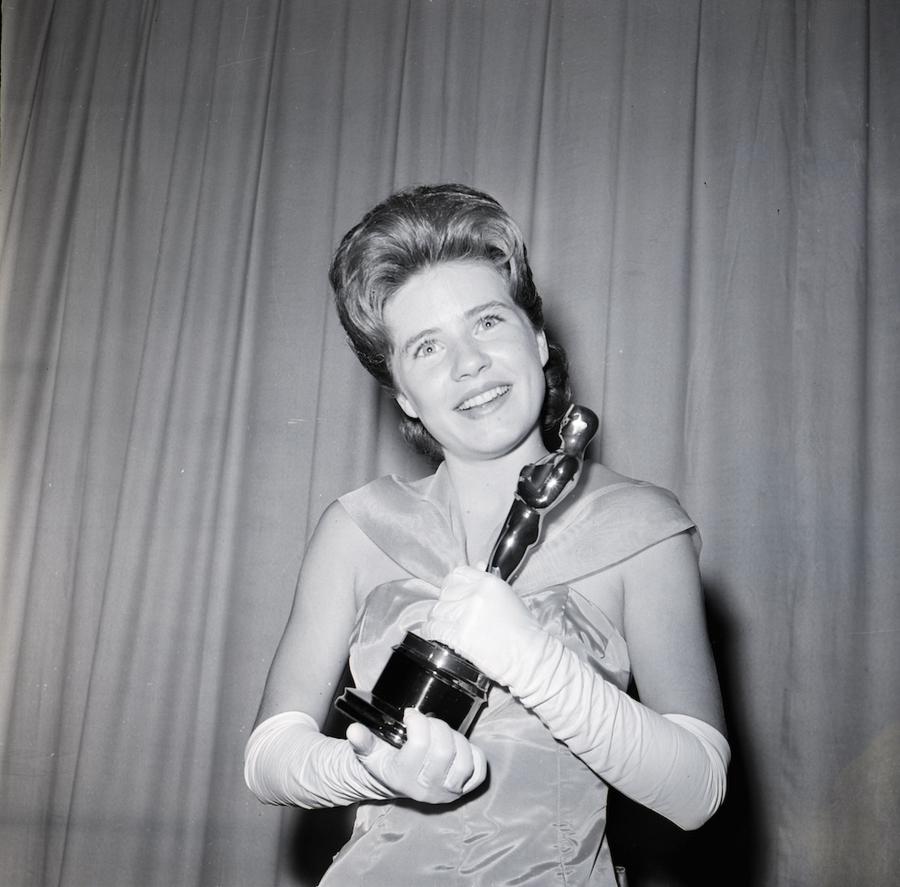
Patty Duke Holding her Oscar in 1963 (Getty)
Career
Duke began acting as a child in the 1950s on the soap opera "The Brighter Day." She also appeared in a number of television commercials. Her first major role was as Helen Keller in the Broadway play "The Miracle Worker." The play was later turned into a 1962 film in which Duke appeared, and she won the Academy Award for Best Supporting Actress. In 1963, she starred in her own series, "The Patty Duke Show." The series lasted three seasons before being canceled in 1966.
Duke began her adult acting career in "Valley of the Dolls" in 1967. Two years later, in 1969, she appeared in "Me, Natalie." Throughout the 1970s, Patty appeared heavily on television in shows like "Captains and Kings" and "It Takes Two." In the 1980s, she appeared in films like "By Design" and "A Time to Triumph." In 1985, Duke was also elected president of the Screen Actors Guild, a post she held until 1988. In 1992, she appeared in the film adaptation of the play "Prelude to a Kiss."
During her later years, Duke took on less work but still made some onscreen appearances. She was a guest star on "Glee" and the reboot of "Hawaii Five-0." She also appeared onstage in the San Francisco production of "Wicked," and she directed "The Miracle Worker" at a theater in Spokane, Washington.
Over the course of her career, Duke earned an Academy Award for Best Supporting Actress, three Emmy Awards and ten total nominations, and two Golden Globe Awards and four nominations. When she won her Academy Award in 1963, she became the youngest person ever to win an Academy Award in a competitive category. In August 2004, Duke received a star on the Hollywood Walk of Fame. In 2007, on her 61st birthday, Patty was awarded an honorary doctorate in humane letters degree from the University of North Florida for her work in advancing awareness of mental health issues. In March 2010, she was awarded an honorary doctorate in humane letters from the University of Maryland Eastern Shore.
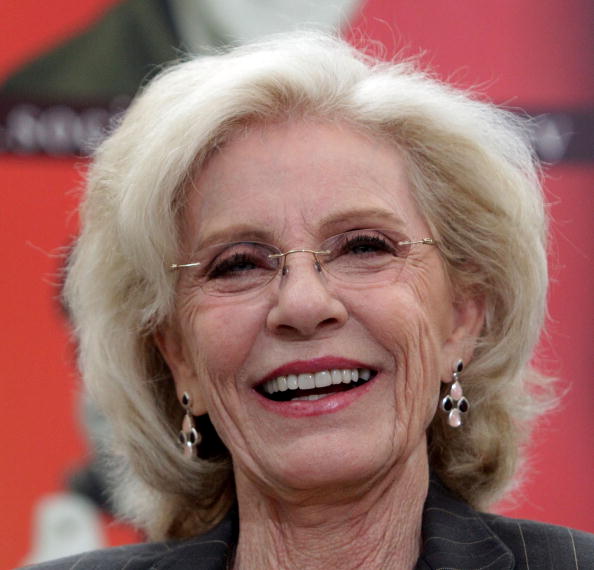
Frederick M. Brown/Getty Images
Personal Life and Death
Duke was married four times throughout her life and had three children. In 1965, when she was 19, she married director Harry Falk, who was 13 years older than her. Her marriage finally led to the end of the abusive relationship she had with her childhood guardians, the Rosses. Duke suffered from mental health issues throughout the marriage, as she often had mood swings, abused drugs and alcohol, and became anorexic during this time. The couple divorced in 1969.
In early 1970, Duke was involved with three men at the same time – Desi Arnaz Jr., John Astin, and Michael Tell. In June 1970, she learned she was pregnant. Patty quickly married Tell during a manic phase. Their marriage lasted only 13 days before ending in an annulment in July.
Her son, Sean Astin, was born in February 1971. Duke initially told her son that Arnaz Jr. was his father. Sean later underwent biological testing and learned that Tell was his biological father. Duke married John Astin in August 1972. Astin then adopted Sean, and the couple had another son, Mackenzie Astin. In 1985, Patty and John divorced. The following year, she married drill sergeant Michael Pearce. They remained married until Duke's death 30 years later. They adopted a son, Kevin, who was born in 1988.
Duke published three books in her life. Her autobiography, "Call Me Anna," was published in 1987. "Brilliant Madness: Living with Manic Depression Illness" was published in 1992. Both books discussed her mental health struggles, as she had been diagnosed as bipolar in 1982. She was one of the first public figures to speak out about a personal experience with mental illness. She went on to lobby the United States Congress and joined forces with the National Institute of Mental Health and the National Alliance on Mental Illness to increase awareness, funding, and research for people with mental illness. Her third book, "In the Presence of Greatness – My Sixty-Year Journey as an Actress," was published posthumously in February 2018.
Duke died on March 29, 2016, in Idaho at the age of 69. Her son, Sean, encouraged the public to contribute to a mental health foundation in his mother's name, the Patty Duke Mental Health Initiative.
/2023/11/patty2.png)
/2020/03/john-astin.jpg)
/2010/12/Sean-Astin.jpg)
/2015/11/mt.jpg)
/2014/09/berneard.jpg)
/2014/08/Rosalynn-Carter1.jpg)
/2016/08/david2.jpg)
/2021/05/Holly-Hunter.jpg)
/2009/09/Jennifer-Aniston.jpg)
/2020/06/taylor.png)
/2020/04/Megan-Fox.jpg)
/2009/09/Cristiano-Ronaldo.jpg)