













What Is Nawazuddin Siddiqui's Net Worth and Salary?
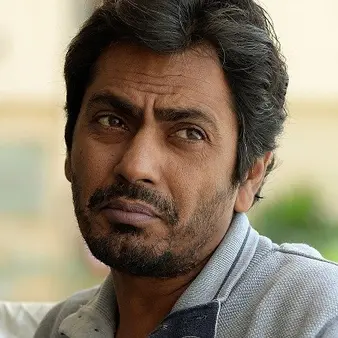
Nawazuddin Siddiqui is an Indian actor who has a net worth of $15 million.
Nawazuddin Siddiqui is one of the most acclaimed character actors in modern Indian cinema, known for an extraordinary rise from years of poverty and tiny supporting roles to starring performances in "Gangs of Wasseypur," "The Lunchbox," "Badlapur," "Manjhi – The Mountain Man," "Raman Raghav 2.0," "Manto," and Netflix's "Sacred Games." After graduating from India's National School of Drama, Siddiqui arrived in Mumbai with ₹2,500 and spent more than a decade struggling for work, appearing briefly as terrorists, waiters, pickpockets, and other unnamed characters. His fortunes changed dramatically in 2012 when "Kahaani," "Gangs of Wasseypur," and "Talaash" established him as one of India's most distinctive performers.
Siddiqui subsequently moved easily between independent films, major Bollywood productions, international festival movies, and streaming projects. He has worked opposite stars including Salman Khan, Shah Rukh Khan, Saif Ali Khan, and Rajinikanth without abandoning lower-budget films. His performances have earned him a National Film Award Special Jury Award, a Filmfare Award, international festival honors, and an International Emmy nomination.
Career Earnings
The financial arc of Nawazuddin Siddiqui's career is particularly dramatic because he spent more than a decade earning almost nothing as an actor.
Siddiqui has said he arrived in Mumbai with only ₹2,500. During his early years, he worked for daily wages and survived with help from friends while accepting whatever small acting parts he could find. He was supposed to receive ₹2,500 for playing a waiter in "Shool" but said the payment never arrived. For his brief appearance as a pickpocket in 2003's "Munna Bhai M.B.B.S.," he earned ₹25,000.
By the time "Gangs of Wasseypur 2" transformed him into a star in 2012, the economics had completely reversed. Siddiqui recalled in 2026 that nearly 200 scripts arrived after the movie and that some producers placed blank checks in front of him, allowing him to name his fee.
Despite becoming a highly paid actor, Siddiqui has continued alternating commercial jobs with films he chooses primarily for artistic reasons. He has openly acknowledged taking some projects for money so that he can afford to work on passion projects for little or no compensation.
The most striking example is "Manto." Siddiqui was so determined to portray writer Saadat Hasan Manto in Nandita Das' 2018 biopic that he charged a fee of exactly ₹1.

PUNIT PARANJPE/AFP/Getty Images
Early Life
Nawazuddin Siddiqui was born on May 19, 1974, in Budhana, Uttar Pradesh, India. He grew up as the eldest of nine children in a farming family.
Entertainment options in Budhana were limited, and Siddiqui became fascinated by the annual Ramleela performances staged in his hometown. He later said that watching those theatrical productions helped create his early interest in acting.
Siddiqui did not initially pursue entertainment professionally. He earned a Bachelor of Science degree in chemistry and took a job as a chemist at a petrochemical factory in Vadodara, Gujarat.
While living in Gujarat, he began attending theatrical performances with colleagues and became increasingly attracted to acting. He eventually left the factory and moved to Delhi, where he became involved in theater.
Money was extremely tight. Siddiqui performed during the day while working as a watchman at night to support himself.
He eventually gained admission to the National School of Drama in New Delhi. His training encompassed acting, movement, traditional Indian theater, dance, and performance techniques. Siddiqui graduated in 1996 and initially worked with a theater group before deciding to pursue film roles in Mumbai.
Years of Struggle in Mumbai
Siddiqui moved to Mumbai near the end of the 1990s expecting his National School of Drama training to open doors. Instead, he encountered years of rejection.
His first movie appearance came in 1999's "Sarfarosh," starring Aamir Khan. Siddiqui played a terrorist being interrogated by police and appeared onscreen for only a short period.
Other tiny roles followed. He appeared as a waiter in "Shool," had a brief part in "Jungle," and played a pickpocket in "Munna Bhai M.B.B.S." For years, he was routinely cast in roles that barely had names or dialogue.
Siddiqui lived in cramped apartments shared with several other struggling actors and frequently lacked enough money for food. He has recalled surviving at times on biscuits and relying on different friends for lunch and dinner.
Even after years of rejection, Siddiqui refused to abandon acting. He later said that returning home was psychologically difficult because people in his village had already told him that someone who looked like him could never become a movie star.
"Black Friday" and "Peepli Live"
Director Anurag Kashyap became one of the most important figures in Siddiqui's career.
Kashyap remembered the unknown actor from his tiny role in "Sarfarosh" and cast him as Asgar Mukadam in "Black Friday," his drama about the 1993 Bombay bombings. Although completed earlier, censorship and legal disputes delayed the film's theatrical release until 2007.
Siddiqui continued working in small roles in movies including "Dev.D," "New York," and "Firaaq." His performances gradually attracted attention within the independent-film community.
A larger audience began noticing him through 2010's "Peepli Live," in which he played journalist Rakesh. The film was produced by Aamir Khan and selected as India's submission for the Academy Award for Best Foreign Language Film.
Siddiqui also played major roles in independent films including "Patang," which screened at international festivals and helped expose his work to audiences outside India.
2012 Breakthrough
Everything changed for Siddiqui in 2012.
He appeared as intelligence officer Khan in Sujoy Ghosh's thriller "Kahaani," starring Vidya Balan. The movie became a major critical and commercial success.
He also delivered an acclaimed supporting performance opposite Aamir Khan in "Talaash."
But the role that permanently changed his career was Faizal Khan in Anurag Kashyap's two-part gangster epic "Gangs of Wasseypur."
The sprawling film traces generations of criminal families battling for power in the coal-mining region of Wasseypur. Siddiqui's Faizal begins as an unmotivated marijuana-smoking young man before evolving into a calculating gangster determined to avenge his family's murders.
"Gangs of Wasseypur" premiered in its complete form at the Cannes Film Festival before being released as two movies in India.
The performance transformed Siddiqui from a respected character actor into a leading man. He later recalled that after "Gangs of Wasseypur 2" opened, he was suddenly presented with hundreds of scripts and blank checks from producers who had ignored him for years.
"The Lunchbox"
Siddiqui followed his 2012 breakthrough with another internationally acclaimed film, "The Lunchbox."
The 2013 drama starred Irrfan Khan as a lonely office worker who accidentally receives meals intended for another woman's husband. Siddiqui played Shaikh, an eager younger employee whom Khan's character is assigned to train.
"The Lunchbox" premiered at the Cannes Film Festival's Critics' Week and became one of the most internationally successful Indian independent films of the decade.
Siddiqui won the Filmfare Award for Best Supporting Actor for his performance.
The movie also reinforced a pattern that would characterize his career: large commercial Hindi films provided financial security, while smaller filmmaker-driven productions gave him many of his most acclaimed roles.
"Kick," "Badlapur" and "Bajrangi Bhaijaan"
Siddiqui's growing reputation allowed him to move into mainstream Bollywood without abandoning unconventional characters.
He played the villain Shiv Gajra opposite Salman Khan in the 2014 blockbuster "Kick." The movie became one of the year's highest-grossing Indian films and exposed Siddiqui to a much larger commercial audience.
The following year, he starred opposite Varun Dhawan in "Badlapur." Siddiqui played Liak, a criminal whose relationship with the grieving protagonist becomes increasingly complicated over the course of the film. His performance earned widespread acclaim.
Also in 2015, Siddiqui reunited with Salman Khan for "Bajrangi Bhaijaan," playing Pakistani television journalist Chand Nawab. The film became one of the biggest Indian box-office successes of its era.
Siddiqui managed to stand out in both movies despite playing opposite conventional leading stars, strengthening his reputation as an actor who could move between independent cinema and major commercial releases.
"Manjhi – The Mountain Man"
In 2015, Siddiqui took on one of the most physically demanding roles of his career in "Manjhi – The Mountain Man."
He portrayed Dashrath Manjhi, a laborer from Bihar who spent decades carving a road through a mountain using hand tools after his wife died following an accident.
Siddiqui prepared extensively for the performance, studying Manjhi's physical movements, background, and personality before filming.
The role became one of the clearest examples of the transformation that had occurred in Siddiqui's career. An actor who had spent years struggling to obtain single-scene appearances was now being trusted to carry entire films.
"Raman Raghav 2.0"
Siddiqui reunited with Anurag Kashyap for 2016's psychological thriller "Raman Raghav 2.0."
He played Ramanna, a serial killer who becomes obsessed with a corrupt police officer played by Vicky Kaushal. Rather than attempt to imitate the real-life murderer Raman Raghav, the film reimagined the concept in contemporary Mumbai.
The movie premiered at the Cannes Film Festival's Directors' Fortnight.
Siddiqui's performance earned him Best Actor honors at several international film festivals and further strengthened the global reputation he had built through "Gangs of Wasseypur" and "The Lunchbox."
"Raees" and Major Commercial Films
In 2017, Siddiqui appeared opposite Shah Rukh Khan in "Raees."
He played police officer Jaideep Ambalal Majmudar, who relentlessly pursues Khan's bootlegger character. The movie became another major commercial success.
Other mainstream roles included "Munna Michael," "Mom," and "Genius." Siddiqui also made his Tamil-language debut opposite Rajinikanth in 2019's "Petta."
His willingness to take profitable commercial projects was deliberate. Siddiqui has explained that money earned from mainstream movies gives him the financial freedom to accept independent films that cannot afford major salaries.
"Manto"
One of Siddiqui's most personal projects was Nandita Das' 2018 biographical drama "Manto."
He played Saadat Hasan Manto, the celebrated and controversial Urdu short-story writer whose work explored sexuality, violence, hypocrisy, and the trauma of India's partition.
Siddiqui felt such a strong connection to the material that he refused a conventional salary. He charged Das ₹1 for the entire film.
"Manto" premiered in the Un Certain Regard section of the Cannes Film Festival.
Siddiqui's portrayal became one of his most acclaimed performances and earned him the Asia Pacific Screen Award for Best Performance by an Actor.
"Sacred Games"
Siddiqui's next major career transformation came through streaming.
Netflix's "Sacred Games," based on Vikram Chandra's novel, became the platform's first Indian original series. Siddiqui starred as Mumbai crime lord Ganesh Gaitonde opposite Saif Ali Khan as police officer Sartaj Singh.
Siddiqui initially resisted the project because he did not understand the significance of Netflix. Anurag Kashyap persuaded him by explaining that the show would be released in more than 190 countries.
The gamble paid off. "Sacred Games" became an international hit and introduced Siddiqui to an enormous new audience outside India.
The series ran for two seasons. Its long-form format also gave Siddiqui much more time to explore Gaitonde's transformation from a small-time criminal into a powerful gangster consumed by ego, paranoia, religion, and mortality.
"Photograph," "Serious Men" and Streaming Films
Siddiqui reunited with "The Lunchbox" director Ritesh Batra for 2019's "Photograph," playing a struggling Mumbai street photographer who persuades a shy woman to pretend to be his fiancée.
He then starred in Netflix's "Serious Men," directed by Sudhir Mishra and adapted from Manu Joseph's novel. Siddiqui played Ayyan Mani, an ambitious lower-caste man who falsely presents his young son as a scientific genius in an attempt to improve the family's social position.
The performance earned Siddiqui a nomination for Best Performance by an Actor at the International Emmy Awards.
He also starred as police inspector Jatil Yadav in the Netflix mystery "Raat Akeli Hai." The role became one of the rare characters Siddiqui later chose to revisit.
Other streaming-era projects included "Raat Akeli Hai," "Serious Men," "Haddi," "Tiku Weds Sheru," "Afwaah," and "Rautu Ka Raaz."
"Haddi"
Siddiqui underwent another major transformation for the 2023 crime drama "Haddi."
He played a transgender woman who becomes entangled in Delhi's criminal world while seeking revenge. The performance required extensive prosthetics, costuming, and physical transformation while asking Siddiqui to portray the character across different stages of her life.
The film became one of his most discussed streaming performances and earned him several Indian digital-film acting awards.
Recent Work
Siddiqui continued working across languages and formats in the mid-2020s.
In 2024, he appeared in the Telugu action film "Saindhav" and played a police inspector investigating a murder in "Rautu Ka Raaz."
In 2025, he starred in "Costao," based on the life of Goa customs officer Costao Fernandes, whose fight against gold smuggling placed him in conflict with powerful interests. Siddiqui also reprised Jatil Yadav in "Raat Akeli Hai: The Bansal Murders."
He joined Ayushmann Khurrana and Rashmika Mandanna in the supernatural comedy "Thamma," part of Maddock Films' interconnected horror-comedy universe.
More than 25 years after his first tiny film role, Siddiqui has remained unusually willing to move between starring roles, supporting performances, theatrical releases, streaming films, and projects whose budgets differ enormously.
Awards
Siddiqui received the National Film Award Special Jury Award for his collective performances in "Kahaani," "Gangs of Wasseypur," "Dekh Indian Circus," and "Talaash."
He won the Filmfare Award for Best Supporting Actor for "The Lunchbox" and received numerous other Indian film awards for movies including "Talaash," "Badlapur," "Bajrangi Bhaijaan," "Manto," "Raman Raghav 2.0," "Raat Akeli Hai," and "Serious Men."
His performance in "Manto" earned the Asia Pacific Screen Award for Best Performance by an Actor, while "Serious Men" brought him an International Emmy nomination.
Several of Siddiqui's films have screened at Cannes, including "Gangs of Wasseypur," "The Lunchbox," "Raman Raghav 2.0," and "Manto."
Personal Life
Siddiqui married Aaliya Siddiqui in 2009. They have two children, daughter Shora and son Yaani.
Their marriage went through a lengthy and highly publicized period of conflict, including separation and divorce proceedings. In 2024, Aaliya announced that the couple had reconciled and planned to remain together, with their children's well-being playing a major role in the decision.
Their daughter, Shora, has expressed an interest in becoming an actor and has studied performing arts and attended acting workshops. Siddiqui has said he wants her to develop her craft independently rather than rely on his position in the film industry.
Siddiqui's late father, Nawabuddin Siddiqui, remained an important influence on him. He later named his Mumbai home "Nawab" in his father's memory.
Real Estate
Nawazuddin Siddiqui owns a large three-story bungalow on Yari Road in Versova, Mumbai.
The home, called "Nawab," took three years to complete and was designed largely by Siddiqui himself. He drew inspiration from the family home where he grew up in Budhana and recreated elements including its white exterior, arches, columns, flooring, and open spaces.
The property contains seven bedrooms, two large dining rooms, a personal gym, an in-home theater, a makeup room, balconies, gardens, and a private space where Siddiqui reads scripts and works.
Siddiqui moved into the completed home in 2020. He has contrasted it with his first years in Mumbai, when he shared tiny rooms with four or five other struggling actors, noting that the bathroom in his current home is larger than some of the places where he once lived.
He has also rejected the suggestion that a few commercial movies alone paid for the property, explaining that the bungalow represents the accumulated earnings of many years of work.