


What Is Leonardo DiCaprio's Net Worth and Salary?
Leonardo DiCaprio is an American actor, producer, philanthropist, and environmental activist who has a net worth of $300 million.
Leonardo DiCaprio has been one of Hollywood's most bankable and selective leading men for more than three decades. After breaking through as a teenager with "This Boy's Life" and earning his first Academy Award nomination for "What's Eating Gilbert Grape," he became a global superstar opposite Kate Winslet in 1997's "Titanic." Rather than spend the following decades making conventional blockbusters, DiCaprio built his career around filmmakers including Martin Scorsese, Christopher Nolan, and Quentin Tarantino, starring in films such as "The Aviator," "The Departed," "Inception," "Django Unchained," "The Wolf of Wall Street," "The Revenant," "Once Upon a Time in Hollywood," "Killers of the Flower Moon," and "One Battle After Another."
DiCaprio's selective approach has also made him one of the highest-paid actors in movie history. Between 1995 and 2020 alone, he earned more than $300 million from film salaries and backend participation. He famously turned a $2.5 million salary for "Titanic" into approximately $40 million through gross participation and earned nearly $60 million from "Inception." Netflix paid him $30 million for "Don't Look Up," and Apple paid him another $30 million for "Killers of the Flower Moon."
DiCaprio won the Academy Award for Best Actor for 2015's "The Revenant" after multiple previous nominations. His 2025 film "One Battle After Another" won six Academy Awards, including Best Picture, in 2026, with Leonardo receiving another Best Actor nomination. Films featuring DiCaprio in leading or lead-ensemble roles have generated more than $7.5 billion at the worldwide box office. Outside acting, he owns the production company Appian Way, has accumulated an extensive venture-investment portfolio, owns well over $100 million worth of real estate, and has directed more than $100 million toward environmental and conservation causes through his philanthropic work.
Early Life
Leonardo Wilhelm DiCaprio was born on November 11, 1974, in Los Angeles, California. His mother, Irmelin Indenbirken, worked as a legal secretary, while his father, George DiCaprio, was an underground comics writer, publisher, and distributor. His parents separated when Leonardo was still very young but remained involved in raising him.
According to family lore, Leonardo received his name because his pregnant mother felt him kick while she was looking at a Leonardo da Vinci painting in Italy. He grew up primarily with his mother in Los Angeles and became interested in performing while still a child.
DiCaprio began appearing in commercials and educational programs before his teenage years. Among his early commercial work were advertisements for Matchbox cars, Bubble Yum, Apple Jacks, and Kraft Foods. He later appeared on television programs including "The New Lassie," "Roseanne," and "Parenthood."
A major television break came when Leonardo joined "Growing Pains" as Luke Brower, a homeless teenager taken in by the Seaver family. By then he had begun shifting decisively from commercials and television guest appearances toward feature films.
Early Film Career
DiCaprio made his feature-film debut in the low-budget horror sequel "Critters 3" in 1991. Two years later, he landed the part that established him as a serious dramatic actor when Robert De Niro selected him to play Tobias Wolff in "This Boy's Life."
Later in 1993, DiCaprio played Arnie Grape, the developmentally disabled younger brother of Johnny Depp's character, in "What's Eating Gilbert Grape." His performance earned him Academy Award and Golden Globe nominations for Best Supporting Actor while he was still a teenager.
Leonardo followed with increasingly demanding roles in "The Basketball Diaries," in which he portrayed writer and heroin addict Jim Carroll, and "Total Eclipse," in which he played French poet Arthur Rimbaud. In 1996, director Baz Luhrmann cast him opposite Claire Danes in "William Shakespeare's Romeo + Juliet." The highly stylized adaptation earned $147.5 million worldwide and demonstrated that DiCaprio could carry a mainstream romantic film.
"Titanic"
DiCaprio's life changed permanently when James Cameron cast him as Jack Dawson opposite Kate Winslet's Rose DeWitt Bukater in 1997's "Titanic."
The enormously expensive production was viewed as a major financial risk before its release. Instead, "Titanic" became a global cultural phenomenon, spending months at the top of the box office and ultimately becoming the highest-grossing movie in history at the time. It won 11 Academy Awards, including Best Picture and Best Director.
The movie transformed DiCaprio from an acclaimed young actor into one of the most famous people in the world. The intense attention surrounding him became known as "Leo-mania," but rather than immediately accept every blockbuster offered to him, DiCaprio became increasingly selective about his roles.
"Titanic" was also one of the most important financial decisions of his career. Leonardo accepted a relatively modest $2.5 million base salary in exchange for 1.8% of gross revenue participation. As the movie generated billions of dollars across theatrical exhibition and other revenue streams, DiCaprio's eventual earnings climbed to approximately $40 million.
How Much Did Leonardo DiCaprio Make From "Titanic"?
Leonardo earned a base salary of $2.5 million for "Titanic." More importantly, he negotiated a 1.8% share of gross backend revenue.
The film's unprecedented commercial success eventually pushed DiCaprio's total earnings from "Titanic" to approximately $40 million. The deal became an early example of how a superstar actor could turn a comparatively modest upfront salary into a vastly larger payday through backend participation.
Post-"Titanic" Career
DiCaprio followed "Titanic" with "The Man in the Iron Mask" and then deliberately reduced his workload. He returned as the lead in Danny Boyle's 2000 film "The Beach," for which his salary jumped to $20 million.
One of the most important relationships of his career began with 2002's "Gangs of New York," his first collaboration with Martin Scorsese. That same year, Leonardo starred opposite Tom Hanks in Steven Spielberg's "Catch Me If You Can," playing real-life con artist Frank Abagnale Jr. The movie earned more than $350 million worldwide.
DiCaprio and Scorsese reunited for 2004's "The Aviator," with Leonardo playing eccentric aviation pioneer and businessman Howard Hughes. The performance earned him his second Academy Award nomination for Best Actor and his first Golden Globe win in the category.
Their partnership continued with 2006's "The Departed," which also starred Matt Damon, Jack Nicholson, and Mark Wahlberg. The film earned $291 million worldwide and won four Academy Awards, including Best Picture and Scorsese's long-awaited first Oscar for Best Director.
That same year, DiCaprio starred in "Blood Diamond," earning another Best Actor Academy Award nomination. He subsequently reunited with Kate Winslet for 2008's "Revolutionary Road" and returned to Scorsese for the psychological thriller "Shutter Island" in 2010.
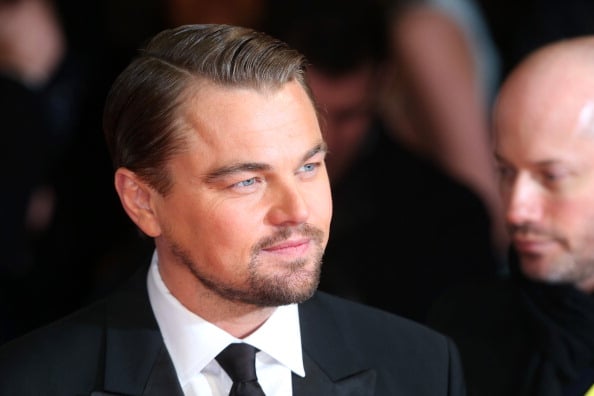
Leonardo DiCaprio (via Getty)
"Inception," "Django Unchained," and "The Wolf of Wall Street"
In 2010, DiCaprio starred as Dom Cobb in Christopher Nolan's "Inception." The science-fiction thriller earned more than $800 million worldwide and produced one of the largest individual paydays of Leonardo's career.
Rather than receiving only a conventional $20 million superstar salary, DiCaprio negotiated a deal containing substantial first-dollar gross participation. His eventual compensation reached just under $60 million.
Leonardo played FBI director J. Edgar Hoover in Clint Eastwood's "J. Edgar" before taking a rare supporting role as sadistic plantation owner Calvin Candie in Quentin Tarantino's 2012 film "Django Unchained." The following year, he starred as Jay Gatsby in Baz Luhrmann's "The Great Gatsby."
Also in 2013, DiCaprio delivered one of his signature performances as corrupt stockbroker Jordan Belfort in "The Wolf of Wall Street." He developed the project through his Appian Way production company, starred in it, and served as a producer. The movie earned more than $400 million worldwide and gave Leonardo another Academy Award nomination for Best Actor.
"The Revenant" and Academy Award
DiCaprio starred as frontiersman Hugh Glass in Alejandro G. Iñárritu's 2015 survival epic "The Revenant." The notoriously difficult production shot extensively in remote natural locations and required Leonardo to perform in freezing conditions while portraying a severely injured man making his way across the wilderness.
The film earned $533 million worldwide and brought Leonardo the award that had eluded him throughout his career. At the 2016 Academy Awards, he won Best Actor after previous acting nominations for "What's Eating Gilbert Grape," "The Aviator," "Blood Diamond," and "The Wolf of Wall Street."
"The Revenant" also won Academy Awards for Best Director and Best Cinematography. DiCaprio used much of his widely watched acceptance speech to discuss climate change and environmental protection.
"Once Upon a Time in Hollywood"
DiCaprio returned to the screen in 2019 in Quentin Tarantino's "Once Upon a Time in Hollywood." He played fading television actor Rick Dalton opposite Brad Pitt's stuntman Cliff Booth.
Both actors ordinarily commanded salaries in the $20 million range, but each accepted $10 million upfront to help make the project economically viable. The movie earned $377 million worldwide, and Leonardo received another Academy Award nomination for Best Actor. Pitt won the Oscar for Best Supporting Actor.
"Don't Look Up" and "Killers of the Flower Moon"
In 2021, DiCaprio starred opposite Jennifer Lawrence in Adam McKay's Netflix satire "Don't Look Up." Leonardo earned $30 million for the film, while Lawrence received $25 million.
DiCaprio then reunited with Scorsese for 2023's "Killers of the Flower Moon," based on David Grann's nonfiction book about the murders of members of the Osage Nation during the 1920s. Leonardo played Ernest Burkhart opposite Lily Gladstone and Robert De Niro and also served as an executive producer through Appian Way.
Apple paid DiCaprio $30 million for the film. "Killers of the Flower Moon" received ten Academy Award nominations, including Best Picture and a historic Best Actress nomination for Gladstone.
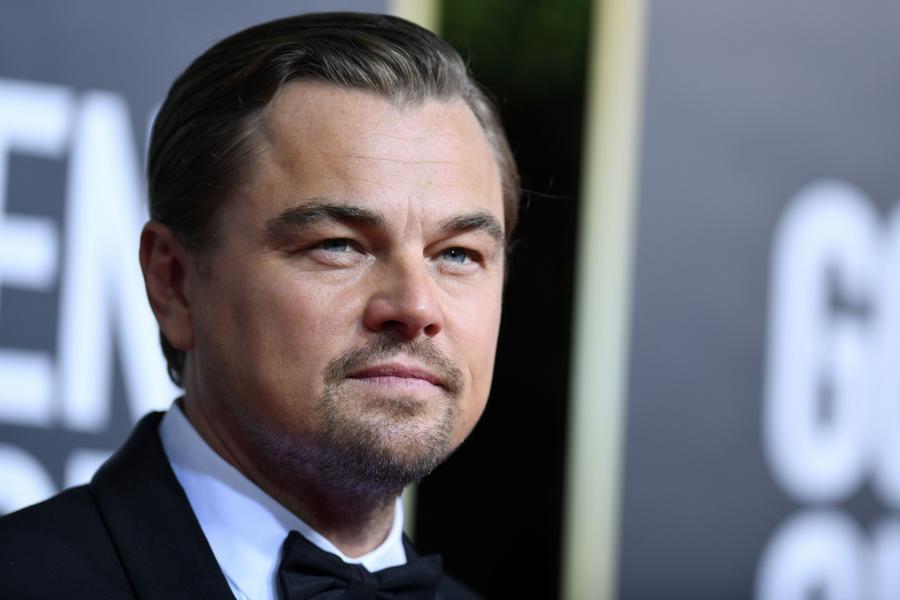
(Photo by VALERIE MACON/AFP via Getty Images)
"One Battle After Another"
DiCaprio starred in Paul Thomas Anderson's 2025 film "One Battle After Another," playing Bob Ferguson, a former revolutionary whose past returns when his daughter is threatened. The cast also included Sean Penn, Benicio del Toro, Regina Hall, Teyana Taylor, and Chase Infiniti.
The movie earned $210 million worldwide and became the highest-grossing film of Anderson's career. Forbes calculated that DiCaprio earned $29 million gross during 2025, or approximately $25 million after agent and manager fees, with his "One Battle After Another" compensation driving the bulk of those earnings.
The film became one of the major awards successes of 2026. It won six Academy Awards, including Best Picture, Best Director for Anderson, Best Adapted Screenplay, Best Supporting Actor for Sean Penn, Best Editing, and Best Casting. DiCaprio received another nomination for Best Actor, losing to Michael B. Jordan for "Sinners."
"What Happens at Night"
In 2026, DiCaprio reunited with both Scorsese and Jennifer Lawrence for "What Happens at Night," an adaptation of Peter Cameron's novel. Leonardo and Lawrence starred as an American married couple who travel to a mysterious snowbound European town while attempting to adopt a child.
The film also stars Mads Mikkelsen, Patricia Clarkson, and Jared Harris. DiCaprio and Lawrence both served as producers, with production taking place in the Czech Republic in 2026.
The project marked yet another collaboration between Leonardo and Scorsese, whose creative relationship has stretched from "Gangs of New York" through "The Aviator," "The Departed," "Shutter Island," "The Wolf of Wall Street," "Killers of the Flower Moon," and "What Happens at Night."
Appian Way Productions
DiCaprio founded Appian Way Productions in 2001 and gradually transformed it into an important part of his career and fortune. Rather than relying solely on acting salaries, Leonardo has used the company to develop projects, secure producing fees, participate in ownership, and exert more control over the films he chooses to make.
Appian Way's credits include "The Aviator," "Shutter Island," "The Wolf of Wall Street," "The Revenant," "The Ides of March," "Out of the Furnace," "Richard Jewell," and numerous documentaries. DiCaprio received a Best Picture Academy Award nomination as a producer of "The Wolf of Wall Street."
In 2020, Appian Way signed a multi-year first-look feature-film agreement with Sony Pictures. The company has also maintained a substantial documentary operation, with many projects focusing on conservation, climate change, wildlife, and environmental issues.
Leonardo DiCaprio Salary Highlights
DiCaprio's ability to combine enormous upfront salaries with backend participation has produced hundreds of millions of dollars in career earnings.
- He earned $1 million for "The Basketball Diaries."
- He received $2.5 million upfront for "Titanic," but gross participation eventually increased his total compensation to approximately $40 million.
- He earned $20 million for "The Beach."
- He earned $10 million for "Gangs of New York."
- He earned $20 million for "Catch Me If You Can."
- He earned $20 million for "The Aviator."
- He earned $20 million for "The Departed."
- He earned $20 million for "Blood Diamond."
- His "Inception" salary and backend participation ultimately generated just under $60 million.
- He earned $20 million for "The Great Gatsby."
- He earned $25 million for "The Wolf of Wall Street."
- He earned $20 million for "The Revenant."
- He accepted a $10 million upfront salary for "Once Upon a Time in Hollywood."
- Netflix paid Leonardo $30 million for "Don't Look Up."
- Apple paid him $30 million for "Killers of the Flower Moon."
Between 1995 and 2020 alone, Leonardo earned at least $300 million from film salaries and backend bonuses. That total does not include the enormous additional compensation he has earned since 2020 from "Don't Look Up," "Killers of the Flower Moon," "One Battle After Another," producing fees, residuals, endorsements, investments, and other business interests.
Highest-Paying Roles
Some of Leonardo DiCaprio's largest known film paydays include:
- "Gangs of New York" – $10 million
- "Once Upon a Time in Hollywood" – $10 million upfront
- "The Beach" – $20 million
- "Catch Me If You Can" – $20 million
- "The Aviator" – $20 million
- "The Departed" – $20 million
- "Blood Diamond" – $20 million
- "The Great Gatsby" – $20 million
- "The Revenant" – $20 million
- "The Wolf of Wall Street" – $25 million
- "Don't Look Up" – $30 million
- "Killers of the Flower Moon" – $30 million
- "Titanic" – approximately $40 million including backend participation
- "Inception" – approximately $59 million including backend participation
Endorsements and Investments
DiCaprio's income has never been limited to acting. He spent years as a global ambassador for TAG Heuer watches and has appeared in overseas advertising campaigns for brands including Jim Beam. A Japanese credit-card commercial reportedly paid him $5 million, and in 2017 he became a global ambassador for Chinese electric-vehicle manufacturer BYD.
Leonardo has also built a significant venture-investment portfolio, much of it focused on businesses connected to sustainability, food, climate technology, and consumer products. He was an early investor and advocate for Beyond Meat before the plant-based food company went public in 2019.
His other investments have included cultivated-meat companies Mosa Meat and Aleph Farms, for which he has also served as an advisor, as well as companies involved in sustainable materials, climate technology, and alternative food production. The amounts of most individual investments have not been publicly disclosed.
DiCaprio has also invested alongside other prominent entrepreneurs and celebrities in conventional technology and consumer startups. Taken together with his film earnings and real estate holdings, these investments give him a much more diversified financial profile than someone whose fortune comes exclusively from acting salaries.
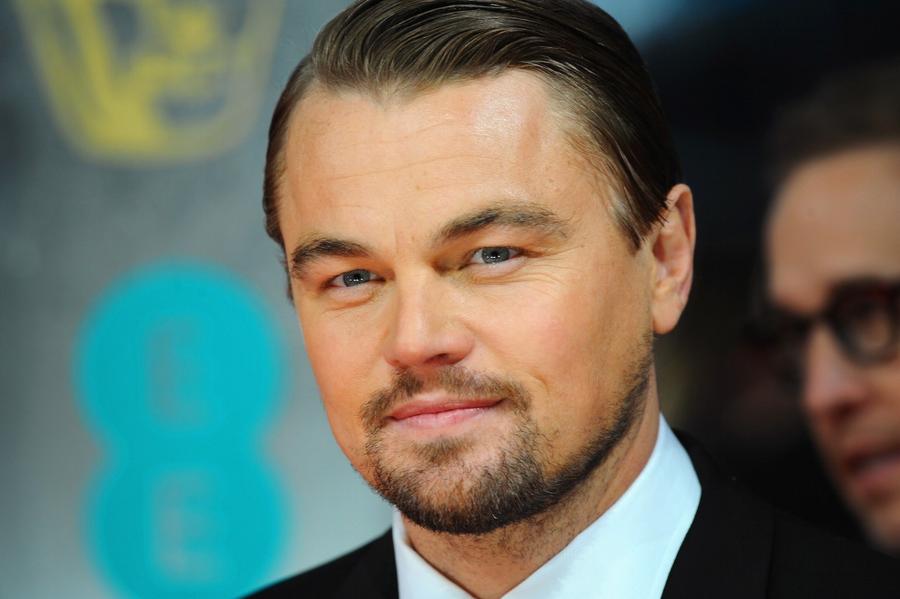
Getty Images
Environmental Activism and Philanthropy
DiCaprio created the Leonardo DiCaprio Foundation in 1998, shortly after the success of "Titanic," with a focus on wildlife conservation, climate change, marine protection, biodiversity, Indigenous communities, and environmental restoration.
His philanthropic environmental work eventually expanded through organizations including Earth Alliance and Re:wild. DiCaprio is a founding board member of Re:wild, and his combined philanthropic efforts have directed more than $100 million in grants toward conservation and environmental projects around the world.
In 2014, the United Nations named Leonardo a Messenger of Peace with a special focus on climate change. He addressed the UN Climate Summit and subsequently used both his celebrity platform and film work to bring attention to environmental issues.
In July 2015, DiCaprio announced $15 million in grants supporting conservation organizations around the world. He has also donated $1 million toward Haiti earthquake relief and $1 million toward Hurricane Harvey relief and contributed $35,000 to create the Leonardo DiCaprio Computer Center at the Los Feliz branch of the Los Angeles Public Library, which sits on the former site of his childhood home.
In 2020, Leonardo helped launch America's Food Fund with Laurene Powell Jobs and other partners in response to the COVID-19 pandemic. The initiative ultimately raised tens of millions of dollars for Feeding America and World Central Kitchen.
In 2026, Re:wild and the Bezos Earth Fund launched the Phoenix Species Project, a $200 million effort aimed at recovering 100 critically endangered species across 30 countries. Re:wild committed $100 million to the project, matched by another $100 million from the Bezos Earth Fund.
Real Estate
Leonardo DiCaprio has been an unusually active real estate investor throughout his career and has bought and sold well over a dozen properties in Southern California, New York, Palm Springs, and Belize. His current holdings and development properties have a combined value well north of $100 million.
One of his earliest major purchases came after "Titanic." In 1998, Leonardo paid $1.775 million for an oceanfront bungalow on Malibu's Carbon Beach. He later offered the home for nearly $11 million, rented it for as much as $25,000 per month, and ultimately sold it in November 2021 for $10.3 million.
Here's a video tour of that former DiCaprio mansion:
DiCaprio also began assembling a Hollywood Hills compound early in his career. One of the properties was purchased from Madonna for $2 million, and he paid approximately $4 million in total for his original adjoining holdings. Over the years, he significantly renovated and expanded the compound with amenities including an infinity pool, screening room, wine cellar, spa, basketball court, and underground garage.
In late 2022, Leonardo paid $10.5 million for another neighboring mansion, expanding the Hollywood Hills compound to four properties across five lots and more than five acres.
In 1999, he paid $769,000 for a Spanish-style home in Silver Lake. He held that property for nearly two decades before selling it for $1.56 million in 2018.
Leonardo's New York real estate holdings have included apartments in the environmentally designed Riverhouse building in Battery Park. He paid $3.67 million for his first unit in 2008 and another $8 million for the neighboring apartment in 2014. The building features filtered air, solar power, water-treatment systems, a swimming pool, and other environmentally oriented amenities.
Also in 2014, Leonardo paid $10 million for a separate wellness-focused condo in Greenwich Village. The apartment featured circadian lighting, purified air and water systems, a vitamin-C shower, and other specialized amenities. He sold that property in 2016 for approximately $8 million, taking a $2 million loss.
That same year, DiCaprio paid $5.2 million for the former Dinah Shore estate in Palm Springs. Designed by famed midcentury architect Donald Wexler, the 7,100-square-foot compound contains six bedrooms, 7.5 bathrooms, a guesthouse, swimming pool, tennis court, and detached gym. Leonardo has made the estate available as a luxury vacation rental.
In 2017, he paid $23 million for a 1.76-acre property in Malibu's Paradise Cove. The parcel contained only a tiny cottage when he purchased it, and the previous owner had already obtained approval for a much larger residence, swimming pool, cliffside deck, and private beach access.
In 2018, Leonardo paid $4.91 million for a Los Feliz home from musician Moby. He purchased the property for a family member and listed it several years later, ultimately selling it to singer Miguel for $4.9 million in 2022.
In early 2021, DiCaprio paid $7.1 million for another Los Feliz property, this time purchasing a nearly 5,000-square-foot Spanish Colonial from "Modern Family" star Jesse Tyler Ferguson and his husband, Justin Mikita.
Later in 2021, Leonardo paid $13.75 million for a roughly 3,200-square-foot, four-bedroom beachfront home in Malibu. In July 2025, he listed the property for $23 million while simultaneously offering it for rent at $65,000 per month. He later reduced the sale price to $19.99 million before taking the home off the market in April 2026.
In December 2021, DiCaprio also paid $9.9 million for a renovated 1930s home in Beverly Hills. The approximately 5,000-square-foot property includes five bedrooms, a swimming pool, outdoor entertaining areas, and a detached guesthouse. He subsequently offered the house for rent for $32,500 per month.
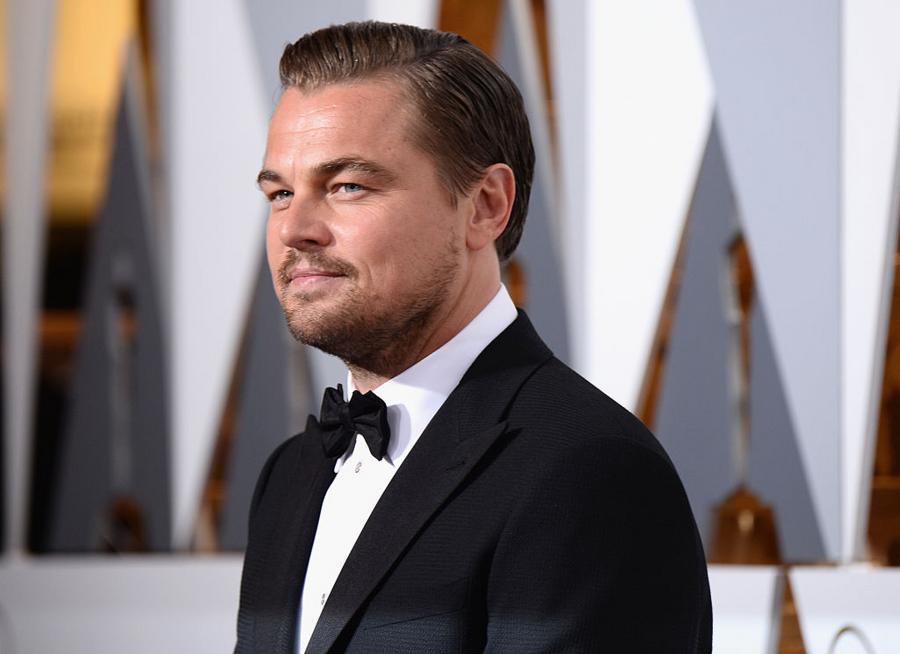
Frazer Harrison/Getty Images
Private Island and Eco-Resort
In 2005, Leonardo paid $1.75 million for Blackadore Caye, an undeveloped 104-acre private island off the coast of Belize.
DiCaprio and developer Paul Scialla subsequently unveiled ambitious plans for an environmentally restorative luxury resort. The proposed development called for 36 resort bungalows and 36 private estate homes, with renewable energy, extensive habitat restoration, and strict sustainability standards built into the project.
At various points, the private residences were expected to sell for millions of dollars apiece. The resort was originally promoted with an opening target of 2018, but those plans encountered years of delays, environmental concerns, and development challenges. Despite the substantial publicity surrounding Blackadore Caye, the proposed resort has not been completed.
Relationships
DiCaprio has never married and has no children. His relationships have nevertheless received extraordinary attention throughout his decades in the public eye.
Leonardo dated Brazilian supermodel Gisele Bündchen for several years in the early 2000s. He later had a long relationship with Israeli model Bar Refaeli and dated German model Toni Garrn during portions of the 2010s.
From 2017 until 2022, Leonardo was in a relationship with actress and model Camila Morrone. In 2023, he began dating Italian model Vittoria Ceretti.
The couple has generally avoided making their relationship part of DiCaprio's public persona, but Ceretti accompanied him to the 2026 Academy Awards, where he was nominated for "One Battle After Another."


