











What is Julie Kavner's Net Worth?
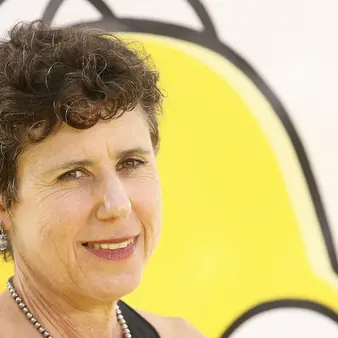
Julie Kavner is an American actress, comedian, and voice artist who has a net worth of $90 million.
Julie Kavner is best known for voicing Marge Simpson on the long-running animated television series "The Simpsons," a role she originated in 1987 and has performed for nearly four decades. She also voices Marge's chain-smoking twin sisters, Patty and Selma Bouvier, their mother Jacqueline, and other members of the Bouvier family. Her distinctive raspy voice has become one of the most recognizable sounds in television history. At the height of the show's success, Kavner and the other principal voice actors earned as much as $440,000 per episode, equivalent to $9.68 million for a traditional 22-episode season.
Before "The Simpsons," Kavner achieved considerable success playing Brenda Morgenstern on the 1970s sitcom "Rhoda," earning four Emmy nominations and winning Outstanding Supporting Actress in a Comedy Series in 1978. She later became a regular on "The Tracey Ullman Show" and developed a successful film career, appearing in "Hannah and Her Sisters," "Radio Days," "Awakenings," "This Is My Life," and "Click." In 2025, she returned to live-action films in James L. Brooks' comedy-drama "Ella McCay," her first substantial non-"Simpsons" screen role in nearly two decades. Unlike many celebrities, Kavner has deliberately avoided publicity, granting few interviews and maintaining a notably private personal life.
"The Simpsons" Salary and Contract History
Julie Kavner's earnings from "The Simpsons" have increased dramatically since the series began in 1989. During its early years, the six principal voice actors earned around $30,000 per episode, a substantial salary that nevertheless represented only a small fraction of the revenues the show eventually generated through syndication, advertising, and merchandising.
The first major salary dispute occurred in 1998, when several principal cast members demanded significant raises. Fox initially resisted and explored the possibility of replacing the actors with new performers. Kavner had already negotiated a separate agreement before the final confrontation involving four of her colleagues.
The resulting pay scale increased compensation to $50,000 per episode for the show's tenth season, $60,000 for its eleventh, and $70,000 for its twelfth. The agreements also included a $1 million syndication bonus for each principal performer.
In 2001, the cast negotiated another substantial increase, bringing salaries to $100,000 per episode for seasons 13 and 14, with an option for $125,000 during season 15. The new agreements also accelerated payment of the previously promised $1 million bonuses.
Another major dispute erupted in 2004, when the cast demanded $360,000 per episode and a share of the show's profits. Production was temporarily disrupted after the actors stopped attending script readings. Fox eventually agreed to pay them around $250,000 per episode under a new four-year contract, equivalent to $5.5 million for a 22-episode season, but did not grant the requested profit participation.
In 2008, the cast returned to the negotiating table, initially seeking salaries approaching $500,000 per episode. They ultimately secured agreements worth nearly $400,000 per episode, with subsequent industry reporting placing their compensation as high as $440,000.
At $440,000 per episode, Kavner could earn $9.68 million for a 22-episode season, placing her among the highest-paid voice actors in television history.
The 2011 $440,000 Salary Showdown
In October 2011, "The Simpsons" faced one of the most serious threats to its future when 20th Century Fox Television demanded substantial salary reductions from its six principal voice actors.
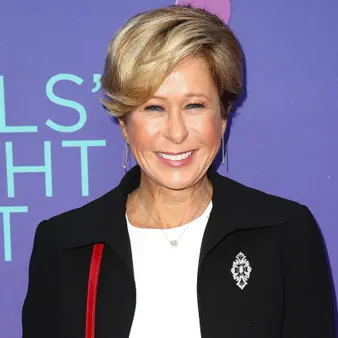
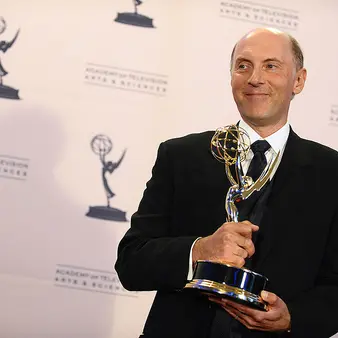
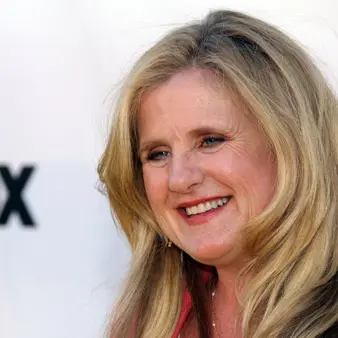
At the time, Kavner and fellow performers Dan Castellaneta, Nancy Cartwright, Yeardley Smith, Hank Azaria, and Harry Shearer were earning a reported $440,000 per episode. Fox wanted to reduce their salaries to around $250,000, representing a cut of more than 43%.
The cast countered with an offer to accept $300,000 per episode, a reduction of nearly one-third, if the studio agreed to give them a small percentage of the show's syndication and merchandising profits. By that point, "The Simpsons" had generated billions of dollars in revenue, and certain producers and other participants already benefited from back-end profit arrangements.
Shearer made an extraordinary public offer to accept a salary reduction exceeding 70% in exchange for a modest share of future profits. Fox refused to consider the arrangement, even at the dramatically reduced salary he proposed.
The dispute ended on October 7, 2011, when the studio agreed to continue the series through its 25th season. The actors accepted salaries of around $300,000 per episode, representing a reduction of about 30%, but did not receive the profit participation they had requested.
The agreement allowed Kavner to continue earning millions annually from "The Simpsons," but it also meant she did not receive an ownership-style share of the enormous profits generated by its syndication and merchandise business.
Current Salary and Lifetime Earnings
The most clearly documented salary history establishes that Kavner earned as much as $440,000 per episode before the 2011 negotiations and accepted a reduction to around $300,000 afterward. More recent entertainment reporting has placed the principal cast's salaries between $300,000 and $400,000 per episode, although their latest individual contracts have not been publicly disclosed.
In April 2025, Fox renewed "The Simpsons" for four additional seasons, extending the show through its 40th season and the 2028–2029 broadcast cycle. Under the revised production arrangement, the show is scheduled to produce 17 episodes annually, including 15 for Fox and two Disney+ exclusives.
At $300,000 per episode, 17 episodes would generate $5.1 million in gross compensation. At $400,000, the total would be $6.8 million. These calculations illustrate the potential annual earnings under the reported salary range rather than establishing Kavner's actual current contract.
Over nearly four decades, Kavner's cumulative gross earnings from "The Simpsons" have almost certainly exceeded $100 million. Her other television, film, and voice-acting work has provided additional income.
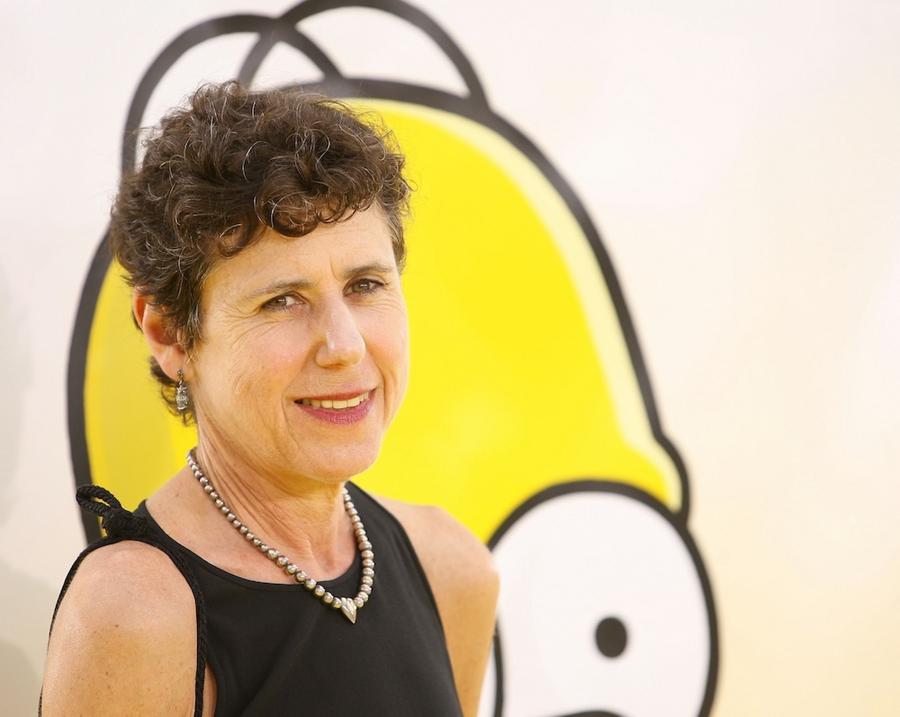
(via Getty)
Early Life
Julie Deborah Kavner was born on September 7, 1950, in Los Angeles, California. Her father, David Kavner, worked as a furniture manufacturer and distributor, while her mother, Rose, was a family counselor.
Kavner attended Beverly Hills High School, where she developed an interest in acting but considered herself shy and something of a loner. After graduating, she enrolled at San Diego State University, majoring in drama and participating in numerous theatrical productions.
Following college, Kavner returned to Los Angeles and briefly worked as a typist at UCLA while auditioning for professional acting roles. Her breakthrough came when she was introduced to television producer David Davis, who helped arrange an audition for a new sitcom.
"Rhoda" and Her First Emmy Award
In 1974, Kavner landed her first professional acting role as Brenda Morgenstern on the CBS sitcom "Rhoda," a spinoff of "The Mary Tyler Moore Show." The series starred Valerie Harper as Rhoda Morgenstern, a single woman navigating relationships and family life in New York City.
Kavner played Rhoda's younger sister, Brenda, a shy, self-deprecating woman struggling with dating and personal insecurities. Her understated comic delivery and relatable performance made Brenda one of the show's most popular characters.
"Rhoda" ran for five seasons, from 1974 through 1978. Kavner received four consecutive Primetime Emmy nominations for Outstanding Supporting Actress in a Comedy Series, winning the award in 1978. She also received multiple Golden Globe nominations.
The role established Kavner as a major television talent and brought her to the attention of influential producers, including James L. Brooks, who would later become instrumental in her career on "The Simpsons."
"The Tracey Ullman Show" and the Birth of "The Simpsons"
After "Rhoda" ended, Kavner continued working in television films and guest roles. Her credits included "No Other Love," "Revenge of the Stepford Wives," "A Fine Romance," and an appearance on the sitcom "Taxi."
In 1987, she reunited with James L. Brooks when she was cast as a regular performer on Fox's sketch comedy series "The Tracey Ullman Show," starring Tracey Ullman. The program gave Kavner an opportunity to portray an assortment of unusual characters, often using elaborate costumes, accents, and improvisational comedy.
The series also featured short animated segments created by Matt Groening about a dysfunctional family called the Simpsons. Kavner was selected to voice Marge Simpson, the family's patient, blue-haired mother.
The animated shorts became enormously popular and were eventually developed into a standalone television series. "The Simpsons" premiered on December 17, 1989, beginning one of the longest and most successful runs in television history.
Voicing Marge Simpson, Patty, and Selma
Kavner's portrayal of Marge Simpson has become one of the defining performances in American television animation. Her naturally husky voice, combined with Marge's distinctive expressions of concern, frustration, and affection, helped establish the character as the emotional center of the Simpson family.
Although Homer frequently creates chaos through his impulsive behavior, Marge is generally responsible for keeping the family together. Kavner's performance balances the character's patience and warmth with moments of anger, exasperation, and unexpected humor.
She also voices Marge's sisters, Patty and Selma Bouvier, whose cynical personalities and constant criticism of Homer provide a sharp contrast to Marge's more forgiving nature. Kavner uses lower, rougher variations of her natural voice to distinguish the sisters from Marge.
Her additional characters include Marge's mother, Jacqueline Bouvier, Great-Aunt Gladys, and several other members of the extended Bouvier family.
Kavner reprised her characters in "The Simpsons Movie," released in 2007, which grossed more than $536 million worldwide against a $75 million production budget. She has also provided voices for "Simpsons" video games, shorts, theme park attractions, and streaming specials.
By 2026, "The Simpsons" had passed its 800th episode, with Kavner remaining one of the show's original principal performers.
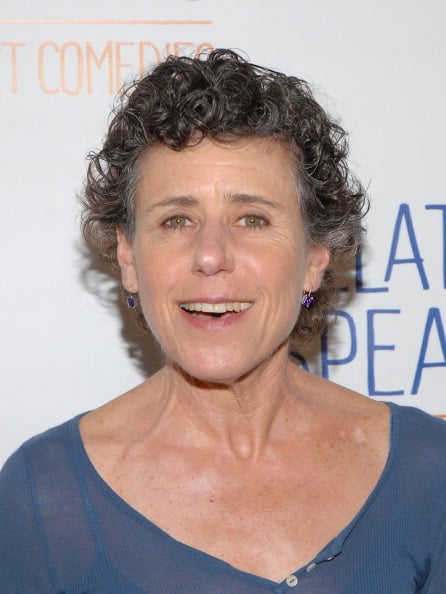
Michael N. Todaro/Getty Images
Film Career and Woody Allen Collaborations
Although Kavner is most closely associated with television, she also established a successful film career beginning in the early 1980s. Her first feature film was the 1982 comedy "National Lampoon's Movie Madness," followed by the 1985 film "Bad Medicine."
She became a frequent collaborator with writer-director Woody Allen, appearing in "Hannah and Her Sisters" in 1986 and "Radio Days" in 1987. She subsequently worked with Allen on "New York Stories," "Alice," "Shadows and Fog," and "Deconstructing Harry."
In 1990, Kavner appeared opposite Robin Williams in the acclaimed medical drama "Awakenings," playing a nurse who develops a relationship with Williams' character, Dr. Malcolm Sayer.
Her first major leading film role came in 1992 with "This Is My Life," the directorial debut of Nora Ephron. Kavner played Dottie Ingels, a single mother who attempts to establish a career as a stand-up comedian while raising two daughters.
She followed that performance with roles in "I'll Do Anything," "Forget Paris," "Dr. Dolittle," and the independent drama "Judy Berlin."
In 2006, Kavner played Trudy Newman, the mother of Adam Sandler's character, in the fantasy comedy "Click." The following year, she brought Marge Simpson to movie theaters in "The Simpsons Movie."
Return to Live-Action Film in "Ella McCay"
In December 2025, Kavner returned to live-action film acting in "Ella McCay," a comedy-drama written and directed by James L. Brooks. The film marked Brooks' first original feature in 15 years and reunited him with an actress whose career he had helped shape through "Rhoda," "The Tracey Ullman Show," and "The Simpsons."
Kavner portrayed Estelle, the loyal assistant to Emma Mackey's title character, an idealistic young politician struggling to balance her career with complicated family relationships. Estelle also served as the film's narrator, giving Kavner a prominent vocal presence throughout the story.
The ensemble cast included Jamie Lee Curtis, Woody Harrelson, Albert Brooks, Ayo Edebiri, Rebecca Hall, and Kumail Nanjiani. The project marked Kavner's first substantial non-"Simpsons" screen appearance since "Click" nearly two decades earlier.
Personal Life and Privacy
Julie Kavner has maintained a remarkably private personal life despite her decades of television fame. Since the 1970s, she has been in a longstanding relationship with television writer and producer David Davis, who worked on "The Mary Tyler Moore Show" and "Rhoda."
The couple began their relationship in 1976, around the period when Kavner was establishing herself on "Rhoda." They have generally avoided public attention, and Kavner has rarely discussed their relationship in interviews.
Her dedication to privacy extends to her professional life. Kavner has consistently resisted efforts to make her a recognizable celebrity outside her acting roles, preferring to let audiences focus on her characters rather than her personal identity.
In a 1992 interview with the Los Angeles Times, she explained that her "Simpsons" contract allowed her to decline on-camera promotional appearances as the voice of Marge. She believed that revealing the person behind the character would diminish the illusion for young viewers.
Unlike some of her fellow voice actors, Kavner has rarely participated in celebrity publicity campaigns or behind-the-scenes promotional appearances. Her preference for anonymity has allowed her to enjoy the financial rewards of one of television's most successful franchises without the constant public attention associated with conventional stardom.
Awards and Recognition
Julie Kavner has received eight Primetime Emmy Award nominations and won twice. Her first victory came in 1978 for Outstanding Supporting Actress in a Comedy Series for "Rhoda," following four consecutive nominations for the role.
She received three additional Emmy nominations for her performances on "The Tracey Ullman Show" in 1987, 1988, and 1989.
In 1992, Kavner won the Primetime Emmy Award for Outstanding Voice-Over Performance for "The Simpsons." The honor recognized her portrayal of Marge Simpson and helped establish the legitimacy of voice acting as a major television performance category.
Her work has also earned Golden Globe nominations, an Annie Award nomination for "The Simpsons Movie," and recognition from television critics and animation organizations. Through her performances as Brenda Morgenstern and Marge Simpson, Kavner has played two enduring television characters across a career spanning more than five decades.