












What Was John Saxon's Net Worth?
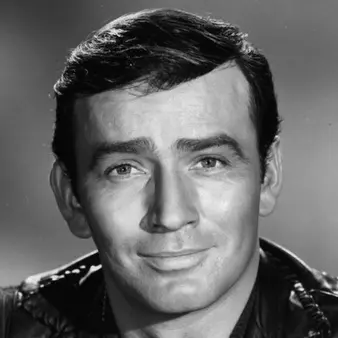
John Saxon was an American actor who had a net worth of $1.5 million at the time of his death in 2020.
John Saxon was a remarkably prolific character actor whose career spanned more than six decades and nearly 200 film and television productions. He became internationally famous for playing Roper opposite Bruce Lee in the 1973 martial arts classic "Enter the Dragon" and later gained an entirely new audience as Lieutenant Donald Thompson in the "A Nightmare on Elm Street" franchise. Before those successes, Saxon had been promoted as a teenage heartthrob by Universal Pictures, where his first studio contract paid just $150 per week. He gradually developed into a versatile leading and supporting actor, appearing in Westerns, crime dramas, horror movies, and television series. His performances included a Golden Globe-winning role in "This Happy Feeling" and a Golden Globe nomination for "The Appaloosa," opposite Marlon Brando. Saxon also became a respected advocate for actors' rights, serving two terms on the Screen Actors Guild's national board. His longevity made him one of Hollywood's most recognizable working actors even though he never became a conventional blockbuster leading man.
Early Life and Modeling Career
John Saxon was born Carmine Orrico on August 5, 1936, in Brooklyn, New York. He grew up in an Italian-American family and attended New Utrecht High School, where he developed an interest in acting and entertainment.
As a teenager, Saxon began working as a model, appearing in romantic and detective magazines that frequently featured young men in dramatic fictional situations. One photograph depicted him as a wounded teenager slumped against a garbage can, with an actress looking over him.
The image attracted the attention of Hollywood talent agent Henry Willson, who had helped launch the careers of actors including Rock Hudson and Tab Hunter. Willson contacted Saxon's family and arranged for the teenager to travel to Los Angeles, where he began auditioning for movie studios.
Because Saxon was still a minor, his parents had to approve his professional agreements. His original name was also considered less suitable for the image Universal wanted to create, and he adopted the stage name John Saxon.
Universal Contract: $150 Per Week
Saxon's early Hollywood compensation provides an unusually specific glimpse into the economics of the studio system during the 1950s.
In a 2012 interview with the "Los Angeles Times," Saxon recalled that Universal offered him a contract paying $150 per week for 40 weeks annually. At that rate, he would have earned approximately $6,000 per year if he received the full 40 weeks of compensation.
The agreement gave him professional acting opportunities and studio training, but it also placed him under the control of a company that could determine which projects he appeared in. Young contract performers often had far less negotiating power than established stars.
Saxon studied acting, including work with the influential teacher Stella Adler, while developing his screen presence through increasingly substantial roles.
His early credits included uncredited appearances in "It Should Happen to You" and "A Star Is Born," both released in 1954. He gradually moved into larger roles as Universal promoted him as a handsome young leading man.
1950s Stardom and Golden Globe Success
Saxon became a familiar face to movie audiences during the second half of the 1950s. He appeared in films including "Running Wild," "Rock, Pretty Baby," "Summer Love," and "The Restless Years," frequently playing troubled or rebellious young men.
His youthful appearance made him popular in romantic dramas and movies aimed at teenage audiences, but he was determined to develop into a more serious actor.
A major early success came with the 1958 comedy "This Happy Feeling," directed by Blake Edwards and starring Debbie Reynolds. Saxon won the Golden Globe Award for New Star of the Year for his performance, confirming his status as one of Hollywood's promising young performers.
He subsequently appeared in "The Reluctant Debutante," "The Unforgiven," and "Portrait in Black," demonstrating his ability to work in different genres.
Unlike some young actors whose careers ended when their teenage appeal faded, Saxon successfully transitioned into adult supporting roles. His darker appearance, athleticism, and intense screen presence made him particularly effective in crime dramas, Westerns, and suspense films.
"The Appaloosa" and Working With Marlon Brando
During the 1960s, Saxon appeared in a succession of major productions, including "War Hunt," "The Cardinal," and "The Appaloosa."
Released in 1966, "The Appaloosa" starred Marlon Brando as a former soldier attempting to recover a stolen horse. Saxon played Chuy Medina, a dangerous Mexican bandit who becomes the central character's principal adversary.
The performance earned Saxon a Golden Globe nomination for Best Supporting Actor. It also reinforced his reputation for playing intimidating or morally ambiguous characters with convincing intensity.
He continued working steadily in Westerns and adventure films, including "Death of a Gunfighter" and "Joe Kidd." These projects benefited from his familiarity with physical action and his ability to portray both sympathetic and threatening characters.
Saxon was also a serious martial arts enthusiast. He studied judo and other disciplines, eventually earning a black belt, a background that would become valuable when he was cast in one of the most influential martial arts movies ever produced.
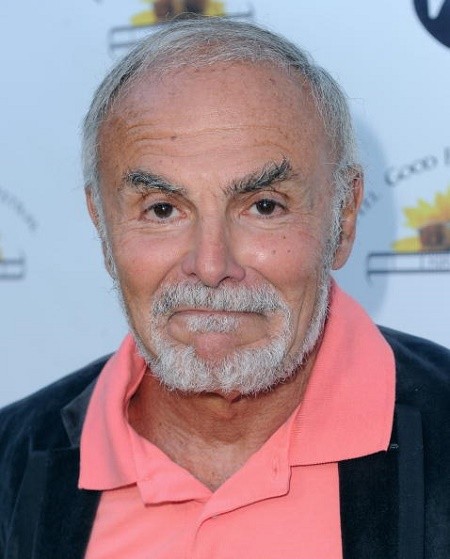
Alberto E. Rodriguez/Getty Images
"Enter the Dragon" With Bruce Lee
Saxon's most internationally famous role came in "Enter the Dragon," released in 1973. The movie starred Bruce Lee as a martial artist who infiltrates a deadly tournament organized by a criminal mastermind.
Saxon played Roper, an American gambler and martial artist drawn into the competition. The character provided a charismatic counterpart to Lee's more disciplined and determined hero.
The film also featured martial artist Jim Kelly, whose character Williams became another important part of the ensemble. Its combination of elaborate fight choreography, international locations, and action-movie storytelling helped bring Hong Kong martial arts cinema to mainstream Western audiences.
"Enter the Dragon" was released shortly after Lee's death in July 1973 and became an enormous international commercial success. Its popularity transformed Lee into an enduring global icon and made Saxon familiar to audiences who had never seen his earlier Hollywood work.
Saxon's background in martial arts helped him perform convincingly alongside Lee, whose physical abilities were extraordinary. He later recalled the discipline and intensity of working on the production and the cultural impact of its success.
Although Saxon had already spent nearly two decades in Hollywood, "Enter the Dragon" became one of the most important movies of his career. It remained a defining credit throughout the following decades.
"Black Christmas" and Horror Movie Success
After "Enter the Dragon," Saxon increasingly appeared in thrillers and horror films. In 1974, he played Lieutenant Kenneth Fuller in "Black Christmas," the influential Canadian slasher movie directed by Bob Clark.
The film centered on a group of sorority students threatened by a mysterious killer. Although its initial commercial reception was mixed, it later became widely recognized as an important precursor to the modern slasher genre.
Saxon continued working in international productions, including the Italian horror thriller "Tenebrae," directed by Dario Argento and released in 1982.
His ability to play believable authority figures, detectives, and morally complicated men helped make him a natural choice for horror directors seeking experienced actors who could ground fantastical or violent stories in recognizable human behavior.
"A Nightmare on Elm Street" and Freddy Krueger
Saxon reached another generation of moviegoers with "A Nightmare on Elm Street," the 1984 horror film directed by Wes Craven.
He played Lieutenant Donald Thompson, a police officer and the father of Nancy Thompson, portrayed by Heather Langenkamp. The movie followed teenagers terrorized in their dreams by Freddy Krueger, played by Robert Englund.
The film also marked the feature debut of Johnny Depp, who played Nancy's boyfriend Glen.
"A Nightmare on Elm Street" became a major commercial success and launched one of the most recognizable horror franchises in movie history. Saxon returned as Donald Thompson in the 1987 sequel "A Nightmare on Elm Street 3: Dream Warriors."
He appeared again in Craven's 1994 film "Wes Craven's New Nightmare," a self-referential installment that featured actors playing fictionalized versions of themselves.
The franchise introduced Saxon to horror fans who might have been too young to remember his 1950s films or his performance in "Enter the Dragon." It also became an important part of his later convention appearances and public recognition.
Television Career and Later Movies
Saxon maintained an extensive television career throughout his adult life. His credits included "Dr. Kildare," "Bonanza," "The Virginian," "Gunsmoke," "The Six Million Dollar Man," "Wonder Woman," "Vega$," and "The A-Team."
He also appeared on "Dynasty," "Falcon Crest," "Melrose Place," and numerous other dramas. His familiarity with action, crime, and suspense made him particularly useful to producers seeking an experienced guest actor.
His later movie appearances included "Battle Beyond the Stars," "The Electric Horseman," "Beverly Hills Cop III," and "From Dusk till Dawn." He continued accepting independent productions and genre films even after reaching an age when many actors had retired.
Saxon also served on the national board of the Screen Actors Guild, winning election in 1985 and again in 2003. His involvement reflected a longstanding interest in the working conditions and professional rights of actors.
Personal Life and Death
Saxon was married three times. His marriages included unions with screenwriter Mary Ann Murphy and actress Elizabeth Saxon before he married Gloria Martel in 2008. He had a son, Antonio, and remained involved with his family throughout his later years.
He maintained an interest in martial arts, foreign languages, and international culture. Colleagues frequently described him as intelligent, professional, and serious about his craft.
John Saxon died on July 25, 2020, at his home in Murfreesboro, Tennessee, following complications from pneumonia. He was 83 years old.
His career was distinguished by extraordinary longevity and adaptability. From a $150-a-week studio contract to international martial arts fame and cult horror classics, Saxon remained a recognizable screen presence across several generations of Hollywood filmmaking.