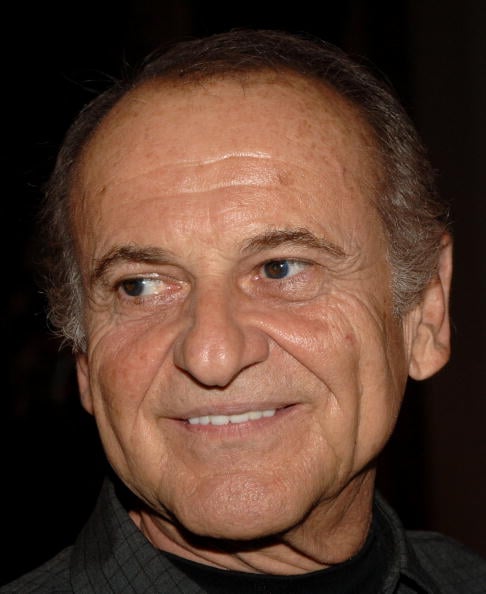
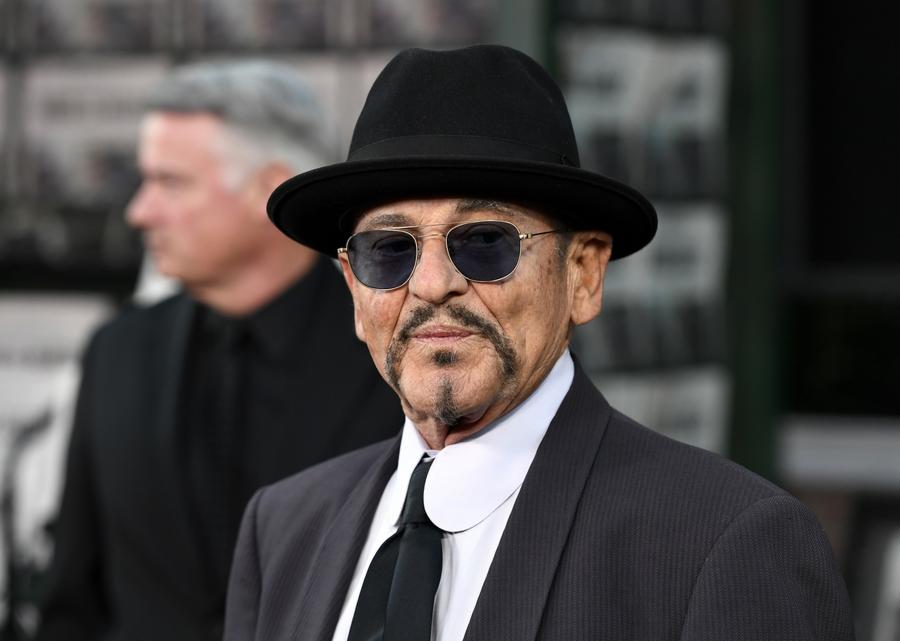
What is Joe Pesci's Net Worth and Salary?
Joe Pesci is an American actor and musician who has a net worth of $50 million.
Joe Pesci is best known for his explosive performances in Martin Scorsese crime films and for his broad comic work in some of the most popular movies of the 1990s. He won the Academy Award for Best Supporting Actor for playing Tommy DeVito in "Goodfellas," and he earned additional Oscar nominations for "Raging Bull" and "The Irishman." His best-known films include "Raging Bull," "Once Upon a Time in America," "Lethal Weapon 2," "Goodfellas," "Home Alone," "My Cousin Vinny," "Casino," "The Good Shepherd," and "The Irishman."
Pesci built one of the most distinctive acting careers of his generation by combining menace, humor, unpredictability, and working-class authenticity. On screen, he could be terrifying, hilarious, charming, or pathetic, sometimes all within the same scene. His collaborations with Martin Scorsese and Robert De Niro made him an essential figure in modern American crime cinema, while his roles in "Home Alone," "My Cousin Vinny," and the "Lethal Weapon" franchise made him familiar to mainstream comedy audiences. Pesci also had an unusual relationship with fame. After reaching the top of Hollywood, he largely retired from acting in the late 1990s, returning only occasionally for select roles.
Early Life
Joseph Frank Pesci was born on February 9, 1943, in Newark, New Jersey. He was raised in Belleville, New Jersey, in an Italian-American family. His mother, Maria, worked as a barber, and his father, Angelo, worked as a forklift driver and bartender.
Pesci began performing at a young age. As a child, he appeared in plays and on radio programs, and by his teenage years he was working as an entertainer in clubs. Before becoming famous as an actor, he spent years as a musician, comedian, and nightclub performer. He also worked as a barber, following in his mother's profession, while trying to build a career in show business.
Music and Early Entertainment Career
Before Hollywood, Pesci was deeply involved in music. He played guitar, sang, and performed in lounge acts. In the 1960s, he released an album under the name Joe Ritchie titled "Little Joe Sure Can Sing!" The album showed his early interest in pop standards and vocal performance, a side of his career that would reappear decades later.
Pesci also performed comedy in clubs with Frank Vincent, who later became a well-known actor and frequent presence in mob films. The two developed a comedy act that eventually helped them land roles in the low-budget 1976 crime film "The Death Collector." That movie turned out to be one of the most important breaks of Pesci's life. Robert De Niro reportedly saw his performance and recommended him to Martin Scorsese for "Raging Bull."

Stephen Shugerman/Getty Images
Raging Bull
Pesci's major breakthrough came in 1980 when he was cast as Joey LaMotta, the brother and manager of boxer Jake LaMotta, in Martin Scorsese's "Raging Bull." The film starred Robert De Niro as Jake LaMotta and became one of the most acclaimed American movies of its era.
Pesci's performance was raw, funny, and intense. He brought a street-level realism to the role that made him feel less like a Hollywood actor and more like someone pulled directly out of LaMotta's world. "Raging Bull" earned Pesci an Academy Award nomination for Best Supporting Actor and instantly established him as a serious dramatic actor.
The success of "Raging Bull" also began Pesci's long association with Scorsese and De Niro. That collaboration would become the defining creative relationship of his career.
1980s Film Career
After "Raging Bull," Pesci worked steadily through the 1980s, though not always in films that matched the acclaim of his breakthrough. He appeared in projects such as "Dear Mr. Wonderful," "Easy Money," "Eureka," "Once Upon a Time in America," and "Man on Fire." His roles during this period often leaned on his tough, fast-talking, New Jersey persona.
In 1989, he reached a wider commercial audience with "Lethal Weapon 2," playing Leo Getz, a loud, frantic, and irritating federal witness who becomes entangled with Mel Gibson and Danny Glover's police detectives. The role was comic relief, but Pesci made Leo memorable by leaning fully into the character's nervous energy and rapid-fire speech. He later reprised the role in "Lethal Weapon 3" and "Lethal Weapon 4."
Goodfellas and Oscar Win
Pesci's most iconic role came in 1990 with Martin Scorsese's "Goodfellas." He played Tommy DeVito, a volatile gangster based on real-life mobster Tommy DeSimone. The performance became one of the most famous supporting turns in movie history.
Tommy was small in stature but terrifying in presence. Pesci played him as charming one moment and homicidal the next, creating a character whose unpredictability gave the film much of its danger. His "funny how?" scene opposite Ray Liotta became one of the most quoted moments in crime cinema.
Pesci won the Academy Award for Best Supporting Actor for "Goodfellas." His acceptance speech was famously brief. He simply thanked the Academy and said it was his privilege before leaving the stage. The win confirmed Pesci as one of the great character actors of his era and cemented "Goodfellas" as the centerpiece of his career.
(Photo by Frazer Harrison/Getty Images)
Comedy Stardom
The early 1990s also made Pesci a major comedy star. In 1990, he played burglar Harry Lyme in "Home Alone," opposite Daniel Stern as Marv. Together, they became the Wet Bandits, the criminals repeatedly outsmarted and physically destroyed by Macaulay Culkin's Kevin McCallister. Pesci reprised the role in "Home Alone 2: Lost in New York."
His biggest starring comedy role came in 1992 with "My Cousin Vinny." Pesci played Vinny Gambini, a loud New York lawyer who travels to Alabama to defend his cousin in a murder case despite having almost no courtroom experience. The film became a comedy classic and showed Pesci at his most likable. His chemistry with Marisa Tomei, who won an Oscar for her performance as Mona Lisa Vito, helped make the movie one of his most beloved mainstream hits.
Pesci also appeared in comedies such as "The Super," "Jimmy Hollywood," "With Honors," "Gone Fishin'," and "8 Heads in a Duffel Bag." Not all of them were successful, but they showed how far his career had expanded beyond mob roles.
Casino
In 1995, Pesci reunited with Martin Scorsese and Robert De Niro for "Casino." He played Nicky Santoro, a violent mob enforcer based loosely on real-life Chicago Outfit figure Anthony Spilotro. The role felt like a spiritual cousin to Tommy DeVito in "Goodfellas," but Nicky was even more openly brutal and destructive.
"Casino" gave Pesci another signature crime-film performance. His narration, scenes with De Niro, and violent outbursts helped make the film one of the most memorable gangster movies of the 1990s. Although "Casino" initially lived in the shadow of "Goodfellas," its reputation grew over time, and Pesci's performance became central to its lasting appeal.
Retirement from Acting
After a busy and successful run through the 1980s and 1990s, Pesci largely retired from acting in 1999. He stepped away from Hollywood to focus on music, private life, and personal interests. His retreat was striking because he was still famous, still in demand, and still closely associated with major directors and franchises.
Pesci did not disappear completely. He made occasional appearances, including a cameo in Robert De Niro's "The Good Shepherd" and a role in "Love Ranch." But compared with most actors of his stature, he became unusually selective. His refusal to work constantly only added to his mystique. Audiences knew him so well from a handful of unforgettable roles that he did not need to keep appearing on screen to remain famous.
The Irishman and Late-Career Return
Pesci made a major return to film in 2019 with "The Irishman," Martin Scorsese's epic crime drama starring Robert De Niro, Al Pacino, and Pesci. He played Russell Bufalino, a quiet, powerful Pennsylvania mob boss. The role was a major departure from the explosive gangsters that had made him famous.
Instead of playing violence as sudden and loud, Pesci played Bufalino with restraint, calm, and quiet authority. The performance was widely praised because it showed a different side of him. After decades of being remembered for volatile characters, Pesci returned with a performance defined by stillness and control.
"The Irishman" earned Pesci another Academy Award nomination for Best Supporting Actor. It also gave him a fitting late-career capstone with Scorsese and De Niro, the two collaborators most responsible for his greatest dramatic work.
Joe Pesci: Film Salaries
| Film & Year | Salary |
|---|---|
| "Raging Bull" 1980 | ~$25,000 |
| "Goodfellas" 1990 | ~$1,000,000 |
| "Home Alone" 1990 | ~$1,000,000 |
| "Home Alone 2" 1992 | $2,000,000 – $3,000,000 |
| "Jimmy Hollywood" 1994 | $3,500,000 |
| "Casino" 1995 | ~$3,000,000 |
| "Lethal Weapon 4" 1998 | $3,300,000 |
| "Gotti" (Recast) 2011 | $3,000,000 |
| "The Irishman" 2019 | $20,000,000 |
Joe Pesci's film salary history is unusual because he was never a traditional leading man, yet he eventually commanded the kind of paychecks usually reserved for major box-office stars. His rise began with "Raging Bull," where he earned around $25,000 to play Joey LaMotta. The role changed his life, earning him an Academy Award nomination and beginning his long creative relationship with Martin Scorsese and Robert De Niro.
By 1990, Pesci's quote had increased dramatically. He earned $1 million for both "Goodfellas" and "Home Alone," two films that transformed his career in completely different ways. "Goodfellas" won him the Academy Award for Best Supporting Actor and cemented him as one of the greatest crime-film actors of his generation. "Home Alone" made him a mainstream comedy star and introduced him to family audiences around the world.
The success of those films pushed Pesci into the multi-million-dollar salary tier. For "Home Alone 2: Lost in New York," he earned between $2 million and $3 million. In his memoir
"Home and Alone", Joe's fellow Wet Bandit, Daniel Stern, revealed that the studio offered him $600,000 to return for the sequel. He asked if that was what Pesci would be making. The studio admitted it was not. Stern went on to discover that Pesci had negotiated a massive blockbuster contract worth "somewhere between $2,000,000 and $3,000,000 plus a gross percentage of the profits.
Pesci's 1990s peak continued with several large upfront paydays. He earned $3.5 million for "Jimmy Hollywood" in 1994, around $3 million for "Casino" in 1995, and $3.3 million for "Lethal Weapon 4" in 1998.
In 2011, Pesci made headlines over a salary dispute tied to the planned Gotti family biopic "Gotti: In the Shadow of My Father." In 2011, he sued Fiore Films for $3 million, claiming he had a guaranteed pay-or-play contract to portray mob enforcer Angelo Ruggiero. According to the complaint, Pesci had spent months preparing for the role and had gained around 30 pounds to match Ruggiero's physical profile. When the producers allegedly tried to move him into a smaller role with a reduced $1 million salary, Pesci demanded the full $3 million. The case was eventually settled out of court.
The Irishman Salary
Joe's largest known payday came decades after his 1990s peak. For Martin Scorsese's 2019 film "The Irishman," Pesci reportedly earned $20 million to play Russell Bufalino. The huge salary reflected both Netflix's buyout model and the premium required to bring Pesci out of semi-retirement. Because Netflix films do not offer traditional box-office backend in the same way as theatrical releases, the company effectively paid its stars upfront. Pesci, Robert De Niro, and Al Pacino were each reportedly paid around $20 million, making "The Irishman" the biggest single acting paycheck of Pesci's career.
Music Career
Pesci's music career continued quietly alongside acting. In 1998, he released "Vincent LaGuardia Gambini Sings Just for You," an album built partly around the persona of his "My Cousin Vinny" character. The album mixed comedy with standards and novelty material.
In 2019, around the release of "The Irishman," Pesci released "Still Singing," a more serious jazz and standards album. The project reflected the musical background he had before becoming famous as an actor. While most fans know him primarily from films, music has been part of Pesci's life for nearly as long as performing itself.
Personal Life
Joe has been married three times. He has a daughter, Tiffany, from his first marriage. The identities of his first and second wife are not public knowledge, but his third wife was actress Claudia Haro. The couple was married from 1988 to 1992. Claudia had a small part in Joe's movie "Casino." In 2012, Haro was sentenced to 12 years in prison for the attempted murder of her second ex-husband, stuntman Garrett Warren. Pesci became engaged to model Angie Everhart in 2007, but they ended their 7-year relationship 9 months later.
Joe sued Fiore Films for $3 million in 2011, saying that he had gained 30 pounds for a movie role they promised him (mobster Angelo Ruggiero in "Gotti"). Instead of casting him in that role, the filmmakers offered him a smaller part that paid less than the $3 million salary he was promised. The case was dismissed after being settled out of court in 2013, and the movie was finally filmed in 2016 with Pruitt Taylor Vince playing Ruggiero.
Awards and Honors
In 1990, Pesci won a Best Supporting Actor Academy Award for his role in "Goodfellas," and he earned the Best Film Newcomer award for "Raging Bull" at the 1982 British Academy Film Awards. He also received Oscar nominations for "Raging Bull" in 1980 and "The Irishman" in 2019. "The Irishman" earned Joe nominations from the Golden Globes and the Screen Actors Guild, and he also received Golden Globe nominations for "Raging Bull" and "Goodfellas." In 1993, Pesci won an American Comedy Award for "My Cousin Vinny," and he has earned awards from film critic associations in Los Angeles, New York, Boston, Chicago, Kansas City, and Dallas-Fort Worth.
Real Estate
In 1994, Joe paid $850,000 for an 8-bedroom mansion on the Jersey Shore. He listed this home for sale in 2019 for $6.5 million. The 7,200-square-foot home features glass walls, a spiral staircase, an elevator, and a deck with a heated swimming pool. He finally sold the home in October 2021 for $5 million.
/2010/01/Martin-Scorsese-1.jpg)
/2023/03/frank.jpg)
/2011/03/Ray-Liotta.jpg)
/2021/01/daniel.jpg)
/2019/10/Kieran-Culkin.jpg)
:strip_exif()/2009/09/P-Diddy.jpg)
/2009/09/Brad-Pitt.jpg)
/2020/06/taylor.png)
/2009/09/Jennifer-Aniston.jpg)
/2009/09/Cristiano-Ronaldo.jpg)
/2009/11/George-Clooney.jpg)
/2020/02/Angelina-Jolie.png)
/2020/04/Megan-Fox.jpg)
/2019/11/GettyImages-1094653148.jpg)
/2018/03/GettyImages-821622848.jpg)
/2019/10/denzel-washington-1.jpg)
/2010/01/Joe-Pesci-1.jpg)
/2019/10/Kieran-Culkin.jpg)
/2009/10/al.jpg)
/2020/04/russell-crowe.png)
/2011/03/Ray-Liotta.jpg)
/2021/01/daniel.jpg)
/2011/02/tony.jpg)
/2017/04/GettyImages-167679510-e1493256522310.jpg)
/2019/04/rr.jpg)
:strip_exif()/2015/09/GettyImages-476575299.jpg)
/2020/01/lopez3.jpg)