










What Is Harvey Keitel's Net Worth?
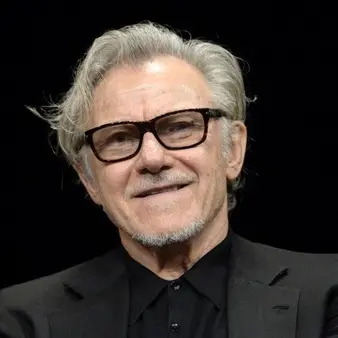
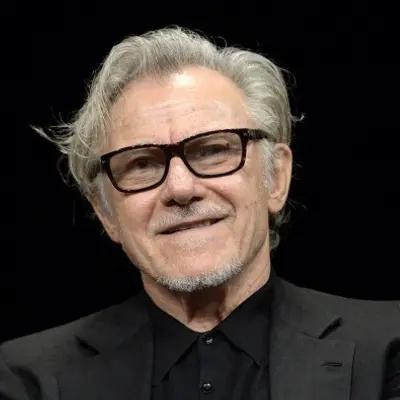
Harvey Keitel is an American actor and producer who has a net worth of $50 million.
Harvey Keitel is one of the most enduring character actors in American cinema, with a career spanning more than six decades and collaborations with some of the most influential directors of the modern era. He first became closely associated with Martin Scorsese, starring in "Who's That Knocking at My Door," "Mean Streets," "Alice Doesn't Live Here Anymore," and "Taxi Driver." Decades later, the two reunited for "The Irishman." Keitel also played a pivotal role in launching Quentin Tarantino's filmmaking career by signing on to star in and co-produce "Reservoir Dogs," helping the unknown writer-director secure the financing needed to make the film.
Keitel's other defining performances include "The Duellists," "Blue Collar," "Thelma & Louise," "Bugsy," "Bad Lieutenant," "The Piano," "Pulp Fiction," "Smoke," "Cop Land," and the "National Treasure" movies. He earned an Academy Award nomination and Golden Globe nomination for playing gangster Mickey Cohen in "Bugsy" and won an Independent Spirit Award for his fearless performance in "Bad Lieutenant." Keitel also served as one of the co-presidents of The Actors Studio alongside Ellen Burstyn and Al Pacino from 1995 to 2017.
Early Life
Harvey Keitel was born on May 13, 1939, in Brooklyn, New York, and grew up in the Brighton Beach neighborhood. His parents were Jewish immigrants; his father had Polish roots, while his mother's family came from Romania. Harvey grew up with an older brother, Jerry, and an older sister, Renee.
Keitel struggled with a stutter as a child and eventually left school before graduating. At 16, he enlisted in the United States Marine Corps. During his service, he was deployed to Lebanon as part of the American military intervention in 1958.
After leaving the Marines, Keitel returned to New York and worked as a court reporter. He eventually became interested in acting and studied with teachers including Stella Adler and Lee Strasberg. He performed in off-Broadway productions and became a member of The Actors Studio, the institution that would remain important to him throughout his career.
Martin Scorsese
Keitel's film career became intertwined with that of another young New Yorker trying to break into the movie business: Martin Scorsese.
Scorsese cast Keitel in his first feature film, "Who's That Knocking at My Door," which began production during the 1960s and was released theatrically in 1968. Keitel played J.R., a young Italian-American man from New York struggling with guilt, relationships, and Catholic morality. The film established themes that would recur throughout both men's careers.
Their breakthrough collaboration came with 1973's "Mean Streets." Keitel played Charlie, a conflicted small-time mob associate attempting to reconcile his religious beliefs with the violent world around him. The movie also featured a breakout performance from Robert De Niro as Johnny Boy.
Keitel subsequently appeared in Scorsese's "Alice Doesn't Live Here Anymore" and gave one of his most memorable early performances in 1976's "Taxi Driver," playing Sport, the pimp controlling Jodie Foster's teenage prostitute character. More than four decades later, Keitel and Scorsese reunited for 2019's "The Irishman," in which Harvey played Philadelphia crime boss Angelo Bruno alongside De Niro, Al Pacino, and Joe Pesci.
"Apocalypse Now"
One of the most consequential setbacks of Keitel's career came when Francis Ford Coppola cast him as Captain Benjamin Willard in "Apocalypse Now."
Keitel traveled to the Philippines and began shooting the film, but Coppola became dissatisfied with the performance and replaced him only weeks into production. Martin Sheen ultimately took over the role.
Losing the part was a significant professional blow, particularly because "Apocalypse Now" became one of the most acclaimed films of its era. Keitel nevertheless continued working steadily and soon became associated with another generation of ambitious filmmakers.
Late 1970s and 1980s
Keitel appeared in the directorial debuts of several filmmakers who would go on to major careers. He starred opposite Keith Carradine in Ridley Scott's 1977 feature debut "The Duellists," then appeared in Paul Schrader's 1978 directorial debut "Blue Collar" alongside Richard Pryor.
That same year, Keitel starred in James Toback's "Fingers," playing a pianist and debt collector caught between artistic ambition and organized crime. The performance reinforced his reputation for portraying intense, morally conflicted men.
During the 1980s, Keitel worked extensively in both American and European productions. His credits included "Bad Timing," "Saturn 3," "The Border," "Copkiller," "Falling in Love," "Wise Guys," and "The Pick-up Artist."
He reunited with Scorsese in 1988 for "The Last Temptation of Christ," playing Judas Iscariot opposite Willem Dafoe as Jesus. Although Keitel continued working constantly, he had yet to reach the level of mainstream recognition that would arrive in the early 1990s.
"Thelma & Louise" and "Bugsy"
Keitel entered the 1990s with an extraordinary run of roles.
In 1991, he appeared as sympathetic detective Hal Slocumb in Ridley Scott's "Thelma & Louise." Unlike many of Keitel's criminal and violent characters, Slocumb spends much of the film attempting to protect the two fugitives and understand what drove them onto the run.
That same year, Keitel played notorious gangster Mickey Cohen in Barry Levinson's "Bugsy," starring Warren Beatty and Annette Bening. The performance earned Keitel nominations for both the Academy Award and Golden Globe for Best Supporting Actor.
The Oscar nomination arrived more than two decades after Keitel's first movie with Scorsese and confirmed his standing as one of Hollywood's most respected character actors.
"Reservoir Dogs" and Quentin Tarantino
Keitel's involvement with "Reservoir Dogs" became one of the most important examples of an established actor using his reputation to help launch an unknown filmmaker.
Producer Lawrence Bender got Tarantino's screenplay into Keitel's hands through connections at an acting class. Keitel loved the script and agreed not only to play Mr. White but also to serve as a co-producer. His involvement immediately gave the project credibility.
Before Keitel came aboard, Tarantino had contemplated making "Reservoir Dogs" on a tiny budget with friends. With Keitel attached, Bender was able to raise approximately $1.5 million to make the movie professionally. Keitel also contributed his own time and money to the production and supported Tarantino's insistence that he direct his own screenplay.
Released in 1992, "Reservoir Dogs" became one of the landmark American independent films of the decade. Keitel's endorsement was so important to getting the movie made that Matt Damon and Ben Affleck later said they deliberately wrote a role in "Good Will Hunting" that they hoped could attract their own equivalent of "Harvey Keitel" — an established actor whose participation could unlock financing.
Keitel reunited with Tarantino in 1994's "Pulp Fiction," playing Winston Wolfe, the impeccably calm fixer summoned to clean up Jules and Vincent's disastrous situation. Although his screen time was relatively brief, "The Wolf" became one of Keitel's most recognizable characters.
"Bad Lieutenant" and "The Piano"
Around the same period, Keitel gave two of the boldest performances of his career.
In Abel Ferrara's 1992 film "Bad Lieutenant," he played a deeply corrupt, drug-addicted New York police officer spiraling toward self-destruction while searching for some possibility of redemption. The film was controversial for its explicit content, but Keitel's performance received widespread acclaim and earned him the Independent Spirit Award for Best Male Lead.
In 1993, he starred opposite Holly Hunter in Jane Campion's "The Piano." Keitel played George Baines, a New Zealand settler who becomes involved with Hunter's mute pianist character. The film won the Palme d'Or at Cannes and three Academy Awards, and Keitel received the Australian Film Institute Award for Best Actor.
The two movies illustrated the unusual range that made Keitel such a valuable actor: he could move from an almost unbearably dark urban drama to an intimate period romance without losing his intensity.

PHILIPPE MERLE/AFP/Getty Images
1990s Career
Keitel remained extraordinarily busy throughout the rest of the decade. He appeared in "Rising Sun," "Monkey Trouble," Spike Lee's "Clockers," Tarantino and Robert Rodriguez's "From Dusk till Dawn," "Cop Land," "Finding Graceland," and Jane Campion's "Holy Smoke!"
He also starred in Wayne Wang's 1995 film "Smoke," playing Brooklyn cigar-shop owner Auggie Wren. The role earned Keitel additional critical acclaim and helped reinforce his ability to carry quieter character-driven films rather than simply playing gangsters, cops, or criminals.
In 1997's "Cop Land," Keitel played corrupt NYPD lieutenant Ray Donlan alongside Sylvester Stallone, De Niro, and Ray Liotta. By that point, Keitel's presence had become almost shorthand for gritty New York crime cinema.
Later Career
Keitel continued working prolifically during the 2000s and 2010s. His credits included "U-571," "Little Nicky," "The Grey Zone," "Red Dragon," "Be Cool," and "National Treasure," in which he played FBI agent Peter Sadusky opposite Nicolas Cage. He returned for "National Treasure: Book of Secrets."
Keitel also developed a recurring relationship with director Wes Anderson. He appeared in "Moonrise Kingdom," "The Grand Budapest Hotel," and provided a voice for "Isle of Dogs."
Other notable later films included Paolo Sorrentino's "Youth," "The Congress," and "The Irishman." In 2021, Keitel portrayed gangster Meyer Lansky in the biographical crime drama "Lansky," playing another major figure from the history of organized crime.
"Mike" and "The Tattooist of Auschwitz"
Keitel moved increasingly into high-profile television work later in his career.
In 2022, he portrayed boxing trainer Cus D'Amato in the Hulu limited series "Mike," based on the life of Mike Tyson. D'Amato trained Tyson during his teenage years and became an important father figure to the future heavyweight champion.
In 2024, Keitel took one of his most substantial television roles in "The Tattooist of Auschwitz." He portrayed the elderly Lali Sokolov, a Jewish Holocaust survivor recounting his experiences at Auschwitz-Birkenau to writer Heather Morris, played by Melanie Lynskey. Jonah Hauer-King portrayed the younger Lali in the six-part series.
Keitel continued acting well into his 80s, with later film credits including "Paradox Effect," "Laws of Man," and "Milarepa."
The Actors Studio
The Actors Studio played an important role in Keitel's development as a young performer, and decades later he became one of the organization's leaders.
From 1995 until 2017, Keitel served as one of the Actors Studio's co-presidents alongside Ellen Burstyn and Al Pacino. They succeeded Paul Newman, who had served as president from 1983 to 1995.
The Studio provides professional actors, writers, and directors with a private environment in which to experiment and develop their craft outside the commercial pressures of film, television, and theater production. Keitel's 22 years in its leadership reflected his long-term commitment to acting as a craft rather than simply a profession.
Personal Life
Keitel was in a long-term relationship with Lorraine Bracco from the early 1980s until 1993. Their daughter, Stella, was born in 1985.
The relationship ended in a highly contentious separation and custody battle over Stella. Bracco later said the legal fight cost her more than $2 million.
Keitel subsequently had a relationship with Lisa Karmazin. Their son, Hudson, was born in 2001.
Later that year, Keitel reconnected with Canadian actress Daphna Kastner, whom he had originally met years earlier. They married in Jerusalem in 2001 and later celebrated the marriage in New York. Their son, Roman, was born in 2004 and has also pursued acting.
Real Estate
Keitel has owned property on both coasts throughout his career.
New York: Keitel was an early celebrity resident of Tribeca and has owned multiple lofts in the neighborhood over the decades. In 1994, he paid $995,000 for a roughly 2,000-square-foot duplex loft on North Moore Street with approximately 1,400 square feet of rooftop space. He sold the property in 1998 for $901,500 during the aftermath of his separation from Lorraine Bracco.
Keitel later owned a much larger Tribeca penthouse on Hudson Street. The roughly 4,600-square-foot loft included approximately 2,600 square feet of outdoor space and was offered for sale in the mid-2000s after Keitel decided not to complete an extensive renovation.
Marina del Rey: In 1998, Keitel acquired an oceanfront condominium in Marina del Rey, California.
Santa Monica: In August 2022, Keitel paid $7.2 million for a home in Santa Monica, California. The approximately 4,400-square-foot property has five bedrooms and five bathrooms, along with multiple outdoor entertaining areas, a swimming pool, detached garage, office, media room, and guest accommodations.