










What is Harry Shearer's Net Worth?
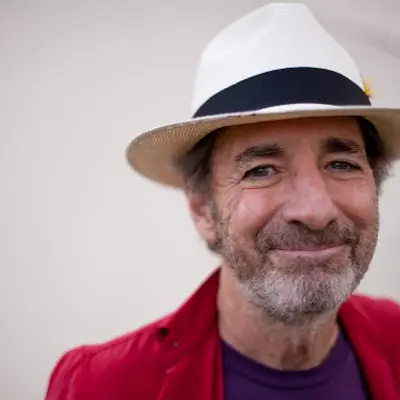
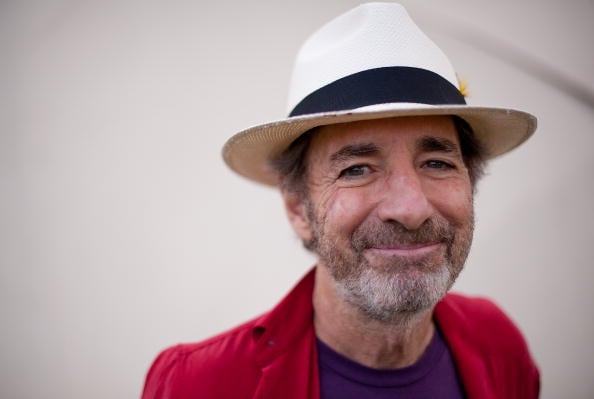
Harry Shearer is an American actor, comedian, writer, musician, producer, and radio host who has a net worth of $85 million.
Harry Shearer is best known for his nearly four decades on "The Simpsons," where he voices Mr. Burns, Ned Flanders, Principal Skinner, Waylon Smithers, and numerous other Springfield residents. He is also famous for playing bassist Derek Smalls in the legendary 1984 mockumentary "This Is Spinal Tap," which he co-created with Rob Reiner, Christopher Guest, and Michael McKean. His career began as a child actor in the 1950s and subsequently included two stints on "Saturday Night Live," decades of political satire, and his long-running radio program "Le Show."
Much of Shearer's fortune comes from "The Simpsons," where the principal cast members earned as much as $440,000 per episode at the peak of their compensation. Shearer has been particularly outspoken about the show's enormous profits and the lack of back-end participation for its voice actors. In 2011, he offered to accept a salary reduction exceeding 70% in exchange for a small share of those profits, an arrangement Fox rejected. Beyond television, Shearer has earned income from film, music, publishing, and his interests in the Spinal Tap franchise, including a major royalties lawsuit that concluded in 2020.
"The Simpsons" Salary and Contract History
Harry Shearer's salary from "The Simpsons" increased dramatically as the series became one of the most successful television franchises in history. During the show's early years, its six principal voice actors earned around $30,000 per episode. By the late 1990s, the enormous revenues from syndication, advertising, and merchandise prompted the cast to demand significantly higher compensation.
In 1998, Shearer and fellow performers Dan Castellaneta, Nancy Cartwright, Julie Kavner, Yeardley Smith, and Hank Azaria negotiated raises after Fox explored the possibility of replacing them. Their new contracts paid $50,000 per episode for season ten, $60,000 for season eleven, and $70,000 for season twelve, along with a promised $1 million syndication bonus.
Another agreement in 2001 raised their compensation to $100,000 per episode for seasons 13 and 14, with an increase to $125,000 for season 15. In 2004, the performers demanded $360,000 per episode and temporarily disrupted production when negotiations stalled. They eventually secured approximately $250,000 per episode, equivalent to $5.5 million for a 22-episode season.
In 2008, the cast negotiated another substantial raise, initially seeking salaries approaching $500,000 per episode. The resulting agreements paid nearly $400,000 per episode, with subsequent reporting placing their compensation as high as $440,000.
At $440,000 per episode, Shearer could earn $9.68 million for a 22-episode season.
The 2011 Salary Showdown and 70% Pay-Cut Offer
In October 2011, "The Simpsons" nearly ended when 20th Century Fox Television demanded that its six principal voice actors accept substantial pay cuts. The studio argued that the show's production costs had become unsustainable and proposed reducing salaries from $440,000 to approximately $250,000 per episode.
The cast countered with an offer to accept $300,000 per episode, representing a reduction of nearly one-third, if Fox would give them a small percentage of the show's syndication and merchandising profits. By that point, "The Simpsons" had generated billions of dollars in revenue, with certain producers and other participants benefiting from back-end profit arrangements.
Shearer took the negotiations a step further by publicly offering to accept a salary reduction of more than 70% in exchange for a modest share of future profits. His proposed compensation would have been less than $130,000 per episode, considerably below what Fox itself had requested.
Writing in The Daily Beast, Shearer acknowledged that the actors were already extraordinarily well paid but argued that the people responsible for bringing the show's characters to life deserved an opportunity to participate in its long-term financial success. He revealed that his representatives had asked Fox how low his salary would need to be to make profit participation possible. The studio's answer was that it would not consider the arrangement at any salary.
On October 7, 2011, Fox announced a deal that secured two additional seasons. The principal actors accepted salaries of approximately $300,000 per episode, a reduction of about 30%, but received none of the requested profit participation.
The settlement preserved the show's future and kept Shearer's annual earnings in the millions. However, it also meant that the cast remained dependent primarily on salaries rather than receiving a percentage of the enormous profits generated by the franchise.
The $13 Million Contract and 2015 Departure
Shearer faced another contract dispute in May 2015, when he announced that he was leaving "The Simpsons" after 26 seasons. The news shocked fans because his departure would have required producers to replace the voices of several major characters, including Mr. Burns and Ned Flanders.
Unlike the 2011 dispute, Shearer maintained that the disagreement was not principally about money. He indicated that he wanted greater freedom to pursue other projects, while executive producer Al Jean argued that the show had already accommodated his outside commitments.
The impasse ended in July 2015 when Shearer agreed to return under the same contract offered to the other principal performers. The agreement was worth approximately $13.2 million over two seasons, with options for two additional seasons, equivalent to roughly $300,000 per episode.
More recent reporting has placed the principal cast's compensation between $300,000 and $400,000 per episode, although the exact terms of Shearer's current contract have not been publicly disclosed. In April 2025, Fox renewed "The Simpsons" for four additional seasons, extending the series through its 40th season and the 2028–2029 television season.
Over his decades with "The Simpsons," Shearer's cumulative gross earnings from the series have almost certainly exceeded $100 million.
Early Life
Harry Julius Shearer was born on December 23, 1943, in Los Angeles, California. His parents, Dora, a bookkeeper, and Mack Shearer, were Jewish immigrants from Austria and Poland.
Shearer began performing professionally as a child, appearing on "The Jack Benny Program" at age seven. His early film credits included "Abbott and Costello Go to Mars," "The Robe," and "The Egyptian." He also received guidance from legendary voice actor Mel Blanc.
Shearer attended UCLA, where he studied political science, worked on the student newspaper, and edited the campus humor magazine. He later pursued graduate studies at Harvard University, worked briefly in California politics, and taught high school before returning to entertainment.
The Credibility Gap and "Saturday Night Live"
During the late 1960s, Shearer joined The Credibility Gap, a Los Angeles-based comedy group specializing in political and cultural satire. The group's members included future Spinal Tap collaborator Michael McKean, along with David Lander and Richard Beebe.
The Credibility Gap developed a devoted following through radio broadcasts, recordings, and live performances. Its improvisational approach and political humor helped establish Shearer's reputation as an accomplished satirist.
In 1979, he joined the cast and writing staff of NBC's "Saturday Night Live." His first experience was frustrating, and he departed after one season. He returned in 1984 for another stint alongside Christopher Guest but again left after disagreements over the program's creative direction.
"This Is Spinal Tap" and Derek Smalls
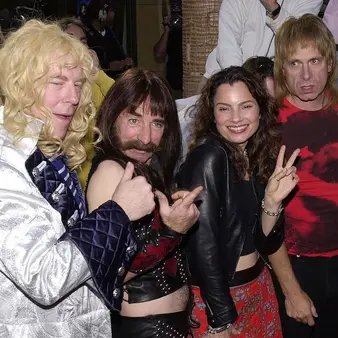
In 1984, Shearer co-wrote and starred in "This Is Spinal Tap," the landmark musical mockumentary directed by Rob Reiner. The film followed a fictional British heavy metal band on a disastrous American tour, with Shearer portraying bassist Derek Smalls alongside McKean and Christopher Guest.
Although the film was only a modest theatrical success, it became one of the most influential comedies ever made. Its improvised dialogue, elaborate musical performances, and absurdly self-serious characters helped popularize the modern mockumentary format. In 2002, it was selected for preservation in the National Film Registry.
Spinal Tap subsequently became a functioning comedy rock band, releasing albums including "This Is Spinal Tap," "Break Like the Wind," and "Back from the Dead." Shearer also released a solo album as Derek Smalls, "Smalls Change (Meditations Upon Ageing)," in 2018.
In September 2025, Shearer reunited with Guest, McKean, and Reiner for "Spinal Tap II: The End Continues." The sequel followed the aging musicians as they attempted one final reunion concert, with appearances by Elton John and Paul McCartney.
"The Simpsons" and Iconic Voice Roles
Shearer joined "The Simpsons" when it became a standalone Fox series in 1989. He quickly established himself as one of the show's most versatile voice performers, portraying an extensive collection of characters with distinctive personalities and accents.
His best-known roles include billionaire Montgomery Burns, Burns' loyal assistant Waylon Smithers, religious neighbor Ned Flanders, school principal Seymour Skinner, news anchor Kent Brockman, and Reverend Timothy Lovejoy. He also voices Lenny Leonard, Otto Mann, and numerous other recurring characters.
Shearer previously voiced Dr. Julius Hibbert, but the role was recast in 2021 when the show's producers adopted a policy of having characters of color voiced by actors of color. Kevin Michael Richardson took over the role.
Shearer reprised his Springfield characters in "The Simpsons Movie," released in 2007, which grossed more than $536 million worldwide. His performances have remained an essential part of the series through its record-setting television run.
The $400 Million Spinal Tap Royalties Lawsuit
In October 2016, Shearer filed a $125 million lawsuit against Vivendi, the French media conglomerate whose subsidiaries controlled distribution and other rights associated with "This Is Spinal Tap." He alleged that the companies had engaged in improper accounting practices that deprived the film's creators of substantial royalties.
The financial figures at the center of the lawsuit were extraordinary. According to the complaint, Vivendi's accounting attributed just $81 in merchandise income and $98 in soundtrack income to the creators over lengthy periods spanning decades.
The following year, Reiner, Guest, and McKean joined the lawsuit, and the damages sought increased to $400 million. The dispute concerned income from the film, its music, and merchandise, along with the creators' rights to the Spinal Tap name and characters.
In 2019, the creators reached a settlement with Universal Music Group concerning the soundtrack. A broader settlement with Vivendi and StudioCanal followed in September 2020, restructuring the parties' contractual relationship and resolving the remaining claims.
The settlement's financial terms were never publicly disclosed. The $400 million figure represented damages sought in litigation, not a confirmed payment to Shearer and his collaborators.
The resolution nevertheless helped clear the way for the creators to regain greater control over the Spinal Tap franchise and pursue additional projects.
"Le Show," Other Films, and Music
Outside his most famous franchises, Shearer has maintained an unusually diverse entertainment career. Since 1983, he has hosted "Le Show," a weekly radio program combining political satire, interviews, music, and commentary. The program has developed an international audience and has continued for more than four decades.
His film credits include "The Fisher King," "My Best Friend's Wedding," "The Truman Show," "A Mighty Wind," and "For Your Consideration." He also wrote, directed, and produced the 2001 comedy "Teddy Bears' Picnic."
Shearer directed the 2010 documentary "The Big Uneasy," which examined engineering failures associated with the flooding of New Orleans during Hurricane Katrina. He has also released numerous satirical comedy albums and published books including "Man Bites Town," "It's the Stupidity, Stupid," and "Not Enough Indians."
Personal Life
Shearer married folk singer Penelope Nichols in June 1974, and the couple divorced in 1977. In March 1993, he married Welsh singer-songwriter Judith Owen. The two have collaborated on musical projects and established the independent record label Courgette Records in 2005.
Shearer has maintained homes in Los Angeles and New Orleans, where he has been an outspoken advocate for improved flood protection and infrastructure. His connection to the city also influenced his work on "The Big Uneasy."
Awards and Recognition
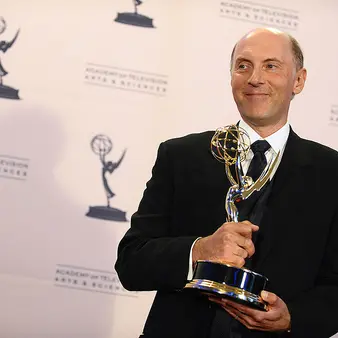
Shearer won the Primetime Emmy Award for Outstanding Character Voice-Over Performance in 2014 for "The Simpsons," becoming the last of the show's six original principal performers to receive the honor. He has also received three Grammy Award nominations for his comedy recordings and work with Spinal Tap.
His career honors include CableACE Awards, film festival recognition, and an honorary doctorate from Goucher College. Across acting, music, writing, and political satire, Shearer has maintained a remarkably varied career spanning more than seven decades.
LEON NEAL/AFP/Getty Images