





What Was Gabby Hayes' Net Worth?
Gabby Hayes was an American actor who had a net worth of $3 million at the time of his death in 1969. That is equivalent to $27.5 million today after adjusting for inflation.
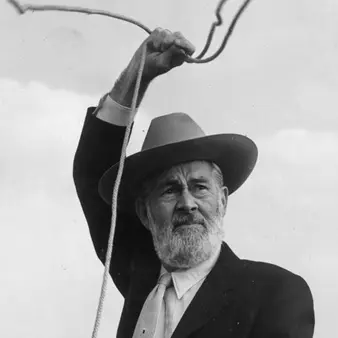
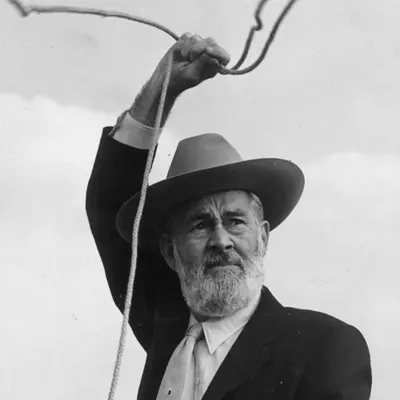
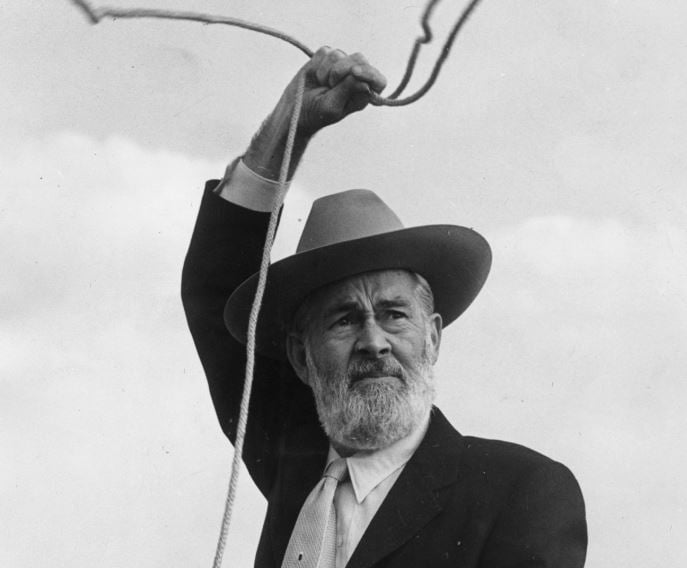
Gabby Hayes was one of the most recognizable character actors of Hollywood's Golden Age, best known for playing the grizzled, cantankerous, but fiercely loyal sidekick in dozens of Western films. With his bushy beard, battered cowboy hat, gravelly voice, and memorable expressions such as "yer durn tootin'," Hayes became a fixture of Saturday matinee Westerns during the 1930s and 1940s. He was particularly famous for his partnerships with William Boyd in the "Hopalong Cassidy" movies and Roy Rogers, with whom he appeared in more than 40 films. He also worked extensively with John Wayne and other major Western stars.
Although he almost always played a supporting character, Hayes became a box-office attraction in his own right, repeatedly ranking among the industry's most popular Western performers. His career ultimately encompassed nearly 200 film appearances, a successful television program, radio work, and a comic book series bearing his name. His financial history was equally unusual: after making enough money in vaudeville to retire in his early 40s, he lost his savings in the 1929 stock market crash and was forced to rebuild his fortune in Hollywood. He eventually became a successful investor and property owner, demonstrating a financial savvy that contrasted sharply with the scruffy, perpetually bewildered characters he played on screen.
Early Life
George Francis Hayes was born on May 7, 1885, in Stannards, New York, a small community near Wellsville. He was the third of seven children born to Clark Hayes, who operated the family's hotel and was also involved in the oil business. George grew up far removed from the Western landscapes that would eventually make him famous.
As a teenager, Hayes played semi-professional baseball and spent time working with a traveling circus. At 17, he left home to join a touring theatrical stock company, beginning a performing career that would span more than five decades. He spent his early adulthood traveling with theater companies and developing his skills as a comedian and entertainer.
In 1914, Hayes married Olive E. Ireland, a fellow performer who used the stage name Dorothy Earle. The couple developed a successful vaudeville act and spent years performing together on the theatrical circuit. Their act became profitable enough that Hayes was able to retire from show business in 1928, when he was just 43 years old.
The couple settled in Baldwin, Long Island, where Hayes intended to enjoy a comfortable retirement. That plan would collapse almost immediately.
The 1929 Stock Market Crash and Hollywood Comeback
Hayes suffered a devastating financial setback during the stock market crash of 1929, losing the savings that had enabled his early retirement. With his financial security destroyed, he had little choice but to return to work.
At Olive's urging, the couple moved to Los Angeles so Hayes could pursue opportunities in the rapidly expanding motion picture industry. He had already made some early screen appearances, but Hollywood offered the possibility of steady employment at a time when Western movies were being produced in enormous quantities.
One of his important early connections was producer Trem Carr, who recognized that Hayes' expressive face, comic timing, and distinctive personality made him particularly suited to character roles. Carr helped him secure regular film work, and Hayes appeared in scores of low-budget productions throughout the early 1930s.
Initially, he played a wide variety of characters, including villains, ranchers, sheriffs, prospectors, and occasionally more conventional leading roles. He appeared alongside a young John Wayne in Westerns such as "The Lucky Texan," "Blue Steel," "The Star Packer," and "The Lawless Frontier." These movies were produced quickly and inexpensively, but they gave Hayes an opportunity to refine the irritable, wisecracking personality that would become his trademark.
Ironically, Hayes had little personal connection to cowboy culture. He had not grown up riding horses and only learned to ride after entering the Western film business. He also admitted that he was not especially enthusiastic about the genre, finding many of its plots repetitive.
Getty
Hopalong Cassidy and the Birth of "Gabby"
Hayes' breakthrough came through his association with William Boyd, who played the heroic cowboy Hopalong Cassidy in one of Hollywood's most successful Western film series. Beginning in the mid-1930s, Hayes became a regular presence in the franchise as Windy Halliday, an excitable, talkative old-timer who served as Cassidy's sidekick.
The character was a perfect fit for Hayes' comic abilities. Windy was prone to complaining, exaggerating, and making questionable decisions, but he remained loyal to Cassidy and could be counted on when danger appeared. His humorous presence helped distinguish the films from competing Western series and made him a favorite among younger audiences.
Hayes appeared in the Hopalong Cassidy movies through 1939, when a salary dispute led to his departure. Because the Windy Halliday character name was controlled by the producers, Hayes could not continue using it in films for another studio.
He instead adopted the name Gabby, which he had used for a character in the 1939 Roy Rogers Western "Southward Ho!" The name proved so popular that it became his permanent professional identity, and audiences increasingly knew him simply as Gabby Hayes.
Roy Rogers and Western Stardom
After leaving the Hopalong Cassidy series, Hayes established a lengthy association with Republic Pictures and became the regular sidekick of Roy Rogers, one of the biggest Western stars of the era. Between 1939 and 1946, Hayes appeared in more than 40 Rogers films, establishing one of the most recognizable partnerships in the genre.
Their movies included "The Carson City Kid," "Along the Navajo Trail," "Don't Fence Me In," "My Pal Trigger," "Rainbow Over Texas," and "Under Nevada Skies." Hayes frequently appeared alongside Rogers' future wife, Dale Evans, adding comic relief to the musical performances, horseback chases, and gunfights that defined Republic's Western productions.
His popularity extended well beyond the Rogers films. Hayes appeared with Gene Autry, Wild Bill Elliott, and Randolph Scott, and continued working with John Wayne in larger productions such as "Dark Command" and "Tall in the Saddle."
Unlike many supporting actors, Hayes developed a following strong enough to compete with leading Western stars. He was repeatedly named among the most popular performers in Western box-office polls, and his personal appearances attracted large crowds. Audiences knew exactly what to expect when Gabby appeared on screen: exaggerated indignation, comically mangled expressions, and an entertaining mixture of cowardice and unexpected bravery.
As the popularity of theatrical B-Westerns began to decline in the late 1940s, Hayes gradually reduced his film appearances. His final movie was "The Cariboo Trail," released in 1950 and starring Randolph Scott.
Television, Radio, and Merchandising
Hayes successfully transitioned to television in 1950 with "The Gabby Hayes Show," a children's Western program broadcast by NBC and sponsored by Quaker Oats. The series capitalized on his established screen persona, presenting him as a folksy storyteller who introduced Western adventures, historical dramatizations, and scenes from older cowboy movies.
The program was an early example of a film personality successfully adapting to the new medium of television. Different versions aired during the first half of the 1950s, with a reedited version appearing in 1956. The show received a nomination for Outstanding Children's Program at the 1953 Emmy Awards.
Hayes' celebrity also extended into publishing. In 1948, Fawcett Publications introduced "Gabby Hayes Western," a comic book series built around his familiar cowboy persona. The title continued under Fawcett and later Charlton Comics into the 1950s, demonstrating that his name had become a recognizable commercial property beyond his movie appearances.
In 1960, Hayes received two stars on the Hollywood Walk of Fame, honoring his work in television and radio. His television star is located at 1724 Vine Street, while his radio star is located at 6427 Hollywood Boulevard.
Real Estate and Investments
Hayes' financial life was notably different from that of his fictional characters. Before the 1929 crash, he had accumulated enough money from vaudeville to retire and purchase a home on Long Island. Although the crash wiped out that early financial security, his Hollywood career gave him a second opportunity to build wealth.
During his later years, Hayes invested in California real estate. His holdings included a ranch property in the Toluca Lake area and a ten-unit apartment building in North Hollywood. Following his wife's death in 1957, he devoted more of his attention to managing his investments and rental property.
Contemporary biographical accounts describe Hayes as a financially disciplined man who took a serious interest in his investments. His ability to accumulate property and rebuild his fortune after the Depression was an important part of his life outside the entertainment industry.
Personal Life
Hayes married Olive Ireland on March 4, 1914, and the couple remained together for more than 43 years, until her death on July 5, 1957. They had no children. Olive had been instrumental in both his early vaudeville career and his decision to pursue Hollywood work after the stock market crash.
Offscreen, Hayes bore little resemblance to the unkempt, excitable characters that made him famous. He was known as an intelligent, well-read, serious man with sophisticated tastes and an interest in philosophy. He was also considered an unusually stylish dresser, contrasting sharply with the tattered clothes, worn hats, and heavy whiskers associated with his Western characters.
He maintained close relationships with several of his Hollywood colleagues, particularly John Wayne, whom he regarded with considerable affection. Although their screen personalities were very different, the two worked together repeatedly during Wayne's early career and remained connected through their shared history in Western films.
Death and Legacy
In early 1969, Hayes was admitted to Saint Joseph Hospital in Burbank, California, for treatment of cardiovascular disease. He died on February 9, 1969, at the age of 83. He was buried at Forest Lawn Memorial Park in the Hollywood Hills.
Hayes' influence on the Western genre continued long after his death. His distinctive characterization helped establish the template for the comic cowboy sidekick, a stock figure that became a recurring feature of Western films, television programs, and popular culture. The character Gabby Johnson, played by Jack Starrett in Mel Brooks' 1974 comedy "Blazing Saddles," was an affectionate parody of Hayes' famous screen persona.
In 2000, Hayes was inducted into the Hall of Great Western Performers at the National Cowboy & Western Heritage Museum in Oklahoma City. Although he rarely played the hero, his personality, comic timing, and enduring popularity made him one of the most beloved figures in the history of Hollywood Westerns.