Category:
Richest CelebritiesActors
Net Worth:
$400 Thousand
Birthdate:
Oct 19, 1945 - Mar 7, 1988 (42 years old)
Birthplace:
Baltimore
Gender:
Male
Profession:
Singer, Drag queen, Actor, Hairdresser, Film Director
Nationality:
United States of America
  1. What Was Divine's Net Worth?
  2. Early Life
  3. John Waters Films
  4. Music, Stage, And Other Acting Work
  5. Hairspray And Mainstream Breakthrough
  6. Death
  7. Legacy
Last Updated: June 26, 2026

What was Divine's Net Worth?

Divine was an American actor, singer, drag performer, and cult-film icon who had a net worth of $400 thousand at the time of his death.

Divine, whose real name was Harris Glenn Milstead, became famous as the unforgettable star and muse of filmmaker John Waters, appearing in some of the most notorious and influential underground movies of the 20th century. His roles in "Pink Flamingos," "Female Trouble," "Polyester," and "Hairspray" made him a symbol of outrageous comedy, outsider art, and fearless self-invention. Although Divine was often described by the press as a drag queen, he repeatedly emphasized that he saw himself first as an actor, not a traditional female impersonator. He also built a parallel career as a stage performer, cabaret act, and disco recording artist, especially in Europe. Divine died just as "Hairspray" was bringing him his broadest mainstream recognition, but his influence continued for decades, helping shape the world of drag performance that later produced stars such as RuPaul.

Early Life

Harris Glenn Milstead was born on October 19, 1945, in Baltimore, Maryland. He was the only child of Harris Bernard Milstead and Frances Milstead. He grew up in the Baltimore suburbs and experienced bullying as a child and teenager, in part because of his size, personality, and refusal to fit neatly into social expectations.

As a young man, Milstead attended beauty school and worked as a hairdresser. He also became part of Baltimore's emerging underground art and nightlife scene. His life changed after he met John Waters, a fellow outsider and aspiring filmmaker. Waters gave Milstead the name Divine and helped build a screen persona around his size, glamour, aggression, humor, and shocking disregard for conventional taste.

John Waters Films

Divine's earliest screen work came through Waters' experimental short films and underground features, including "Roman Candles," "Eat Your Makeup," "Mondo Trasho," and "Multiple Maniacs." These films were made far outside the mainstream, but they developed a devoted cult following and helped define Waters' brand of deliberately trashy, transgressive comedy.

Divine's breakthrough came with "Pink Flamingos" in 1972. The film was designed to shock, offend, and amuse in equal measure, and Divine's performance as Babs Johnson, a criminal proudly billed as "the filthiest person alive," became one of the most famous performances in midnight-movie history. The movie's infamous final scene became inseparable from Divine's legend and helped turn both performer and director into underground icons.

He followed that with another defining Waters collaboration, "Female Trouble," in 1974. In that film, Divine played Dawn Davenport, a delinquent-turned-criminal celebrity whose life spirals into violence, vanity, and grotesque glamour. The role remains one of Divine's best-known performances and showed that his appeal was not simply shock value. He had comic timing, presence, and a rare ability to make extreme characters feel fully committed and strangely human.

Divine continued working with Waters in "Polyester," released in 1981. The film was more polished than their early underground work and starred Divine opposite former teen idol Tab Hunter. That pairing helped move Divine slightly closer to mainstream recognition while still preserving the rebellious humor that made him famous.

Divine Net Worth

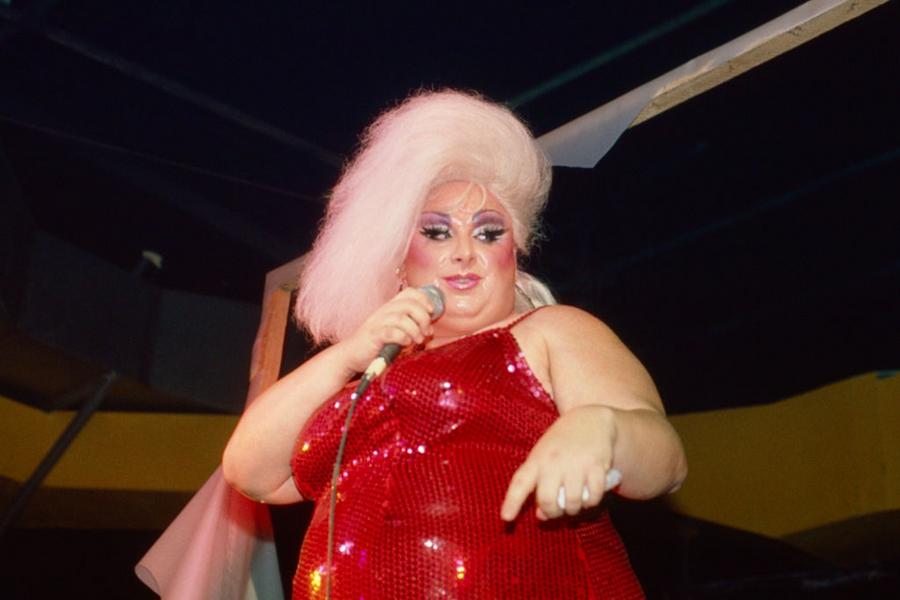
(Photo by Steve Rapport/Getty Images)

Music, Stage, and Other Acting Work

Outside of his John Waters collaborations, Divine built a busy career as a performer. He appeared on stage in productions such as "Women Behind Bars" and "The Neon Woman," and he developed a solo cabaret act that became especially popular internationally.

In the 1980s, Divine also became a disco and Hi-NRG recording artist. His recordings included songs such as "You Think You're a Man," "I'm So Beautiful," and "Walk Like a Man." His music career was particularly successful in clubs and in Europe, where his larger-than-life image translated naturally to dance music and nightlife culture.

Divine also took roles that allowed him to show more range. In Paul Bartel's "Lust in the Dust," he appeared alongside Tab Hunter again. In Alan Rudolph's "Trouble in Mind," he played a male role, something he actively wanted more of as he tried to broaden public perception of his acting career.

Hairspray and Mainstream Breakthrough

Divine's final major film role became one of his most beloved. In John Waters' 1988 comedy "Hairspray," he played Edna Turnblad, the loving mother of Tracy Turnblad, played by Ricki Lake. He also played a second role as a male television-station owner.

"Hairspray" was a major turning point because it brought Waters' sensibility to a wider audience without losing its outsider edge. Divine's performance as Edna was warmer and more sympathetic than many of his earlier roles, and it hinted at the broader character-actor career he might have enjoyed had he lived longer.

The role later became central to Divine's legacy. "Hairspray" was adapted into a hit Broadway musical, and the 2007 film version cast John Travolta in the Edna Turnblad role that Divine originated.

Death

Divine died on March 7, 1988, at the Regency Plaza Hotel in Los Angeles. He was 42 years old. He had traveled to Los Angeles to appear in an episode of the Fox sitcom "Married… with Children," a booking that represented another step toward mainstream television visibility.

His death was widely reported as the result of heart failure connected to an enlarged heart. He was survived by his parents, Harris and Frances Milstead.

Legacy

Divine's career was short, but his influence was enormous. He helped create a new model of drag performance that was not built around polish, imitation, or beauty alone. Divine was loud, confrontational, funny, glamorous, grotesque, and completely original.

For John Waters, he was more than a star. He was a collaborator whose screen presence helped define Waters' entire early universe. For later generations of performers, Divine became proof that an outsider could turn ridicule, excess, and nonconformity into power.

Although he died before drag became a major television industry, Divine's fingerprints are all over modern drag culture. His work helped make room for performers who were not trying to be respectable, safe, or easily categorized. He remains one of the most important cult performers in American film history and one of the foundational figures in the evolution of drag as mainstream entertainment.

All net worths are calculated using data drawn from public sources. When provided, we also incorporate private tips and feedback received from the celebrities or their representatives. While we work diligently to ensure that our numbers are as accurate as possible, unless otherwise indicated they are only estimates. We welcome all corrections and feedback using the button below.
Did we make a mistake?
Submit a correction suggestion and help us fix it!
Submit a Correction