










What Was David Prowse's Net Worth and Salary?
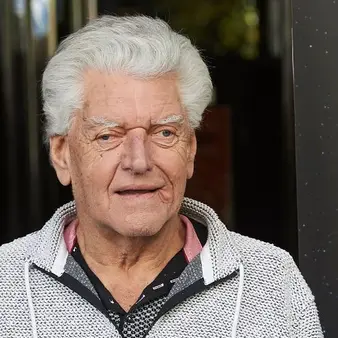
David Prowse was an English actor, bodybuilder, and champion weightlifter who had a net worth of $3 million at the time of his death in 2020.
David Prowse was best known for physically portraying Darth Vader in the original three "Star Wars" movies. Standing approximately 6 feet 6 inches tall, he supplied the imposing silhouette, movements, and on-set performance of one of cinema's greatest villains, while James Earl Jones provided Vader's famous voice. Prowse played the character in "Star Wars" (1977), "The Empire Strikes Back" (1980), and "Return of the Jedi" (1983), although other performers handled certain fight scenes and the moment when Vader's face was finally revealed.
Long before he became Darth Vader, Prowse was a successful competitive weightlifter, a gym owner, and a fitness trainer whose clients included Christopher Reeve. British audiences also knew him as the Green Cross Code Man, the superhero-like figure who taught generations of children how to cross roads safely. That public-service work earned him an MBE in 2000. Despite the enormous commercial success of "Star Wars," Prowse publicly complained that a profit-sharing arrangement connected to "Return of the Jedi" never produced payments for him, an experience that became a frequently cited example of Hollywood's controversial net-profit accounting practices.
Early Life
David Charles Prowse was born on July 1, 1935, in Bristol, England. His father died when he was young, and he was raised primarily by his mother. He attended Bristol Grammar School and faced a serious physical setback during childhood: doctors suspected he had tuberculosis of the knee, and he spent several years wearing a leg brace. The diagnosis was later found to be mistaken, but the experience helped shape his determination to become physically strong.
As a teenager, Prowse began swimming and weight training, eventually developing a passion for bodybuilding. He worked various jobs, including as a lifeguard and nightclub doorman, while pursuing competitive strength sports. His height and muscular build would become professional advantages, first in athletics and later in acting.
Weightlifting and Fitness Career
Prowse became one of Britain's leading heavyweight weightlifters, winning the national heavyweight championship three consecutive years, from 1962 through 1964. He represented England at the 1962 British Empire and Commonwealth Games in Perth, Australia. He also competed in bodybuilding contests, including Mr. Universe events, and moved in the same strength-training circles as future stars such as Arnold Schwarzenegger.
After moving to London, Prowse sold fitness equipment, became a fitness consultant for Harrods, and opened gyms. He also developed a second career training performers for physically demanding movie roles. Most notably, he helped Christopher Reeve prepare for 1978's "Superman," putting the actor through weeks of weight training to give him a superhero's physique. He later helped Cary Elwes prepare for 1987's "The Princess Bride." These fitness ventures provided Prowse with a professional identity and work outside acting, even as Darth Vader became his defining screen role.
Acting Career Before Star Wars
Prowse's imposing physique brought him to the attention of casting directors in the 1960s. He appeared without credit as Frankenstein's monster in the 1967 James Bond spoof "Casino Royale" and subsequently played versions of the same creature in the Hammer horror films "The Horror of Frankenstein" (1970) and "Frankenstein and the Monster from Hell" (1974). He also appeared in the spy thriller "Hammerhead" (1968) and on British television, including "The Saint."
His most notable pre-"Star Wars" role came in Stanley Kubrick's 1971 film "A Clockwork Orange," in which he played Julian, the muscular bodyguard and caretaker employed by the writer Frank Alexander. Prowse's combination of size and screen presence also led to appearances in "Carry On Henry," "Up the Chastity Belt," "Vampire Circus," "Black Snake," and "White Cargo." Later credits included "Jabberwocky" and "The People That Time Forgot," both released in 1977.
Although these roles rarely made Prowse the central character, they established him as a dependable performer whenever a production needed someone unusually powerful or intimidating. That reputation eventually attracted the attention of George Lucas.
Playing Darth Vader
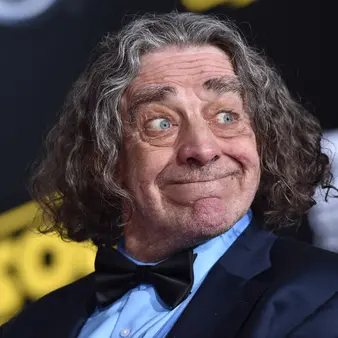
During casting for the original "Star Wars," Lucas considered Prowse for two very different characters: Darth Vader and Chewbacca. Prowse chose Vader, reportedly reasoning that audiences would remember the villain. Chewbacca was ultimately played by the even taller Peter Mayhew.
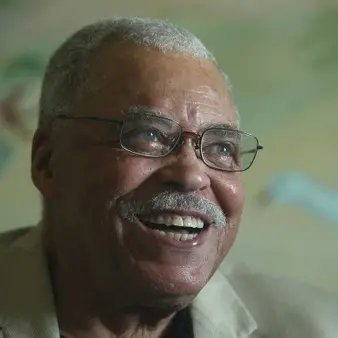
Prowse wore Vader's heavy black costume during filming and spoke the character's dialogue on set, giving the other actors someone to respond to. His West Country accent, however, did not match Lucas's vision of the villain. Jones recorded the lines in post-production, and sound designer Ben Burtt created Vader's mechanical breathing. The finished character was therefore a collaboration, with Prowse supplying the physical performance that made the costume genuinely threatening.
Prowse returned in "The Empire Strikes Back" and "Return of the Jedi," but his contribution became a source of frustration. Fencing expert and stunt performer Bob Anderson took over much of Vader's lightsaber fighting in the sequels. When Vader finally removed his mask in "Return of the Jedi," audiences saw actor Sebastian Shaw rather than Prowse. Prowse maintained that he had expected to appear in that scene and felt increasingly excluded from decisions about the character he had helped establish.
The result was an unusual kind of fame: Prowse could appear in some of the most recognizable scenes in film history while remaining largely unrecognizable to people who passed him on the street. His performance was essential to Vader's identity, but his face and voice were absent from the finished portrayal.
Star Wars Salary and Profit Dispute
David Prowse's upfront salaries for the original "Star Wars" trilogy have not been reliably disclosed. For comparison, James Earl Jones said he received $7,000 to record Darth Vader's voice for the original 1977 film. Prowse's situation is best known not because of a documented salary figure, but because of a later dispute over the financial terms of "Return of the Jedi." We have covered Jones's original "Star Wars" compensation separately.
Prowse said his contract for the third film entitled him to a share of its net profits. Yet in a 2009 interview with the British actors' union magazine "Equity," he claimed he had received notices from Lucasfilm explaining that "Return of the Jedi" had not generated a contractual net profit and that no participation payment was due. One of the phrases he recalled from those notices was: "as Return of the Jedi has never gone into profit, we've got nothing to send you."
The complaint attracted attention because "Return of the Jedi" had earned hundreds of millions of dollars at the worldwide box office. However, box-office revenue and contractually defined net profits are not the same thing. A studio's accounting formula may subtract distribution fees, marketing expenses, financing costs, and other charges before calculating what is owed to participants. This is the practice commonly described as "Hollywood accounting." Prowse objected to the outcome, but the precise terms of his contract and Lucasfilm's underlying accounting statements have not been publicly established.
Importantly, Prowse was not claiming that he had never received an acting salary for "Return of the Jedi." His grievance concerned the additional money he believed he should have received under its profit-sharing arrangement. It also differed from the deals enjoyed by other "Star Wars" performers: Alec Guinness negotiated a valuable participation in the original film, while Mark Hamill and Carrie Fisher received additional profit shares from Lucas after its success. The contrast helps explain why two actors connected to the same blockbuster franchise could experience very different financial outcomes. For more on those arrangements, see our breakdown of what the original "Star Wars" cast earned.

Carlos Alvarez/Getty Images
Green Cross Code Man
For millions of British children, Prowse was just as familiar as the Green Cross Code Man as he was as Darth Vader. Beginning in 1975, he played a superhero-like road-safety instructor in a series of public information films encouraging children to stop, look, and listen before crossing the street. He also visited schools and spoke directly to young audiences about pedestrian safety.
Unlike Darth Vader, this was a character who used Prowse's recognizable face and, after the earliest advertisements, his own voice. He continued to be associated with the campaign for years and later said he was prouder of teaching children road safety than of playing one of cinema's greatest villains. In 2000, he was appointed a Member of the Order of the British Empire (MBE) for his services to road safety and charity. He returned to public discussions of pedestrian safety later in life, expressing particular concern about children becoming distracted by phones and headphones.
Later Career and Rift With Lucasfilm
Prowse appeared in smaller productions after the original trilogy, including "Saving Star Wars" (2004) and "The Kindness of Strangers" (2010). He also wrote books about fitness and his career, including "Fitness Is Fun" (1979) and the autobiography "Straight from the Force's Mouth," published in revised form in 2011. He made appearances at science-fiction conventions around the world, signing autographs and meeting fans who wanted to hear from the man who had actually worn Darth Vader's costume.
His relationship with Lucasfilm, however, grew strained. Disagreements over the handling of Vader's voice and the unmasking scene contributed to a longstanding dispute. Rumors about leaked plot details added to the tension, although responsibility for those leaks remained contested. In 2010, Prowse said he had been informed that he would no longer be invited to official Lucasfilm-associated events because he had supposedly "burnt too many bridges" with the company. That restriction did not prevent him from participating in independent fan events.
His experiences were explored in the 2015 documentary "I Am Your Father," which revisited his contribution to Darth Vader and the disappointment he felt over his treatment by the franchise. Despite his grievances, Prowse remained closely identified with "Star Wars" throughout his life and was widely celebrated by its fans.
Personal Life and Death
Prowse married Norma Scammell in 1963, and the couple had three children: Steve, James, and Rachel. Away from film work, he remained involved in fitness and charitable causes. His later years were marked by considerable health problems, including arthritis, mobility difficulties, and prostate cancer, for which he underwent treatment in 2009. He also publicly discussed a dementia diagnosis and eventually withdrew from convention appearances as his health deteriorated.
David Prowse died on November 28, 2020, at the age of 85, following a short illness. Although James Earl Jones supplied the voice that audiences associate with Darth Vader, Prowse's commanding physical performance was equally important to the character's enduring place in film history. His work as the Green Cross Code Man also left a very different legacy, one rooted in public service rather than Hollywood spectacle.