










What was Carole Lombard's Net Worth?
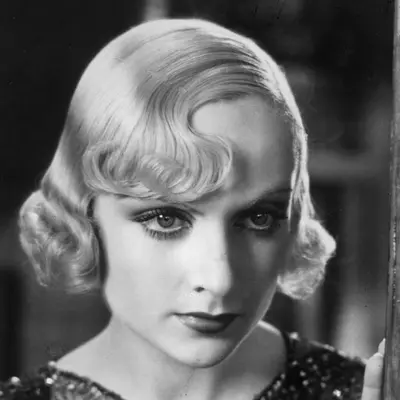
Carole Lombard was an American actress who had a net worth equal to $16 million at the time of her death in 1942, after adjusting for inflation.
Carole Lombard was one of the defining stars of the screwball comedy, equally comfortable playing an outrageous heiress, a scheming manicurist, or a small-town woman caught in a publicity circus. Her best-known films included "Twentieth Century," "Hands Across the Table," "My Man Godfrey," and "Nothing Sacred." "My Man Godfrey" earned her an Academy Award nomination, while her popularity helped make her one of Hollywood's highest-paid stars in the late 1930s.
Lombard's career stretched from silent films and Mack Sennett shorts to sophisticated comedies directed by Howard Hawks, Alfred Hitchcock, and Ernst Lubitsch. She also became a prominent freelance performer, negotiating lucrative picture deals after her years under contract at Paramount. Her marriage to Clark Gable made the couple one of Hollywood's most closely watched pairs, but her life ended at 33 in a plane crash while returning from a war-bond tour. Her final film, "To Be or Not to Be," reached theaters after her death.
Early Life
Carole Lombard was born Jane Alice Peters on October 6, 1908, in Fort Wayne, Indiana. She had two older brothers, and her mother moved the children to Los Angeles while Lombard was young. She enjoyed sports and developed an early fascination with movies.
At 12, Lombard caught the attention of director Allan Dwan, who cast her in "A Perfect Crime," released in 1921. She did not immediately become a child star, but the experience encouraged her pursuit of film work. She signed with Fox as a teenager and began appearing under the name Carole Lombard.
Silent Films and the Road to Paramount
Lombard's first Fox assignments consisted largely of small roles in Westerns and adventure films. After that contract ended, she found a different kind of training in Mack Sennett's short comedies from 1927 to 1929. Their physical humor helped develop the timing that later distinguished her sound-film performances.
A car accident during her early career left scars on her face and required reconstructive surgery. Lombard returned to work and learned how makeup and lighting could conceal the marks. Her transition to feature films included "High Voltage" and "The Racketeer" in 1929, followed by "The Arizona Kid" in 1930.
Paramount signed Lombard in 1930, giving her a steady stream of leading roles. Her early films there ranged from dramas to romantic comedies, including "Man of the World" with William Powell and "No Man of Her Own" with Gable. The studio initially emphasized her glamour more than the uninhibited comic personality that would become her trademark.
Screwball Comedy Stardom
Lombard's breakthrough came in Howard Hawks's "Twentieth Century" in 1934. Opposite John Barrymore, she played Lily Garland, an actress whose battles with a theatrical producer gave her room to be explosive, ridiculous, and commanding. The performance changed her standing in Hollywood and established comedy as her strongest territory.
In "Hands Across the Table" in 1935, Lombard played a manicurist looking for a wealthy husband. The film began a productive screen partnership with Fred MacMurray, with whom she also made "The Princess Comes Across," "Swing High, Swing Low," and "True Confession." These films offered variations on the wit, romantic confusion, and physical comedy that audiences associated with her.
For "My Man Godfrey" in 1936, Lombard reunited with her former husband, William Powell. Her performance as Irene Bullock, a wealthy young woman who brings a homeless man into her family's household as a butler, earned a Best Actress nomination at the 1937 Academy Awards. She followed it with "Nothing Sacred" in 1937, playing a woman whose supposed terminal illness becomes a newspaper sensation.
Salary and Independent Film Deals
Lombard earned $460,000 in 1937 and at least $400,000 annually afterward. At her late-1930s peak, her $400,000 annual earnings were equal to $7 million in today's dollars after adjusting for inflation.
Her ability to command $150,000 per picture put her at the top of the business. She received that amount for "Nothing Sacred" and "Fools for Scandal," with the latter contract covering nine consecutive weeks of work. Her freelance agreements also gave her influence over working conditions and how she appeared on screen.
Lombard's ambitions extended beyond collecting a fixed salary. In 1938, she and Powell agreed to participate in a proposed Ernst Lubitsch venture on profit-sharing terms. The planned company did not develop into the production operation its backers envisioned, but it reflected her interest in gaining more control over her work.
Dramatic Roles and Final Comedies
After "Fools for Scandal" disappointed in 1938, Lombard turned toward more serious material. She starred with James Stewart in "Made for Each Other" and with Cary Grant in "In Name Only," both released in 1939. "Vigil in the Night" and "They Knew What They Wanted" followed in 1940.
She returned to marital comedy in Alfred Hitchcock's "Mr. & Mrs. Smith" in 1941. Her final performance was as Maria Tura in Lubitsch's "To Be or Not to Be," opposite Jack Benny. The satire followed a Polish theatrical troupe outwitting the Nazis and opened in March 1942.
Personal Life and Real Estate
Lombard married Powell in 1931, and they divorced in 1933. They remained friends and later proved that their screen chemistry had survived the marriage. In 1939, she married Clark Gable in Kingman, Arizona.
The couple paid $50,000 for a 20-acre ranch in Encino in 1939. Previously owned by director Raoul Walsh, the property included a nine-room house, citrus groves, and space for livestock. Lombard renovated the house while Gable worked on "Gone with the Wind," and the ranch became their retreat from Hollywood.
War-Bond Tour and Death
After the United States entered World War II, Lombard volunteered to support the war effort. She traveled to Indiana in January 1942 and helped sell more than $2 million in war bonds. Her mother and MGM publicist Otto Winkler accompanied her on the trip.
On January 16, 1942, their return flight crashed into Potosi Mountain near Las Vegas, killing all 22 people aboard. Lombard was 33. She was buried at Forest Lawn Memorial Park in Glendale, California, where Gable was later interred beside her. In 1960, she received a posthumous motion-picture star on the Hollywood Walk of Fame.