










What Was Burt Reynolds' Net Worth and Salary?
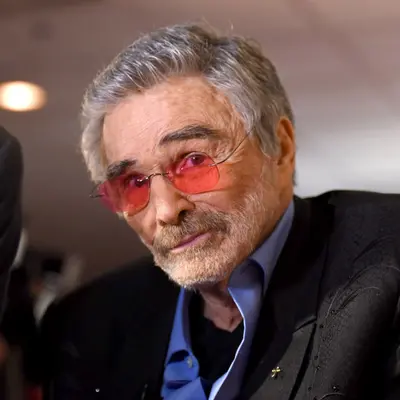
Burt Reynolds was an American actor, director, and voice artist who had a net worth of $500 thousand at the time of his death in 2018.
Burt Reynolds was one of Hollywood's biggest stars of the 1970s and early 1980s, known for "Deliverance," "The Longest Yard," "Smokey and the Bandit," and "The Cannonball Run." He topped the annual movie exhibitors' box-office poll for five consecutive years, from 1978 through 1982, and commanded a $5 million salary for "The Cannonball Run." His easygoing charm, physical comedy, and willingness to poke fun at himself made him as popular on talk shows as he was in theaters.
Reynolds' financial fortunes changed dramatically over his lifetime. He placed his peak wealth at $60 million, while his 1988 prenuptial agreement listed $15 million. Failed restaurant investments, costly properties, borrowing, and his divorce from Loni Anderson contributed to a 1996 bankruptcy filing that disclosed $6.65 million in assets and $11.2 million in debts.
His later career included an Emmy-winning television comeback in "Evening Shade" and an Oscar-nominated performance in "Boogie Nights." Reynolds continued acting and teaching into his eighties. During his final years, he lived at his longtime Florida waterfront home under an arrangement with the friend who had purchased it from him.
Salary, Business Losses, and Bankruptcy
At the height of his career, Reynolds earned millions of dollars per film. His $5 million salary for "The Cannonball Run," released in 1981, was an exceptional payday for the period. Producer Albert S. Ruddy also announced that Reynolds would receive a share of the film's profits.
Reynolds said his wealth reached $60 million after taxes during his peak years. He accumulated multiple homes, a private jet, a helicopter, and a Florida ranch with 150 horses. Maintaining those assets required substantial income even when film offers became less lucrative.
Some of his largest losses came from restaurants. During the 1980s, Reynolds and music executive Buddy Killen invested in 30 Po' Folks franchises. Reynolds personally guaranteed restaurant leases, leaving him exposed to obligations that continued when the businesses struggled.
The partners sought help unwinding the investment, but instead became involved with another restaurant chain, Daisy's Diner. Reynolds later described a situation in which a potential $5 million to $6 million loss escalated into losses of $20 million to $30 million for the two men. Their experience left Reynolds with major liabilities while he was still living like one of Hollywood's highest-paid stars.
In 1990, Reynolds borrowed $4 million from CBS as he returned to television with "Evening Shade." He expected the sitcom's eventual rerun sales to help repay the loan. Although the show lasted four seasons and did enter rerun distribution, its syndication revenue fell far short of expectations.
Reynolds said he had anticipated syndication sales of at least $800,000 per episode, compared with the $150,000 per episode that materialized. Those were program-sale figures, not his personal fee for each episode. By 1996, he still owed CBS $3.7 million, and the network sued to collect.
In December 1996, Reynolds filed for Chapter 11 bankruptcy. His listed assets totaled $6.65 million against debts of $11.2 million. His creditors included banks, talent representatives, CBS, and even his toupee supplier, to whom he owed $121,000.
The filing followed years of trying to meet old obligations with new acting work. It also exposed the difference between the lavish property collection associated with his public image and the debt attached to it. Reynolds continued working through the bankruptcy period, including the film that would bring him his only Academy Award nomination.

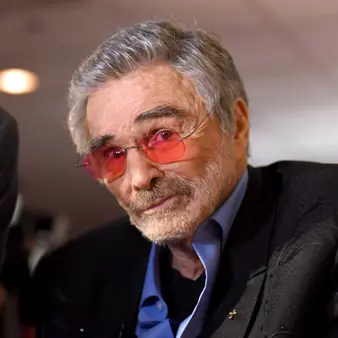
Getty Images
Early Life
Burton Leon Reynolds Jr. was born on February 11, 1936, in Lansing, Michigan. His family eventually settled in Florida, where his father worked in law enforcement. Reynolds became a standout athlete at Palm Beach High School and earned a football scholarship to Florida State University.
At Florida State, he roomed with future coach and broadcaster Lee Corso. Reynolds hoped to build a career in football, but injuries, including those suffered in a car accident, ended that ambition. He considered police work before an English instructor encouraged him to try acting while he was attending junior college.
A role in "Outward Bound" led to recognition in a Florida drama competition and persuaded him to pursue the profession. He subsequently worked in regional theater, moved to New York, and began seeking television and film roles. His athletic background remained useful: he was comfortable with physical action and later developed close friendships with stunt performers.

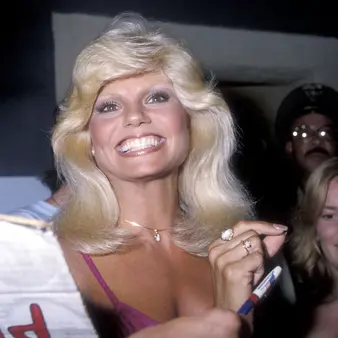
Kevin Winter/Getty Images
Television and Film Breakthrough
Reynolds found steady television work before becoming a movie star. He appeared in "Riverboat" and played Quint Asper on "Gunsmoke," then took leading roles in the crime series "Hawk" and "Dan August." These programs established him as a recognizable actor, although none initially gave him the film career he wanted.
His appearances on talk shows revealed another side of his personality. Reynolds could tell stories, trade jokes, and laugh at his own image, making him an engaging guest even before he had a major movie hit. That relaxed public persona became an important part of his appeal.
The turning point was "Deliverance" in 1972. Directed by John Boorman, the film cast Reynolds as Lewis Medlock, the forceful outdoorsman whose confidence is tested during a disastrous river trip. The performance demonstrated that he could carry a serious drama and gave him a role far removed from his later comic screen image.
That same year, his nude centerfold in "Cosmopolitan" made him an unusually prominent male sex symbol. The publicity greatly increased his celebrity, although Reynolds later felt it distracted from his acting. The combination of a critically acclaimed film and a widely discussed magazine appearance made 1972 the decisive year of his rise.
Box-Office Stardom
Reynolds followed "Deliverance" with a varied run of films, including "White Lightning" and the prison-football comedy "The Longest Yard." His experience as an athlete helped make the latter role convincing, while the film also showcased the rebellious humor audiences increasingly associated with him. He made his feature directing debut with "Gator," the 1976 sequel to "White Lightning."
"Smokey and the Bandit" became one of his signature successes in 1977. Working with stuntman-turned-director Hal Needham, Reynolds played a driver hired to distract police during an illicit beer run. His chemistry with Sally Field, the car chases, and the film's playful tone helped turn it into a major hit.
Needham and Reynolds reunited on "Hooper," a comedy about stunt performers that drew on their experience in the business. Reynolds also directed and starred in "The End," taking on a darker comic story about a man confronting mortality. In "Starting Over," he showed a more vulnerable side in a romantic comedy that differed substantially from his driving and action pictures.
From 1978 through 1982, Reynolds ranked first in the annual Quigley poll of movie exhibitors, matching Bing Crosby's five-year streak. The poll measured exhibitors' assessments of stars' ability to attract paying audiences. It captured the extraordinary drawing power Reynolds enjoyed during the period, rather than serving as a worldwide box-office accounting.
His early-1980s films included "The Cannonball Run," "Sharky's Machine," and "The Best Little Whorehouse in Texas." He directed "Sharky's Machine" as well as starring in it, demonstrating his interest in crime thrillers alongside broad comedy. Sequels and repeated collaborations kept him busy, but some choices limited the range of roles he accepted.
Reynolds later discussed turning down parts in films including "One Flew Over the Cuckoo's Nest," "Terms of Endearment," and "Die Hard." By the middle and late 1980s, his commercial standing had weakened. Health problems, disappointing films, and the expense of his lifestyle made the decline financially consequential.
"Evening Shade" and "Boogie Nights"
In 1990, Reynolds returned to a leading television role in "Evening Shade." He played Wood Newton, a former professional football player coaching a struggling high school team in Arkansas. The ensemble sitcom gave him a more domestic, character-based role than many of his movies and ran through 1994.
Reynolds won the 1991 Emmy for outstanding lead actor in a comedy series and a Golden Globe in 1992. The show restored some of his critical standing, even though its financial performance ultimately failed to solve his debt problems. Its cancellation removed a regular acting job at a time when his personal expenses remained high.
His major film comeback arrived with Paul Thomas Anderson's "Boogie Nights" in 1997. As adult-film director Jack Horner, Reynolds played a charismatic father figure whose professional ambitions and surrogate family came under increasing strain. The performance earned him a Golden Globe and an Academy Award nomination for best supporting actor.
Reynolds' relationship with the project was difficult. He clashed with Anderson and expressed discomfort with the film, despite the acclaim his performance received. The role nevertheless introduced his dramatic abilities to a generation that knew him mainly from action comedies or tabloid coverage.
His subsequent work included "Without a Paddle," "The Dukes of Hazzard," and the 2005 remake of "The Longest Yard," in which he played the older mentor to the central character. He also made television guest appearances, including "Burn Notice," and supplied voices for animation and video games. "The Last Movie Star," released theatrically in 2018, gave him a particularly personal role as an aging actor looking back on his career.

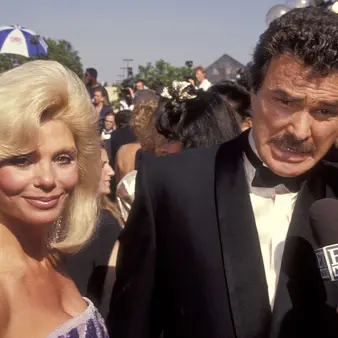
(Photo by Kevin Winter/Getty Images)
Marriages and Divorce
Reynolds married British actress Judy Carne in 1963, and they divorced in 1965. He later had a highly publicized relationship with Sally Field, his co-star in several films. In his 2015 memoir, "But Enough About Me," he described losing that relationship as one of his greatest regrets.
Reynolds and Loni Anderson married in 1988 after dating for several years. They adopted their son, Quinton, that year. Their separation in 1993 became a prolonged public dispute involving money, custody, and allegations each made about the other's conduct.
The financial arrangements developed over several years. A property settlement announced in January 1994 called for Anderson to receive $2 million and the couple's North Carolina vacation home, valued at $500,000, while Reynolds retained the Florida ranch, then valued at $4 million. He also had continuing mortgage obligations associated with Anderson's Los Angeles-area home, described in contemporary coverage at values near $2 million.
Reynolds was paying $15,000 a month in child support before seeking a reduction in 1994. The couple reached a revised agreement that December, with the new monthly amount undisclosed.
A separate $234,794.13 divorce-related obligation remained the subject of later collection efforts. Reynolds ultimately paid a remaining balance of $154,520 in 2015, more than two decades after the marriage ended. Despite the acrimony surrounding the divorce, Quinton remained an important part of his father's life.
Theater and Teaching
Reynolds invested in live theater as well as restaurants and real estate. His $2 million dinner theater in Jupiter, Florida, opened in 1979, with Sally Field among the performers in its first production. It brought established film and television actors to South Florida and also provided training opportunities for young performers.
He operated the theater until 1989, then leased it to another producer. Financial problems eventually forced its closure, and Reynolds sold the property for $2 million in 1996. The building later became the home of the Maltz Jupiter Theatre.
Teaching remained part of his life after the original theater changed hands. Through his acting institute and classes, Reynolds worked with aspiring performers on auditions, stage technique, and screen acting. He maintained those connections to Florida's performing-arts community while continuing to accept film roles.
Real Estate and Memorabilia
Reynolds' property holdings extended well beyond Hollywood. In addition to several Beverly Hills residences, he owned a mansion in Georgia, a North Carolina cabin, and an Arkansas retreat associated with his "Evening Shade" years. His 160-acre Florida ranch housed 150 horses, while his private aircraft made it possible to travel among his homes.
His best-known residence was Valhalla, a 3.4-acre waterfront estate in Hobe Sound, Florida. He bought the property in 1980 for $700,000. The 12,500-square-foot home included five bedrooms, a private screening room, a helicopter landing area, a yacht dock, and a two-bedroom guesthouse.
Reynolds initially sought $15 million for Valhalla, but the property remained on the market for years. In 2011, a lender filed a foreclosure action seeking $1.2 million in mortgage principal after alleging that he had stopped making payments. That amount was the outstanding principal sought, rather than $1.2 million in missed monthly installments.
In 2015, longtime friend and neighbor Charles Modica purchased the estate for $3.3 million. Modica allowed Reynolds to remain there for a nominal rent, giving him the ability to spend his final years in the home despite no longer owning it. The sale concluded a decade-long effort to find a buyer for the estate.
Reynolds also auctioned personal possessions and career memorabilia in December 2014. Coverage at the time linked the sale to claims of nearly $10 million in debt, which he disputed. He said he was selling items he no longer needed, rather than accepting the characterization that he was broke.
The auction demonstrated the continuing demand for objects associated with his career. His black-and-gold 1977 Pontiac Trans Am sold for $450,000, and the overall sale brought $2.5 million. The car was a promotional vehicle given to Reynolds, rather than one of the cars driven during filming of "Smokey and the Bandit."
Death and Estate
Reynolds died on September 6, 2018, at age 82, after suffering a heart attack. He had been cast in "Once Upon a Time in Hollywood" but died before filming his scenes. His work on "The Last Movie Star" had already given audiences a final major performance closely connected to his own experiences of fame and aging.
His will named his niece, Nancy Lee Brown Hess, as the personal representative of his estate. Quinton was provided for through a separate trust, rather than a direct bequest in the will. The trust's assets and terms were private, so the public will did not disclose a complete inventory of the property set aside for his son.