
/2020/03/cosby.jpg)
/2024/01/GettyImages-1147579085.jpg)
:strip_exif()/2009/09/Jerry-Seinfeld-1.jpg)
/2010/05/Kevin-Spacey.jpg)
/2019/11/hw.jpg)
/2014/11/GettyImages-73480008.jpg)
/2020/02/Angelina-Jolie.png)
/2019/04/rr.jpg)
/2009/09/Cristiano-Ronaldo.jpg)
/2020/01/lopez3.jpg)
/2018/03/GettyImages-821622848.jpg)
/2020/06/taylor.png)
/2009/11/George-Clooney.jpg)
:strip_exif()/2015/09/GettyImages-476575299.jpg)
/2020/04/Megan-Fox.jpg)
/2017/02/GettyImages-528215436.jpg)
:strip_exif()/2009/09/P-Diddy.jpg)
What is Bill Cosby's net worth?
Bill Cosby is an American comedian, television star, and producer who has a net worth of $50 million. It should be noted that our net worth estimate is made up mostly of illiquid assets such as real estate and his art collection. According to a deposition given by Bill in a 2026 legal case:
"Due to allegations, whether they be newspaper, radio, television, magazines or just plain internet, I have not worked in about 10 years, or more. That means I have not earned a cent through my being an entertainer, a writer, a television performer, except in reruns, and my net worth has gone down like a submarine with no motor."
As a result of his various legal problems, Bill has faced foreclosure on some real estate assets and has been forced to sell others. He sold a Manhattan townhouse in 2025 for $28 million. He continues to own homes in New York, Pennsylvania, and Massachusetts.
At the peak of his success, Bill Cosby's net worth was $300-$400 million. Bill earned the majority of his fortune as the creator and star of "The Cosby Show." In the late 1980s and 1990s, Bill was the highest-paid television actor in the world. His base salary for the show was $1 million per episode, but when his producing, creator, syndication, and various other income streams were totaled, he earned $4 million per episode. That's the same as earning $8 million per episode today. He owned 20% of the show's equity, which went on to generate hundreds of millions in syndication royalties. Those royalties have mostly dried up in recent years in the wake of his scandals.
Cosby used those royalties, in addition to royalties from other programs, endorsement deals, and speaking engagement fees, to invest in an extremely valuable real estate portfolio and art collection. Depending on their respective market rates at any given moment, the Cosby art collection and real estate portfolio could be worth north of $100 million combined. The future of Cosby's fortune is not yet known. Cosby reportedly spent millions of dollars on various legal defenses and could be liable for millions of dollars in future damages.
Bill Cosby rose to prominence in the 1960s as a groundbreaking comedian, becoming one of the first Black performers to achieve mainstream success in American entertainment. His comedy albums won multiple Grammy Awards, and he gained initial television fame in "I Spy" (1965-1968), making history as the first Black actor to star in a dramatic television series.
In the 1970s, Cosby expanded his influence through educational children's programming, creating and hosting "Fat Albert and the Cosby Kids" (1972-1985). He also appeared in films including "Uptown Saturday Night" and "Let's Do It Again."
Cosby achieved his greatest success with "The Cosby Show" (1984-1992), which revolutionized television by portraying an upper-middle-class Black family. The show dominated ratings for years and transformed both television and cultural representation. He followed this with "A Different World" and other television projects.
Beyond entertainment, Cosby became a prominent public figure, advocating for education and often speaking on social issues affecting the Black community. He authored several books and received numerous honorary degrees.
However, Cosby's legacy was dramatically altered when dozens of women began publicly accusing him of sexual assault in 2014-2015, with allegations dating back decades. Many women claimed he drugged them before the assaults. In 2018, Cosby was convicted of aggravated indecent assault against Andrea Constand and sentenced to prison.
In June 2021, the Pennsylvania Supreme Court overturned his conviction on technical grounds related to a prior agreement with prosecutors. Despite his release, the allegations permanently damaged his once-pristine public image. More legal challenges followed, including a civil case in 2022 where a jury found Cosby liable for sexually assaulting a teenager in the 1970s.
The dramatic fall from "America's Dad" to convicted sex offender represents one of the most significant reversals of fortune in entertainment history.
The Cosby Show Syndication Royalties
The Cosby Show ran from 1984 to 1992. At the peak of the show, he was earning $4 million per episode (the same as $8 million today). In the last two decades alone, the show has generated over $1.5 billion from syndication. As the owner of 20% of the show's profits, Bill earned at least $300 million from syndication sales.
Early Life
Bill Cosby was born on July 12, 1937, in Philadelphia. He is one of four children of Anna Pearl and William Henry Cosby Sr. Bill was class president at Mary Channing Wister Public School in Philadelphia. He was known for his reputation as the class clown. He attended Germantown High School but failed out of tenth grade. In 1956, Cosby left school at the age of 15 to join the Navy. He worked in physical therapy with the Navy and Marine Corps, who had been injured during the Korean War. Cosby did eventually earn his diploma and went on to earn a doctorate in Education at the University of Massachusetts Amherst. He also bartended at clubs and made big tips from those he made laugh. He then focused his efforts on the stage.
Early Career and Stand-Up Breakthrough
Bill Cosby's career began in stand-up comedy during the early 1960s, when he developed a style that was notably different from many of his contemporaries. Rather than relying on edgy or political material, Cosby built his act around clean, observational humor rooted in everyday life, childhood experiences, and family dynamics. After serving in the U.S. Navy, he attended Temple University, where he began performing stand-up in Philadelphia clubs.
His big break came when he was booked on national television, including appearances on "The Tonight Show." Cosby quickly became one of the first Black comedians to achieve mainstream success with a broad, crossover audience. His comedy albums, including "Bill Cosby Is a Very Funny Fellow…Right!" and "I Started Out as a Child," were hugely successful and won multiple Grammy Awards. These records established him as one of the most popular comedians of the decade and helped redefine stand-up as a commercially viable art form.
Television Breakthrough with "I Spy"
In 1965, Cosby made history when he was cast alongside Robert Culp in the NBC espionage series "I Spy." At a time when television roles for Black actors were extremely limited, Cosby's co-starring role was groundbreaking. He did not play a servant or side character, but an equal partner to Culp's character.
His performance earned him three consecutive Emmy Awards for Outstanding Lead Actor in a Drama Series, making him the first Black actor to win in that category. "I Spy" ran for three seasons and significantly elevated Cosby's profile, opening doors for more prominent roles in television and film.
Expanding Influence: "The Electric Company" and Educational Programming
During the late 1960s and early 1970s, Cosby expanded into educational television. He was deeply involved in children's programming and became a key figure on PBS's "The Electric Company," where he used humor and storytelling to help teach reading skills to young audiences.
Around the same time, he pursued advanced education, earning a Doctor of Education degree from the University of Massachusetts Amherst. His academic work focused on the use of media in education, which influenced many of his later creative projects. Cosby increasingly positioned himself as not just an entertainer, but also an educator and cultural figure invested in shaping youth programming.
"Fat Albert" and Animation Success
In 1972, Cosby created and starred in the animated series "Fat Albert and the Cosby Kids," which was based on stories from his own childhood. The show blended humor with moral lessons, often addressing social issues such as peer pressure, honesty, and responsibility.
"Fat Albert" became a long-running success and further cemented Cosby's reputation as a family-friendly entertainer. It also demonstrated his ability to create and control his own content, a theme that would continue throughout his career. The series remained popular in syndication for decades and introduced Cosby to an even younger generation of fans.
Film Career and Stand-Up Dominance in the 1970s–Early 1980s
Throughout the 1970s, Cosby remained one of the most successful stand-up comedians in the world while also pursuing a film career. He starred in a string of movies, including "Uptown Saturday Night," "Let's Do It Again," and "Mother, Jugs & Speed." Many of these films paired him with actors like Sidney Poitier and were commercially successful, particularly with Black audiences.
Despite his film work, stand-up remained a cornerstone of his career. His comedy albums continued to sell well, and he was a frequent presence on television specials. By the early 1980s, Cosby had established himself as one of the most recognizable and bankable entertainers in America.
"The Cosby Show" and Television Dominance
In 1984, Cosby reached the peak of his career with the debut of "The Cosby Show" on NBC. The sitcom, which he co-created and starred in as Dr. Cliff Huxtable, portrayed an upper-middle-class Black family and was widely praised for its positive representation and universal appeal.
"The Cosby Show" quickly became the number one show on television and remained a ratings powerhouse for much of its eight-season run. It played a major role in reviving the sitcom format and helped anchor NBC's dominant Thursday night lineup.
Cosby was heavily involved behind the scenes, exerting significant creative control over scripts, casting, and storylines. The show's success led to spin-offs like "A Different World" and turned Cosby into one of the highest-paid performers in television history. At its peak, he was earning millions per episode when factoring in salary, syndication points, and ownership stakes.
Later Television Work and Continued Presence
After "The Cosby Show" ended in 1992, Cosby continued working in television with projects like "Cosby," which aired from 1996 to 2000, and various stand-up specials. While none of these projects matched the cultural impact of his earlier work, they demonstrated his continued relevance in the entertainment industry.
He also remained active as a public speaker and author, often focusing on education, parenting, and social issues. Throughout the 1990s and early 2000s, Cosby maintained a reputation as a respected elder statesman in comedy and television.
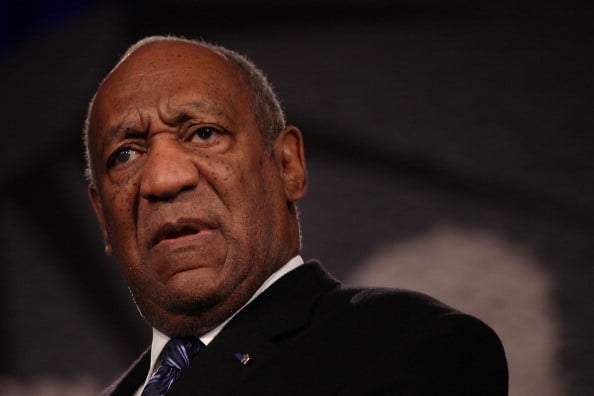
Spencer Platt/Getty Images.
Sexual Assault Convictions
Bill Cosby has been the subject of highly-publicized rape, sexual assault, child sexual abuse, and sexual battery accusations by many women since 2000. His accusers say the earliest of the assaults started taking place in the mid-60s. Cosby repeatedly denied the allegations, stating that the incidents were consensual. Most of the acts alleged by his accusers fell outside of the statutes of limitations for legal proceedings. In the wake of the allegations, almost everyone who had anything to do with the Cosby brand severed ties with him. Reruns of The Cosby Show and other shows featuring Bill were pulled from syndication. In 2015, Cosby was the subject of eight civil suits, which later rose to 33. On April 26, 2018, a jury in Pennsylvania found Bill Cosby guilty of three counts of aggravated sexual assault. In September 2018, he was sentenced to three to ten years in a state prison. He was confined to a single cell in administrative segregation at SCI Phoenix in Pennsylvania, but was moved to the general population of the prison in January 2019. In December 2019, Cosby lost an appeal to overturn his conviction. In June of 2021, the Supreme Court of Pennsylvania vacated the conviction for violations of Cosby's 5th Amendment and 14th Amendment due process rights and released him from jail. The legal issues have continued to follow Cosby since.
Attempted Comeback
Following his release from prison in 2021, Bill Cosby started plotting an attempt at a comeback, including a potential comedy tour spanning the United States and Canada, going all the way to London. It was reported that the Cosby team contacted a number of promoters and clubs, trying to make it happen. Also, a five-part docuseries covering his legacy and time in prison, and a book were being put together by Cosby. But in September of that same year, he canceled these comeback plans for the time being.
Personal Life
Cosby has been married to his wife Camille since 1964, and the couple had five children. Their son Ennis was murdered in January 1997 at the age of 27 in an attempted robbery while he was changing a flat tire on the side of the interstate. Their daughter, Ensa, died of renal disease while awaiting a kidney transplant in February 2018. In 2016, Cosby's attorneys revealed he was legally blind. In 2021, Bill and Camille moved back to their home in Shelbourne, Massachusetts, leaving their home in Elkin Park, Pennsylvania.
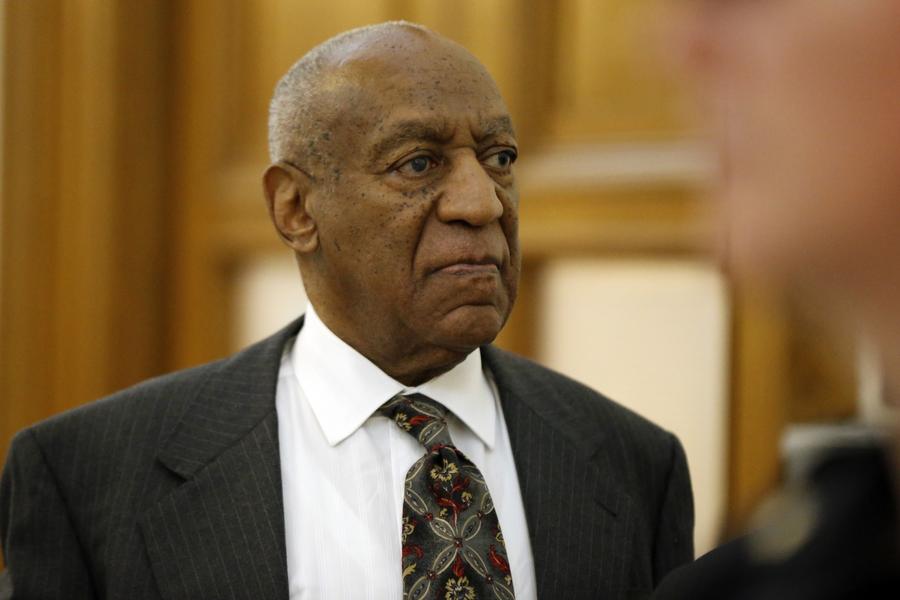
Matt Rourke-Pool/Getty Images
Real Estate
Elkins Park Estate (Pennsylvania)
Cosby's long-time home is a historic estate in Elkins Park, Pennsylvania (outside Philadelphia), which the family has owned since 1983. Bill and his wife Camille purchased this 3-acre property in June 1983 for $225,000. The main house is a 5,835 sq ft 18th-century stone Colonial manor with 5 bedrooms and 4½ baths. Over the years, the Cosbys raised their children here, and the estate was updated with modern comforts (gated entry, security, etc.). Given its size and location in Montgomery County, the current market value of this property is likely in the millions (several million dollars), far above the 1983 purchase price. This Pennsylvania home gained attention as the site where Cosby's 2004 assault of Andrea Constand occurred, and is where Cosby returned after his 2021 prison release. It has remained the Cosbys' primary residence since 2021.
Shelburne Falls Compound (Massachusetts)
In the early 1970s, at the height of his early career, Cosby acquired a sprawling 21-acre estate in Shelburne Falls, Massachusetts (near Buckland). He bought the land around 1971 while pursuing graduate studies at UMass Amherst. The property evolved into a private family compound with multiple structures, sitting along the Deerfield River. Cosby's five children grew up spending time on this estate, and the family even set aside portions of the land for conservation. (Tragically, Cosby's only son, Ennis, who was murdered in 1997, was laid to rest on this Massachusetts property.) The Shelburne Falls estate – effectively a rural retreat – likely has a more modest market value than his urban holdings, but still represents significant wealth. It includes extensive acreage and was a key part of Cosby's asset base for decades. Cosby has reportedly owned this Western Massachusetts compound since 1971 and continues to retain it.
Beverly Hills Mansion (California)
Cosby also owns a premium property in Beverly Hills. In 1992, at the height of his Cosby Show earnings, he purchased a luxury mansion at 728 North Linden Drive, Beverly Hills, for $3.65 million. The property is a sizable 0.53-acre lot in the Beverly Hills flats, featuring an ~6,700 sq ft Spanish-style mansion with 8 bedrooms and 5 baths. Surrounded by mature trees and tucked behind gates, this has been the Cosbys' West Coast residence for years. Today, the Beverly Hills estate's value has appreciated substantially – recent estimates put it around $12 million (per Redfin analysis), though some speculative sources have suggested even higher values. The home is mortgage-free and was a cornerstone of Cosby's real estate wealth. (There were unconfirmed reports in 2021 referring to this as Cosby's "former" house, but property records do not show a sale, implying the Cosbys still own it.)
Manhattan Townhouses (New York City)
Cosby accumulated at least two high-value townhouses on the Upper East Side of Manhattan, which have figured into his financial picture and recent troubles:
East 71st Street Townhouse: In 1987, Cosby bought a stately six-story townhouse at 18 E. 71st Street (Lenox Hill) for $6.2 million. This 12,000+ sq ft mansion served as the Cosbys' New York residence and was considered their primary home in the city for decades. As property values soared, Cosby later leveraged this asset – by 2010–2014 he had taken out $17.5 million in loans against the townhouse. (In fact, in 2017, he even explored borrowing up to $30 million on it, indicating the home's potential value at the time.) Recently, however, Cosby defaulted on those loans. By late 2024, a bank lawsuit revealed Cosby had stopped making payments on the $17.5 million debt for the E.71st St property, prompting foreclosure proceedings. To avoid the humiliation of a public foreclosure auction over his defaulted $17.5 million loan, Cosby was forced to sell his prized 13,000-square-foot Gilded Age mansion. It sold in November 2025 for $28 million (down from his initial $29M asking price). While he made a profit (he bought it for $6.2M in 1987), a massive chunk of that cash immediately went to satisfying his creditors and First Foundation Bank.
East 61st Street Townhouse: Cosby and his wife also own a smaller 4-story brownstone at East 61st Street (Lenox Hill). They bought this 5,000 sq ft townhouse back in April 1980 for just $327,000 (likely as a long-term investment). In 2017, amidst mounting legal costs, Cosby quietly listed the E.61st St townhouse for sale at $6.995 million. It appears a sale never occurred; instead, Cosby borrowed against this property, too. He took out a $4.2 million loan, but fell into default on that as well. In December 2024, Citibank filed a pre-foreclosure action over the $3.68 million remaining balance on the 61st St mortgage. Cosby used the capital from the 71st Street sale to pay off the $3.7 million debt he owed CitiMortgage on this smaller property. He saved it from foreclosure, renovated it, and quietly relisted it in early 2026 for around $6.8 million.
Art Collection
Bill Cosby and his wife Camille are the longtime owners of what has often been called "the most significant private art collection in the hands of an African American family." Experts have estimated that the collection's market value exceeds $150 million
The Cosbys began assembling their collection in the 1960s, using Cosby's rising entertainment earnings to acquire both historic and contemporary works. Over the decades, the collection has grown to include more than 300 pieces, spanning genres, centuries, and continents.
The Cosby collection features masterpieces by Thomas Hart Benton, Rembrandt, Renoir, Picasso, and Matisse, alongside a substantial body of work by Black American artists, including Henry Ossawa Tanner, Jacob Lawrence, Elizabeth Catlett, Romare Bearden, Faith Ringgold, Charles White, and many others. Their holdings helped elevate the visibility of Black artists within major museum circles.
In 2014, the Smithsonian's National Museum of African Art launched a landmark exhibit featuring 62 works from the Cosbys' personal collection, highlighting its cultural and curatorial significance. The show sparked both acclaim and controversy following Cosby's legal troubles, but it cemented the collection's reputation as museum-grade in scale and quality.
In recent years, Cosby has reportedly used at least one painting as loan collateral and sold others, including a Thomas Hart Benton oil valued at over $10 million, suggesting the collection has also served as a source of liquidity during periods of legal and financial strain.
Legal Fees and Settlements
Cosby has faced numerous civil lawsuits and settlements stemming from sexual assault allegations, which have put a dent in his fortune. The most notable payout was a 2006 settlement with Andrea Constand – Cosby paid her $3.38 million to resolve her sexual assault claims. This settlement became public during Cosby's 2018 criminal trial. In 2022, a California jury in Judy Huth's case found Cosby liable for assaulting her as a teenager at the Playboy Mansion in 1975; Cosby was ordered to pay $500,000 in damages.
Several other accusers filed defamation suits after Cosby's representatives called them liars. In 2019, Cosby settled a defamation lawsuit with seven women (accusers from the 1970s–80s) for an undisclosed sum. Likewise, former model Janice Dickinson sued for defamation and, in 2019, reached a confidential settlement that her attorney described as a "very large" and "epic" amount.
In total, between the Constand payout and various settlements, Cosby has likely paid tens of millions of dollars to resolve legal claims. He also incurred substantial legal defense costs – by one estimate, up to $40 million in fees through 2018
Notably, Cosby's insurance carrier (AIG) covered many of these civil settlements. Reports indicate Cosby had at least $37 million in liability insurance (including a $35 million umbrella policy), which his insurers tapped to pay claims even if Cosby personally objected.
/2020/03/cosby.jpg)
/2014/11/GettyImages-73480008.jpg)
/2017/06/cosby.jpg)
/2025/01/GettyImages-1039252130.jpg)
/2018/11/GettyImages-533955606.jpg)
/2009/09/Jerry-Seinfeld-1.jpg)
/2024/01/GettyImages-1147579085.jpg)
/2010/05/Kevin-Spacey.jpg)
/2009/09/Jennifer-Aniston.jpg)
/2009/09/Brad-Pitt.jpg)