
/2016/03/GettyImages-498541178.jpg)
/2015/08/Henry-Swieca1.png)
/2020/11/GettyImages-586859142-1.jpg)
/2014/07/John-Meriwether.jpg)
/2024/11/scott-bessent.jpg)
/2009/09/Warren-Buffett.jpg)
/2009/09/Brad-Pitt.jpg)
/2019/11/GettyImages-1094653148.jpg)
/2017/02/GettyImages-528215436.jpg)
:strip_exif()/2015/09/GettyImages-476575299.jpg)
/2019/10/denzel-washington-1.jpg)
/2020/06/taylor.png)
/2018/03/GettyImages-821622848.jpg)
/2020/02/Angelina-Jolie.png)
/2009/11/George-Clooney.jpg)
/2020/01/lopez3.jpg)
/2009/09/Cristiano-Ronaldo.jpg)
What Is Michael Burry's Net Worth?
Michael Burry is an American physician, investor, and hedge fund manager who has a net worth of $200 million. Michael Burry is best known for predicting and profiting from the 2008 housing market collapse. Originally trained as a medical doctor, Burry developed a passion for value investing while studying at Vanderbilt University School of Medicine. In 2000, he founded Scion Capital, a hedge fund that quickly gained attention for its disciplined, contrarian approach rooted in deep fundamental analysis. His strategy focused on identifying undervalued stocks and shorting overhyped assets, earning impressive returns in the early 2000s even during the dot-com crash.
Burry's most famous move came in the mid-2000s when he recognized that the U.S. housing market was built on unsustainable subprime mortgage debt. He used credit default swaps to bet against mortgage-backed securities, a position widely ridiculed at the time but that ultimately netted his fund and investors hundreds of millions when the market collapsed in 2007–2008. His story was immortalized in Michael Lewis's book "The Big Short" and the Oscar-winning film of the same name, where he was portrayed by Christian Bale.
After closing Scion Capital in 2008, Burry founded Scion Asset Management in 2013, where he continued to make unconventional, high-conviction bets. His later investments included water rights, farmland, and certain technology stocks. Burry remains known for his outspoken skepticism of speculative bubbles and for making bold, often unpopular predictions about markets, cryptocurrencies, and government debt—many of which have continued to attract both criticism and fascination from investors and the public alike.
Early Life and Education
Michael Burry was born on June 19, 1971, in San Jose, California. When he was just two years old, he lost his left eye to retinoblastoma, a rare form of cancer, and has worn a glass eye ever since. The experience left him introspective and independent, traits that would later define his investment style. Burry attended Santa Teresa High School, where he excelled academically before enrolling at the University of California, Los Angeles. There, he studied both economics and pre-med, combining analytical rigor with a scientific approach to problem-solving. He went on to earn his Doctor of Medicine degree from Vanderbilt University School of Medicine and began a residency in neurology at Stanford University Medical Center. Though he never completed the program, Burry retained his medical license with the California Medical Board, a testament to his unusual dual expertise in medicine and finance.
Start of Investment Career
Burry's transition from medicine to investing began while he was still at Stanford. In his limited free time, he spent evenings researching stocks and posting his analyses on message boards such as Silicon Investor and MSN Money. His writings quickly gained a cult following for their precision and insight, reflecting a deep understanding of value investing principles derived from Benjamin Graham and David Dodd's classic book "Security Analysis." Burry's philosophy centered on the "margin of safety" concept—buying securities at prices well below their intrinsic value to minimize risk and maximize long-term returns.
By the late 1990s, his track record was so consistently strong that established investors and financial institutions, including Vanguard and White Mountains Insurance Group, began following his recommendations. Encouraged by their attention, Burry launched his own hedge fund, Scion Capital, in late 2000, using a combination of personal savings, family loans, and inheritance funds. His timing could not have been better: while the broader market was reeling from the dot-com collapse, Scion posted extraordinary gains. In 2001, Burry's fund rose 55% while the S&P 500 fell nearly 12%. He repeated that outperformance in 2002 and again in 2003, when Scion gained more than 50% by shorting overvalued technology stocks. By the end of 2004, Burry was managing roughly $600 million in assets and was widely regarded as one of the most promising young hedge fund managers in the country.
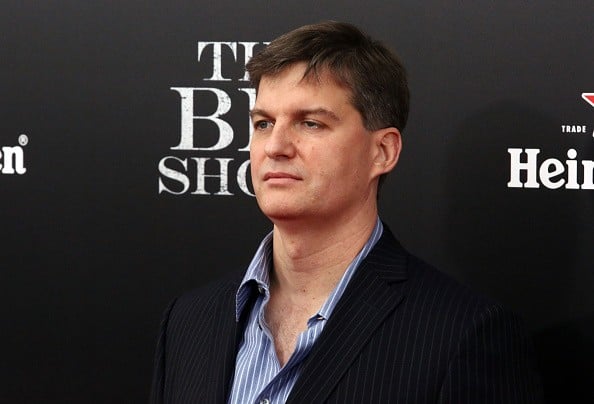
Astrid Stawiarz/Getty Images
Subprime Mortgage Bet
Michael Burry's defining moment came in the mid-2000s, when he made a bold, deeply researched bet against the U.S. housing market. After poring over thousands of individual mortgage documents, he realized that the booming real estate market was built on a foundation of risky subprime loans that were destined to fail once adjustable interest rates reset. Acting on this insight, Burry approached major Wall Street firms, including Goldman Sachs, and convinced them to create and sell him credit default swaps—essentially insurance contracts that would pay out if mortgage-backed securities collapsed. It was an unprecedented move for a relatively small, independent fund manager, and one that many in finance dismissed as reckless or absurd.
Burry began placing these bets in 2005, tying up hundreds of millions of dollars in premiums to maintain his short positions. For nearly two years, the trades appeared disastrous. The housing market kept rising, and Scion Capital was forced to make large monthly payments to the banks, bleeding cash while impatient investors accused Burry of going rogue. Some demanded redemptions, and his relationship with clients grew increasingly strained. Still, Burry refused to back down, confident in his analysis that the loans underpinning the market were unsustainable.
When the bubble finally burst in 2007, Burry's persistence paid off spectacularly. His subprime short positions generated roughly $700 million in profits for his investors and $100 million for himself personally. The bet cemented his reputation as one of the few investors who truly foresaw the financial crisis, a contrarian genius who trusted data and conviction over consensus.
Scion Asset Management
Upon returning the gains to his investors, Michael shut Scion Capital down. In 2013, he launched a new hedge fund, Scion Asset Management, filing reports as an exempt reporting adviser. Subsequently, he turned his primary attention to investing in gold, water, and farm land. His fund has also made large investments in Facebook and Google's parent company, Alphabet Inc. According to a March 2025 SEC filing, Scion Asset Management managed $155 million worth of assets at that time. In November 2025, Scion terminated its registration status with the SEC, effectively shutting the firm down.
GameStop
More than a decade after his housing market triumph, Michael Burry found himself at the center of another financial firestorm—this time involving the struggling video game retailer GameStop. In 2019 and 2020, through his firm Scion Asset Management, Burry quietly accumulated roughly 3 million shares of GameStop at prices averaging around $4 per share. He viewed the company as deeply undervalued, citing its strong cash reserves, loyal customer base, and potential to benefit from a major stock buyback. In a series of public letters to management, Burry urged the board to repurchase shares aggressively and streamline operations, believing that disciplined financial moves could unlock significant shareholder value.
While his investment initially drew little attention, it later became one of the most talked-about trades in history. By mid-2020, Burry had trimmed his holdings to about 1.7 million shares, locking in solid gains but still maintaining a sizable position. Then, in early 2021, GameStop's stock price exploded in a historic short squeeze fueled by retail traders on Reddit's WallStreetBets forum. The price surged from under $20 to an intraday high of $480 on January 28, 2021, briefly turning Burry's remaining stake into a paper value exceeding $800 million.
Although Burry had largely exited his position before the most extreme price spikes, his early identification of GameStop's potential and his vocal campaign for corporate reform helped set the stage for the frenzy that followed. The episode reinforced his reputation as a contrarian investor willing to challenge Wall Street consensus—sometimes years before the rest of the market catches on.
2025 AI Bet
In 2025, Michael Burry once again captured headlines with a bold series of trades targeting what he viewed as speculative excess in the artificial intelligence sector. Through Scion Asset Management, he disclosed large put option positions against Nvidia Corporation and Palantir Technologies, two of the most prominent beneficiaries of the AI investing boom.
According to his SEC Form 13F filing, those options represented a combined notional value of roughly $1.1 billion, though the actual capital at risk was likely only a small fraction of that amount (1-5%). The filings also revealed smaller call option stakes in Halliburton and Pfizer, suggesting that Burry's outlook was not universally bearish but strategically selective.
While some online commentators characterized the positions as a massive short bet on AI stocks, experienced analysts noted that 13F filings don't capture the full structure of derivatives trades or potential hedges, meaning his exposure may have been more nuanced. Around the same time, Burry posted cryptic warnings on social media about "bubbles" and shared graphics referencing his portrayal in "The Big Short," signaling his concern that AI-linked valuations had become detached from reality. Whether a calculated hedge or a conviction short, the move underscored his enduring reputation as one of Wall Street's most contrarian thinkers—unafraid to bet against the crowd when he sees irrational exuberance taking hold.
In Popular Culture
Michael Burry's remarkable foresight and unconventional career have made him a prominent figure in both financial journalism and popular media. His story first appeared in Gregory Zuckerman's 2009 book "The Greatest Trade Ever," which chronicled the small group of investors who made fortunes by betting against the subprime mortgage market. Although the book focused primarily on hedge fund manager John Paulson, Burry's early and independent role in identifying the housing bubble was prominently discussed as a precursor to the crisis.
Burry's influence reached a much wider audience with the release of Michael Lewis's 2010 bestseller "The Big Short: Inside the Doomsday Machine." The book detailed the buildup to the 2008 financial collapse and profiled several key figures who saw it coming, including Burry, whose meticulous research and willingness to defy Wall Street orthodoxy made him one of its central characters.
The story was adapted into the 2015 feature film "The Big Short," directed by Adam McKay and starring Christian Bale as Burry alongside Brad Pitt, Steve Carell, and Ryan Gosling. The film earned widespread critical acclaim, receiving five Academy Award nominations and winning the Oscar for Best Adapted Screenplay. Bale's portrayal of Burry—complete with his intense focus, social awkwardness, and conviction in the face of ridicule—earned him a nomination for Best Supporting Actor, firmly cementing Burry's place in financial lore and popular culture alike.
Personal Life
Michael and his wife, Anh-Thi, have one son. At some point in childhood, their son was diagnosed with Asperger syndrome. After reading up on the disorder, Michael diagnosed himself as also likely having the disorder. In 2011, Michael and Anh-Thi made a donation to Vanderbilt University to establish the Burry Chair in Cognitive Development in the Department of Pediatrics.
Real Estate
In 2004, Michael and Anh-Thi paid $3.8 million for a 6,300-square-foot mansion set on a one-acre lot in Saratoga, California. They continue to own this home, and today it is worth around $7 million. In 2021, they paid $2.55 million for a one-acre estate featuring a 6,000-square-foot mansion in Nashville, Tennessee. Today, this home is worth around $4 million.
/2016/03/GettyImages-498541178.jpg)
/2009/09/Warren-Buffett.jpg)
/2021/02/gabe-plotkin.png)
/2014/07/John-Meriwether.jpg)
/2020/05/GettyImages-693700256.jpg)
/2020/11/GettyImages-586859142-1.jpg)
/2014/01/CNW-Man-12.png)
/2010/01/michael2.jpg)
:strip_exif()/2009/09/P-Diddy.jpg)
/2020/04/Megan-Fox.jpg)
/2009/09/Jennifer-Aniston.jpg)