










What Is Ken Griffin's Net Worth?
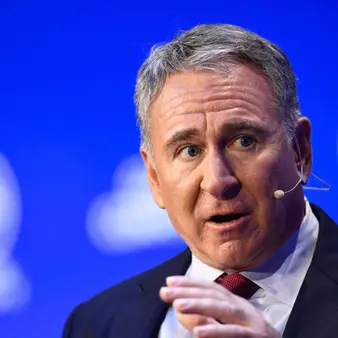
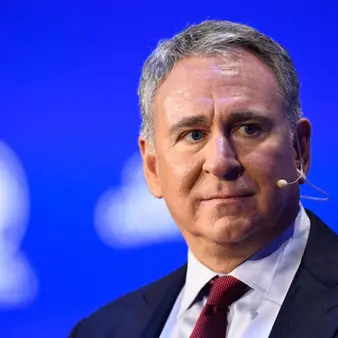
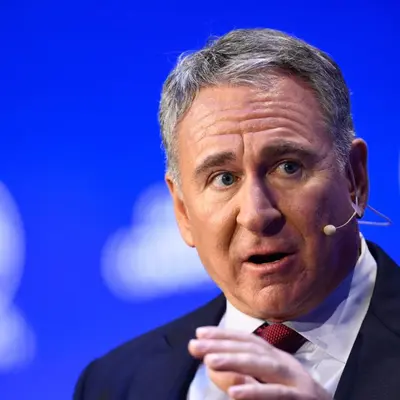
Ken Griffin is an American hedge fund manager, entrepreneur, and philanthropist who has a net worth of $57 billion.
Ken Griffin founded Citadel in 1990 after beginning his investing career from his Harvard dorm room. What started with $4.6 million in outside capital evolved into one of the most successful hedge funds in history, with more than $70 billion under management. Griffin also founded Citadel Securities, a separate market-making company that handles roughly one-quarter of U.S. stock-trading volume and generated a record $12.2 billion in trading revenue in 2025.
Those two privately held businesses form the foundation of Griffin's enormous fortune. He has repeatedly ranked among the world's highest-paid hedge fund managers, including earning $2.4 billion in 2025 alone. Outside finance, Griffin has assembled one of the world's most extraordinary private collections of real estate, art, and historical artifacts, including a $238 million Manhattan penthouse, a $122 million London mansion, and $500 million worth of Jackson Pollock and Willem de Kooning paintings acquired in a single transaction. In September 2026, he pledged $3 billion to Carnegie Mellon University, bringing his lifetime charitable giving to $5.7 billion.
Early Life
Kenneth Cordele Griffin was born on October 15, 1968, in Daytona Beach, Florida. He spent much of his childhood in Boca Raton, Florida, along with periods in Texas and Wisconsin. Griffin demonstrated an interest in computers and business from a young age, and while attending Boca Raton Community High School, where he served as president of the math club, he operated a mail-order educational software company called EDCOM from his bedroom.
He enrolled at Harvard University in 1986 and began trading almost immediately. One of his early investments involved buying put options on Home Shopping Network, producing a $5,000 profit. Griffin became increasingly interested in convertible-bond arbitrage, and in 1987, shortly after turning 19, he raised $265,000 from friends, family members, and other investors to launch his first fund.
Because receiving real-time financial information was difficult in the pre-internet era, Griffin persuaded Harvard officials to let him install a satellite dish on the roof of his dormitory. The equipment allowed him to receive market data while trading from his room. His timing proved fortunate: Griffin had established short positions before the October 1987 Black Monday stock-market crash, and those positions generated substantial profits. By the time he graduated from Harvard with an economics degree in 1989, he was managing close to $1 million.
Founding Citadel
Griffin's early performance attracted the attention of Frank Meyer, co-founder of Chicago investment firm Glenwood Partners. Rather than taking a conventional Wall Street job after Harvard, Griffin moved to Chicago and managed capital for Meyer. His returns were strong enough that Meyer helped him launch an independent investment business.
In 1990, at age 22, Griffin launched what became Citadel with $4.6 million in capital. The original fund concentrated on convertible arbitrage, attempting to profit from pricing discrepancies between convertible securities and the stocks into which they could be converted. The operation expanded quickly, and by the mid-1990s Griffin was overseeing hundreds of millions of dollars and dozens of employees.
Citadel broadened into additional investment strategies and increasingly differentiated itself through quantitative analysis, technology, sophisticated risk management, and the recruitment of scientists, engineers, mathematicians, and other specialists. The firm reached $10 billion in assets under management in 2004.
Over time, Citadel developed five major investment areas: equities, fixed income and macro, commodities, credit, and quantitative strategies. Today, Citadel employs thousands of people and manages more than $70 billion in investment capital for pension funds, sovereign wealth funds, universities, foundations, hospitals, and other institutional investors.
2008 Financial Crisis
Citadel's rise nearly came apart during the global financial crisis. In 2008, the firm's two largest funds lost more than half their value, Citadel lost roughly $8 billion, and Griffin's personal fortune fell by more than $1 billion.
The losses became so severe that Citadel temporarily suspended investor redemptions, preventing clients from withdrawing money while the firm stabilized its positions. At the time, some competitors questioned whether Citadel would survive.
Griffin reduced leverage, restructured parts of the business, preserved the firm's core trading operation, and gradually rebuilt. Citadel eventually recovered its crisis-era losses and returned to producing some of the strongest long-term results in the hedge fund industry. The comeback became one of the defining episodes of Griffin's career.
Citadel subsequently grew far beyond its pre-crisis size and has generated more net investment gains for clients than any other hedge fund in history. By the end of 2025, the firm had produced more than $90 billion in net gains for investors since its founding.
PATRICK T. FALLON/AFP via Getty Images
Citadel Securities
Griffin created a second major financial business in 2002 when he and his partners founded Citadel Securities as electronic trading began transforming financial markets. Citadel Securities is separate from the Citadel hedge fund. Rather than primarily managing clients' investments, it operates as a market maker, constantly buying and selling financial instruments and providing liquidity to other investors.
The company became a dominant force in U.S. equity and options trading and subsequently expanded into fixed income, currencies, commodities, government bonds, and international markets. Citadel Securities now serves more than 1,600 institutional clients, including major asset managers, central banks, and sovereign wealth funds, while also executing trades for millions of individual investors through brokerage platforms. The company handles roughly 25% of U.S. equity trading.
For years, Citadel Securities was entirely privately financed by Griffin and his partners. That changed in 2022 when Sequoia Capital and Paradigm invested $1.15 billion for a minority stake, valuing the company at nearly $22 billion.
The business has grown significantly since then. Citadel Securities generated $9.7 billion in trading revenue in 2024 before setting a new record with $12.2 billion in 2025. Earnings before interest, taxes, depreciation, and amortization reached $6.5 billion in 2025. Griffin remains the company's controlling shareholder and serves as its non-executive chairman.
Annual Earnings
Griffin has regularly ranked among the highest-earning people on Wall Street. Unlike a corporate executive whose compensation consists primarily of salary and stock awards, a hedge fund founder can earn money through management fees, performance fees, and returns on personal capital invested alongside clients. Griffin additionally benefits from his ownership of Citadel Securities.
In 2018, Griffin earned $1.4 billion. His annual earnings subsequently climbed into the multiple billions during particularly strong years for Citadel. In 2025, Institutional Investor calculated that Griffin earned $2.4 billion.
Those earnings came even though Citadel's flagship Wellington fund experienced its weakest year since 2018, gaining 10.2%. Other Citadel strategies performed better, including an 18.6% gain for Tactical Trading and a 14.5% return from Global Equities.
Meme Stock Controversy
Citadel Securities became the subject of intense scrutiny during the GameStop trading frenzy of January 2021. Millions of individual investors had piled into GameStop, AMC Entertainment, and other so-called meme stocks, causing extraordinary price increases and inflicting huge losses on hedge funds that had bet against the companies.
One of those funds was Melvin Capital. As its losses mounted, Citadel's hedge fund operation invested $2 billion in Melvin as part of a broader emergency capital injection. At the same time, Citadel Securities was one of the largest firms purchasing order flow from Robinhood, the brokerage platform being used by many of the retail investors buying GameStop.
On January 28, Robinhood and several other brokerages restricted customers from purchasing GameStop and certain other volatile stocks while continuing to permit sales. The situation generated an immediate conspiracy theory that Citadel Securities had pressured Robinhood to restrict buying in order to protect Citadel or Melvin Capital.
Citadel Securities denied having any role in the decision. Robinhood said the restrictions resulted from extraordinary collateral requirements imposed by its clearinghouse as volatility exploded. Investors subsequently sued, alleging that Robinhood and Citadel Securities had conspired to restrict trading, but federal courts dismissed the antitrust claims after concluding that the plaintiffs had failed to plausibly establish an unlawful agreement between the two companies.
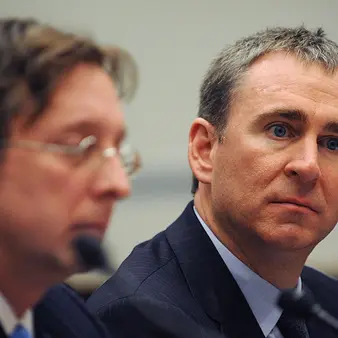
The episode nevertheless made Griffin one of the most prominent and controversial figures associated with the 2021 meme-stock phenomenon. He testified before Congress by video conference as lawmakers examined the structure of modern securities markets and Robinhood's trading restrictions.
Move to Miami
For more than three decades, Citadel was synonymous with Chicago. That changed in 2022 when Griffin announced that both Citadel and Citadel Securities would move their global headquarters to Miami.
The firms initially established operations in Miami's Brickell financial district while planning a permanent headquarters along Biscayne Bay. Citadel's proposed new headquarters calls for approximately 1.2 million square feet of office and amenity space and is intended to become one of Miami's most prominent new commercial towers.
Griffin's relocation also coincided with a dramatic expansion of both his personal investments and philanthropic commitments in South Florida.
Art Collection
Griffin is one of the world's most important private art collectors. His most famous art acquisition occurred in a private transaction with entertainment billionaire David Geffen.
In 2015, Griffin agreed to pay a combined $500 million for two Abstract Expressionist masterpieces. He paid $300 million for Willem de Kooning's 1955 painting "Interchange" and $200 million for Jackson Pollock's 1948 painting "Number 17A." At the time, the transaction ranked among the largest private art deals in history.
Griffin has frequently lent works from his collection to museums rather than keeping them entirely in private residences. His collecting extends beyond paintings. In 2024, Griffin paid $44.6 million at Sotheby's for "Apex," an extraordinarily complete Stegosaurus skeleton, setting a world record for a fossil sold at auction.
Getty
U.S. Constitution
In November 2021, Griffin paid $43.2 million at Sotheby's for a rare first printing of the United States Constitution. The auction became unusually famous because Griffin's principal competitor was ConstitutionDAO, a group of cryptocurrency investors that had pooled more than $40 million in an attempt to purchase the document collectively.
Griffin won, and his $43.2 million bid set an auction record for a book, manuscript, or printed text. He later revealed that he also owns an extremely rare first printing of the proposed amendments that ultimately became the Bill of Rights.
Rather than keeping the documents out of public view, Griffin arranged to lend both the Constitution and Bill of Rights to the National Constitution Center in Philadelphia. He also donated $15 million to create a new gallery devoted to America's founding principles.
Philanthropy
Griffin has given $5.7 billion to educational, medical, scientific, cultural, and civic organizations. Among his largest longtime beneficiaries has been Harvard University, to which Griffin has donated a combined $500 million, including $150 million in 2014 and a $300 million gift in 2023.
In 2017, he donated $125 million to the University of Chicago's economics department. His other beneficiaries have included the Art Institute of Chicago, Museum of Modern Art, Field Museum, Memorial Sloan Kettering Cancer Center, American Museum of Natural History, hospitals and medical research institutions, charter schools, tutoring programs, and organizations focused on reducing violent crime.
In early 2020, Griffin and partners at Citadel and Citadel Securities committed $20 million to COVID-19 relief efforts in Chicago, New York, China, and the United Kingdom. After moving to Florida, Griffin substantially expanded his giving in Miami and elsewhere in South Florida, funding schools, universities, healthcare institutions, and public programs.
Then, in September 2026, Griffin announced by far the largest philanthropic commitment of his life: a $3 billion pledge to Carnegie Mellon University, the largest single donation to higher education in American history.
Of that amount, $1 billion was designated for Carnegie Mellon's computer science school and other priorities, including financial aid and faculty recruitment. The school will be renamed the Kenneth C. Griffin School of Computer Science. Much of the remaining money will finance an entirely new Carnegie Mellon campus in Miami's Wynwood neighborhood, with graduate programs scheduled to begin in 2028 and undergraduate programs in 2032.
Political Donations
Griffin has also become one of America's most prolific political donors, primarily supporting Republican candidates, organizations, and policy groups. His political giving has frequently exceeded $100 million during major election cycles.
Griffin donated more than $100 million during the 2024 federal election cycle and continued financing candidates and political organizations in 2026. His positions have not always aligned with every Republican administration policy; Griffin has publicly criticized tariffs, excessive federal deficits, and political rhetoric that he believes creates economic uncertainty.
Real Estate
Ken Griffin has assembled one of the most expensive personal real estate portfolios in the world. His holdings span New York, Florida, London, and other luxury markets, and his purchases have repeatedly established local or national price records.
New York
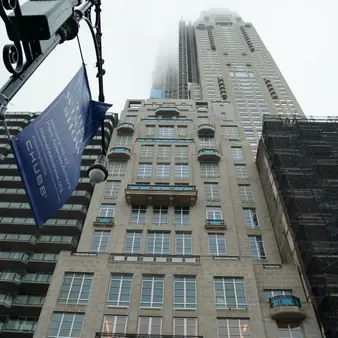
Griffin's most famous purchase came in January 2019 when he paid approximately $238 million for a four-floor penthouse at 220 Central Park South. The roughly 24,000-square-foot residence occupies several floors of the Robert A.M. Stern-designed tower overlooking Central Park. At the time, the transaction was the most expensive residential purchase ever completed in the United States.
Griffin subsequently expanded his Manhattan holdings at another legendary address, 740 Park Avenue. In 2025, he paid $45 million for an approximately 8,500-square-foot duplex owned by Julia Koch, widow of billionaire David Koch.
In April 2026, Griffin paid another $38 million for an adjacent duplex in the building. That unit spans approximately 7,500 square feet and contains five bedrooms, 41 windows, 21 closets, and three wood-burning fireplaces. Together, the two purchases give Griffin more than $80 million worth of neighboring property at one of Manhattan's most exclusive cooperative buildings, in addition to his record-setting residence at 220 Central Park South.
Palm Beach
Florida has become the center of Griffin's real estate empire. Over more than a decade, he systematically acquired neighboring oceanfront parcels in Palm Beach, eventually assembling approximately 27 acres stretching across some of the island's most valuable land.
Griffin has spent more than $450 million assembling the Palm Beach compound. The project has involved tearing down or replacing existing structures and combining formerly separate lots into one enormous private estate. The sheer scale of the assemblage makes it one of the most valuable privately owned residential properties in the United States.
Miami
Griffin has also spent heavily throughout Miami. In 2015, he paid a combined $60 million for two penthouse units at Faena House in Miami Beach, setting a local record at the time.
That investment did not work out particularly well financially. Griffin later sold the larger unit for $35 million and the smaller unit for $11.15 million.
He subsequently shifted his Miami real estate strategy toward large waterfront properties. In 2020, entities tied to Griffin paid $62 million for two adjacent vacant lots on Star Island. In December 2021, he added a neighboring mansion for $75 million, bringing the initial cost of that assemblage to $137 million.
Griffin has also spent more than $100 million on property in Coconut Grove. The expansion of his Miami holdings accelerated as Citadel and Citadel Securities relocated their headquarters from Chicago to South Florida.
London
In January 2019, Griffin paid £95 million, equal to roughly $122 million at the time, for 3 Carlton Gardens in London. The historic Georgian mansion sits near Buckingham Palace and overlooks St. James's Park.
The transaction ranked among the most expensive residential sales ever completed in London.
Chicago
Griffin was once Chicago's dominant luxury-property buyer. In 2017, he paid $58.75 million for four unfinished condominium units at No. 9 Walton, establishing a Chicago residential record.
He intended to combine the units into an enormous multistory residence but never completed the project. After Citadel moved its headquarters to Miami, Griffin began unwinding his Chicago holdings.
In 2024, he sold the top two floors at No. 9 Walton for $19 million. He had paid more than $34 million for those units, resulting in a 44% loss before carrying costs and transaction expenses.
Personal Life
Griffin has been married twice. He married his high-school girlfriend, Katherine Weingartt, in 1991, and they divorced in 1996.
In 2003, Griffin married French-born investor Anne Dias. The couple had three children before Griffin filed for divorce in 2014. The proceedings became highly public before the former couple reached a confidential settlement in October 2015, and they share custody of their children.
Griffin later moved his primary residence and businesses from Chicago to Miami.
Wealth Milestones
- 1987: Raised $265,000 while still a Harvard student and began trading from his dorm room.
- 1989: Was managing close to $1 million by the time he graduated from Harvard.
- 1990: Launched the investment operation that became Citadel with $4.6 million.
- 2004: Citadel surpassed $10 billion in assets under management.
- 2008: Citadel lost roughly $8 billion during the financial crisis, while Griffin's personal net worth declined by more than $1 billion.
- 2016: Paid $500 million for two paintings by Willem de Kooning and Jackson Pollock.
- 2018: Earned $1.4 billion.
- 2019: Paid $238 million for his 220 Central Park South penthouse, setting a U.S. residential record.
- 2021: Paid $43.2 million for a first printing of the United States Constitution.
- 2022: A $1.15 billion outside investment valued Citadel Securities at nearly $22 billion.
- 2024: Paid $44.6 million for the "Apex" Stegosaurus fossil.
- 2025: Earned $2.4 billion as Citadel continued generating multibillion-dollar investment gains.
- 2025: Citadel Securities generated a record $12.2 billion in annual trading revenue.
- 2026: Citadel manages more than $70 billion in investment capital.
- 2026: Griffin pledged $3 billion to Carnegie Mellon University, bringing his lifetime philanthropy to $5.7 billion.
- 2026: His net worth stands at $57 billion.