
/2019/10/Scott-Boras-1.jpg)
/2010/02/Darryl-Strawberry-1.jpg)
/2019/12/gc2.jpg)
/2024/01/GettyImages-1850707328.jpg)
/2010/01/Barry-Bonds.jpg)
/2022/07/juan-soto.jpg)
/2009/09/Cristiano-Ronaldo.jpg)
/2020/02/Angelina-Jolie.png)
/2019/10/denzel-washington-1.jpg)
/2019/04/rr.jpg)
/2020/06/taylor.png)
/2009/09/Brad-Pitt.jpg)
:strip_exif()/2009/09/P-Diddy.jpg)
:strip_exif()/2015/09/GettyImages-476575299.jpg)
/2020/01/lopez3.jpg)
/2009/09/Jennifer-Aniston.jpg)
/2020/04/Megan-Fox.jpg)
What is Scott Boras' net worth, commission, and salary?
Scott Boras is an American sports agent who has a net worth of $800 million. Scott Boras' net worth is built on three factors:
- Over his 30+ year career, Boras has negotiated well over $17 billion in active and expired contracts. Unlike many agents who lower their fees to 3% or 4% to compete, Boras is famous for strictly commanding the MLBPA maximum of 5%. That alone equates to $500 million in gross agency fees.
- Scott owns 100% of the Boras Corporation, which, based on comparable recent agency sales, is worth conservatively $800 million, perhaps as much as $1 billion.
- Scott personally owns some significant personal and commercial real estate investments in Newport Beach, California.
Scott Boras is one of the most powerful and influential sports agents in the world, best known for representing Major League Baseball's top talent and securing record-breaking contracts. A former minor league player and trained lawyer, Boras founded the Boras Corporation in the 1980s after realizing he could better serve players as an advocate and negotiator than as a player. His legal and medical background, combined with a meticulous approach to analytics and market leverage, has made him a dominant force in professional baseball for more than three decades.
Boras gained early notoriety in the 1980s by negotiating groundbreaking free-agent deals and challenging team practices in the draft and arbitration system. He built a reputation for aggressively maximizing client value, often drawing criticism from team executives but admiration from players. His contracts frequently reset market standards and have fundamentally reshaped how MLB teams approach player negotiations.
Boras is known for his high-profile free agent standoffs, hardball tactics, and signature metaphors at press conferences. Despite the controversy, he remains a relentless advocate for his clients and a master strategist in navigating complex multi-year deals. His agency has grown into a billion-dollar enterprise, handling not just contract negotiations but also marketing, public relations, and personal development for players. He is a member to College Baseball Hall of Fame, California Sports Hall of Fame, Sacramento Sports Hall of Fame, University of Pacific Hall of Fame, and the Orange County Sports Hall of Fame.
Some notable current and former clients include Stephen Strasburg, Gerrit Cole, Anthony Rendon, Alex Rodriguez, Matt Holliday, Manny Ramirez, and Jayson Werth. As of this writing, Scott has negotiated billions of dollars worth of contracts for his clients, bringing his agency around $100 million in annual commissions. Boras has over 30 years of experience as a sports agent.
Scott Boras Salary/Commission
How much does Scott Boras make, and how does he charge his clients?
Scott earns a 5% commission on all contracts he negotiates for his clients. So, for example, between September 2017 and September 2018, he negotiated $1.88 billion worth of contracts for various clients. His commission on those deals was around $100 million.
In a one-week period in December 2019, Scott negotiated the following deals:
- $245 million for Stephen Strasburg (from the Nationals)
- $324 million for Gerrit Cole (from the Yankees)
- $245 million for Anthony Rendon (from the Angels)
When you factor in agency fees, these earnings equate to a $40.7 million "cut" for Scott Boras. This paints a clear picture of how much the agent is capable of earning in a one-week period. Though it should also be noted that agents get paid as the clients get paid, so that money comes over time,
Scott Boras: Notable Client Deals
| Player & Team | Contract Details & Context |
|---|---|
| Greg Maddux Atlanta Braves (1992) | $28,000,000 5 years – Market-reset making him the highest-paid player in baseball at the time. |
| Kevin Brown Los Angeles Dodgers (1998) | $105,000,000 7 years – The very first $100 million contract in MLB history. |
| Alex Rodriguez Texas Rangers (2000) | $252,000,000 10 years – More than doubled the previous record for the largest contract in sports history. |
| Alex Rodriguez New York Yankees (2007) | $275,000,000 10 years – Leveraged an opt-out to break the $250 million barrier a second time. |
| Max Scherzer Washington Nationals (2015) | $210,000,000 7 years – Known for heavy, structured deferrals linking him to the team for over a decade. |
| Max Scherzer New York Mets (2021) | $130,000,000 3 years – Shattered the AAV record at $43.3 million per season. |
| Bryce Harper Philadelphia Phillies (2019) | $330,000,000 13 years – Broke the total dollar value record in North American sports at the time. |
| Gerrit Cole New York Yankees (2019) | $324,000,000 9 years – Shattered the total guarantee record for a pitcher with a $36M AAV benchmark. |
| Stephen Strasburg Washington Nationals (2019) | $245,000,000 7 years – Capitalized on his World Series MVP run, setting a brief pitching record. |
| Anthony Rendon Los Angeles Angels (2019) | $245,000,000 7 years – Secured a massive payday immediately following a World Series win. |
| Corey Seager Texas Rangers (2021) | $325,000,000 10 years – Secured the largest contract in Rangers history just hours before the lockout. |
| Carlos Correa Minnesota Twins (2023) | $200,000,000 6 years – Pivoted to a creative guarantee after massive deals fell through due to physicals. |
| Matt Chapman San Francisco Giants (2024) | $151,000,000 6 years – Converted a short-term free-agent deal into a nine-figure extension mid-contract. |
| Juan Soto New York Mets (2025) | $765,000,000 15 years – Secured the largest guaranteed contract in global sports history. |
| Dylan Cease Toronto Blue Jays (2025) | $210,000,000 7 years – Capitalized on a dominant run to secure top-of-the-market pitching money. |
| Corbin Burnes MLB (2025) | $210,000,000 Paired with Cease to completely dominate the 2025 starting pitching market. |
| Cody Bellinger MLB (2025) | $165,000,000 Guided from short-term "prove-it" deals back to a nine-figure, long-term guarantee. |
| Pete Alonso MLB (2025) | $155,000,000 Secured a massive payday for the premier power hitter following his departure from the Mets. |
| Alex Bregman Chicago Cubs (2026) | $175,000,000 5 years – Secured a massive $35M AAV outside of the typical decade-long mega-deals. |
Boras Corporation Valuation
To calculate the potential overall value of the Boras Corporation if it were ever to be sold, we can look at a recent valuation of Casey Wasserman's agency, The Team (formerly Wasserman). In early 2026, Wasserman's firm drew takeover interest valuing the company at roughly $3 billion. That valuation was built on an estimated $200 million in annual EBITDA (Earnings Before Interest, Taxes, Depreciation, and Amortization), representing a healthy 15x multiple.
When applying a similar "napkin math" financial model to the Boras Corporation, the numbers are staggering for a single-sport agency. Boras currently manages an estimated $5 billion in active MLB contracts. Because he strictly commands the MLBPA maximum commission rate of 5%, his agency's total active commission pool sits at approximately $260 million.
However, running the sport's premier boutique agency requires immense overhead. The Boras Corporation operates out of a 23,000-square-foot headquarters and employs a staff of over 100 people, including MIT-trained economists, sports psychologists, fitness experts, and a global scouting network. Assuming a highly efficient, specialized agency margin of 30% to 35%, Boras's annual EBITDA likely falls between $75 million and $90 million.
Applying standard industry multiples to that revenue and EBITDA places the enterprise value of the Boras Corporation comfortably between $800 million and $1 billion. Casey Wasserman owns a minority (20-30%) stake in his business. Scott Boras owns 100% of his company.
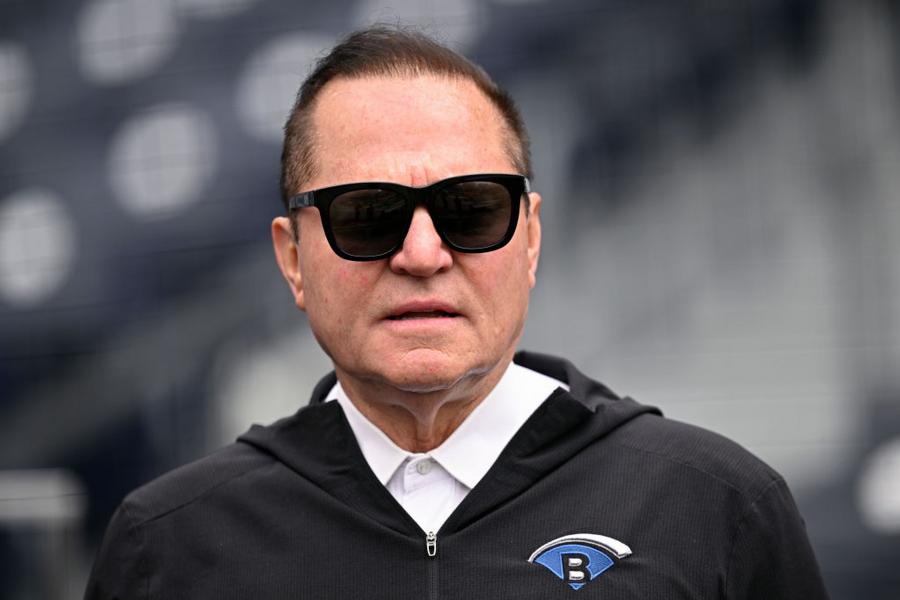
(Photo by Orlando Ramirez/Getty Images)
Early Life
Scott Boras came from humble beginnings. He was born the son of a dairy farmer on November 2nd, 1952. Born and raised in Sacramento, he eventually attended the University of the Pacific, where he played college baseball. Much of Scott Boras' personal and family life is unknown. He hasn't shared much information about life before college, and whether or not he has any siblings.
As an excellent player with a batting ratio of .312 in 1972, he set numerous records and was inducted into the university's Hall of Fame. He then played minor league baseball for four years and eventually made the Florida State League All-Star team. Knee issues shortened his career, although his time playing baseball undoubtedly prepared him for a career as an agent in later life.
He went into law after his baseball career, obtaining a Juris Doctor degree from McGeorge School of Law in 1982. He would later assist in defending major pharmaceutical companies against lawsuits.
Early Legal Career and Entry Into Baseball
After earning his law degree from McGeorge School of Law, Scott Boras began blending legal work with athlete representation, a combination that would define his career. Even before completing his degree, he had already started advising players, including Mike Fischlin of the Cleveland Indians and Bill Caudill of the Seattle Mariners. By the early 1980s, Boras had fully committed to baseball as his professional focus.
His early breakthrough came in 1983, when he negotiated a then eye-catching $7.5 million deal for Caudill. More importantly, Boras approached representation differently than traditional agents, using legal frameworks, contract precedent, and market comparisons to push salaries higher. This early success established his reputation as a meticulous and aggressive negotiator willing to challenge team-controlled norms.
Founding the Boras Corporation
In 1983, Boras founded the Boras Corporation, transforming his individual success into a scalable agency. From the outset, his strategy centered on maximizing player leverage, particularly for young talent entering the league. Throughout the 1980s and early 1990s, he consistently negotiated record-setting signing bonuses, especially for amateur players.
Notable early deals included a $1.2 million contract for high school pitcher Todd Van Poppel in 1990 and a $1.5 million signing bonus for Brien Taylor in 1991. These deals were groundbreaking at the time and signaled a shift in how top prospects were valued. Boras followed this by negotiating a $28 million contract for Greg Maddux in 1992, setting new benchmarks for elite major league talent.
His growing influence stemmed not just from the size of deals, but from his willingness to push negotiations further than most agents, often advising clients to reject initial offers and wait for better terms.
Exploiting Loopholes and Changing MLB Rules
By the mid-1990s, Boras had begun reshaping the structure of baseball contracts by identifying and exploiting loopholes in Major League Baseball's rules. In 1996, he successfully maneuvered clients Matt White and Bobby Seay out of the traditional draft system, allowing them to sign more lucrative deals. The move forced MLB to revise its draft regulations.
A year later, he executed a similar strategy with J. D. Drew. After Drew refused to sign with the Philadelphia Phillies, Boras advised him to play independent baseball with the St. Paul Saints, preserving his eligibility to re-enter the draft. Drew was selected again the following year, this time by the St. Louis Cardinals, and secured a far more favorable contract. MLB once again responded by closing the loophole.
These episodes cemented Boras' reputation as an agent who not only negotiated contracts but actively influenced league policy.
Record-Breaking Contracts and Market Influence
Throughout the late 1990s and 2000s, Boras became synonymous with record-breaking deals. He repeatedly reset the market for player salaries, beginning with contracts for Greg Maddux that pushed earnings past $50 million and then $100 million thresholds. His most famous deal came in 2000, when he negotiated a 10-year, $252 million contract for Alex Rodriguez, the largest in sports history at the time.
Boras continued to dominate the high end of the market in subsequent decades. In 2019 alone, he negotiated a $330 million contract for Bryce Harper and a $324 million deal for Gerrit Cole. His contracts frequently include innovative structures such as opt-out clauses, deferred payments, and performance incentives, giving players greater flexibility and long-term earning potential.
Beyond headline deals, Boras has built a reputation for extracting maximum value in unconventional situations, including for injured, aging, or unproven players. His ability to create competitive bidding environments has consistently driven salaries higher across the league.
Modern Dominance and Industry Impact
Over time, the Boras Corporation has grown into the most powerful agency in baseball, representing dozens of All-Stars and managing billions of dollars in active contracts. Boras is a central figure in every MLB offseason, with teams and executives closely tracking the movements of his clients.
While often criticized by team owners and front offices for his hardline tactics, Boras has remained steadfast in his philosophy that players should fully test their market value. His influence extends far beyond individual contracts, shaping how free agency operates and how teams structure long-term financial commitments.
Through a combination of legal expertise, strategic patience, and relentless negotiation, Boras has fundamentally altered the economics of Major League Baseball, turning player representation into a high-stakes, data-driven industry.
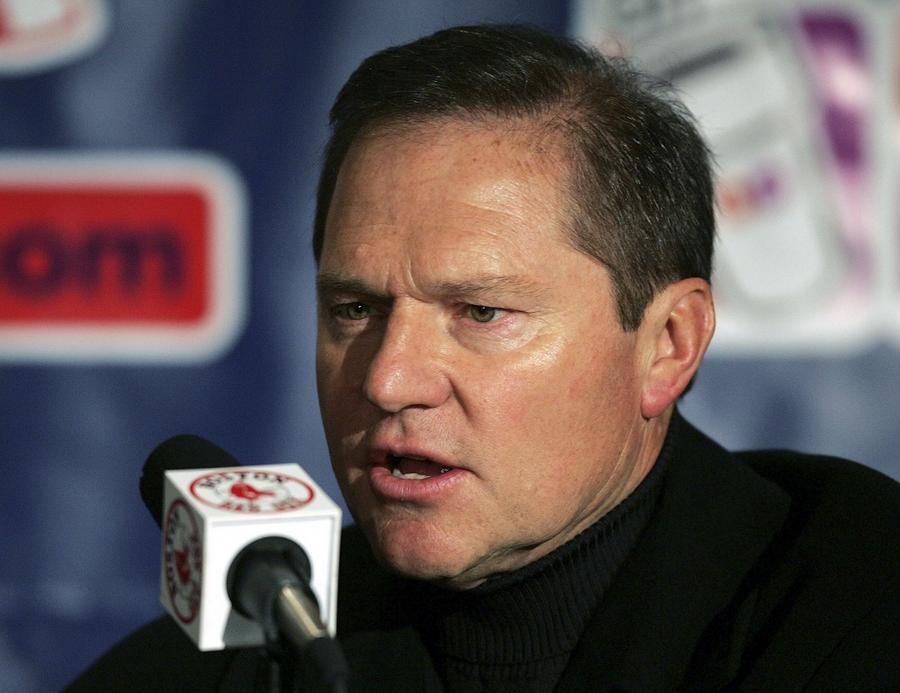
(Photo by Elsa/Getty Images)
Subsidiary Companies
The Boras Corporation has a number of subsidiary companies that also generate income for Scott Boras. These include Boras Marketing and the Boras Training Institute. Boras employs a number of extremely qualified individuals, including an MIT-trained economist, an investment team, and sports psychologists. Scott Boras also sends scouts all over the globe to look for new talent.
Criticism
Scott Boras has been the subject of considerable criticism over the years. As a sports agent, his main priority is helping his clients make money. These goals often put him at odds with the perceived "morals" of baseball, as well as the performance and well-being of various teams. Fans and baseball officials have often attacked Boras for putting money first.
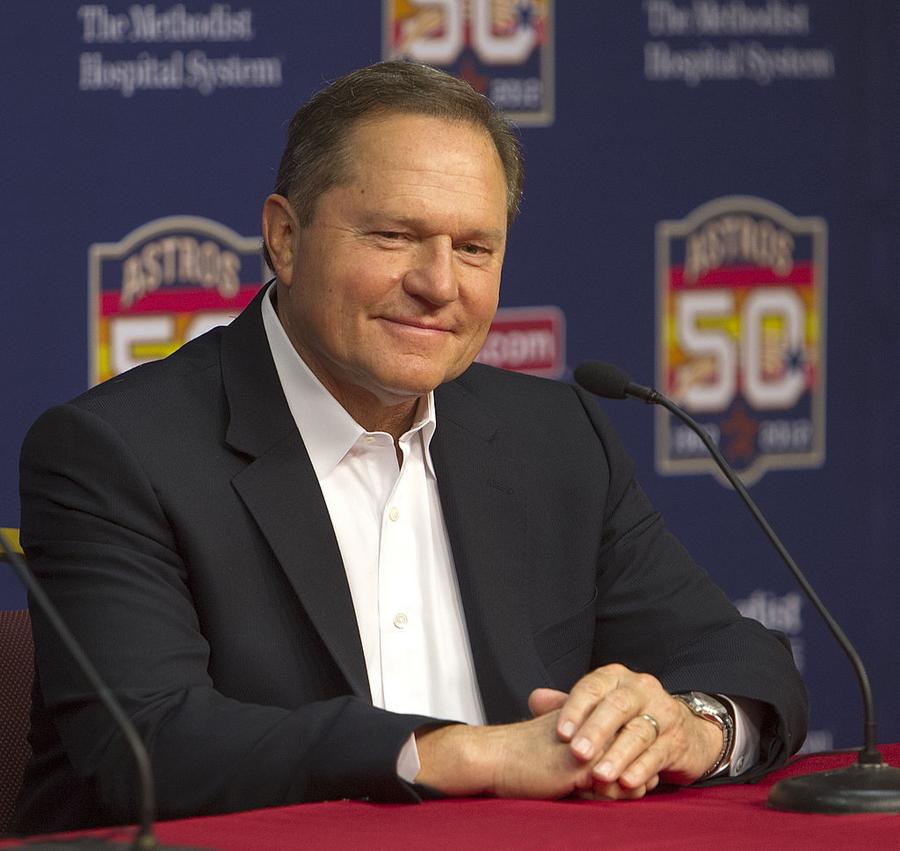
Bob Levey/Getty Images
Personal Life
Scott Boras has been married to Jeanette Biewers since June 29, 1985. The couple met in 1982 at John Wayne Airport in California. They have three children: Shane, Natalie, and Trent. Shane is an MLBPA-certified agent working at the Boras Corporation. Natalie pursued psychology and modeling, while Trent played college baseball and is studying law. The family resides in Newport Beach, California.
Real Estate
Scott and Jeanette moved to Newport Beach, California, in 1986, drawn by its proximity to multiple MLB franchises, including the Angels, Dodgers, Padres, Giants, and A's. His agency, the Boras Corporation, operates out of a 23,000-square-foot glass-and-steel headquarters in Newport Beach.
In 2020, Boras purchased a 4,700-square-foot home in Newport Beach's Cliffhaven neighborhood for $3.925 million. The two-story residence features four bedrooms, 3.5 bathrooms, a billiard room, a dual-island kitchen, an indoor-outdoor lounge, and a backyard with a pool, fireplace, and herb garden.
Previously, Boras owned a contemporary home in Venice, Los Angeles, which he bought in 2017 for $3.18 million and sold in 2020 for $3.5 million. The 3,123-square-foot property included a saltwater pool and spa.
In 2013, he acquired a Mediterranean-style home in Newport Beach for $2.975 million, which he sold in 2019 for $2.9 million.
Beyond his real estate ventures, Boras is actively involved in the Newport Beach community. He co-owns local restaurants The Cannery and Louie's by the Bay and founded the Boras Baseball Classic, a premier high school baseball tournament held in California and Arizona.
/2019/10/Scott-Boras-1.jpg)
/2022/07/juan-soto.jpg)
/2019/12/GettyImages-146523492.jpg)
/2016/03/GettyImages-515771238.jpg)
/2014/09/rod.jpg)
/2014/10/Max-Scherzer.jpg)
/2019/04/GettyImages-736355251.jpg)
/2024/12/GettyImages-2166685226.jpg)
/2018/03/GettyImages-821622848.jpg)
/2017/02/GettyImages-528215436.jpg)