
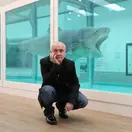











What Is Jeff Koons' Net Worth?
Jeff Koons is an American contemporary artist who has a net worth of $400 million.
Jeff Koons is one of the most famous, commercially successful, and polarizing living artists in the world. He became prominent in the 1980s by transforming ordinary consumer objects and mass-market imagery into meticulously fabricated works of fine art, eventually building a career around themes of desire, consumption, celebrity, sexuality, childhood, and the line between high culture and kitsch. His best-known works include "Rabbit," "Balloon Dog," "Michael Jackson and Bubbles," "Puppy," and the sexually explicit "Made in Heaven" series.
Koons has repeatedly set records in the international art market. His "Balloon Dog (Orange)" sold for $58.4 million in 2013, at the time the highest price ever paid at auction for a work by a living artist. In 2019, his stainless-steel "Rabbit" sold for $91.1 million, setting a new record for a living artist at the time. Beyond his own work, Koons has amassed an extraordinary personal art collection. In 2026, nine works from his collection, including paintings by Pablo Picasso, Édouard Manet, and Cornelis van Haarlem, were consigned to Christie's with a combined estimate exceeding $100 million.
Early Life and Education
Jeffrey Lynn Koons was born on January 21, 1955, in York, Pennsylvania. His mother, Gloria, was a seamstress, and his father, Henry, owned a furniture and interior-design business. Koons showed an interest in art from childhood. By age eight, he was copying Old Master paintings, signing them "Jeffrey Koons," and selling them in his father's furniture store.
As a teenager, Koons became fascinated with Salvador Dalí. With help from his mother, he contacted the artist and traveled to New York to meet him. Koons went on to study at the Maryland Institute College of Art in Baltimore and spent an exchange year at the School of the Art Institute of Chicago, where he became close to artist Ed Paschke. He earned his BFA in 1976 and later worked as Paschke's studio assistant.
Career Beginnings
Koons moved to New York City in 1977 and took a job at the membership desk of the Museum of Modern Art. During this period, he began experimenting with inflatable flowers, rabbits, mirrors, Plexiglas, and other commercially produced materials.
In 1980, Koons left MoMA and entered the financial world, selling mutual funds and stocks at First Investors Corporation and later working in financial sales and commodities. The income helped finance the expensive fabrication of his early artwork.
One of his first important bodies of work was "The New," in which new vacuum cleaners and floor polishers were displayed inside fluorescent-lit Plexiglas cases. He followed with "Equilibrium," which included basketballs suspended in tanks of liquid, and "Luxury and Degradation," which drew imagery from alcohol advertisements and luxury branding.
Rise to Fame
By the mid-1980s, Koons had emerged as one of the leading figures in a generation of artists examining consumerism, advertising, celebrity, and popular culture. Rather than personally fabricating every element of his increasingly elaborate work, he developed a studio system employing teams of assistants and specialized craftsmen, often using industrial production methods to achieve extremely precise finishes.
In 1986, Koons created "Rabbit," a 41-inch-tall stainless-steel sculpture based on an inflatable toy rabbit. Its mirror-polished surface and deliberately simple form became emblematic of his work. "Rabbit" was produced in an edition of three plus one artist's proof and would eventually become one of the most valuable sculptures ever sold at auction.
Koons attracted even greater attention with his 1988 "Banality" series. Among its most famous works is "Michael Jackson and Bubbles," a life-size porcelain sculpture depicting Michael Jackson with his pet chimpanzee. One example sold at auction for $5.6 million in 2001.
"Made in Heaven," "Puppy" and "Celebration"
Koons created his most controversial work with the "Made in Heaven" series of 1990-1991. The photographs, paintings, and sculptures depicted Koons and his then-wife, adult-film performer and Italian politician Ilona Staller, known as Cicciolina, in explicit sexual poses. Koons described the project as an attempt to eliminate shame surrounding sex, but it generated intense criticism and became one of the most notorious bodies of work of his career.
In 1992, Koons created "Puppy," a monumental West Highland white terrier covered in living flowers. A later steel-framed version was acquired by the Guggenheim Museum Bilbao and installed outside the museum in 1997, where it became one of the institution's best-known landmarks.
Koons began his "Celebration" series in the 1990s, creating enormous paintings and sculptures based on birthdays, holidays, toys, balloons, hearts, diamonds, and other symbols associated with childhood and celebration. The series produced works including "Balloon Dog," "Hanging Heart," "Tulips," "Diamond," and "Play-Doh."
Producing the pieces was technically complex and enormously expensive. Koons spent years refining fabrication methods, sometimes rejecting completed components because they did not meet his specifications. Combined with the legal expenses from a prolonged custody dispute involving his son Ludwig, the production costs of "Celebration" pushed Koons close to bankruptcy during the 1990s.

Getty
Later Work and Major Exhibitions
Koons continued producing large-scale sculpture and painting through series including "Easyfun," "Easyfun-Ethereal," "Popeye," "Hulk Elvis," "Antiquity," and "Gazing Ball." His "Gazing Ball" works placed highly reflective blue spheres beside or in front of recreations of famous works from art history, continuing his practice of combining familiar imagery with elaborately manufactured objects.
In 2014, the Whitney Museum of American Art staged "Jeff Koons: A Retrospective," the most comprehensive survey of his career to that point. Featuring more than 120 works, it became the first single-artist exhibition to occupy nearly the entirety of the Whitney's Marcel Breuer building. The exhibition subsequently traveled to the Centre Pompidou in Paris and the Guggenheim Museum Bilbao.
Koons took his work literally beyond Earth with "Moon Phases." The project consisted of 125 works, each with a miniature stainless-steel sculpture intended for the Moon, a larger companion sculpture remaining on Earth, and an associated NFT. The lunar sculptures reached the Moon aboard Intuitive Machines' Odysseus lander in February 2024.
After several years represented by Pace Gallery, Koons returned to Gagosian in 2025. Gagosian had previously staged more than a dozen solo exhibitions of his work around the world.
Collaborations and Other Projects
Koons has frequently worked outside the traditional gallery world. He designed the cover artwork for Lady Gaga's 2013 album "ARTPOP," incorporating a sculpture of the singer into a collage inspired by Sandro Botticelli's "The Birth of Venus." He has also collaborated with BMW and worked with Louis Vuitton on the "Masters" collection of handbags and accessories incorporating imagery from paintings by artists including Leonardo da Vinci, Vincent van Gogh, Claude Monet, and Peter Paul Rubens.
Koons has also worked as a curator. In 2009, he organized an exhibition of Ed Paschke's work at Gagosian in New York, and in 2010, he curated an exhibition drawn from billionaire collector Dakis Joannou's collection at the New Museum.
Auction Records
Koons has spent decades near the top of the contemporary art market. In 2007, his stainless-steel "Hanging Heart (Magenta/Gold)" sold for $23.6 million. Six years later, "Balloon Dog (Orange)" sold at Christie's for $58.4 million, establishing a world auction record for a living artist.
Koons held that record until November 2018, when David Hockney's "Portrait of an Artist (Pool with Two Figures)" sold for $90.3 million. Koons reclaimed the record in May 2019 when "Rabbit" sold at Christie's for $91.075 million. The sculpture came from the collection of late Condé Nast owner S.I. Newhouse and was purchased for a private client through dealer Robert Mnuchin, the father of former Treasury Secretary Steven Mnuchin.
The $91.1 million sale was especially significant because the sculpture was the final example from the edition still held in private hands. The other examples had entered major museum collections.
Personal Art Collection
Koons is also a major collector of historic art. Over the years, he assembled a collection that included Old Masters, Impressionist works, and several late paintings by Pablo Picasso, displaying much of the collection in his Manhattan home.
In October 2026, Koons was identified as the consignor behind Christie's "Heroes and Lovers" collection, a group of nine works spanning 500 years of art history with a combined estimate above $100 million. The centerpiece was Picasso's 1969 painting "Le Baiser," which carried an estimate in the $40 million range. Koons had bought the painting at Sotheby's in 2008 for $17.4 million.
Koons also paid $8.1 million in 2008 for Cornelis van Haarlem's 1590 painting "Hercules and Achelous," which Christie's valued at $12 million for the sale. He purchased another late Picasso in 2011 for $10.5 million. Christie's provided Koons with a guarantee covering the consigned works.
Real Estate and Studios
Koons has made several major real estate investments in New York. In 2009, he paid $12 million for a six-story townhouse at 11 East 67th Street on Manhattan's Upper East Side. He subsequently paid $20 million for the neighboring mansion at 13 East 67th Street and began combining the properties into a single residence. Plans for the merged mansion included a swimming pool, gym, and staff quarters, with renovation filings carrying a $4.85 million construction budget.
Koons and his family also spend time at an 800-acre farm in Pennsylvania connected to his mother's family, where the family raises horses and cattle.
His studio operations have required substantial real estate as well. In 2015, Koons spent $23.7 million acquiring three adjoining properties at 620, 622, and 624 West 52nd Street in Manhattan's Hell's Kitchen neighborhood. Together, the parcels offered more than 50,000 square feet of buildable space for a potential expanded studio complex.
Copyright Lawsuits and Criticism
Koons' practice of taking imagery from advertisements, photographs, consumer products, and popular culture has produced a long history of copyright litigation. One of the most important cases was "Rogers v. Koons," involving Koons' sculpture "String of Puppies," which was based on photographer Art Rogers' photograph "Puppies." A federal appeals court ruled against Koons in 1992, rejecting his fair-use defense.
He has also prevailed in other appropriation cases. In "Blanch v. Koons," a federal appeals court ruled in 2006 that Koons' use of a fashion photograph in his painting "Niagara" qualified as fair use because it transformed the original image for a different artistic purpose.
More broadly, Koons has spent his career provoking sharply divided reactions. Admirers consider him one of the most important artists of the postwar era and credit him with challenging distinctions between commercial imagery and fine art. Critics have attacked his work as kitsch, overly commercial, and dependent on spectacle and self-promotion.
Personal Life
While attending art school, Koons had a daughter, Shannon, who was placed for adoption. The two later reunited and developed a relationship.
Koons married Ilona Staller in 1991 after the two collaborated on the work that became "Made in Heaven." Their son, Ludwig, was born in 1992. The marriage ended in an acrimonious international custody dispute after Staller took Ludwig to Italy. Koons spent years and millions of dollars pursuing custody and visitation rights.
The experience ultimately led to Koons' involvement with the International Centre for Missing & Exploited Children. He and his family later helped establish the Koons Family Institute on International Law & Policy, which conducts research and advocacy related to child-protection laws around the world.
Koons married artist and former studio employee Justine Wheeler in 2002. They have six children together. Including Shannon and Ludwig, Koons has eight children.