













What Is Erno Rubik's Net Worth?
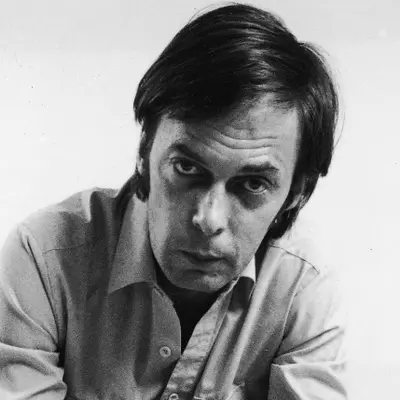
Erno Rubik is a Hungarian inventor, architect, designer, and professor who has a net worth of $100 million.
Erno Rubik is best known for creating the Rubik's Cube, the three-dimensional puzzle that became one of the most successful toys ever invented. Rubik built the first working prototype in Budapest in 1974 while teaching architecture and design, originally using the object to explore movement and spatial relationships. The puzzle was patented in Hungary in 1975, introduced domestically as the "Magic Cube," and launched internationally as the Rubik's Cube in 1980.
The Cube became a global sensation almost immediately. Ideal Toy Company sold 100 million units within its first three years of international distribution, and worldwide sales eventually surpassed 500 million cubes. It is the best-selling puzzle toy in history and has generated at least $5 billion in global retail revenue. In 2017 alone, the Rubik's brand produced $250 million in retail sales.
The contrast between Rubik's invention and his circumstances was extraordinary. When the Cube began taking off internationally, he was an architecture and design professor in communist Hungary earning $200 per month. At the height of the early craze, his royalties reached $30,000 per month after taxes, 150 times his teaching salary. The money made Rubik one of the richest people in Hungary at a time when private wealth on that scale was extremely unusual.
Rubik went on to create additional puzzles including Rubik's Snake and Rubik's Magic, founded Rubik Studio, supported education and engineering initiatives, and published the memoir "Cubed: The Puzzle of Us All." In January 2021, Canadian toy company Spin Master completed a $50 million acquisition of Rubik's Brand Ltd., giving the company ownership of the Rubik's Cube brand and its enormous portfolio of intellectual property.
Early Life
Ernő Rubik was born on July 13, 1944, in Budapest, Hungary, during World War II. His father, also named Ernő Rubik, was a highly regarded mechanical engineer and aircraft designer who specialized in gliders. His mother, Magdolna Szántó, was a poet.
Rubik later credited his father with teaching him the importance of persistence and learning through physical objects. His mother's artistic sensibility was equally important, giving him an upbringing that combined engineering, design, mathematics, and art.
Erno was a quiet and solitary child who enjoyed books, puzzles, models, and figuring out how objects worked. Those interests eventually led him toward both sculpture and architecture.
Education and Architecture
From 1958 to 1962, Rubik studied sculpture at Budapest's Secondary School of Fine and Applied Arts. He then enrolled in the architecture program at the Budapest University of Technology, earning his architecture degree in 1967.
Rubik continued his education at the Hungarian Academy of Applied Arts and Crafts, studying interior architecture and design and earning another diploma in 1971. His education reflected the combination that would ultimately make the Cube possible: he approached objects simultaneously as an architect interested in structure, a sculptor interested in physical form, and a designer concerned with how people interact with objects.
He worked professionally as an architect before joining the Academy of Applied Arts as an instructor. From 1971 through the end of the decade, he taught architecture and design while experimenting with geometric models.
Inventing the Rubik's Cube
In 1974, while teaching in Budapest, Rubik began experimenting with a problem that fascinated him: how could parts of a three-dimensional object move independently without the entire structure falling apart?
He constructed his early prototype by hand in his mother's apartment using wood and other simple materials. The breakthrough was an internal mechanism that allowed the individual sections of the cube to rotate around a central structure while remaining connected.
Rubik colored the six sides so he could observe how the pieces moved in relation to one another. Once he began twisting the finished prototype, he realized he had unintentionally created something else: a puzzle.
After scrambling the colors, even Rubik did not immediately know how to restore the Cube to its original configuration. It took him weeks to solve his own invention for the first time.
The standard 3×3 Rubik's Cube has 43,252,003,274,489,856,000 possible configurations. Only one represents the completely solved Cube.
Patent and the "Magic Cube"
Rubik filed for a Hungarian patent in 1975, describing his invention as a "spatial logic toy." The patent protected the Cube's internal mechanism in Hungary, but Rubik did not obtain equivalent patent protection in several important international markets, including the United States.
Hungary was still a communist country with a state-controlled economy and little infrastructure for transforming a professor's unusual puzzle into an international consumer product. The first commercial versions were manufactured in Hungary by Politechnika and reached Hungarian stores in 1977 under the name "Bűvös Kocka," or "Magic Cube."
The toy gradually attracted attention outside Hungary. By 1979, it had reached international toy fairs, where British toy and games entrepreneur Tom Kremer recognized its potential.
Kremer became instrumental in persuading Western toy companies to take the Cube seriously. He helped arrange a deal that ultimately brought the puzzle to Ideal Toy Company, one of America's major toy manufacturers.
The Ideal Toy Deal
Ideal agreed to introduce the puzzle internationally and changed its name from the generic "Magic Cube" to the far more distinctive "Rubik's Cube."
The international launch began in 1980. Almost immediately, the Cube turned into one of the largest toy crazes in history. Ideal produced millions of units as demand overwhelmed toy stores, and shortages developed in several countries.
Ideal sold 100 million Rubik's Cubes within three years. Including other licensed production, approximately 150 million units were sold between 1980 and 1982 alone.
The Cube also produced an enormous secondary industry. Solution books became bestsellers, television programs featured the toy, competitions emerged, and unauthorized manufacturers flooded the market with imitation cubes.
How Much Money Did Erno Rubik Make From the Cube?
Rubik's financial arrangement was complicated by the fact that he created the Cube in communist Hungary. Production and international trade initially flowed through Hungarian state-controlled companies, meaning he did not simply own a private toy company that manufactured and sold every Cube himself.
His primary financial benefit came through royalties and intellectual-property arrangements. Early in the Cube's international success, Rubik continued earning only $200 per month from his university teaching position. He initially saw relatively little money from the exploding international sales.
That changed as royalties began flowing back to Hungary. At the height of the first Rubik's Cube craze, Rubik was receiving $30,000 per month after taxes from the toy, equivalent to $360,000 per year at a time when his academic salary totaled just $2,400 annually.
The payments made him a genuine millionaire behind the Iron Curtain. In a 1986 interview, he described the unusual position bluntly:
"In our currency, I am a multimillionaire. In dollars, I am also a millionaire, but unfortunately I can't say exact numbers, because I really don't know. I do not check the bank account all the time."
Rubik nevertheless continued working as a professor and designer rather than abandoning his academic career to live as a celebrity entrepreneur.
$5+ Billion in Cube Sales
Rubik's invention ultimately became vastly more valuable than the fortune its inventor personally accumulated.
More than 500 million Rubik's Cubes have been sold since the puzzle was created, replacing the old 350 million figure that was commonly cited for years. Lifetime retail revenue has exceeded $5 billion.
The brand has also experienced multiple periods of renewed popularity. After the explosive early-1980s craze faded, the internet helped create a new generation of enthusiasts who shared solving methods and competed to set faster times.
By 2008, global sales had climbed back to 15 million cubes in a single year. Rubik's Brand recorded $250 million in worldwide retail sales in 2017, more than four decades after Erno constructed the original prototype.
Rubik's Snake and Rubik's Magic
The Cube was not Rubik's only successful puzzle.
He created Rubik's Snake, a chain of triangular prisms that can be twisted into different shapes. Introduced internationally during the early 1980s, it sold several million units.
Rubik followed with "Rubik's Magic," consisting of hinged square panels that can be manipulated into different configurations. Released during the 1980s, Rubik's Magic sold more than 14 million units worldwide.
His other designs have included Rubik's Magic: Master Edition, Rubik's Tangle, and Rubik's 360. None approached the commercial significance of the original Cube, but together they established Rubik as a puzzle designer rather than the creator of a single accidental hit.
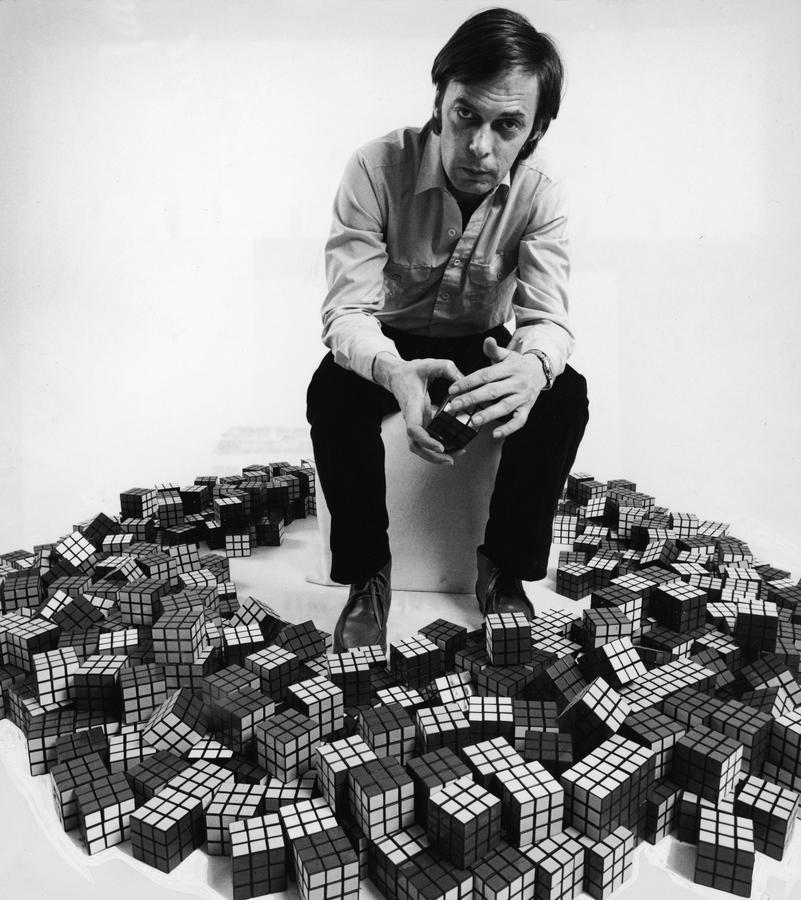
(Photo by Pictorial Parade/Getty Images)
Rubik Studio
As the initial Cube craze began cooling during the 1980s, Rubik turned his attention back toward design and invention.
He served as editor-in-chief of the Hungarian games magazine "…És játék" in 1982 and 1983. In 1983, he established Rubik Studio, an organization devoted to product design, architecture, games, puzzles, and other creative projects.
Rubik also became deeply involved in supporting Hungarian designers, engineers, and students. He established foundations and educational initiatives intended to encourage talented young people working in technology, engineering, architecture, science, and design.
From 1990 to 1996, Rubik served as president of the Hungarian Academy of Engineering. He subsequently became its honorary president.
The Rise of Speedcubing
The Cube's original craze faded dramatically during the mid-1980s, but the puzzle never disappeared. A dedicated community continued developing increasingly sophisticated solving techniques, and the arrival of the internet gave Cube enthusiasts around the world an easy way to find each other.
The first official Rubik's Cube World Championship had been held in Budapest in 1982. Competitive cubing reemerged on a much larger scale in the 2000s, eventually developing into the organized international activity now known as speedcubing.
The World Cube Association oversees competitions around the world covering numerous variations of the puzzle. Competitors solve cubes one-handed, blindfolded, and in increasingly astonishing times.
By 2023, American speedcuber Max Park had reduced the official single-solve world record for the standard 3×3 Cube to 3.13 seconds. Rubik himself has never been especially interested in solving for speed. Even decades after creating the puzzle, his own time remained close to one minute.
Spin Master's $50 Million Acquisition
By the 21st century, the commercial rights surrounding Rubik's invention had evolved into Rubik's Brand Ltd., a London-based company responsible for managing the Rubik's name, trademarks, licensing, and branded products.
Rubik remained influential in the business, but the corporate ownership structure included other investors and entities. The distinction became important when the brand was sold.
In October 2020, Canadian toy company Spin Master announced an agreement to acquire Rubik's Brand Ltd. The transaction closed on January 4, 2021.
Spin Master paid $50 million in cash, with its financial statements initially valuing the total purchase consideration at $56.4 million after working-capital adjustments and the fair value of future royalties.
The $50 million was the purchase price for Rubik's Brand Ltd., not a $50 million personal check paid directly to Erno Rubik. Following the acquisition, Spin Master became the owner of the Rubik's Cube brand and its global trademark portfolio and began expanding the line with new versions, games, and licensed products.
"Cubed"
In 2020, Rubik published "Cubed: The Puzzle of Us All," an unusual memoir that uses the Cube as a way to explore creativity, education, curiosity, problem-solving, and his own life.
Rather than presenting a conventional autobiography, Rubik wrote about the relationship between order and chaos, invention and discovery, and the reasons humans remain fascinated by difficult problems.
He has always been somewhat uncomfortable with the word "inventor," preferring the idea that designers discover possibilities that already exist within objects, mathematics, and nature.
The book also provided an unusually personal look at a man who spent decades avoiding the celebrity that accompanied his creation.
Awards and Honors
Rubik has received extensive recognition in Hungary and internationally. The Rubik's Cube won Toy of the Year honors in multiple countries during its initial global launch, and New York's Museum of Modern Art added the Cube to its permanent design collection.
In 1983, Rubik received Hungary's State Prize. He was awarded the Gábor Dénes Prize in 1995 and the Kossuth Prize, one of Hungary's most important cultural honors, in 2007.
His later honors included the Hungarian Order of Merit, the Prima Primissima Prize, the George Washington Award from the American Hungarian Foundation, and honorary citizenship of Budapest.
In 2014, the Hungarian government awarded Rubik the Order of Saint Stephen, the country's highest state honor. That same year, he became one of the first recipients of Hungary's Artist of the Nation title.
Personal Life
Rubik has spent essentially his entire life in Hungary and has remained intensely private despite his worldwide fame. He is married and has four children as well as several grandchildren.
His interests extend far beyond puzzles. He is an avid reader, particularly of science fiction, and enjoys gardening, table tennis, sailing, architecture, and collecting succulents.
Rubik has often described himself as fundamentally different from the object carrying his name. The Cube attracts attention, invites interaction, and appears almost everywhere in popular culture; Rubik has generally preferred privacy, quiet work, and long periods devoted to thinking through problems.
Real Estate
The success of the Cube allowed Rubik to enjoy a standard of living that was extraordinary by the standards of communist Hungary.
By the mid-1980s, he was renovating a substantial Budapest villa for himself and his family. The home included a three-car garage, glass-enclosed porch, expanded upper floor for his children, private office, sauna, and indoor swimming pool.
Rubik remained based in Budapest in the decades that followed. His later home is on the greener Buda side of the city, where he has maintained a garden and continued working on design, architecture, and educational projects.
Despite earning millions from an object owned by households throughout the world, Rubik largely avoided the conspicuous international real-estate collecting associated with many similarly wealthy inventors and entrepreneurs. His life and work remained centered in Hungary.
Legacy
Few individual product designers have created an object with the cultural reach of the Rubik's Cube. It has appeared in movies, television programs, advertising, art installations, mathematics classrooms, competitive sporting events, museums, and hundreds of millions of homes.
The Cube's appeal comes partly from the unusual combination Rubik discovered in 1974. The object itself is simple enough to understand instantly, yet solving it can require learning algorithms, recognizing patterns, and navigating more than 43 quintillion possible configurations.
Fifty years after Rubik built the first prototype, the Cube had sold more than 500 million units. It had survived the collapse of communism, the rise and fall of multiple toy companies, the emergence of video games, smartphones, social media, and streaming entertainment, while remaining essentially the same mechanical puzzle Rubik constructed in his mother's Budapest apartment in 1974.