


What Was Albert Einstein's Net Worth and Salary?
Albert Einstein was a German-born theoretical physicist who had a reported net worth of $65,000 at the time of his death in 1955. That's the same as around $815,000 in today's dollars after adjusting for inflation.
Albert Einstein is widely regarded as one of the greatest scientists in history, best known for developing the special and general theories of relativity and establishing the relationship between mass and energy through his famous equation E=mc². His discoveries transformed modern physics and fundamentally changed humanity's understanding of space, time, gravity, and the universe. In 1922, he received the 1921 Nobel Prize in Physics for his explanation of the photoelectric effect, a major contribution to the development of quantum theory. Although Einstein became one of the most recognizable people in the world, his personal fortune was relatively modest compared with his extraordinary fame. His income came primarily from academic salaries, lectures, and publications rather than commercial enterprises. His financial history also included the loss of assets following the Nazi rise to power and a divorce settlement that transferred the economic benefits of his Nobel Prize to his first wife. After his death, Einstein's name, likeness, and intellectual property became extraordinarily valuable, generating hundreds of millions of dollars in reported licensing revenue for the Hebrew University of Jerusalem. Those posthumous earnings, however, are separate from his personal wealth at the time of his death.
Salary, Estate Value, and Posthumous Royalties
Despite his worldwide fame, Einstein accumulated considerably less personal wealth than many celebrities and entrepreneurs of comparable public recognition. His income came primarily from university appointments, scientific publications, lectures, and occasional other professional activities. He was financially comfortable during his later years in Princeton but generally avoided the extravagant lifestyle that his international celebrity might have supported.
Celebrity Net Worth has historically reported Einstein's estate at $65,000 in 1955 dollars, equivalent to approximately $815,000 in today's dollars. However, the original public announcement of his will did not disclose an estate valuation. The $65,000 figure matches the combined cash bequests specified in his will, but those bequests do not establish the total value of his assets, property, or intellectual rights.
The most financially valuable part of Einstein's legacy emerged after his death. His writings and associated intellectual-property rights ultimately became the foundation for a substantial licensing business administered for the benefit of the Hebrew University of Jerusalem.
Princeton Salary and Academic Earnings
Einstein's financial position improved substantially when he accepted a permanent appointment at the Institute for Advanced Study in Princeton, New Jersey, in 1933.
During negotiations, Einstein reportedly suggested that an annual salary of $3,000 would be sufficient. Institute director Abraham Flexner and the organization's financial backers considered that amount far too low for a scientist of his stature.
The Institute ultimately arranged an annual salary of $15,000, along with generous retirement provisions. Original correspondence preserved in the Institute's archives confirms the $15,000 arrangement, which provided Einstein with an unusually secure financial position during the Great Depression.
His compensation arrangements evolved during his later years. An official Institute certification dated August 21, 1945, listed his annual salary at $7,000, supplemented by pension payments of $5,996.48. Together, those payments represented nearly $13,000 in annual income.
Einstein remained associated with the Institute for the rest of his life, continuing his research without the extensive teaching obligations typical of university professors. His appointment also provided stability after the financial upheaval caused by his departure from Germany.
Nobel Prize Money and Divorce Settlement
One of the most unusual financial arrangements in Einstein's life involved his Nobel Prize winnings.
During negotiations surrounding his divorce from his first wife, Mileva Marić, Einstein agreed that if he eventually received a Nobel Prize, the money would be allocated for the benefit of Mileva and their children.
The agreement was reached before Einstein had actually won the award. At the time, he was already internationally respected, and both parties anticipated that he might eventually receive the prestigious prize.
Einstein was awarded the 1921 Nobel Prize in Physics in November 1922. The prize money totaled 121,572.54 Swedish kronor, a substantial sum that represented many years of his earnings in Germany.
Rather than keeping the proceeds, Einstein fulfilled the financial provisions of his divorce agreement. The money was transferred into accounts intended to support Mileva and their two sons, Hans Albert and Eduard.
Part of the funds was subsequently invested in residential real estate in Zurich, Switzerland. Mileva eventually acquired three apartment buildings, using their rental income to help support herself and the children.
The investments encountered financial difficulties during the Great Depression, when tenants struggled to pay rent and the properties became increasingly expensive to maintain. Einstein remained involved in correspondence about the investments and occasionally provided additional financial assistance.
The arrangement meant that one of the most significant cash awards of Einstein's career did not become part of his personal accumulated fortune.
Einstein's Will and Estate Distribution
Einstein died on April 18, 1955, leaving a will dated March 18, 1950. His executor was longtime friend Otto Nathan, who worked with attorney David J. Levy to administer the estate.
According to an official announcement released on April 30, 1955, Einstein left $20,000 to his longtime secretary Helen Dukas and another $20,000 to his stepdaughter Margot Einstein. His younger son, Eduard, was to receive $15,000, while his older son, Hans Albert, was to receive $10,000.
Einstein also bequeathed his violin to his grandson Bernhard Einstein. His books and personal effects went to Dukas, while his household furniture and other possessions were left to Margot.
The four principal cash bequests totaled exactly $65,000, a figure that has sometimes been presented as the value of Einstein's estate. However, the official announcement explicitly stated that the total estate valuation had not been made available. The executors described the estate only as moderate in size and explained that the cash bequests could be reduced proportionately if the estate lacked sufficient funds.
The will also created a separate arrangement for Einstein's literary property. His copyrights, publication rights, royalties, and other literary interests were to be held in trust for Helen Dukas and Margot Einstein during their respective lifetimes, with the remaining interests ultimately passing to the Hebrew University of Jerusalem.
The value of those intellectual-property rights would increase dramatically in the decades following Einstein's death.
How Einstein Became a Multimillion-Dollar Brand After Death
Einstein became one of the world's most commercially valuable deceased public figures, with his unmistakable hairstyle, mustache, and reputation for genius making him attractive to advertisers and consumer-product manufacturers.
The Hebrew University of Jerusalem, which Einstein had helped establish, eventually assumed control of his literary estate and began asserting licensing rights involving his name and likeness. During the 1980s, the university developed a more systematic approach to commercial licensing, approving certain products while challenging uses it considered unauthorized or inappropriate.
One of the best-known examples involved the "Baby Einstein" line of educational products for young children. In 2005, the Walt Disney Company reportedly paid $2.66 million for a 50-year license to use the "Baby Einstein" name. The agreement illustrates how valuable Einstein's identity had become, although that payment should not be confused with the total annual earnings of his posthumous licensing business.
His name and likeness have also been used in advertising campaigns, books, educational products, software, merchandise, and other commercial ventures.
According to a 2022 investigation by The Guardian, Forbes estimated that Einstein generated an average of approximately $12.5 million annually in posthumous licensing earnings between 2006 and 2017. The newspaper estimated that cumulative posthumous earnings had reached at least $250 million by 2022.
These figures refer to the commercial use of Einstein's intellectual property and identity, not wealth personally accumulated during his lifetime. The licensing arrangements have also been the subject of legal disputes concerning the scope and duration of posthumous publicity rights.
Einstein's descendants have not generally received the financial benefits of this licensing business. His granddaughter Evelyn Einstein, who died in 2011, experienced substantial financial hardship despite belonging to one of the world's most famous families.
Our previous reporting on the highest-earning deceased celebrities documented Einstein's place among the most commercially valuable historical figures.
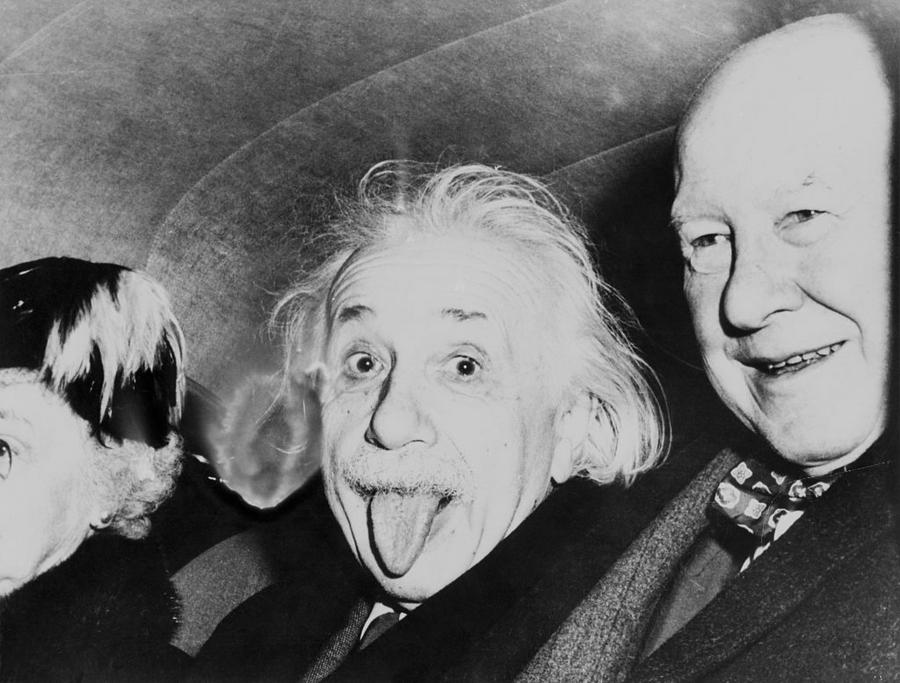
Albert Einstein in Princeton, New Jersey. (via Getty Images)
Early Life
Albert Einstein was born on March 14, 1879, in Ulm, in the Kingdom of Württemberg in the German Empire. His parents, Hermann Einstein and Pauline Koch, were members of a secular Jewish family. His father worked in the electrical equipment industry, and his mother encouraged Albert's interest in music, particularly the violin.
When Einstein was an infant, his family moved to Munich, where his father and uncle operated an electrical engineering business. Einstein attended a Catholic elementary school before enrolling at the Luitpold Gymnasium, although he frequently clashed with the school's rigid teaching methods.
Contrary to a popular myth, Einstein was not a poor mathematics student. He demonstrated exceptional mathematical ability from a young age and independently studied advanced mathematical subjects while still a teenager.
His father's business eventually encountered financial difficulties, prompting the family to relocate to Italy. Einstein subsequently moved to Switzerland, where he completed his secondary education and enrolled at the Swiss Federal Polytechnic School in Zurich.
He graduated in 1900 with a teaching diploma in mathematics and physics but struggled to secure an academic appointment immediately afterward.
Swiss Patent Office and Early Scientific Work
Following graduation, Einstein supported himself through temporary teaching positions and private tutoring. In 1902, he obtained a position as a technical examiner at the Swiss Federal Patent Office in Bern, where he evaluated inventions involving electrical and mechanical systems.
His initial annual salary was approximately 3,500 Swiss francs. Although the work provided reliable income, it left him outside the traditional academic research establishment.
Einstein continued developing scientific ideas during his free time, often discussing difficult theoretical problems with friends and colleagues. In 1905, while still employed at the patent office, he published a remarkable series of scientific papers that transformed modern physics.
The papers addressed the photoelectric effect, Brownian motion, special relativity, and the equivalence of mass and energy. Together, they established Einstein as one of the most original scientific thinkers of his generation.
The year became known as his "Annus Mirabilis," or "Miracle Year," reflecting the extraordinary number of scientific breakthroughs he produced within such a short period.
Einstein also completed his doctoral dissertation at the University of Zurich in 1905, further establishing his credentials as a professional physicist.
Special and General Relativity
Einstein's 1905 theory of special relativity challenged traditional assumptions about space and time. It demonstrated that measurements of time and distance depend on the relative motion of observers and that the speed of light in a vacuum remains constant.
His famous equation, E=mc², established a relationship between mass and energy, demonstrating that even a small amount of mass corresponds to an enormous quantity of energy.
Einstein continued expanding his ideas over the following decade. In 1915, he presented the general theory of relativity, describing gravity as the curvature of spacetime caused by mass and energy.
The theory made several predictions that differed from Newtonian physics, including the bending of light by massive objects. During a solar eclipse in 1919, observations led by British astronomer Arthur Eddington provided evidence supporting Einstein's predictions.
The announcement attracted worldwide attention and transformed Einstein from a prominent scientist into an international celebrity. Newspapers celebrated his achievements, and he became one of the few physicists whose name was instantly recognizable to the general public.
His work influenced subsequent generations of researchers, including Stephen Hawking, whose research into black holes and cosmology depended on the framework established by general relativity.
Academic Career and International Fame
Einstein's growing reputation brought increasingly prestigious academic appointments. In 1909, he left the Swiss Patent Office to become a professor at the University of Zurich.
He subsequently held positions at Charles University in Prague and the Swiss Federal Polytechnic in Zurich before moving to Berlin in 1914. There, he joined the Prussian Academy of Sciences and became associated with the Kaiser Wilhelm Institute for Physics.
Following the international confirmation of general relativity in 1919, Einstein traveled widely, delivering lectures and meeting prominent scientists, intellectuals, and political leaders.
His celebrity extended well beyond academic circles. During visits to the United States, he met entertainers including Charlie Chaplin, with whom he developed a friendship.
In 1921, Einstein was nominated for the Nobel Prize in Physics, which he ultimately received the following year. Although relativity had made him famous, the Nobel Committee specifically recognized his explanation of the photoelectric effect.
Despite his celebrity, Einstein continued concentrating on theoretical research and largely avoided commercial efforts to exploit his public image.
Leaving Nazi Germany and Moving to Princeton
Einstein's life changed dramatically with the rise of Adolf Hitler and the Nazi Party in Germany.
Einstein had become a prominent critic of German nationalism, antisemitism, and militarism. When Hitler came to power in 1933, Einstein was traveling outside Germany and decided not to return. He renounced his German citizenship, and his property and financial interests in Germany became subject to Nazi confiscation and persecution.
Among the possessions he lost access to was his beloved summer home in Caputh, near Berlin. The house had been constructed in 1929 after Einstein purchased land and commissioned architect Konrad Wachsmann to design a modest wooden residence.
Einstein relocated permanently to the United States in 1933, accepting his appointment at the Institute for Advanced Study in Princeton. He became an American citizen in 1940 while retaining his Swiss citizenship.
In 1936, Einstein purchased a home at 112 Mercer Street in Princeton. The modest two-story residence became his permanent home and remained closely associated with his scientific work during the final two decades of his life.
After his death, the house continued to be occupied by his stepdaughter Margot and secretary Helen Dukas. It was designated a National Historic Landmark in 1976.
Personal Life
Einstein married his first wife, Serbian physicist and mathematician Mileva Marić, on January 6, 1903. The couple had met while studying at the Swiss Federal Polytechnic School, where Marić was one of the few women enrolled in the mathematics and physics program.
They had three children together. Their daughter, Lieserl, was born in 1902, before the couple married. Little is known about her subsequent life, and historians have been unable to establish definitively what happened to her after infancy.
Their sons, Hans Albert and Eduard, were born in 1904 and 1910, respectively. Hans Albert later became a successful engineer and university professor, while Eduard experienced serious psychiatric difficulties that required extensive medical treatment.
Einstein and Marić separated in 1914, and their divorce was finalized in February 1919. Several months later, Einstein married Elsa Löwenthal, his cousin, who had two daughters from a previous marriage.
Elsa accompanied Einstein during his international travels and helped manage his increasingly complicated public life. She died in December 1936, three years after the couple relocated to Princeton.
Einstein never remarried. During his later years, he maintained close relationships with family members, friends, and scientific colleagues, while continuing to enjoy sailing, music, and playing the violin.
The Atomic Bomb and World War II
Einstein's scientific discoveries played an important role in the development of nuclear physics, although he was not directly involved in building the atomic bomb.
In 1939, physicist Leo Szilard and other scientists became concerned that Nazi Germany might develop nuclear weapons using uranium. They persuaded Einstein to sign a letter warning President Franklin D. Roosevelt about the possibility and encouraging American research into nuclear chain reactions.
The letter helped draw the Roosevelt administration's attention to nuclear research and became part of the series of events that eventually led to the Manhattan Project.
Einstein himself did not work on the Manhattan Project and was not granted the security clearance necessary to participate in its classified research. His scientific fame and political activities made him a controversial figure within parts of the American government.
Following the atomic bombings of Hiroshima and Nagasaki in 1945, Einstein became an outspoken advocate for international nuclear arms control. He later expressed regret about his role in encouraging American nuclear research, although his original warning had been motivated by fears that Nazi Germany might acquire such weapons first.

Getty Images
Political and Philosophical Views
Einstein was active in political and humanitarian causes throughout his adult life. Having experienced antisemitism in Europe, he strongly opposed racial discrimination and became a supporter of the American civil rights movement.
He maintained friendships with Black intellectuals and activists and criticized segregation in the United States. He was also a lifelong advocate for international cooperation, education, and peaceful conflict resolution.
Einstein identified with socialist political ideas, criticizing economic systems that concentrated wealth and power while leaving ordinary people vulnerable to insecurity. He also supported civil liberties and opposed political persecution during the Cold War.
His relationship with Zionism was complex. He supported the creation of institutions that would provide educational and cultural opportunities for Jewish people in Palestine, particularly the Hebrew University of Jerusalem. At the same time, he advocated cooperation and peaceful coexistence between Jewish and Arab communities.
In 1952, following the death of Israel's first president, Chaim Weizmann, Einstein was offered the presidency of Israel. He declined, explaining that he lacked the experience and temperament necessary for political leadership.
Although Einstein came from a Jewish family, his personal religious beliefs did not conform to conventional religious doctrine. He frequently described his sense of wonder at the natural universe and expressed admiration for the philosophy of Baruch Spinoza.
Death and Scientific Legacy
Albert Einstein died on April 18, 1955, at Princeton Hospital in New Jersey. He was 76 years old. His death resulted from an abdominal aortic aneurysm, a condition for which he had previously undergone treatment.
Einstein had requested that his body be cremated and that his ashes be scattered privately, rather than creating a public burial site. His wishes were carried out following his death.
His scientific legacy continued expanding throughout the decades that followed. General relativity became central to modern cosmology, black hole research, and the study of gravitational waves.
In February 2016, researchers at the Laser Interferometer Gravitational-Wave Observatory announced the first direct detection of gravitational waves, confirming a prediction Einstein had made approximately a century earlier.
His work also became essential to technologies including satellite navigation systems, which require corrections based on special and general relativity to maintain accuracy.
Beyond science, Einstein became a universal symbol of intellectual genius. His name entered everyday language as a synonym for extraordinary intelligence, while his distinctive appearance became one of the most recognizable images of the twentieth century.
The financial success of his posthumous licensing business demonstrated the enduring commercial value of his reputation, even though Einstein himself had little interest in converting his scientific fame into personal wealth.


