












What Is William Clay Ford's Net Worth?
William Clay Ford was an American businessman and sports team owner who had a net worth of $2.2 billion at the time of his death in 2014.
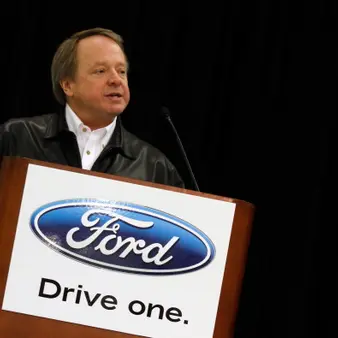
William Clay Ford was the youngest son of Edsel Ford, the last surviving grandchild of Henry Ford, and one of the principal stewards of the Ford family's automobile fortune for more than half a century. He spent 57 years on the Ford Motor Company board, helped create the celebrated Continental Mark II, chaired the company's design committee for 32 years, and played a crucial role in preserving the Ford family's special voting control when the automaker went public. He also owned the NFL's Detroit Lions for 50 seasons. Ford paid $4.5 million for the franchise in 1963, officially becoming sole owner in January 1964. By the time of his death, the Lions were valued at $960 million. His wealth also included a substantial personal stake in Ford Motor Company; shortly before his death, he beneficially owned more than 6.4 million of the family's Class B shares.
Early Life and Education
William Clay Ford was born on March 14, 1925, in Detroit, Michigan. He was the youngest child of Edsel Ford and Eleanor Clay Ford. His siblings were Henry Ford II, Benson Ford, and Josephine Clay Ford.
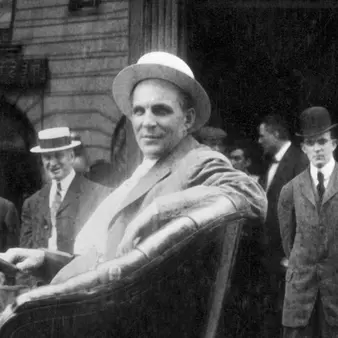
William's father served as president of Ford Motor Company from 1919 until his death in 1943, while his grandfather Henry Ford founded the company and revolutionized mass automobile production.
William attended the Hotchkiss School in Connecticut. At 17, during World War II, he entered the U.S. Navy's aviation cadet program and trained at St. Mary's Pre-Flight School in California.
After the war, Ford returned to Yale University. He played soccer and tennis and graduated in 1949 with a degree in economics.
Ford Motor Company
William was elected to Ford Motor Company's board of directors on June 4, 1948, before he had even graduated from Yale. He formally joined the company in 1949, initially working in sales and advertising.
His early assignments included labor relations and quality control before he gravitated toward the area that would define much of his Ford career: automobile design.
In 1952, Ford was placed in charge of Special Product Operations, leading a team tasked with creating a successor to the original Lincoln Continental developed under his father, Edsel. William wanted the new vehicle to retain the proportions and elegance of his father's car while updating it for the postwar era.
The result was the Continental Mark II, introduced for the 1956 model year. The hand-built luxury coupe became one of Ford's most celebrated designs and was owned by celebrities including Elvis Presley and Elizabeth Taylor. Ford later said the project had particular personal significance because of its connection to his father.
William became a Ford vice president in 1953 and served as vice president and general manager of the Continental Division from 1954 to 1956. When the division was folded into Lincoln, he assumed responsibility for corporate product planning and design.
In 1957, Ford became the first chairman of Ford Motor Company's Design Committee. He held the position for the next 32 years, influencing the appearance of Ford, Lincoln, and Mercury vehicles. Among the most important cars developed during his tenure was the 1961 Lincoln Continental, famous for its clean styling and rear-hinged "coach doors."

Getty Images
Ford Family Control
One of William Clay Ford's most consequential contributions to the family business occurred when Ford Motor Company prepared to go public in 1956.
William strongly supported preserving family control despite selling shares to outside investors. The resulting structure gave publicly traded common stock 60% of the company's voting power while a special Class B stock held by Ford descendants retained the remaining 40%.
The arrangement allowed the Ford family's economic ownership percentage to shrink dramatically over succeeding generations without surrendering its powerful voice in company affairs.
William remained one of the largest individual holders of Class B shares for the rest of his life. Ford Motor Company's 2014 proxy statement showed that he beneficially owned 6,439,538 Class B shares as of February 1, 2014, representing 9.09% of the outstanding Class B stock.
After the death of his older brother Henry Ford II in 1987, William became the senior figure of the Ford family.
Later Ford Career
William's responsibilities increased substantially during the latter part of his Ford career. In 1973, he was named vice president of product design.
In 1978, he became chairman of Ford's executive committee and joined the Office of the Chief Executive. He was elected vice chairman of the board in 1980 and chairman of the finance committee in 1987.
William retired from his position as vice chairman in 1989 and stepped down as finance committee chairman in 1995. He nevertheless remained a Ford director until May 2005, when he retired from the board and was named director emeritus.
His board service lasted nearly 57 years.
Detroit Lions
William Clay Ford's second great business passion was professional football.
He became president of the Detroit Lions in 1961. In November 1963, he struck a deal to purchase control of the franchise, and on January 10, 1964, he officially became the Lions' sole owner.
Ford paid $4.5 million for the Detroit Lions.
The purchase became one of the most valuable assets in his fortune. By 2014, the year Ford died, Forbes valued the Lions at $960 million.
Financially, the investment was spectacular. On the field, Ford's ownership tenure was considerably more frustrating.
The Lions had won the NFL championship in 1957, several years before Ford became sole owner, but they never returned to the league championship game during his 50 seasons of ownership. Their greatest run came during the 1991 season, when Barry Sanders helped lead Detroit to a 12-4 record.
The Lions defeated the Dallas Cowboys 38-6 in the divisional playoffs, producing the franchise's first postseason victory since its 1957 championship. Detroit then lost to Washington in the NFC Championship Game.
It remained the Lions' only playoff victory during William's ownership.
Ford developed a reputation for extreme loyalty to executives and coaches, even when results were poor. Russ Thomas remained the team's general manager for more than two decades. Years later, Ford hired former Lions player and broadcaster Matt Millen to run football operations despite Millen having no front-office experience. Millen's tenure became one of the least successful executive runs in modern NFL history.
The low point came in 2008, when the Lions went 0-16, becoming the first team in NFL history to lose all 16 games of a regular season.
Despite the lack of championships, Ford remained deeply committed to keeping the team in Detroit. In the 1990s, he and his son William Clay Ford Jr. were instrumental in bringing the Lions back from suburban Pontiac to downtown Detroit.
Ford Field opened in 2002 and became one of the centerpieces of downtown Detroit's redevelopment.
Henry Ford Museum
William also played an enormous role in preserving the Ford family's historical legacy.
In 1951, at just 26 years old, he became chairman of the institution now known as The Henry Ford, which encompasses Henry Ford Museum of American Innovation and Greenfield Village.
He held the chairmanship for 38 years.
Under Ford's leadership, the museum professionalized its operations, expanded its collections, and developed major new visitor experiences. Acquisitions during his tenure included President John F. Kennedy's presidential limousine, Firestone Farm, a Douglas DC-3 aircraft, and the Allegheny steam locomotive.
William eventually became the largest donor in the institution's history. The museum's William Clay Ford Hall of American Innovation was named in his honor.
After stepping down as chairman, he remained associated with the institution as chairman emeritus.
Philanthropy and Civic Work
William supported numerous charitable and civic organizations in addition to The Henry Ford.
He served as a director of the Detroit Economic Club, a national trustee of the Boys & Girls Clubs of America, an honorary chair of United Way for Southeastern Michigan, and a member of the Texas Heart Institute's National Advisory Council.
Henry Ford Health named the William Clay Ford Center for Athletic Medicine in recognition of his support, while the University of Michigan named its outdoor varsity tennis facility the William Clay Ford Tennis Center.
Ford was named a Michiganian of the Year by "The Detroit News" in 2003 and was inducted into the Michigan Sports Hall of Fame in 2005.
Marriage to Martha Firestone
In 1947, William married Martha Firestone, granddaughter of Firestone Tire and Rubber Company founder Harvey Firestone.
The marriage joined two of America's great automotive fortunes. William's grandfather had founded Ford Motor Company, while Martha's grandfather had built Firestone into one of the world's dominant tire manufacturers and had been a longtime friend and business associate of Henry Ford.
William and Martha married on June 21, 1947, at St. Paul's Episcopal Church in Akron, Ohio. Their wedding attracted enormous attention and was described by the "Akron Beacon Journal" as the biggest society wedding in the city's history.
They remained married for 66 years and had four children: Martha Ford Morse, Sheila Ford Hamp, William Clay Ford Jr., and Elizabeth Ford Kontulis.
Their son William Clay Ford Jr. eventually became chairman and CEO of Ford Motor Company. Their daughter Sheila later became principal owner and chair of the Detroit Lions.
Death and Lions Inheritance
William Clay Ford died from pneumonia at his home in Grosse Pointe Shores, Michigan, on March 9, 2014. He was 88 years old and died five days before his 89th birthday.
At the time of his death, he was the last surviving grandchild of Henry Ford.
Ownership of the Detroit Lions passed to his widow, Martha Firestone Ford. She served as principal owner and chair from 2014 through 2020 before transferring leadership of the franchise to their daughter Sheila Ford Hamp.
The Ford family continues to own the Lions, preserving an investment William acquired for $4.5 million more than six decades ago.