










What Is Warren Buffett's Net Worth and Salary?
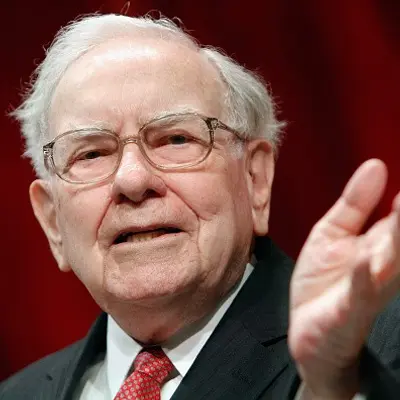
Warren Buffett is an American investor, businessman, and philanthropist who has a net worth of $150 billion. Widely regarded as one of the greatest investors in history, Buffett spent more than six decades transforming Berkshire Hathaway from a failing New England textile manufacturer into a conglomerate worth more than $1 trillion. From 1965 through 2025, Berkshire's per-share market value compounded at an annual rate of 19.7%, compared with 10.5% for the S&P 500 with dividends included. Over the full period, Berkshire's gain exceeded 6 million percent.
Buffett built Berkshire through a combination of wholly owned businesses and investments in publicly traded companies. Its operations have included GEICO, BNSF Railway, Berkshire Hathaway Energy, Dairy Queen, See's Candies, Fruit of the Loom, Benjamin Moore, NetJets, and dozens of other businesses. Berkshire also accumulated major stakes over the years in companies including Coca-Cola, American Express, Apple, Bank of America, Chevron, and Occidental Petroleum.
For more than 40 years as Berkshire's CEO, Buffett paid himself a base salary of just $100,000 per year and received no bonus or stock-based compensation. Nearly all of his wealth came from his ownership of Berkshire Hathaway shares rather than executive pay.
Buffett stepped down as Berkshire's CEO at the end of 2025, with Greg Abel taking over on January 1, 2026. On September 18, 2026, Buffett also relinquished the chairman title and became Chairman Emeritus. His son Howard G. Buffett became chairman, while Warren remained a member of Berkshire's board.
Despite accumulating one of the largest fortunes in history, Buffett has pledged to give virtually all of it away. Since beginning his major philanthropic program in 2006, he has donated more than $64 billion worth of Berkshire shares to charitable foundations.
Warren's Net Worth Without the Donations
Warren Buffett's fortune would be dramatically larger if he had never donated Berkshire Hathaway stock to charity.
When Buffett began his large-scale giving program in 2006, he owned 474,998 Berkshire Class A shares representing more than 30% of Berkshire's economic ownership. Decades of annual donations steadily reduced that position. Following another major donation in July 2026, Buffett owned 188,290 Class A shares and 1,162 Class B shares, representing 13.2% of Berkshire's economic interest.
If Warren had never donated a dollar to charity and had retained the Berkshire shares he gave away, his fortune would likely be in the $340 billion to $350 billion range.
The scale of the difference illustrates one of the unusual features of Buffett's philanthropy. Because he donated Berkshire shares rather than cash, he also gave away the enormous future appreciation those shares subsequently generated.
Had he retained the full stake, his fortune would rival the largest inflation-adjusted fortunes associated with industrialists such as John D. Rockefeller.
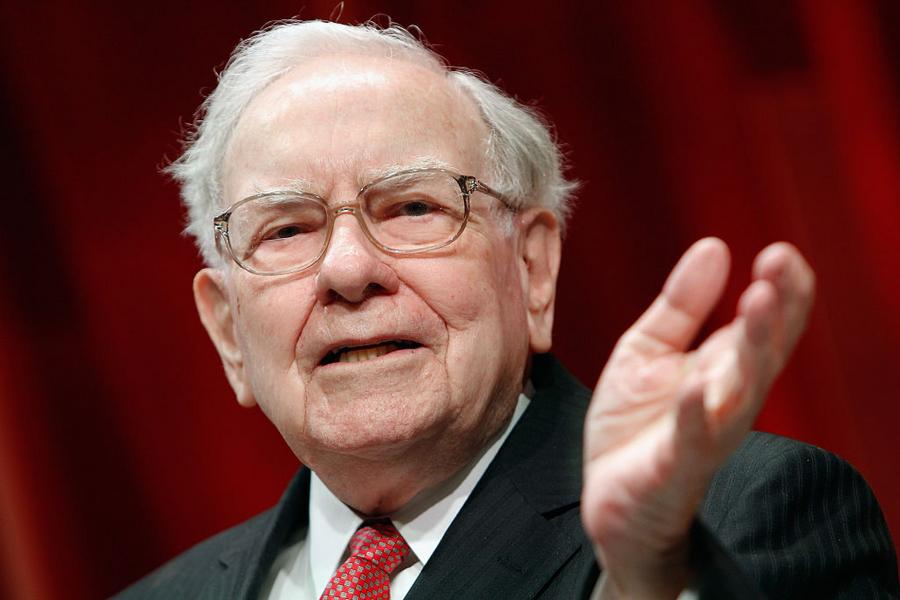
(Paul Morigi/Getty Images for Fortune/Time Inc)
Berkshire Salary
For more than four decades, Buffett's annual base salary as Berkshire Hathaway's CEO remained fixed at $100,000. He received no annual bonus and no equity-based compensation.
His reported total compensation was somewhat higher because Berkshire paid for personal and home security. In 2024, for example, his $100,000 salary plus $305,111 in security expenses resulted in total disclosed compensation of $405,111.
The salary was almost irrelevant to Buffett's finances. His Berkshire shares represented virtually his entire fortune, meaning the value of his wealth rose or fell alongside the company he controlled.
Early Life
Warren Edward Buffett was born on August 30, 1930, in Omaha, Nebraska. He was the second of three children and the only son of Leila and Howard Buffett. His father operated a stock brokerage business and later served four terms in the United States House of Representatives.
Buffett displayed an unusual interest in numbers, business, and money from childhood. When he was seven, he read the book "One Thousand Ways to Make $1,000," which helped intensify his fascination with entrepreneurship.
At age 11, Buffett made his first stock purchase, buying shares of Cities Service Preferred for himself and his sister. He also earned money through newspaper routes, selling chewing gum and Coca-Cola, detailing cars, and other small ventures.
As a teenager, Buffett and a friend purchased used pinball machines and placed them in barber shops. He also used savings from his newspaper business to acquire farmland in Nebraska.
When Howard Buffett was elected to Congress in 1942, the family moved to Washington, D.C. Warren attended Alice Deal Junior High School and graduated from Woodrow Wilson High School in 1947. His yearbook described him as:
"likes math; a future stockbroker."
College
Buffett enrolled at the Wharton School of the University of Pennsylvania in 1947. He spent two years there before transferring to the University of Nebraska, where he completed his bachelor's degree in business administration in 1950.
He subsequently applied to Harvard Business School but was rejected. That rejection proved enormously consequential because Buffett instead enrolled at Columbia Business School, where he studied under Benjamin Graham and David Dodd.
Graham's philosophy of buying securities for less than their underlying intrinsic value became the intellectual foundation of Buffett's early investing career. Buffett earned a Master of Science degree in economics from Columbia in 1951.
Benjamin Graham and Buffett Partnership
After Columbia, Buffett returned to Omaha and worked as an investment salesman at Buffett-Falk & Co., his father's brokerage firm. He also taught an evening course on investing at the University of Nebraska-Omaha.
Buffett badly wanted to work for Benjamin Graham but was initially turned down. Graham eventually hired him at Graham-Newman Corp. in New York in 1954, where Buffett worked as a securities analyst.
When Graham retired and closed the partnership in 1956, Buffett returned to Omaha. By then, he had accumulated $174,000 in personal savings, a substantial fortune for a 25-year-old.
Buffett began forming investment partnerships using money from friends and relatives. His own capital commitment to the first partnership was only $100, while his partners contributed $105,000.
The partnerships expanded rapidly. By 1962, Buffett had become a millionaire.
GEICO
GEICO became one of the most important companies in Buffett's investing life, but the relationship unfolded in several distinct stages.
As a 20-year-old Columbia student in 1951, Buffett traveled to Washington, D.C., on a Saturday and knocked on the locked door of GEICO's headquarters. An executive named Lorimer Davidson happened to be working and spent hours explaining the insurance business to him.
Buffett became convinced that GEICO possessed an unusual competitive advantage through its direct-to-consumer business model. During 1951, he purchased 350 GEICO shares for a total of $10,282. By the end of the year, the investment represented more than 65% of his net worth.
Buffett sold his entire position in 1952 for $15,259. He later described the sale as a major missed opportunity because the shares he sold would have grown to more than $1 million over the following two decades.
Berkshire returned to GEICO in a major way in 1976 when the insurer was facing serious financial problems. Berkshire invested heavily and eventually accumulated more than half of the company.
In January 1996, Berkshire paid $2.3 billion for the remaining 49% of GEICO it did not already own, making the insurer a wholly owned subsidiary.
Berkshire Hathaway
Buffett began buying shares of Berkshire Hathaway in 1962. At the time, Berkshire was a struggling textile manufacturer created through the merger of two old New England textile companies.
Buffett initially viewed the shares as a classic Benjamin Graham-style bargain: the company traded for less than the value of its working capital. He gradually increased his position and took control of Berkshire in 1965.
Buffett later described buying the textile business as one of his biggest mistakes. The industry required constant investment while producing poor returns, and Berkshire eventually shut its final textile operations in 1985.
The corporate shell, however, proved extraordinarily useful. Buffett redirected Berkshire's capital into insurance companies, securities, and businesses with better economics.
One of his most important early moves was Berkshire's 1967 purchase of National Indemnity. Insurance generated "float"—premium money collected before claims had to be paid—which Buffett could invest while the funds remained available to Berkshire.
That insurance float became one of the engines behind Berkshire's growth.

Charlie Munger and the Evolution of Buffett's Strategy
Buffett's investment philosophy evolved significantly through his relationship with longtime business partner Charlie Munger.
Buffett's early Graham-inspired strategy emphasized extremely cheap securities, even if the underlying businesses were mediocre. Munger pushed Buffett toward paying reasonable prices for exceptional companies capable of generating strong returns for decades.
The purchase of See's Candies in 1972 became a classic example. Berkshire paid $25 million for a business with relatively little tangible capital but enormous customer loyalty and pricing power.
That shift ultimately shaped many of Berkshire's most successful investments. Buffett increasingly looked for companies with strong brands, durable competitive advantages, capable management, high returns on capital, and the ability to reinvest earnings.
Munger formally became Berkshire's vice chairman in 1978 and remained Buffett's closest business partner until his death in November 2023 at age 99.
Major Investments and Acquisitions
Buffett became famous for concentrating money in businesses he believed could remain successful for decades.
Berkshire began building its stake in Coca-Cola in 1988, eventually investing $1.3 billion. The shares subsequently became worth tens of billions of dollars while producing billions more in dividends.
American Express became another long-term holding. Buffett first invested personally in the company during the 1960s after the "salad oil scandal" damaged its share price, and Berkshire later accumulated a major ownership position.
Buffett also oversaw acquisitions of businesses including See's Candies, Nebraska Furniture Mart, Borsheims, Dairy Queen, Benjamin Moore, Fruit of the Loom, NetJets, and Precision Castparts.
In 2010, Berkshire completed its $26 billion acquisition of the portion of BNSF Railway it did not already own. The transaction was the largest acquisition in Berkshire's history at the time.
Berkshire began buying Apple shares in 2016. Apple eventually became by far the largest stock holding in Berkshire's public-equity portfolio and one of the most profitable investments of Buffett's career.
Buffett also built large positions in Occidental Petroleum, Chevron, Bank of America, and several major Japanese trading companies during his later years running Berkshire.
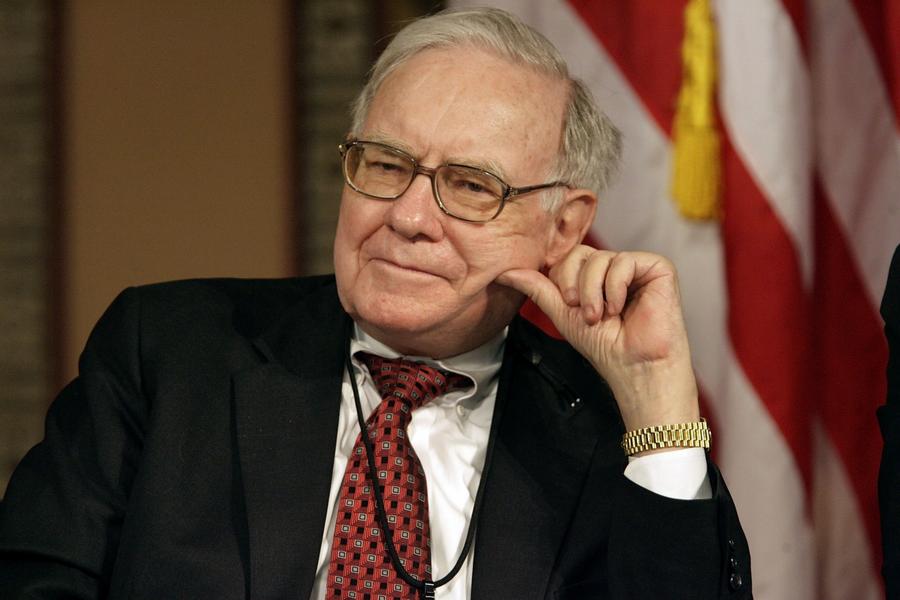
(Photo by Chip Somodevilla/Getty Images)
Berkshire Hathaway Returns
The long-term performance of Berkshire Hathaway explains Buffett's reputation more clearly than almost any other statistic.
From 1965 through 2025, Berkshire's per-share market value increased at a compounded annual rate of 19.7%. Over the same period, the S&P 500 returned 10.5% annually including dividends.
That gap may appear modest on an annual basis, but over six decades the effect of compounding became extraordinary. From 1964 through 2025, Berkshire's overall gain was 6,099,294%, compared with 46,061% for the S&P 500.
Buffett repeatedly emphasized that Berkshire's success came less from frequent trading than from owning strong businesses for very long periods while allowing retained earnings to compound.
CEO Succession
For decades, one of the most important questions surrounding Berkshire was who would eventually succeed Buffett.
In 2021, Buffett confirmed that Greg Abel, Berkshire's vice chairman responsible for non-insurance operations, was his intended successor as chief executive.
At Berkshire's May 2025 annual meeting, Buffett surprised shareholders by announcing that he intended to step down as CEO at the end of the year. Berkshire's board formally appointed Abel to the position effective January 1, 2026.
Buffett initially remained Berkshire's chairman after leaving the CEO role. On September 18, 2026, Berkshire announced another stage of the succession plan: Warren became Chairman Emeritus while his son Howard G. Buffett became Chairman of the Board.
Warren remained a Berkshire director and continued to make his experience and judgment available to the company. Abel retained responsibility for Berkshire's operations, capital allocation, and major investment decisions as CEO.
Personal Life
Buffett married Susan Thompson in 1952. They had three children: Susan, Howard, and Peter Buffett.
Warren and Susan began living separately in 1977 when she moved to San Francisco to pursue a singing career, but they remained married and close until her death in 2004.
Susan introduced Warren to Astrid Menks, who eventually became his longtime companion. Warren and Astrid married in 2006, on his 76th birthday.
Buffett has maintained an unusually modest lifestyle relative to the size of his fortune. He has spent decades living in the same Omaha house he purchased in 1958 and is famous for his preference for simple food, Coca-Cola, and familiar routines.
He has also played the ukulele for much of his life, an interest that began as a teenager when he was trying to impress Susan.
Warren Buffett's Net Worth Over Time
Warren Buffett's Net Worth Over Time
| Year & Age | Estimated Net Worth (USD) |
|---|---|
| 1951 Age 21 | ~$20,000 Equivalent to about $200,000 today |
| 1960 Age 30 | $1,000,000+ Crossed $1M for the first time |
| 1965 Age 35 | ~$7,000,000 |
| 1969 Age 39 | ~$25,000,000 |
| 1977 Age 47 | ~$67,000,000 |
| 1986 Age 56 | $1,400,000,000 Became a billionaire |
| 1996 Age 66 | ~$17,000,000,000 |
| 2002 Age 72 | $36,000,000,000+ |
| 2010 Age 79 | ~$39,000,000,000 Launched the Giving Pledge with Bill and Melinda Gates |
| 2016 Age 86 | ~$73,000,000,000 |
| 2017 Age 87 | $80,000,000,000+ Crossed $80 billion for the first time |
| April 2025 Age 94 | ~$170,000,000,000 Reached an all-time high |
| 2026 Age 96 | $150,000,000,000 |
One of the most remarkable features of Buffett's wealth is how late in life the overwhelming majority of it was created. Decades of compounding meant that tens of billions of dollars were added to his fortune after he had already reached an age when most people have been retired for years.
Philanthropy
Buffett has pledged to give away more than 99% of his fortune.
In 2006, he announced plans to donate Berkshire Hathaway shares to five foundations, with the largest annual grants initially going to the foundation created by Bill Gates and Melinda French Gates. Other recipients included the Susan Thompson Buffett Foundation and foundations run by Buffett's three children.
Buffett later joined Gates in 2010 to create The Giving Pledge, which encourages billionaires to commit the majority of their wealth to charitable causes.
His approach was influenced in part by Chuck Feeney, the Duty Free Shoppers co-founder who spent decades quietly giving away virtually his entire fortune during his lifetime.
By 2026, Buffett had donated more than $64 billion worth of Berkshire shares. Because many of those shares appreciated enormously after being donated, the current value of the stock he gave away would be much higher had he retained it.
In July 2026, Buffett converted 8,000 Class A Berkshire shares into 12 million Class B shares and donated all 12 million shares to four family foundations. He stated that his goal was to dispose of all his remaining Berkshire shares through philanthropy by the end of 2034.
Buffett has consistently instructed the organizations receiving his wealth to put the money to work rather than preserve it indefinitely in large endowments.
Real Estate
In 1958, Warren and Susan Buffett paid $31,500 for a five-bedroom stucco house in Omaha. Buffett continued living in the same residence even after becoming one of the richest people in the world.
The house has become one of the most famous symbols of his relatively modest personal lifestyle. Buffett has repeatedly said that the property provides everything he needs and that moving to a more expensive home would not make him happier.
Warren and Susan also owned a vacation home in Laguna Beach, California. Buffett purchased the property in the 1970s, and it remained in the family for decades before being sold in 2018 for $7.5 million.
Net Worth Unpacked Warren Buffett
Explore the figures, comparisons, and money moments in this profile.
Read the text version 16 cards
Warren Buffett built a fortune he plans to give away
CNW estimated net worth $150B
CNW snapshot: 2026-11-06
SourcesBerkshire's compounding beat the S&P for 60 years
Compounded annual gain, 1965–2025
- Berkshire per-share market value19.7%
- S&P 500, including dividends10.5%
CNW snapshot: 2026-11-06
SourcesBuffett's Berkshire buys went from candy to railroads
Reported Berkshire acquisition prices, nominal USD, 1972–2010
- See's Candies, 1972$25M
- Dexter Shoe, paid in stock, 1993$433M
- GEICO, remaining 49%, 1996$2.3B
- BNSF, remaining stake, 2010$26B
CNW snapshot: 2026-11-06
Dexter's seller chose Berkshire stock over cash
Alfond received 25,203 shares in 1993. The shoe business later closed.
Estimated 2025 value of Harold Alfond's shares if still held $19B
Berkshire spent more on Buffett's security than his salary
Nearly all his wealth came from Berkshire shares, not executive pay.
Berkshire's disclosed CEO compensation components, 2024
- Base salary$100K
- Personal and home security$305.11K
CNW snapshot: 2026-11-06
SourcesHe still lives in the Omaha house he bought in 1958
Price Buffett paid for his Omaha home, 1958 $31,500
SourcesBuffett leads CNW's 1930-born fortunes
of 82 CNW profiles #1
CNW profiles born in 1930
- #1 · Warren Buffett$150B
- Tied #2 · George Soros$9B
CNW profiles born in 1930
Population: 82 covered profiles.
CNW snapshot: 2026-11-06
The richest people born in 1930
CNW estimates · Born in 1930
- #1 · Warren Buffett$150B
- Tied #2 · George Soros$9B
- Tied #2 · Edward JohnsonCNW estimated net worth at death (2022)$9B
- #4 · August von Finck JrCNW estimated net worth at death$8.3B
- #5 · Teh Hong Piow$6.2B
CNW snapshot: 2026-11-06
Buffett briefly overtook Bill Gates in 2008
CNW-reported personal net worth, March 2008
- Warren Buffett · 2008-03$62B
- Bill Gates · 2008-03$58B
CNW snapshot: 2026-11-06
He pledged over 99% of his wealth to charity
Value of Berkshire shares donated since 2006, CNW estimate More than $64B
SourcesGiving reshaped Buffett's Berkshire stake
- 2006 · 474,998 Class A shares
More than 30% economic ownership when major giving began
- After July 2026 gift · 188,290 Class A shares
Plus 1,162 Class B shares; 13.2% economic ownership
Sources- 2006 · 474,998 Class A shares
Berkshire's new chairman is Buffett's son Howard
Howard became chairman in September 2026; Warren remained a director.
Father and son · CNW estimated net worth
- Warren Buffett$150B
- Howard Buffett$400M
CNW snapshot: 2026-11-06
Buffett's place among CNW's U.S.-nationality fortunes
of 12,628 CNW profiles #11
CNW profiles · Nationality: United States of America
Population: 12,628 covered profiles.
CNW snapshot: 2026-11-06
Top five · United States of America
CNW estimates · United States of America
- #1 · John D. Rockefeller$340B
- #2 · Larry Page$325B
- #3 · Andrew Carnegie$310B
- #4 · Sergey Brin$300B
- #5 · Jeff Bezos$285B
Warren Buffett · #11 · $150B
CNW snapshot: 2026-11-06
How rich if Buffett had kept his donated shares?
The shares he gave away kept growing
CNW hypothetical net worth if he had retained donated Berkshire shares $340B–$350B
Sources