










What Is George Soros' Net Worth?
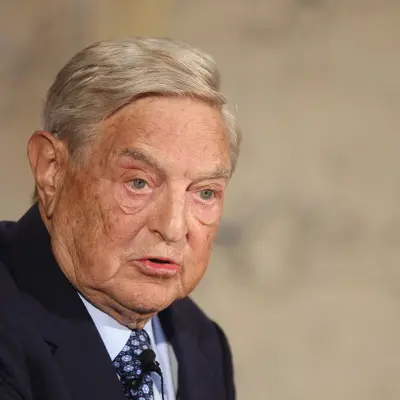
George Soros is a Hungarian-American investor, hedge fund founder, businessman, and philanthropist who has a net worth of $9 billion.
George Soros built his fortune as the founder of Soros Fund Management, one of the most successful investment firms in financial history. Beginning with a small hedge fund in 1969, Soros developed a global investment operation that generated nearly $40 billion in cumulative profits for investors by 2013. He became internationally famous in 1992 when his Quantum Fund made more than $1 billion betting against the British pound, earning him the nickname "the man who broke the Bank of England." His extraordinary investment performance, which included decades of annualized returns exceeding 20%, established him as one of the most influential hedge fund managers of all time.
Soros subsequently converted his investment firm into a family office, which manages $28 billion in assets for his family and associated philanthropic foundations. He is also one of history's largest individual philanthropists, having transferred more than $32 billion of his personal fortune to the Open Society Foundations, an international network supporting education, human rights, public health, and democratic institutions. Despite those enormous charitable contributions, he remains a multibillionaire.
A survivor of Nazi-occupied Hungary, Soros has devoted much of his later life to philanthropy and political advocacy. In 2023, he transferred leadership of his charitable network to his son Alexander Soros, and in 2025, he received the Presidential Medal of Freedom.
Soros Fund Management and the Quantum Fund
Soros began establishing his investment empire in 1969 while working at the investment bank Arnhold and S. Bleichroeder in New York. He launched a hedge fund called Double Eagle with $4 million in investor capital, including $250,000 of his own money. In 1970, he established Soros Fund Management, which became the foundation of his investment business.
In 1973, Soros launched a new fund with $12 million in assets, which eventually became known as the Quantum Fund. His early business partner was Jim Rogers, a fellow investor who shared his interest in international markets, commodities, and macroeconomic trends. Their investment strategy differed from conventional stock picking because they were willing to make large bets across currencies, government bonds, commodities, and equities.
The partnership produced exceptional returns during the 1970s. Over the decade, the fund's value increased more than 4,000%, vastly outperforming the broader stock market. Rogers left the partnership in 1980, while Soros continued building Quantum into one of the world's largest and most successful hedge funds.
By 1981, Quantum had grown to $400 million in assets. That year, however, it experienced a 22% loss, followed by substantial investor withdrawals that reduced its assets to $200 million. Soros recovered from the setback and continued expanding his investment operation throughout the decade.
His strategy was built around identifying major economic imbalances and taking large positions before financial markets adjusted. Rather than concentrating on individual companies, Soros frequently focused on currencies, interest rates, central bank policies, and changing economic conditions.
The results were extraordinary. By 2013, the Quantum Fund had generated $39.6 billion in cumulative net profits for investors since its inception, according to calculations by hedge fund investor LCH Investments. That year alone, the fund earned $5.5 billion, placing Soros at the top of the firm's historical ranking of hedge fund managers.
The $1 Billion Bet Against the Bank of England
Soros achieved worldwide fame during the British currency crisis of September 1992. At the time, the United Kingdom was participating in the European Exchange Rate Mechanism, which required the British pound to trade within a specified range against other European currencies.
The arrangement placed considerable pressure on Britain's economy. High interest rates, weak economic conditions, and an overvalued currency made it increasingly difficult for the British government to maintain the pound's exchange rate.
Soros and his investment team concluded that the British government would eventually be forced to allow the currency to fall. Working closely with portfolio manager Stanley Druckenmiller, Soros built an enormous short position against the pound, reaching $10 billion in exposure.
On September 16, 1992, a day that became known as "Black Wednesday," the British government attempted to defend the pound by raising interest rates and intervening in currency markets. The measures failed, and Britain withdrew from the European Exchange Rate Mechanism.
The pound subsequently declined, creating a spectacular profit for Soros's fund. The trade generated more than $1 billion, becoming one of the most famous currency bets in financial history.
The episode earned Soros the nickname "the man who broke the Bank of England," although his trading was part of a much broader currency crisis involving numerous financial institutions and investors. The Bank of England's difficulties reflected underlying economic pressures that existed before Soros placed his trade.
Black Wednesday established Soros as a household name and demonstrated the enormous financial power that sophisticated hedge funds could exercise in global currency markets.
From Hedge Fund to $28 Billion Family Office
By the early 2000s, Soros had accumulated one of the largest personal fortunes in finance. He gradually stepped back from daily portfolio management, delegating investment responsibilities to executives and professional money managers.
In July 2011, Soros announced that Soros Fund Management would stop managing outside investors' capital and convert into a family office. The decision came as new financial regulations increased reporting and disclosure requirements for hedge funds. At the time, the firm was managing close to $25 billion belonging to Soros, his family, and affiliated foundations.
The transition allowed Soros to retain a sophisticated global investment operation without operating a conventional hedge fund for outside clients. The firm continued investing in stocks, bonds, currencies, private equity, venture capital, and other assets, while managing capital belonging to his family and charitable organizations.
In 2011, Scott Bessent returned to Soros Fund Management as chief investment officer. Bessent had previously worked with Soros during the 1990s and became responsible for overseeing the investment portfolio. He left in 2015 to establish his own hedge fund, Key Square Group, with significant financial backing from Soros.
In 2017, Soros appointed veteran investment executive Dawn Fitzpatrick as chief investment officer. Fitzpatrick subsequently became chief executive officer while retaining investment responsibilities.
Soros Fund Management now operates as a global investment firm and family office managing $28 billion in assets. The company employs 200 people across offices in New York, Connecticut, London, and Dublin.
The $28 billion under management is distinct from Soros's personal fortune because the firm also manages substantial assets belonging to the Open Society Foundations. Forbes valued Soros's remaining personal wealth at $8.6 billion in 2026, even after decades of multibillion-dollar charitable contributions.
Open Society Foundations and $32 Billion in Donations
Soros began his philanthropic activities in 1979 by providing scholarships to Black South African students during apartheid. In 1984, he established a foundation in Hungary that promoted educational exchanges, independent scholarship, and access to information under the country's Communist government.
His charitable activities expanded rapidly following the collapse of Communist governments across Eastern Europe. He established foundations and programs supporting education, independent media, legal reform, public health, and civil society organizations in countries transitioning toward democratic institutions.
These initiatives eventually developed into the Open Society Foundations, one of the world's largest privately funded philanthropic networks. The organization's name reflects the influence of philosopher Karl Popper, whom Soros studied at the London School of Economics. Popper's work, particularly "The Open Society and Its Enemies," emphasized the importance of political pluralism, individual rights, and institutions capable of correcting their own mistakes.
Soros has contributed more than $32 billion of his personal wealth to the Open Society Foundations since 1984. One of his largest transfers occurred in 2017, when he moved $18 billion from his family office into the charitable network, substantially increasing its endowment.
The scale of his giving places Soros among the most generous philanthropists in modern history. According to the organization's financial reporting, the Open Society Foundations had recorded $24.2 billion in cumulative expenditures through 2024, including $1.2 billion during that year alone.
Those expenditures have supported thousands of organizations and initiatives addressing education, public health, freedom of expression, civil rights, government accountability, and humanitarian assistance.
One of his largest educational projects was the establishment of Central European University in 1991. Originally based in Budapest, the institution became a major center for graduate education and research in Central and Eastern Europe. It later moved most of its teaching activities to Vienna following disputes with the Hungarian government.
Soros has also supported scholarships for students from disadvantaged communities, programs serving Roma populations in Europe, independent journalism, and efforts to improve access to healthcare. His foundations have funded humanitarian assistance in conflict zones and supported organizations advocating for the rights of marginalized communities.
In 2016, Soros announced a $500 million investment initiative designed to support migrants, refugees, and their host communities. The commitment focused on investments in businesses, startups, and social-impact enterprises that could create jobs and improve access to services. Unlike a conventional charitable donation, the initiative was structured around investments whose financial returns would support further philanthropic work.
Alexander Soros and Family Succession
In June 2023, Soros confirmed that he was transferring leadership of his philanthropic organization to his son Alexander, commonly known as Alex Soros. Alexander had been elected chairman of the Open Society Foundations' board in December 2022 and subsequently assumed a greater role in directing the organization's strategy and political activities.
The succession represented a major generational change for one of the world's largest philanthropic networks. Alexander announced plans to continue supporting human rights, democratic institutions, and political causes while expanding the organization's attention to issues including voting rights and gender equality.
The leadership transition was accompanied by a significant restructuring of the Open Society Foundations. The organization consolidated operations, reduced its workforce, and reorganized its international grantmaking strategy. Binaifer Nowrojee became president in 2024, overseeing daily operations under the board chaired by Alexander.
George Soros remains the founder of both Soros Fund Management and the Open Society Foundations, but professional executives and his son have assumed much of the operational responsibility for the organizations he created.
Early Life
George Soros was born György Schwartz on August 12, 1930, in Budapest, Hungary. His parents, Tivadar and Erzsébet Schwartz, were members of a prosperous Jewish family. His father was a lawyer, writer, and former prisoner of war who had escaped captivity during World War I.
In 1936, the family changed its surname from Schwartz to Soros, partly in response to rising antisemitism in Europe. Soros grew up during a period of political instability and experienced the devastating consequences of Nazi occupation firsthand.
In March 1944, Nazi Germany occupied Hungary, placing hundreds of thousands of Hungarian Jews in immediate danger. Soros was only 13 years old when the occupation began. His father obtained false identity documents for family members, allowing them to conceal their Jewish heritage and avoid deportation.
The family also helped other Jews acquire false papers and escape persecution. More than 500,000 Hungarian Jews were murdered during the Holocaust, making the family's survival particularly remarkable.
Soros later recalled the experience as a defining moment in his life, explaining that his father had taught him how to confront dangerous circumstances rather than simply surrender to them.
Following World War II, Hungary came increasingly under Communist control. In 1947, Soros left Budapest and moved to London, where he supported himself through jobs as a railway porter and nightclub waiter.
He enrolled at the London School of Economics, where he studied philosophy and economics. One of his most influential intellectual figures was Karl Popper, whose ideas about open societies, democratic government, and the limitations of human knowledge would shape Soros's thinking about politics, economics, and philanthropy.
After completing his education, Soros initially struggled to find professional opportunities in finance. His early experiences as a refugee and immigrant remained central to the worldview that later informed his charitable activities.
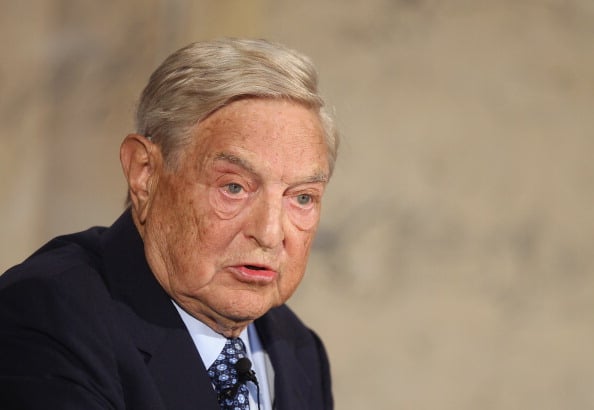
Sean Gallup/Getty Images
Early Financial Career
Soros began his professional financial career in London, working at the merchant bank Singer & Friedlander. The position introduced him to international securities trading and provided experience with investment markets.
In 1956, he moved to New York City and joined the brokerage firm F.M. Mayer, where he specialized in European securities and international arbitrage. He subsequently worked at Wertheim & Co. before joining Arnhold and S. Bleichroeder in 1963.
During this period, Soros developed his understanding of international financial markets and began experimenting with investment strategies based on economic trends, investor psychology, and the relationships between prices and underlying fundamentals.
His experience managing securities portfolios eventually convinced him that he could achieve greater success by operating independently. That decision led to the creation of Double Eagle in 1969 and Soros Fund Management the following year.
Investment Philosophy and Reflexivity
Soros is closely associated with a theory of financial markets known as reflexivity. The concept argues that investors' expectations and actions can influence the underlying economic conditions they are attempting to predict.
For example, rising real estate prices can encourage lenders to provide more credit, which increases demand for property and drives prices even higher. The resulting feedback loop can continue until financing conditions or expectations change, potentially producing a sharp collapse.
Soros applied this thinking to currencies, stocks, government bonds, and commodities. His investment strategies often focused on identifying situations where prevailing market expectations were creating unstable economic conditions.
He explained many of these ideas in his 1987 book "The Alchemy of Finance," which became an influential work among professional investors. His later books included "The Crisis of Global Capitalism," "Open Society: Reforming Global Capitalism," and "The New Paradigm for Financial Markets."
Throughout his career, Soros also emphasized the importance of recognizing mistakes and changing positions when new information contradicted his original investment thesis. His willingness to reverse trades and accept losses became a defining part of his investment philosophy.
Political Activities
Soros has been an influential financial supporter of liberal political organizations, Democratic candidates, and advocacy groups in the United States and internationally. His political spending has included direct contributions to campaigns, political action committees, and organizations focused on voting rights, criminal justice policy, and civil liberties.
Over the decade preceding 2026, Forbes calculated that Soros had contributed more than $200 million to American political candidates and political action committees. His substantial financial involvement in politics has made him a frequent subject of public debate, attracting criticism from conservative politicians and support from groups that share his policy priorities.
His philanthropic activities have also generated controversy in countries where governments oppose organizations funded by the Open Society Foundations. Soros has consistently maintained that his charitable work is intended to support independent institutions, transparency, human rights, and democratic participation.
Real Estate
Soros has accumulated a valuable residential real estate portfolio concentrated in New York, with additional properties in other parts of the United States.
In 1993, he paid $10.5 million for a 35-acre property in Katonah, a wealthy community within Bedford, New York. He subsequently expanded his holdings by purchasing neighboring estates and parcels, eventually assembling a private compound extending across more than 115 acres.
In 2003, Soros paid $19 million for a neighboring 19th-century mansion previously owned by bestselling novelist and filmmaker Michael Crichton. The 10,000-square-foot residence included seven bedrooms, extensive formal living spaces, equestrian facilities, and a caretaker's house. The transaction was one of the most expensive residential sales in Westchester County history at the time.
Soros has also maintained a substantial residence in the Hamptons known as El Mirador. The Mediterranean-style mansion encompasses more than 30,000 square feet and includes 12 bedrooms, extensive gardens, ponds, and a swimming pool. The property hosted the wedding of his son Alexander and Huma Abedin in June 2025.
In Manhattan, Soros owns a 16-room duplex apartment at 1060 Fifth Avenue overlooking Central Park. Following his 2005 divorce from Susan Weber, he paid her $24 million as part of the settlement to retain ownership of the property.
In 2003, Soros also purchased an 11-bedroom home in Sun Valley, Idaho, for $2.25 million. The 9,000-square-foot property had previously operated as a bed-and-breakfast and featured multiple fireplaces, a commercial-style kitchen, and an outdoor hot tub.
Personal Life
Soros has been married three times and has five children. He married his first wife, Annaliese Witschak, in 1960, and they had three children: Robert, Andrea, and Jonathan. The marriage ended in divorce in 1983.
Later that year, Soros married historian and art expert Susan Weber. They had two sons, Alexander and Gregory, before divorcing in 2005.
In September 2013, Soros married health care and education consultant Tamiko Bolton in a ceremony at his Bedford estate. The wedding was followed by a larger reception attended by figures from international finance, politics, and philanthropy.
Several of Soros's children have pursued careers in investment management, business, and philanthropy. Robert and Jonathan have held senior roles in financial services, while Alexander has taken a leading position in the family's philanthropic and political activities.
Honors and Recognition
Soros has received numerous awards and honorary degrees recognizing his financial career and philanthropic activities. Universities and international organizations have honored his support for education, civil society, and human rights.
In January 2025, President Joe Biden awarded Soros the Presidential Medal of Freedom, the highest civilian honor in the United States. Soros did not attend the White House ceremony, and his son Alexander accepted the award on his behalf.
The recognition reflected his decades of philanthropic spending and international advocacy, which have become as closely associated with his public identity as his achievements in the financial markets.