
/2010/08/kaiser.jpg)
/2009/09/ck2.jpg)
/2012/12/william-conway.jpg)
/2010/01/michael2.jpg)
/2009/09/Jay-Rockefeller.png)
/2010/09/Harold-Hamm.jpg)
/2018/03/GettyImages-821622848.jpg)
/2020/01/lopez3.jpg)
/2009/09/Cristiano-Ronaldo.jpg)
/2009/09/Brad-Pitt.jpg)
:strip_exif()/2015/09/GettyImages-476575299.jpg)
/2009/11/George-Clooney.jpg)
/2017/02/GettyImages-528215436.jpg)
/2019/04/rr.jpg)
/2020/06/taylor.png)
/2020/04/Megan-Fox.jpg)
/2019/10/denzel-washington-1.jpg)
What is George Kaiser's net worth?
George Kaiser is an American businessman who has a net worth of $16 billion.
George Kaiser is best known for transforming a small Tulsa-based oil and gas firm into one of the most successful privately held energy companies in the United States. Through decades of disciplined capital allocation, contrarian investing, and aggressive reinvestment during industry downturns, Kaiser built a fortune largely centered around natural gas production and energy-related assets. He is the founder and longtime chairman of Kaiser-Francis Oil Company, a business that grew from modest beginnings into a multi-billion-dollar enterprise with operations spanning multiple shale basins.
While Kaiser rarely seeks public attention, he has exerted enormous influence through his philanthropic work, particularly in early childhood education, public health, and urban development. In Tulsa, his name is attached to some of the city's most ambitious civic projects, including a world-class riverfront park and large-scale initiatives aimed at breaking cycles of intergenerational poverty. Nationally, he has played a significant role in policy-oriented philanthropy, directing substantial resources toward data-driven social programs.
Kaiser's career stands as a classic example of long-term wealth creation rooted in patience, operational discipline, and a willingness to deploy capital when others retreat. Unlike many high-profile billionaires, his legacy is defined as much by institutional philanthropy as by financial success.
Early Life and Education
George Kaiser was born on July 9, 1942, in Tulsa, Oklahoma. He was raised in a Jewish household and grew up in a city closely tied to the energy industry. Kaiser attended the University of Oklahoma, where he earned a degree in economics. He later attended Harvard Business School, receiving an MBA that would shape his analytical and strategic approach to investing.
After completing his education, Kaiser returned to Tulsa and began working in the oil and gas business at a time when the industry was cyclical, capital-intensive, and highly volatile. These early experiences helped instill a conservative balance sheet philosophy that would later become a hallmark of his business strategy.
Kaiser-Francis Oil Company
In the early 1970s, Kaiser co-founded Kaiser-Francis Oil Company, initially focused on acquiring and developing oil and gas properties in Oklahoma and neighboring states. Rather than pursuing rapid expansion fueled by excessive debt, Kaiser emphasized operational efficiency, careful geological analysis, and reinvestment of cash flow.
The company's defining moment came during periods of industry distress, particularly during oil price collapses when heavily leveraged competitors were forced to sell assets at steep discounts. Kaiser-Francis consistently emerged as a buyer during these downturns, quietly assembling valuable acreage and reserves at favorable prices.
Over time, the firm shifted its focus increasingly toward natural gas, positioning itself well for the long-term expansion of gas-fired power generation and domestic energy demand. By remaining privately held, Kaiser retained full control over capital decisions, allowing the company to prioritize long-term value over quarterly results. This approach ultimately turned Kaiser-Francis into one of the most successful privately owned energy producers in the country and the primary source of George Kaiser's billionaire fortune.
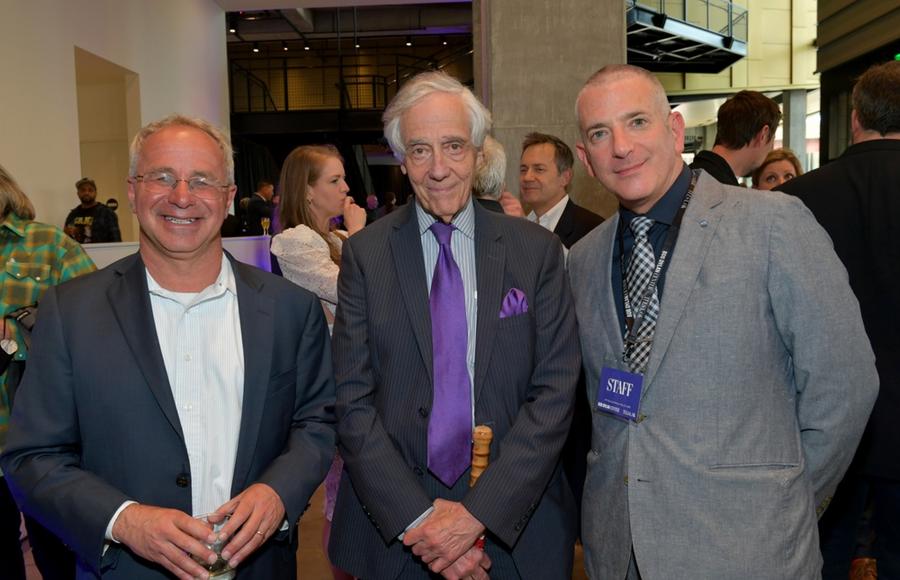
(Photo by Lester Cohen/Getty Images for The Bob Dylan Center)
Investment Philosophy and Wealth Building
Kaiser's wealth-building strategy has often been described as disciplined, opportunistic, and deliberately unflashy. He has repeatedly emphasized the importance of patience, maintaining liquidity, and avoiding excessive leverage, particularly in cyclical industries like energy.
Rather than diversifying aggressively into unrelated sectors early on, Kaiser concentrated on areas where he possessed deep domain knowledge. As his fortune grew, he expanded into a broader portfolio of investments, including financial assets and private equity, while keeping energy as his core competency.
This conservative but opportunistic approach allowed Kaiser to compound wealth over decades, particularly by deploying capital during moments of market stress when competitors were constrained.
Philanthropy and Civic Leadership
Philanthropy has been central to Kaiser's public legacy. He is the founder of the George Kaiser Family Foundation, which has committed billions of dollars to initiatives focused on early childhood education, maternal health, and community development.
One of the foundation's most notable efforts has been its work in early childhood programs designed to improve outcomes for low-income families. Kaiser's approach emphasizes measurable results, longitudinal data, and scalable models rather than symbolic giving.
In Tulsa, his philanthropy has reshaped the city's civic landscape. He was a key figure behind the creation of Gathering Place, a large, privately funded riverfront park that has become one of the most celebrated public spaces in the United States. He has also supported public education reform, infrastructure investment, and programs aimed at reducing incarceration rates and improving public health outcomes.
At the national level, Kaiser has been involved in policy-focused philanthropy, supporting research and advocacy related to early childhood development and social mobility.
Political and Policy Involvement
Although not a partisan public figure, Kaiser has been active in policy-oriented philanthropy and has supported various reform efforts through think tanks and advocacy organizations. His involvement has often centered on pragmatic, data-driven solutions rather than ideological alignment.
Kaiser has also served on advisory boards and commissions related to education and economic development, leveraging his business experience to inform public policy discussions.
Personal Life and Low-Profile Approach
George Kaiser is known for maintaining an exceptionally low public profile relative to his wealth. He lives in Tulsa and has largely avoided the celebrity culture associated with many modern billionaires. His public appearances tend to be tied to philanthropic initiatives rather than business promotion.
Despite his vast fortune, Kaiser is frequently described as reserved and analytical, preferring institutional impact over personal recognition. This understated approach has allowed him to operate with significant influence while remaining largely outside the spotlight.
/2010/08/kaiser.jpg)
/2010/09/Harold-Hamm.jpg)
/2019/02/CNW-Man-12.png)
/2012/08/Jim-davis.png)
/2012/12/william-conway.jpg)
/2009/09/ck2.jpg)
/2012/12/Daniel-DAniello.jpg)
/2015/08/Henry-Swieca1.png)
/2019/11/GettyImages-1094653148.jpg)