
/2020/07/Doris-Duke.png)
/2018/11/Katharine-Rayner.jpg)
/2019/11/julia-koch.jpg)
/2012/08/dr.jpg)
/2014/05/Kirsty-Bertarelli.png)
/2018/11/bh.jpg)
:strip_exif()/2015/09/GettyImages-476575299.jpg)
/2019/04/rr.jpg)
/2018/03/GettyImages-821622848.jpg)
/2009/11/George-Clooney.jpg)
/2019/11/GettyImages-1094653148.jpg)
/2020/02/Angelina-Jolie.png)
/2020/01/lopez3.jpg)
:strip_exif()/2009/09/P-Diddy.jpg)
/2019/10/denzel-washington-1.jpg)
/2020/04/Megan-Fox.jpg)
/2009/09/Cristiano-Ronaldo.jpg)
What was Doris Duke's net worth?
Doris Duke was an American tobacco heiress and philanthropist who had a net worth of $5.3 billion at the time of her death in 1993. Inheriting massive sums at two key points in her young life, she spent her adulthood navigating the privileges and burdens that accompany extreme inherited wealth. As a teenager, she became one of the richest people in the world, a status the press never allowed her to forget.
Her extraordinary fortune enabled a life defined by world travel, experimental hobbies, sprawling properties, and a level of artistic collecting unmatched by most private individuals of her era. She developed deep passions for horticulture, surfing, jazz, Islamic art, Southeast Asian design, and historic preservation, using her wealth to build institutions and collections that would later be opened to the public. At the same time, she fiercely protected her privacy, creating a mystique that followed her throughout her life and intensified after her death. Today, she is remembered as a paradoxical figure whose eccentricity, generosity, and isolation made her one of the most compelling American heiresses of modern history.
Early Life
Doris Duke was born on November 22, 1912, in New York City. She was the only child of tobacco magnate James Buchanan Duke and Nanaline Holt Inman. Her father revolutionized the tobacco business by modernizing cigarette manufacturing and creating some of the industry's most successful brands. When he died in 1925, Doris was just twelve years old and inherited $100 million. Adjusted for modern value, that is equivalent to roughly $1.5 billion. This inheritance instantly made her one of the richest individuals on the planet, surpassed only by titans like John D. Rockefeller, who was eighty-six at the time. Her childhood was spent between the family's massive estate, Duke Farms, in New Jersey, and a series of private tutors, cultural programs, and travels that shaped her intellectual curiosity.
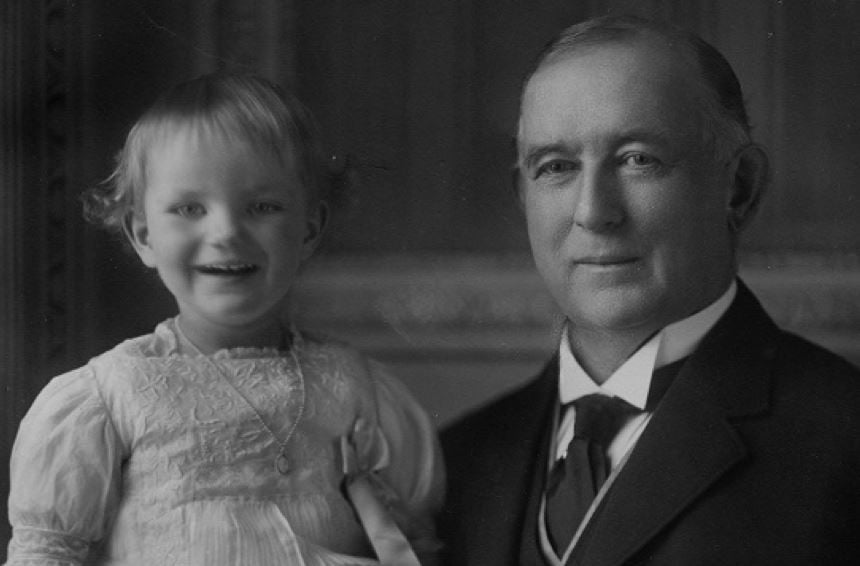
Doris and Buck Duke
As a young woman, Duke explored a surprisingly wide range of interests for someone of her social position. She became a competitive surfer, played jazz piano, briefly worked as a news correspondent, and developed early interests in global art and horticulture. She later created Duke Gardens, which grew into one of the largest indoor botanical displays in the United States.
Inheriting A Fortune
Duke's early inheritance included substantial cash holdings, energy and tobacco investments, and multiple large estates, including properties in New Jersey, Hawaii, Rhode Island, and Beverly Hills. She inherited jewelry, Southeast Asian and Islamic art, and a broader collection that later expanded to include major works by Picasso, Monet, Van Gogh, and Rembrandt. She also amassed a legendary wine collection that included more than 2,000 rare bottles valued at over $5 million. During her lifetime, she was frequently referred to as the richest woman in the world, a title she openly disliked.
Her fortune grew again after the 1962 death of her mother, from whom she inherited an additional $250 million. In modern terms, that is the equivalent of more than $2.1 billion. By her mid-forties, Doris Duke controlled a personal fortune that placed her among the wealthiest private individuals in the United States, an immense financial responsibility she guarded with intense privacy.
According to the terms of her will, the vast majority of Duke's estate was left to charity. The Doris Duke Charitable Foundation was created to oversee these assets, which today total roughly $2 billion. Over the past three decades, the Foundation has given away more than $1.84 billion, supporting environmental conservation, the performing arts, Islamic art preservation, and medical research.
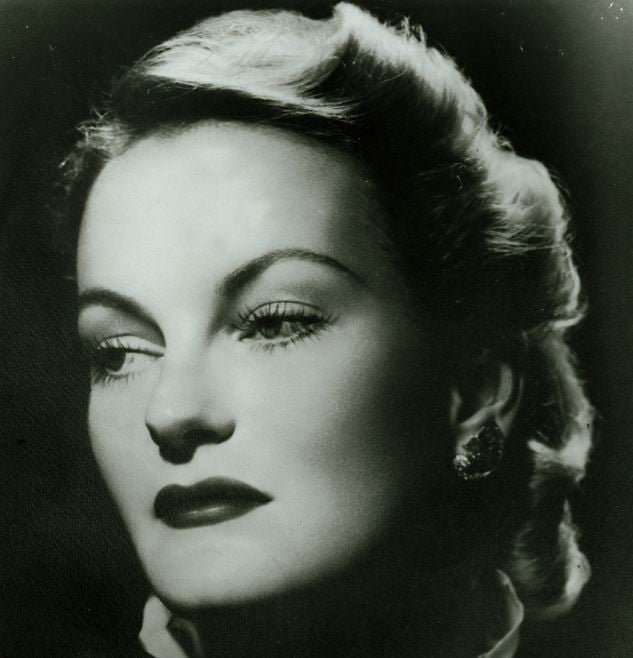
Getty
Major Properties
Doris Duke assembled an extraordinary portfolio of homes, each reflecting different aspects of her personal interests.
Her Hawaii estate, Shangri La, became her most iconic property. Built in the late 1930s after her honeymoon travels through the Middle East and South Asia, it was designed to showcase her extensive Islamic art collection. She incorporated antique tilework, carved wood panels, and architectural elements sourced from countries such as Iran, Egypt, Turkey, and India. Shangri La became a deeply personal retreat and remains a museum dedicated to her collection.
Duke Farms in New Jersey, originally planned by her father, evolved into a massive conservation and horticultural project. Doris invested heavily in greenhouses, botanical displays, and environmental programs, laying the groundwork for the ecological preserve it is today.
In Newport, Rhode Island, she owned Rough Point, a sprawling seaside mansion filled with European art, antiques, and personal acquisitions. In California, she purchased Falcon's Lair, the former Beverly Hills estate of Rudolph Valentino. Each home expressed a different facet of her personality and interests, and she frequently rotated among them for privacy and creative inspiration.
Marriages and Personal Relationships
Duke married diplomat and social figure James Cromwell in 1935. Their marriage took her briefly into the public diplomatic world, but the relationship deteriorated and ended in divorce several years later. Her second marriage, to Dominican diplomat Porfirio Rubirosa in 1947, was even shorter and surrounded by speculation regarding both political pressure and her own discomfort with public scrutiny.
Throughout her life she had several long-term romantic relationships, including with surfer Duke Kahanamoku and jazz pianist Joe Castro. Although she attempted adoption later in life, including a controversial legal dispute in the 1980s, she had no biological children.
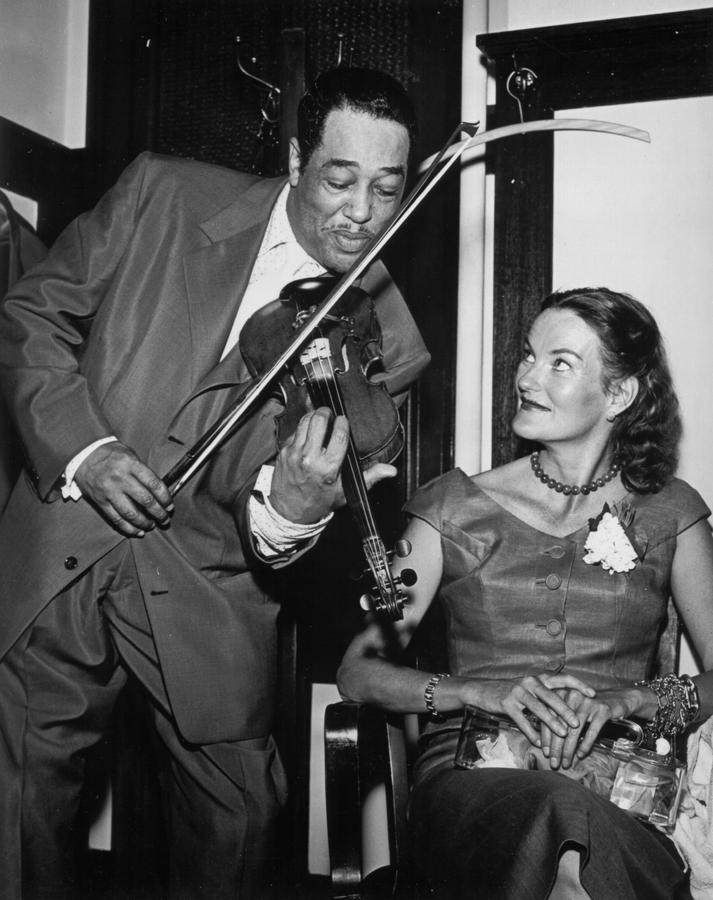
Composer Duke Ellington serenades heiress Doris Duke with a violin at the Embassy Auditorium in 1954 in Los Angeles, California. (Photo by Michael Ochs Archives/Getty Images)
Philanthropy
Philanthropy became one of Duke's defining pursuits. She funded major initiatives in environmental conservation, medical research, dance, Islamic art, and historic preservation. Her support for conservation at Duke Farms and her creation of Duke Gardens exemplified her commitment to horticulture and ecological stewardship. Her investments in Islamic art preservation helped build institutional partnerships and preserve cultural heritage across multiple regions.
Her estate plan ensured that her philanthropic work would continue long after her death. The Doris Duke Charitable Foundation is now one of the largest philanthropic organizations founded by a private individual.
Later Years and Controversies
Duke's final years were marked by declining health and increasing reliance on her butler and confidant, Bernard Lafferty. His influence over her personal and financial decisions sparked public debate and legal scrutiny. After her death on October 28, 1993, her estate became the center of prolonged legal disputes involving family members, advisors, and individuals who had played roles in her later life. The controversies eventually subsided, but they cemented her status as a mysterious and often misunderstood figure.
Legacy
Doris Duke remains one of the most enigmatic and intriguing heiresses in American history. Her life reflected the extremes of wealth, privacy, artistic passion, and personal independence. Her properties, philanthropic institutions, and art collections continue to influence cultural preservation, environmental stewardship, and artistic scholarship. More than thirty years after her death, the foundation she created remains a powerful force in American philanthropy, ensuring that the legacy of a woman once labeled the richest in the world continues to shape the arts and sciences for generations to come.
/2020/07/Doris-Duke.png)
/2018/11/bh.jpg)
/2021/06/doris-1.jpg)
/2021/06/GettyImages-450852456.jpg)
/2018/11/Katharine-Rayner.jpg)
/2019/11/julia-koch.jpg)
/2014/05/Kirsty-Bertarelli.png)
/2013/03/GettyImages-477624067.jpg)
/2017/02/GettyImages-528215436.jpg)
/2020/06/taylor.png)