











What is Changpeng Zhao's Net Worth?
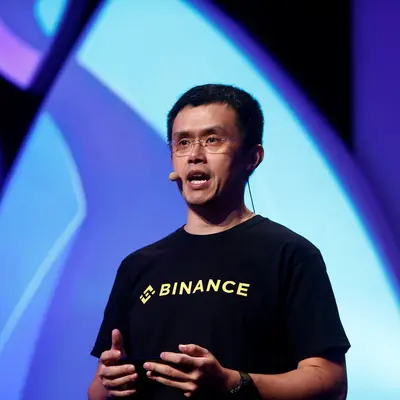
Changpeng Zhao is a Chinese-born Canadian business executive and cryptocurrency entrepreneur who has a net worth of $80 billion.
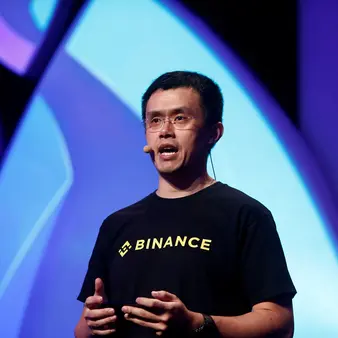
Changpeng Zhao, better known throughout the crypto world simply as "CZ," is the founder of Binance, the world's largest cryptocurrency exchange by trading volume. Zhao launched Binance in 2017 and turned it into the dominant global crypto exchange in less than a year. Bloomberg has credited him with a 90% ownership stake in the privately held company, making Binance the source of the overwhelming majority of his fortune. He has also personally invested in Bitcoin and BNB, though the size of those holdings has never been publicly disclosed.
CZ's fortune has experienced some of the most dramatic swings of any billionaire in modern history. In January 2022, his net worth peaked at $97 billion, making him the richest crypto tycoon in the world, the richest Canadian in the world and one of the ten richest people in the world overall. By May 2022, his fortune had collapsed to $11 billion. At the time, the decline gave Zhao the distinction of having lost more personal wealth than anyone in history, surpassing a record previously held by Masayoshi Son. The record was subsequently shattered by Elon Musk.
Zhao's career took an even more dramatic turn in November 2023 when he pleaded guilty to failing to maintain an effective anti-money-laundering program at Binance. He stepped down as CEO, paid a $50 million personal fine, and Binance agreed to pay $4.3 billion in penalties and forfeitures. In 2024, Zhao was sentenced to four months in federal prison, making him the richest person in history to serve a prison sentence. He retained his controlling stake in Binance throughout the ordeal. His fortune subsequently rebounded by tens of billions of dollars, and in October 2025, President Donald Trump pardoned him.
Early Life
Changpeng Zhao was born on September 10, 1977, in Jiangsu province, China. His mother was a teacher, and his father was an academic. During China's Cultural Revolution, his father was labeled a "pro-bourgeois intellect" and sent to the countryside.
Zhao's father eventually moved to Canada, and Changpeng followed with his mother and sister when he was 12. The family settled in Vancouver. Zhao later recalled that immigrating to Canada involved a lengthy wait outside the Canadian embassy in Beijing, but the move dramatically changed the trajectory of his life.
As a teenager, Zhao worked several jobs to help support his family. He flipped burgers at McDonald's and worked overnight shifts at a gas station. At the same time, he developed a fascination with computers and programming.
Zhao attended McGill University in Montreal, where he studied computer science. His technical education eventually led him toward the intersection of software and financial markets, years before cryptocurrency existed.
Early Career
After leaving McGill, Zhao moved to Tokyo and interned for a subcontractor working with the Tokyo Stock Exchange. His job involved developing software that matched trade orders.
He subsequently moved to New York and joined Bloomberg Tradebook, where he spent four years developing futures-trading software. Zhao rose quickly within the company and gained significant experience building the high-speed systems that underpin modern financial markets.
In 2005, Zhao moved to Shanghai and co-founded Fusion Systems. The company developed high-frequency trading platforms for brokers and became known for building some of the fastest trading systems in the industry.
His life changed again in July 2013 during a poker game in Shanghai. A fellow player introduced Zhao to Bitcoin. Zhao spent the following months studying cryptocurrency and eventually became convinced that digital assets represented a major technological shift.
He made an extraordinary personal bet on that conviction. Zhao sold the three-bedroom Shanghai apartment where he lived with his family for $900,000 and invested the proceeds in Bitcoin. Bitcoin subsequently plunged, but Zhao remained committed to the industry.
He joined Blockchain.info, where he worked closely with other early crypto entrepreneurs, and later became Chief Technology Officer of the Chinese cryptocurrency exchange OKCoin. By then, Zhao had effectively combined his two areas of expertise: trading infrastructure and cryptocurrency.
Founding Binance
In 2017, Zhao left OKCoin and founded Binance. The company raised $15 million through an initial coin offering involving its newly created BNB token.
Binance grew at extraordinary speed. Within eight months of launching, it had become the world's largest cryptocurrency exchange by trading volume. Its rise came from offering a huge selection of crypto assets, low trading fees, sophisticated trading tools and products aimed at users who wanted substantially more leverage and risk than traditional financial markets typically allowed.
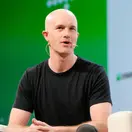
Binance also benefited from operating globally rather than focusing primarily on the United States. While Brian Armstrong's Coinbase became the best-known American cryptocurrency exchange, Binance's international volume eventually dwarfed Coinbase's.
The difference was staggering during the 2021 crypto boom. In September 2021, Coinbase frequently processed $4 billion to $5 billion in transactions per day. Binance routinely processed $50 billion to $80 billion. On September 25, 2021, Binance handled $170 billion worth of crypto transactions in a single 24-hour period.
Binance generated $20 billion in revenue in 2021, three times Coinbase's revenue that year.
The exchange expanded far beyond simple Bitcoin trading. Binance developed derivatives, futures, staking products, lending services, token launches and numerous other financial products. The company also launched Binance Smart Chain in 2020, which was later incorporated into the BNB Chain ecosystem.
At its peak, Binance became less like a single cryptocurrency exchange and more like a sprawling financial infrastructure company built around digital assets.
Global Expansion and Regulatory Problems
Binance was founded in China, but Zhao moved much of the company's operation out of the country after Chinese authorities announced a crackdown on cryptocurrency exchanges in September 2017.
The company initially shifted operations toward Japan but soon encountered regulatory pressure there as well. Zhao subsequently explored a number of jurisdictions, including Malta and Bermuda. For years, Binance resisted maintaining the type of clearly defined global headquarters associated with a traditional financial institution.
The regulatory ambiguity helped Binance grow rapidly, but it eventually became one of the company's biggest problems.
In 2019, Binance partnered with payment processor Simplex to allow customers to purchase cryptocurrencies such as Bitcoin, Ethereum and Litecoin with credit and debit cards. That year, hackers also stole 7,000 Bitcoin from the exchange, worth $40 million at the time. Binance covered the customer losses through an emergency insurance fund.
Binance continued to expand its derivatives business, including perpetual futures contracts that at one point offered leverage of up to 125 times. It also expanded internationally through investments, acquisitions and local trading platforms.
Meanwhile, regulators began scrutinizing the company's compliance practices. Authorities in the United States, United Kingdom, Japan and other countries questioned whether Binance had appropriate licenses and whether it was doing enough to identify customers and prevent money laundering.
For Binance's first several years, customers could open accounts without providing the level of "know your customer," or KYC, information required by traditional financial institutions. That frictionless model helped the exchange grow but eventually became central to the U.S. government's case against Zhao and Binance.
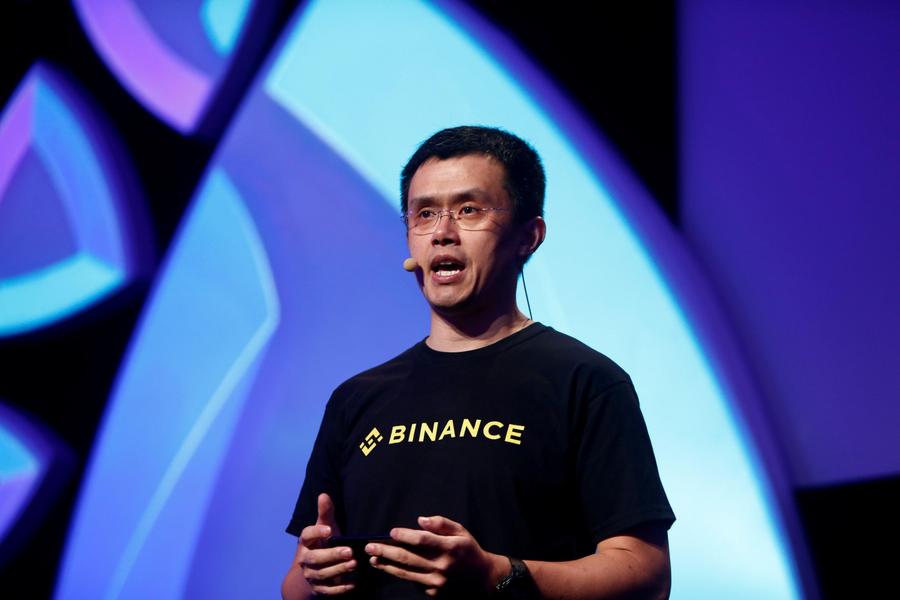
REUTERS/Darrin Zammit Lupi/Alamy
$97 Billion Net Worth and the 2022 Crypto Crash
The extraordinary growth of Binance transformed Zhao into one of the richest people on Earth.
At the beginning of 2022, his net worth stood at $80 billion. In January, it briefly reached $97 billion. At that level, Zhao's fortune put him in the same financial stratosphere as billionaires such as Warren Buffett, Mark Zuckerberg and Steve Ballmer.
And even that figure did not include everything Zhao potentially owned. He had substantial personal cryptocurrency investments, including Bitcoin and BNB. At the height of the crypto bubble, some outside calculations suggested those holdings could have pushed his total fortune well above $100 billion.
Then the crypto market collapsed.
Bitcoin and other digital assets plunged in value during the spring of 2022 as interest rates rose and a series of crypto companies began failing. Because Zhao's wealth was overwhelmingly tied to the privately held Binance, estimates of the company's value fell dramatically as well.
By May 2022, just 130 days after beginning the year with an $80 billion fortune and weeks after touching $97 billion, Zhao's net worth had fallen to $11 billion.
At the time, that decline surpassed the wealth destruction experienced by SoftBank founder Masayoshi Son during the dot-com collapse and briefly represented the largest personal fortune loss ever recorded. Elon Musk later broke the record when his wealth declined by more than $180 billion during Tesla's 2022 downturn.
Unlike many crypto fortunes, however, Zhao's did not disappear permanently.
FTX and Sam Bankman-Fried
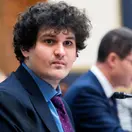
Binance was an early investor in FTX, the cryptocurrency exchange founded by Sam Bankman-Fried. FTX eventually grew into one of Binance's largest competitors, and relations between Zhao and Bankman-Fried deteriorated.
In 2021, FTX bought out Binance's equity stake in the company in a transaction funded with cryptocurrency tokens. Binance emerged from the deal with a large position in FTT, FTX's proprietary token.
The rivalry exploded publicly in November 2022 after CoinDesk published details from Alameda Research's balance sheet that raised questions about FTX's financial condition. Zhao announced that Binance planned to sell its remaining FTT holdings.
The announcement intensified concerns about FTX and helped trigger a rush of customer withdrawals. Within days, the exchange was facing a liquidity crisis.
For a brief moment, it appeared that Zhao would rescue his rival. Binance announced a non-binding agreement to acquire FTX's non-U.S. operation. After reviewing FTX's finances, Binance abandoned the deal the following day.
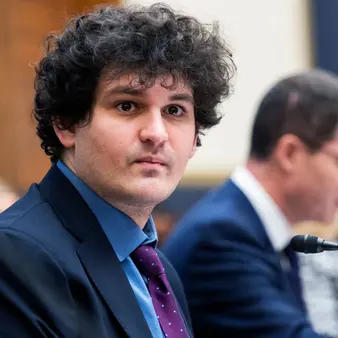
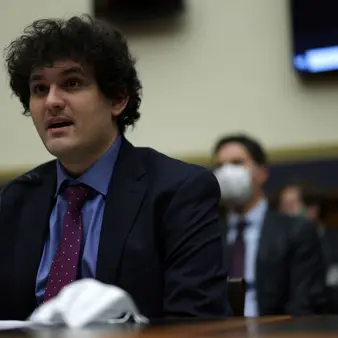
FTX filed for bankruptcy shortly afterward. Bankman-Fried's multibillion-dollar fortune was essentially wiped out in a matter of days. He was arrested in the Bahamas, extradited to the United States, convicted of fraud and related offenses, and sentenced to 25 years in federal prison.
The collapse eliminated Binance's biggest crypto-exchange rival, but Zhao would soon be facing his own federal criminal case.
Guilty Plea and $4.3 Billion Binance Settlement
U.S. authorities had spent years investigating Binance's compliance practices.
In November 2023, Zhao pleaded guilty in federal court to violating the Bank Secrecy Act by failing to maintain an effective anti-money-laundering program at Binance. Prosecutors said Binance had prioritized rapid growth and access to the U.S. market while deliberately failing to implement required compliance controls.
Zhao admitted that he knew Binance served American customers and therefore had obligations under U.S. law. According to federal prosecutors, he also knew that stronger KYC requirements would cause some customers to leave the platform.
As part of his agreement, Zhao stepped down as Binance CEO and agreed to pay a $50 million personal fine.
Binance separately pleaded guilty to criminal charges involving violations of the Bank Secrecy Act, failure to register as a money-transmitting business and violations of U.S. sanctions laws. The company agreed to pay $4.3 billion in penalties and forfeitures, one of the largest corporate criminal resolutions in U.S. history.
Richard Teng, a former financial regulator who had been serving as Binance's head of regional markets, succeeded Zhao as CEO.
The legal problems did not end with the Justice Department case. The Securities and Exchange Commission had filed a separate civil lawsuit against Binance and Zhao in June 2023. In May 2025, the SEC voluntarily dismissed that case with prejudice, meaning the same claims could not be refiled.
Richest Person In History To Go To Prison
Federal prosecutors sought a three-year prison sentence for Zhao. In April 2024, a federal judge instead sentenced him to four months.
At the time of sentencing, Zhao's net worth had already recovered to more than $40 billion. That made him the richest person known to have ever entered prison.
Before Zhao, that distinction belonged to Russian businessman Mikhail Khodorkovsky, who was worth $15 billion when he was arrested in 2003. Bankman-Fried had once been worth $25 billion, but his fortune had collapsed to essentially zero by the time he was incarcerated.
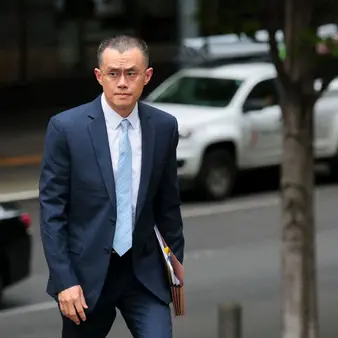
Zhao reported to the federal prison complex in Lompoc, California, in May 2024. Inside prison, he exercised, spent time with other inmates and even participated in discussions about stocks and investing. Fellow inmates were well aware that an extraordinarily wealthy man had joined them.
He was transferred to a halfway house near the end of his sentence. An immigration issue caused him to spend his final two weeks in a local jail.
When Zhao was finally released, his transition back to billionaire life was almost immediate. His mother, sister and assistant collected him, drove him to a nearby airport, and he boarded a private jet for Abu Dhabi.
Just 26 minutes passed between Zhao leaving custody and his plane taking off.
Pardon
Zhao returned from prison at a time when the political and regulatory environment surrounding cryptocurrency in the United States was changing significantly.
He explored the possibility of seeking clemency and ultimately submitted a pardon request. In October 2025, President Donald Trump granted Zhao a presidential pardon for his federal conviction.
The pardon did not restore Zhao to the Binance CEO position. Richard Teng remained in leadership, and Binance later named co-founder Yi He as co-CEO alongside Teng.
Zhao nevertheless remained Binance's controlling shareholder. That distinction proved enormously important financially: losing his CEO title and serving a prison sentence did not require him to surrender the ownership stake that had originally made him a billionaire.
Wealth Recovery
Zhao's fortune began recovering well before he entered prison and continued rising afterward.
Binance remained the dominant cryptocurrency exchange despite the criminal settlement, leadership change and years of regulatory scrutiny. By September 2026, the company said it had more than 330 million registered accounts.
Bloomberg estimated that Binance generated $5.4 billion in annual transaction-fee revenue based on trading volumes and fee disclosures, and calculated total annual revenue of $10.7 billion.
Bloomberg also continued to credit Zhao with 90% ownership of Binance based on his public statements and ownership disclosures in jurisdictions where the company's equity structure is visible.
An important turning point came when Bloomberg reduced the discount it applied to Binance's valuation for regulatory and legal risk from 50% to 15%. That single methodological change increased Bloomberg's calculation of Zhao's fortune by $36 billion.
Binance also secured a major vote of confidence from the United Arab Emirates. Abu Dhabi-backed investment firm MGX agreed to invest $2 billion in Binance in a transaction that valued the company at $75 billion. The investment was one of the largest institutional investments ever made in a cryptocurrency company.
Zhao also owns Bitcoin and BNB personally. Because the precise quantities are unknown, some major billionaire rankings exclude those holdings altogether.
Life in the United Arab Emirates
The United Arab Emirates became increasingly important to Zhao beginning in 2021.
After years of moving between China, Japan and Singapore, Zhao traveled to Dubai and was immediately welcomed by senior Emirati officials. He received a ten-year "golden visa," a residency program designed in part to attract wealthy investors and entrepreneurs.
Zhao quickly committed himself to the region. He later recalled that on his fourth day in Dubai, he viewed two properties and purchased the second one.
The move was notable because Zhao had previously said he did not own a house or car because he considered those assets illiquid. Buying property in the UAE was both a personal decision and a signal that he intended to establish a long-term presence in the country.
Zhao developed relationships with senior Emirati officials and became particularly close to figures involved in the country's effort to establish itself as a center for cryptocurrency, artificial intelligence and other emerging technologies.
After spending time in Dubai, Zhao moved to Abu Dhabi, the UAE's political capital.
Real Estate and Lifestyle
Zhao's first widely publicized UAE real estate purchase was the Dubai property he bought in 2021.
He later established his primary home on Saadiyat Island in Abu Dhabi. By 2026, Zhao was living in a nine-bedroom villa valued at $5 million. The home houses Zhao, his partner and their young children, along with a rotating group of visiting family members.
Although a $5 million home is modest compared with the residences owned by many people with comparable fortunes, Zhao's broader lifestyle is unmistakably that of a multibillionaire. He employs four bodyguards and a chef, travels on a private jet and owns a yacht named "Da Moon."
His Abu Dhabi home includes a private gym and a Steinway piano in the children's playroom. Zhao has joked that the piano is one of the expensive models despite the fact that he does not know how to play it.
He has also pointed out that much more expensive homes surround him. One nearby property was listed for $150 million.
Personal Life
Before founding Binance, Zhao was married and had children with his first wife. After the couple separated, she moved to Tokyo with their children.
Zhao later began a relationship with He Yi, an early Binance executive who had previously worked in television in China. He Yi played a major role in Binance's growth, particularly in marketing and strategy, and became one of the most powerful executives in the cryptocurrency industry.
Zhao and He Yi have three children together. After Zhao stepped down as CEO, He Yi remained deeply involved in Binance and was named co-CEO alongside Richard Teng in 2025.
Despite his enormous fortune, Zhao has frequently characterized himself as relatively uninterested in conventional luxury possessions. He has described himself as a "normal dude," has been photographed driving an ordinary Nissan SUV in Abu Dhabi and has said that a fraction of his fortune would be enough for him to live comfortably.
At the same time, his post-Binance life has placed him in extraordinarily powerful circles. Zhao has traveled internationally advising governments interested in cryptocurrency regulation, met with presidents and royal families, and invested in technology ventures outside Binance.
Philanthropy
Zhao has said that he ultimately intends to give away nearly all of his fortune.
At the height of his wealth in early 2022, he said he expected to follow the example of wealthy philanthropists who donate the majority of their assets, explaining that he intended to give away "90%, 95% or 99%" of his wealth.
Binance also created Binance Charity, a blockchain-based philanthropic platform that has funded disaster relief, education projects and other charitable programs.
Zhao's enormous swings in paper wealth have not changed the basic source of his fortune. From his $97 billion peak, through an $11 billion collapse, a felony conviction, four months in federal prison and a presidential pardon, the key asset remained the same: his controlling ownership of Binance.