
/2010/12/teddy-rile.jpg)
/2019/01/Ronald-Bell.jpg)
/2010/12/Musiq-Soulchild.jpg)
/2024/07/robert-kool-bell.jpg)
/2014/12/James-Jt-Taylor.jpg)
/2019/06/ah.jpg)
/2023/03/Matt-Cameron.jpg)
/2009/12/Denise-Richards.jpg)
/2020/04/Eddie-Vedder.jpg)
/2023/05/Jelly-Roll.jpg)
/2013/01/colin-kaepernick2.jpg)
/2010/08/GettyImages-460635372.jpg)
/2009/12/George-Strait.jpg)
/2013/03/Catherine-Zeta-Jones.jpg)
/2010/12/GettyImages-489914609.jpg)
/2009/10/Bono.jpg)
/2022/04/Charles-Payne.jpg)
What Is Teddy Riley's Net Worth?
Teddy Riley is an American rapper, singer-songwriter, and record producer who has a net worth of $500 thousand. Teddy Riley's creation of New Jack Swing helped put him on the map, and he changed the face of modern R&B, hip-hop and pop.
Teddy created and served as the lead singer of the R&B groups Blackstreet and Guy, and he won a Grammy for the Blackstreet hit "No Diggity." Riley has worked with artists such as Michael Jackson, Usher, Doug E. Fresh, Keith Sweat, and Heavy D. He released the albums "Guy" (1988), "The Future" (1990), and "Guy III" (2000) with Guy and "Blackstreet" (1994), "Another Level" (1996), "Finally" (1999), and "Level II" (2003) with Blackstreet. Notable albums Teddy has produced include Michael Jackson's "Dangerous" (1991) , "Invincible" (2001), "Number Ones" (2003), and "Michael" (2010), Keith Sweat's "Make It Last Forever" (1987), "I'll Give All My Love to You" (1990), "Keep It Comin'" (1991), and "Just Me" (2008), and Patti LaBelle's "Gems" (1994).
Financial Problems
Teddy filed for bankruptcy in 2002. According to his filing, at the time he owed $1 million in back taxes to the IRS. In 2006, his home in Virginia was sold for $1.5 million, with some of the money going toward paying off his debt.
Riley appeared in a 2012 episode of "American Greed" about Troy Titus, a "self-proclaimed real estate guru." Titus was linked to Dunkirk Properties LLC, which owned Teddy's former Virginia Beach studio, Future Recording Studios. The recording studio caught fire when it was for sale, and Troy's license was revoked for bouncing more than $3 million in checks. During an interview on "The Breakfast Club," Riley said of Titus, "For me, this guy was doing [multiple] fake [property] deeds, and selling them to people. Meanwhile, I'm not making any of the [revenue], 'cause I'm not a part of it. I never knew anything about it." Teddy said that Troy was the reason he lost his home.
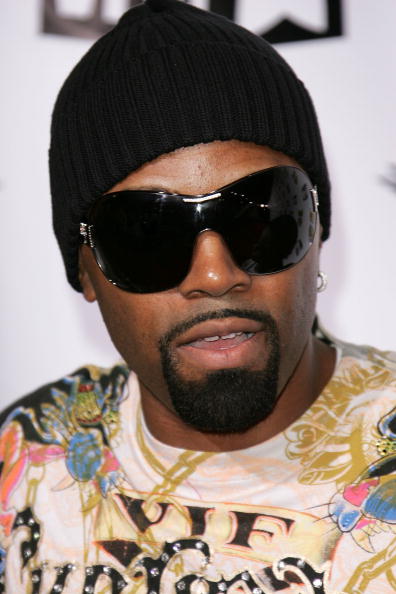
Bryan Bedder/ Getty Images
Early Life
Teddy Riley was born Edward Theodore Riley on October 8, 1967, in New York City. He grew up in Harlem's St. Nicholas Houses, and he was considered a child prodigy at the age of 5. Teddy started playing instruments at church as a child. His uncle owned The Rooftop club in Harlem and built a studio there, where Riley spent much of his time growing up. By the time he was 14, rappers from upstate New York had begun making music to Teddy's tracks.
Career
As a teenager, Riley formed the music group Kids at Work at the behest of music producer Gene Griffin, and the group released a self-titled album in 1984. When Teddy was 18, he produced the Kool Moe Dee single "Go See the Doctor," which peaked at #89 on the "Billboard" Hot 100 chart. In 1987, Riley formed Guy with Timmy Gatling and Aaron Hall. The group released the albums "Guy" (1988), "The Future" (1990), and "Guy III" (2000), and "Guy" was certified 2× Platinum and "The Future" went Platinum. "Guy" reached #27 on the "Billboard" 200 chart and #1 on the Top R&B/Hip-Hop Albums chart. "The Future" also topped that chart, and it reached #16 on the "Billboard" 200 chart. "Guy III" reached #13 on the "Billboard" 200 chart and #5 on the Top R&B/Hip-Hop Albums chart. The group had several top 10 singles on the Hot R&B/Hip-Hop Songs chart, including "Groove Me" (#4), "I Like" (#2), "Let's Chill" (#3), and "Dancin'" (#4). Teddy's song "My Fantasy" (featuring Guy) was included on the 1989 "Do the Right Thing" soundtrack, and it reached #1 on the Hot R&B/Hip-Hop Songs chart. After Guy disbanded in 1992, Riley worked on the production of the Wreckx-n-Effect album "Hard or Smooth, which he also performed on.
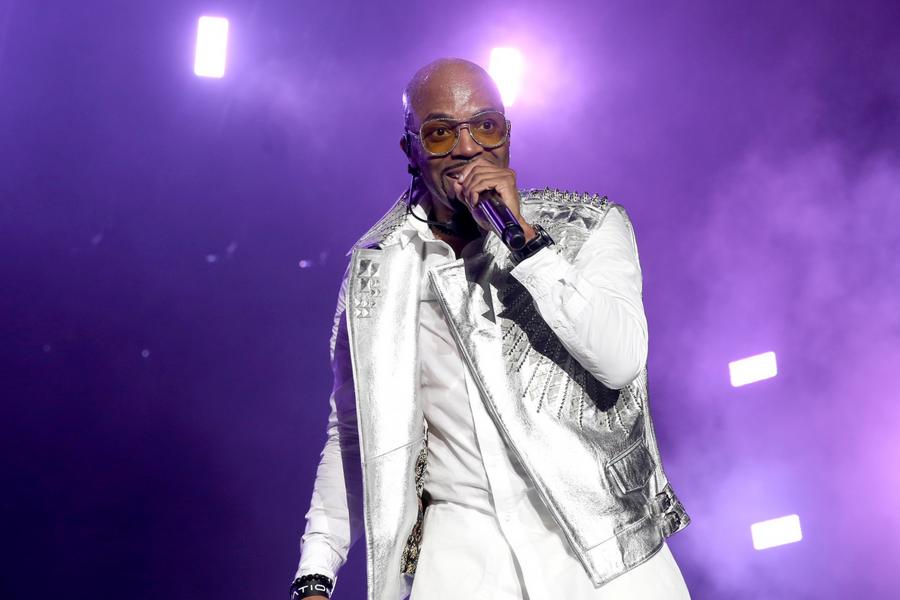
(Photo by Bennett Raglin/Getty Images for Essence)
Blackstreet
Teddy formed the group Blackstreet in late 1991, and they released the albums "Blackstreet" (1994), "Another Level" (1996), "Finally" (1999), and "Level II" (2003). "Blackstreet" went Platinum and reached #52 on the "Billboard" 200 chart and #7 on the Top R&B/Hip-Hop Albums chart. "Another Level" reached #3 on the "Billboard" 200 chart and #1 on the Top R&B/Hip-Hop Albums chart, and it was certified 4× Platinum in the U.S., 2× Platinum in Canada, and Gold in the U.K., France, and the Netherlands. "Finally" and "Level II" both peaked at #4 on the Top R&B/Hip-Hop Albums chart and reached #9 and #14, respectively, on the "Billboard" 200 chart.
The single "No Diggity" (featuring Dr. Dre and Queen Pen) from "Another Level" was a massive hit, reaching #1 on the "Billboard" 200 chart as well as the Hot R&B/Hip-Hop Songs, Dance Singles Sales, and Rhythmic charts. The song also topped the dance charts in several other countries and was certified 3× Platinum in the U.K., Platinum in the U.S., Denmark, and New Zealand, and Gold in Australia, Germany, Norway, and Sweden. In 1996 alone, the song went platinum, selling 1.6 million copies. It took home the 1998 Grammy Award for Best R&B Performance by a Duo or Group with Vocals and was nominated for a Grammy Award for Best R&B Song. It's been covered by more than a dozen artists, featured on countless "Greatest Songs" charts, and even showcased its timelessness by climbing back into the Top 40 of the UK Singles Chart in March of 2013… an astounding 16 years after its initial release there.
Another single from that album, "Don't Leave Me," was a #1 hit on the R&B/Hip-Hop Airplay and Rhythmic charts. As a producer, Riley has worked with artists such as Michael Jackson, Mel B., Keith Sweat, Patti Labelle, Robin Thicke, Snoop Dogg, Lady Gaga, and Boyz II Men, and he formed the production group QDT with Snoop Dogg and DJ Quik.
Recording No Diggity
"No Diggity" almost never saw the light of day. Teddy Riley served as co-producer of the song. Despite a strong track record as a producer he had a hard time getting anybody to record "No Diggity."
Riley initially offered the song to his group, Guy, to aide their short-lived reunion in 1996. Ultimately, Guy didn't record any material, so Riley suggested the group's lead singer Aaron Hall put his vocals on the track, but Hall refused to take part in the recording.
After those rejections, Riley brought the song to Blackstreet, his other group at the time. They had a similar reaction upon first hearing "No Diggity" played for them. Here's Riley, in an interview with Soul Culture, describing how his fellow band members weren't big fans of the track:
"None of the guys liked 'No Diggity'. None of them. They would even say it. That's why I'm singing the first verse.. You know how they say they pushed the little one out there to see if it tastes good and see if he would get egged? Well they pushed me out there – and it became a hit. And now they wish they were singing the first verse, so that they can have the notoriety like me. So [now] they trust what I'm saying…"
Fortunately, Riley knew from his time as producer what songs had the potential to be hits. With a little bit of prodding, he was able to get his group to become fans of "No Diggity" and record it. To this day, it's still the group's only #1 hit, and Riley can smile anytime someone's singing "shorty get downnnn," to the tune of his hit single.
Awards and Nominations
Riley has earned five Grammy nominations, winning for Best Engineered Album, Non-Classical for Michael Jackson's "Dangerous" (1993) and Best R&B Performance by a Duo or Group with Vocal for Blackstreet's "No Diggity" (1998). His other nominations were for Producer of the Year, Non-Classical (1993), Best Rhythm & Blues Song for "No Diggity" (1998), and Album of the Year for Lady Gaga's "The Fame Monster" (2011). In 2016, Teddy was honored with the Legend Award at the "Soul Train" Awards, and he had previously been nominated for Best R&B/Urban Contemporary Single – Group, Band, or Duo for Guy's "I Like" (1990). In 2019, he received a star on the Hollywood Walk of Fame.
/2010/12/teddy-rile.jpg)
/2019/06/ah.jpg)
/2014/12/James-Jt-Taylor.jpg)
/2019/01/Ronald-Bell.jpg)
/2010/12/Musiq-Soulchild.jpg)
/2014/04/Treach.jpg)
/2010/12/GettyImages-450944180.jpg)
/2011/11/doug.jpg)