


What Is John Williams's Net Worth?
John Williams is an American composer, conductor, and pianist who has a net worth of $300 million.
John Williams wrote the music for some of the most recognizable films in cinema history, including "Jaws," "Star Wars," "Superman," "Raiders of the Lost Ark," "E.T. the Extra-Terrestrial," "Jurassic Park," and "Schindler's List." His collaboration with Steven Spielberg began in the 1970s and continued for more than five decades. He also composed the scores for all nine main "Star Wars" films and the first three "Harry Potter" movies.
Williams's work extends well beyond Hollywood. He led the Boston Pops Orchestra, wrote concertos for major classical soloists, and composed music heard during Olympic broadcasts, television news, and sporting events. His honors include five Academy Awards and 54 Oscar nominations, along with 27 Grammy Awards. The scale of his film career has made his melodies familiar to audiences who may never have attended a symphony concert, while his conducting and concert compositions have kept him closely connected to orchestras and performers around the world.
Early Life and Education
John Towner Williams was born on February 8, 1932, in Floral Park, New York. His parents were Esther and percussionist John Williams Sr., and his siblings included Jerry, Joan, and Donald. Music was part of the household from childhood, and the piano became his principal instrument.
The family moved to Los Angeles in 1948, and Williams attended North Hollywood High School. He studied at UCLA and privately with composer Mario Castelnuovo-Tedesco, and he spent a semester at Los Angeles City College playing with its jazz band. He joined the U.S. Air Force in 1951, continuing to arrange, conduct, and perform during his service.
After leaving the military in 1955, he returned to New York and studied piano with Rosina Lhévinne at Juilliard. He also played in nightclubs, combining formal classical training with paid work as a jazz pianist. Those experiences preceded his return to Los Angeles and his entry into the studio music business.
Studio Pianist and Early Film Scores
Williams began working in Hollywood as an orchestrator, session musician, and studio pianist. He contributed to scores by Jerry Goldsmith, Henry Mancini, and Elmer Bernstein, learning the mechanics of recording music for film while working alongside established composers. He also released jazz recordings, including "World on a String," and arranged music for singers Frankie Laine and Ray Vasquez.
His first feature-film score was for the 1958 movie "Daddy-O," followed by projects such as "Because They're Young" in 1960. Television offered another outlet, including "Checkmate," "Lost in Space," and "Land of the Giants." His "Checkmate" recording brought his first Grammy nomination, years before the blockbuster films that made him internationally famous.
Williams received his first Academy Award nomination for his work on "Valley of the Dolls," released in 1967. Another nomination followed for "Goodbye, Mr. Chips," and he won his first Oscar for adapting the music for the 1971 film version of "Fiddler on the Roof." His early-1970s credits included "Images," "The Cowboys," "The Poseidon Adventure," "The Towering Inferno," and "Earthquake."
Steven Spielberg and "Jaws"
Williams began working with Steven Spielberg on "The Sugarland Express" in 1974. Their next collaboration, "Jaws," made Williams's music inseparable from the suspense on screen. Its repeated two-note figure signaled the shark's approach and became one of the most recognizable devices in film music.
The score earned Williams his second Academy Award. He followed it with "Close Encounters of the Third Kind" in 1977, where a five-note musical phrase became part of the story's communication between humans and extraterrestrials. Williams earned $100,000 for his work on "Close Encounters of the Third Kind."
The relationship with Spielberg continued across science fiction, adventure, war films, historical dramas, and family stories. The two worked together on nearly all of Spielberg's subsequent directed features, developing a partnership that lasted into Williams's 90s. Their projects often required very different musical approaches, from the suspense of "Jaws" to the intimacy of "The Fabelmans."
Paul Morigi/Getty Images
"Star Wars" and "Superman"
In 1977, Williams also composed the score for George Lucas's "Star Wars." The orchestral main title, character themes, and recurring musical ideas helped define the series' fictional universe. Williams won his third Academy Award for the score.
He returned for "The Empire Strikes Back" and "Return of the Jedi," then scored the prequel trilogy and the three sequels released between 2015 and 2019. Across the nine films, themes introduced in one installment returned in new settings and arrangements. His music connected characters and events across a story released over more than four decades.
Williams followed the first "Star Wars" with the score for Richard Donner's "Superman" in 1978. Its title march became another of his signature pieces. Together, these scores established him as a defining musical voice of the modern blockbuster.
"Indiana Jones," "E.T.," and the 1990s
Williams introduced the "Raiders March" in "Raiders of the Lost Ark" in 1981 and returned for the later "Indiana Jones" adventures starring Harrison Ford. His score for "E.T. the Extra-Terrestrial" won his fourth Academy Award. Other 1980s projects included "Empire of the Sun" and his Oscar-nominated music for "The Accidental Tourist."
The 1990s brought another extraordinary run of films. He scored "Home Alone," "Hook," "JFK," and "Jurassic Park," then created the music for "Schindler's List," featuring violinist Itzhak Perlman. "Schindler's List" earned him his fifth Academy Award.
His other scores during the decade included "Sabrina," "Seven Years in Tibet," "Saving Private Ryan," and "Angela's Ashes." These films required music for romantic comedy, historical biography, war, and personal tragedy. They also showed the range of a composer whose public reputation was often associated with triumphant adventure themes.
"Harry Potter" and Later Film Work
Williams opened the 2000s with Roland Emmerich's "The Patriot." In 2001, he scored "Harry Potter and the Sorcerer's Stone," introducing "Hedwig's Theme." He returned for "Harry Potter and the Chamber of Secrets" and "Harry Potter and the Prisoner of Azkaban," while his themes remained associated with the franchise after other composers took over.
His credits during the decade also included "A.I. Artificial Intelligence," "Catch Me if You Can," "Memoirs of a Geisha," and "Munich." In the 2010s, he composed "The Adventures of Tintin," "War Horse," "Lincoln," "The Book Thief," and "The Post," alongside the final "Star Wars" trilogy.
Williams received his 53rd Academy Award nomination for Spielberg's 2022 film "The Fabelmans." The following year's "Indiana Jones and the Dial of Destiny" brought his 54th nomination, awarded in 2024, and "Helena's Theme" won a Grammy. He continued working with Spielberg on "Disclosure Day," whose film and soundtrack were released in June 2026.
(Photo by Axelle/Bauer-Griffin/FilmMagic)
Boston Pops and Concert Music
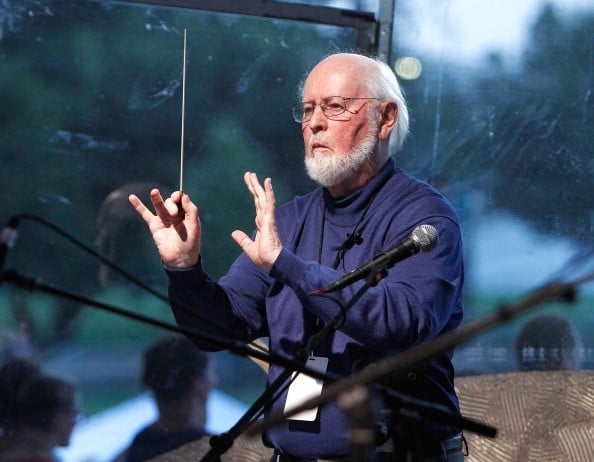
From 1980 through 1993, Williams served as principal conductor of the Boston Pops Orchestra. He subsequently became its laureate conductor and maintained a long association with the Boston Symphony Orchestra and Tanglewood. His conducting appearances have also included the New York Philharmonic, National Symphony Orchestra, Berlin Philharmonic, and Los Angeles Philharmonic at the Hollywood Bowl.
Alongside film scores, Williams wrote symphonies, concertos, and other works for the concert hall. His collaborators have included cellist Yo-Yo Ma, violinists Gil Shaham and Anne-Sophie Mutter, and members of leading American orchestras. Some of these works were written for specific performers with whom he had developed close musical relationships.
His "Concerto for Piano and Orchestra," written for Emanuel Ax, premiered at Tanglewood in July 2025 with Andris Nelsons conducting the Boston Symphony Orchestra. The work drew on Williams's lifelong involvement with the piano and his interest in jazz performers such as Art Tatum, Bill Evans, and Oscar Peterson. It followed decades of concert music, including a cello concerto premiered by Ma in 1994 and a second violin concerto premiered by Mutter in 2021.
Television, Olympic Music, and Honors
Williams composed music for several Olympic Games and wrote themes used by NBC, including its news programming and "NBC Sunday Night Football." Those commissions placed his work in recurring broadcasts rather than only in films and concert performances. His earlier television scores remained another important part of his catalog.
In 2001, the Eastman School of Music awarded him an honorary doctorate when he visited to conduct its orchestra and lead a symposium for student composers.
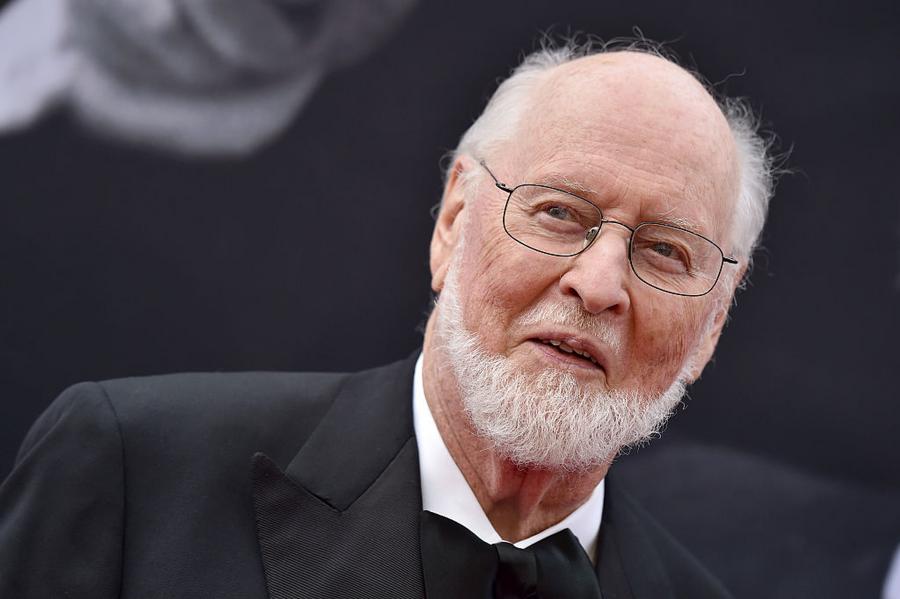
In 2016, Williams became the first composer to receive the American Film Institute's Life Achievement Award. He was named a Disney Legend in 2024, and the documentary "Music by John Williams" examined his work through interviews, archival material, and performances. The documentary won the Grammy for Best Music Film in 2026.
Personal Life and Real Estate
Williams married actress and singer Barbara Ruick in 1956. They had three children, Jennifer, Mark, and Joseph Williams, who became a lead singer of Toto. Ruick died in 1974, and Williams married photographer Samantha Winslow in 1980.
In 1976, Williams paid $170,000 for a home in Los Angeles. The property is worth an estimated $7 million to $10 million.


