













What is Jamie Johnson's Net Worth?
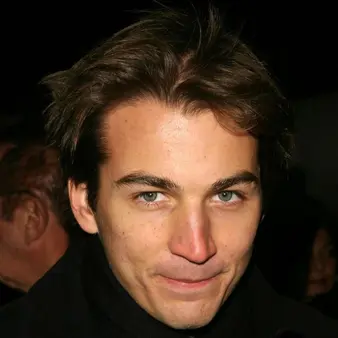
Jamie Johnson is an American filmmaker, writer, fashion designer, and heir to the Johnson & Johnson fortune who has a net worth of $800 million.
James Wittenborn Johnson is best known for directing the 2003 HBO documentary "Born Rich," which offered an unusually candid examination of the lives of young people who inherited extraordinary wealth. A great-grandson of Johnson & Johnson co-founder Robert Wood Johnson I, Johnson turned his privileged upbringing into the subject of a filmmaking career that explored inherited fortunes, social class, and economic inequality. "Born Rich," which featured heirs including Ivanka Trump, Georgina Bloomberg, and S.I. Newhouse IV, earned two Emmy Award nominations and established Johnson as a distinctive voice on the culture of America's wealthy families.
Johnson followed that success with the 2006 documentary "The One Percent," which examined the growing concentration of wealth in the United States. He also spent several years writing about affluent society for Vanity Fair, launched a luxury menswear label called Black Sweater, and pursued narrative filmmaking. His creative endeavors have frequently challenged the conventions of the wealthy social world in which he was raised, particularly the longstanding reluctance of prominent families to discuss money publicly.
Johnson's fortune comes primarily from his family's multigenerational wealth rather than his entertainment or fashion businesses. In 2014, The Washington Post reported that Johnson had received an inheritance estimated at $600 million when he turned 21.
Early Life and Family Background
Jamie Johnson was born in 1979 as James Wittenborn Johnson. His father, James Loring Johnson, was a member of the Johnson & Johnson founding family, while his mother, Gretchen Wittenborn Johnson, came from a family with literary and artistic connections. His maternal uncle is novelist and screenwriter Dirk Wittenborn, who later helped produce his first documentary.
Johnson grew up with four older sisters and a brother on a family estate in New Jersey. The family also maintained homes in East Hampton, New York, and Jupiter Island, Florida. Despite the family's extraordinary resources, his parents attempted to provide their children with a relatively private upbringing.
Johnson attended the Pingry School, an elite private preparatory school in New Jersey. He later enrolled at New York University's Gallatin School of Individualized Study, where he studied history and filmmaking, graduating in 2003.
One of the defining features of his childhood was his family's reluctance to discuss its fortune. Johnson recalled that, when he was about 10 years old, a classmate discovered his father's name in a Forbes ranking of America's wealthiest people and read it aloud at school. The incident revealed the scale of his family's wealth to Johnson and his classmates at the same time.
His father's attitude toward money had been influenced by a bitter inheritance dispute within the Johnson family. Following the death of Jamie's grandfather, J. Seward Johnson Sr., in 1983, members of the family fought a highly publicized legal battle over his estate. The experience reinforced the family's preference for financial secrecy, a tradition Jamie would eventually challenge through his documentaries.
The $600 Million Johnson & Johnson Inheritance
Jamie Johnson is a great-grandson of Robert Wood Johnson I, who founded Johnson & Johnson in 1886 with his brothers James Wood Johnson and Edward Mead Johnson. The company grew into one of the world's largest healthcare businesses, creating enormous fortunes for several generations of the Johnson family.
In 2000, Johnson turned 21 and gained access to a substantial family trust inheritance. The Washington Post reported in August 2014 that published estimates placed his inheritance at $600 million. The newspaper also stated that each of his five siblings received a similar distribution, without restrictions on how the money could be used.
Johnson has independently acknowledged receiving a major inheritance. In a 2003 interview with CNN, he explained that the prospect of inheriting the money had motivated him to begin making "Born Rich." At age 20, he had become concerned about what receiving an enormous fortune would mean for his future and whether he would be able to establish an identity and purpose beyond his family's wealth.
Although the $600 million figure has been widely reported, the family's private trust records have not been publicly disclosed. The exact composition of Johnson's inheritance, including how much was held in Johnson & Johnson stock, other investments, or cash, has not been independently established.
Unlike some members of prominent business dynasties, Johnson did not seek a management position in the family company. He instead used the financial freedom provided by his inheritance to pursue filmmaking, writing, and other creative interests.
Getty
"Born Rich" Documentary Breakthrough
Johnson began developing "Born Rich" while attending New York University. His central question was simple: What happens to young people who grow up knowing they will inherit enough money that they never have to work?
Finding participants proved difficult. Johnson later explained that he approached around 50 potential subjects over three years before assembling a group willing to speak candidly on camera. Many declined because their families considered public discussion of wealth inappropriate.
The finished documentary featured Johnson alongside 10 other young heirs to prominent fortunes. Participants included Ivanka Trump, daughter of real estate developer Donald Trump; Georgina Bloomberg, daughter of billionaire Michael Bloomberg; S.I. Newhouse IV, a member of the Condé Nast publishing family; and Luke Weil, whose family was connected to the gaming industry.
The film examined the participants' attitudes toward money, work, family expectations, and social status. Some expressed discomfort with their privileges, while others defended inherited wealth or embraced the lifestyles it made possible. Johnson also turned the camera on his own family, including his father, who was deeply uncomfortable with the project.
"Born Rich" premiered at the Sundance Film Festival in January 2003 and subsequently aired on HBO in October of that year. The documentary attracted significant attention because it offered access to a social circle that generally avoided discussing its finances with outsiders.
Its release was not without controversy. Luke Weil attempted to block the film through legal action after becoming concerned about his participation. The dispute highlighted the conflict between Johnson's desire for openness and the traditional privacy expectations of wealthy families.
In 2004, "Born Rich" received two Primetime Emmy Award nominations: Outstanding Nonfiction Special and Outstanding Directing for Nonfiction Programming. Johnson was credited as both a producer and director, while his uncle Dirk Wittenborn was also among the film's producers.
The documentary established Johnson's reputation and opened the door to further projects examining wealth and social inequality.
"The One Percent" and Wealth Inequality
Johnson expanded his focus with his second major documentary, "The One Percent," which premiered at the Tribeca Film Festival in 2006 and aired on Cinemax in 2008.
Where "Born Rich" primarily examined the personal experiences of wealthy heirs, "The One Percent" explored the broader economic system that allowed fortunes to become increasingly concentrated among a small segment of American society.
The film featured interviews with economists, business leaders, and people from different economic backgrounds. Among its subjects were economist Milton Friedman, former U.S. Labor Secretary Robert Reich, Bill Gates Sr., and Kinko's founder Paul Orfalea.
Johnson also explored the experiences of Americans living in poverty, presenting a contrast between the extraordinary resources available to wealthy families and the financial insecurity experienced by much of the population.
His interviews revealed sharply different perspectives on inequality. Some participants defended the accumulation of large fortunes as a natural consequence of entrepreneurship and economic freedom. Others warned that extreme concentrations of wealth could weaken social mobility and democratic institutions.
The documentary also continued Johnson's examination of his own family's attitudes toward money. His father remained uncomfortable with the public scrutiny generated by his son's work, illustrating the tensions between generations raised with different expectations about wealth and privacy.
Writing and Journalism
Following his documentary success, Johnson became a regular contributor to Vanity Fair, where he wrote an online column titled "The One Percent" between 2008 and 2011.
The column examined the habits, social rituals, and attitudes of America's affluent families. His subjects ranged from exclusive parties and luxury travel to inherited status, family relationships, political influence, and changing ideas about what it meant to belong to the upper class.
Johnson's writing frequently combined social observation with criticism of the wealthy world's conventions. Having grown up inside that community, he could describe traditions and behaviors that outsiders rarely encountered firsthand.
He also contributed writing to The Huffington Post and The New York Times. In April 2014, he wrote a New York Times article about a White House gathering focused on the next generation of philanthropy.
The event brought together young philanthropists, heirs, and representatives of wealthy families to discuss charitable giving and the responsibilities associated with inherited fortunes. Johnson's coverage reflected his continuing interest in how wealthy individuals chose to use their financial resources and influence.
Black Sweater Fashion Label
Johnson entered the fashion industry in 2010 with the creation of Black Sweater, a luxury menswear collection inspired by traditional American upper-class clothing.
The label's name referenced an old social custom in which a black sweater supposedly signaled that someone had been excluded from polite society. Johnson incorporated elements of classic tailoring, country-club fashion, and understated luxury into the collection.
Black Sweater included jackets, trousers, trench coats, and knitwear, often incorporating unusual details or subtle references to elite social traditions. Some garments featured embroidered names of exclusive destinations such as Newport, Hobe Sound, and Fishers Island.
In March 2011, the collection was introduced at Bergdorf Goodman in New York City. The launch attracted prominent figures from fashion and society, including Ivanka Trump and members of the Rockefeller and Bloomingdale families.
Although the label received attention from fashion publications including Vogue, Black Sweater did not become a lasting commercial business. By 2017, the company had ceased operating as a retail fashion label, although Johnson continued making sweaters for friends and relatives.
Financial details of the venture, including its sales, operating losses, and Johnson's investment in the business, were never made public.
Later Filmmaking and Television Appearances
Johnson also explored acting and fiction filmmaking after establishing himself as a documentary director.
In 2011, he appeared as himself in an episode of the television drama "Gossip Girl," a series centered on wealthy young people living in Manhattan. The following year, he made a small appearance in the financial thriller "Arbitrage," starring Richard Gere.
Johnson subsequently directed the 2014 short film "Adrift," featuring Cornelia Livingston and McCaleb Burnett. The project represented a departure from his documentary work, focusing on the psychology of personal relationships rather than inherited wealth.
In interviews, Johnson explained that he had become interested in exploring emotional honesty and the ways people understand themselves through fictional storytelling.
A 2017 Town & Country profile described Johnson as pursuing two additional narrative film projects, although neither had a confirmed commercial release at the time of that reporting. His publicly documented filmmaking output has remained relatively limited compared with the attention generated by his first two documentaries.
Personal Life and Philanthropic Interests
Despite gaining public attention for exposing the private world of wealthy families, Johnson has generally maintained a low public profile in his personal life.
He has spent much of his adult life in New York City and has remained connected to the city's artistic and social communities. His family relationships and upbringing have continued to influence his creative work, particularly his interest in the psychological effects of inherited wealth.
Johnson has also expressed an interest in philanthropy and the responsibilities that accompany large fortunes. His writing about younger generations of wealthy donors has examined how inherited money can be directed toward education, healthcare, and broader social causes.
Throughout his career, Johnson has occupied an unusual position as both a beneficiary and a critic of inherited privilege. His documentaries challenged the culture of secrecy surrounding America's wealthiest families, while his own inheritance provided the independence to pursue projects that might otherwise have been difficult to finance.