














What Is Lou Pai's Net Worth?
Lou Pai is a Chinese-American businessman and former Enron executive who has a net worth of $200 million.
Lou Pai is best known for serving as CEO of Enron Energy Services, one of the most ambitious and ultimately disastrous divisions of the energy-trading giant. A close associate of Enron executive Jeff Skilling, Pai accumulated an enormous fortune in company stock and options during the 1990s.
During his tenure at Enron, Lou reportedly earned approximately $100 million in salary alone, in addition to receiving enormous grants of company stock. Between 1999 and 2001, he sold approximately $353.7 million worth of Enron shares, bringing his reported salary and gross stock-sale proceeds to more than $450 million.
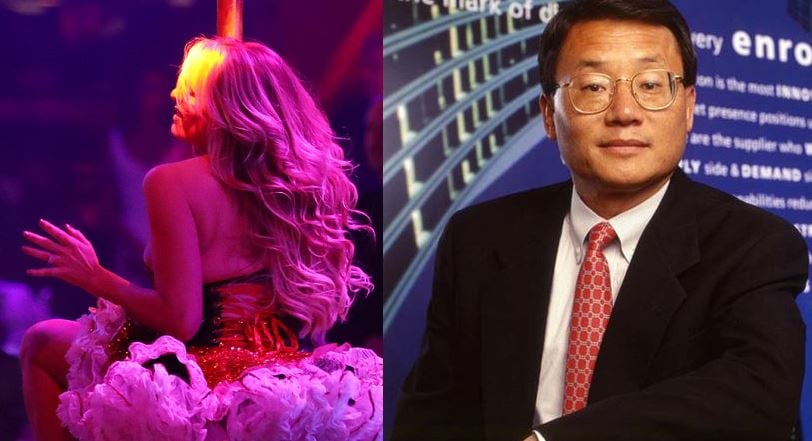
Between 1999 and 2001, he sold approximately $353.7 million worth of Enron shares, much of it to facilitate an extraordinarily expensive divorce stemming from an affair with a Houston stripper. That divorce inadvertently proved to be one of the luckiest financial breaks in corporate history. Just months after his final major stock sales, Enron collapsed into bankruptcy, wiping out billions in shareholder wealth. Although Pai later paid $31.5 million to settle civil insider-trading allegations, he avoided criminal prosecution and retained substantial wealth. He subsequently invested in ranches, real estate, and environmental commodities businesses, including a Colorado property he purchased for $23 million and sold for $60 million.
Early Life
Lou Pai was born in Nanjing, China, in 1947. His father, Shih-I Pai, was a distinguished mathematician and aeronautical engineer who earned advanced degrees from MIT and Caltech before becoming a university professor. The family moved to the United States when Lou was a young child, initially settling near Cornell University, where his father taught, before moving to Maryland in 1953.
Lou inherited his father's aptitude for mathematics and followed him to the University of Maryland, College Park, where he earned a bachelor's degree in 1970 and a master's degree in economics in 1973. His sister, Sue Pai Yang, later became a New Jersey workers' compensation judge. After graduating, Lou worked in government and finance, including a period at the Securities and Exchange Commission, before moving into the energy industry.
Rise at Enron
In 1987, Lou Pai joined Enron, which was then a relatively obscure Houston-based natural gas company. That same year, Enron began working with McKinsey consultant Jeff Skilling, who proposed transforming the company from a traditional energy supplier into a sophisticated financial trading operation. Skilling officially joined Enron in 1990, and Pai became one of his most trusted executives.
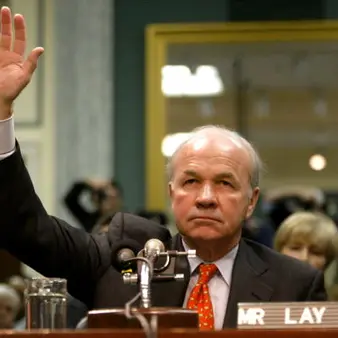
Skilling recognized Pai's mathematical abilities and his talent for developing complicated energy-trading strategies. As Enron expanded into new markets, Pai was placed in charge of increasingly important projects involving energy contracts, pricing, and risk management. His quiet, introverted personality contrasted sharply with the aggressive corporate culture that developed around Skilling and Enron CEO Ken Lay.
In March 1997, Pai was named chairman and CEO of a new division called Enron Energy Services (EES). He held that position until early 2001, when he became chairman and CEO of Enron Xcelerator, a venture capital and technology investment division. His resignation from Enron became effective on June 30, 2001.
Enron Energy Services
Enron Energy Services was supposed to revolutionize the American electricity and natural gas markets. Rather than forcing businesses and households to purchase their energy from traditional utility companies, EES promised to offer competitive alternatives, potentially saving customers money through long-term contracts and more efficient energy management.
Unfortunately, the division struggled to deliver on those promises. It accumulated enormous expenses and entered into complicated contracts that produced substantial financial losses. Former employees later alleged that Enron concealed hundreds of millions of dollars in losses by shifting them between divisions, allowing EES to appear more successful than it actually was.
Despite these problems, Pai remained one of Enron's most powerful and generously compensated executives. His compensation included valuable stock options and substantial equity interests tied to Enron's various businesses, including an allocation of shares connected to the creation of The New Power Company, an Enron-affiliated retail energy venture.
Those equity awards would eventually make Pai extraordinarily wealthy. But his professional reputation became overshadowed by his personal life, particularly his enthusiasm for Houston-area strip clubs.
An Affair That Led to a Fortune
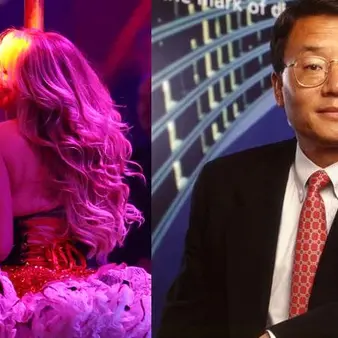
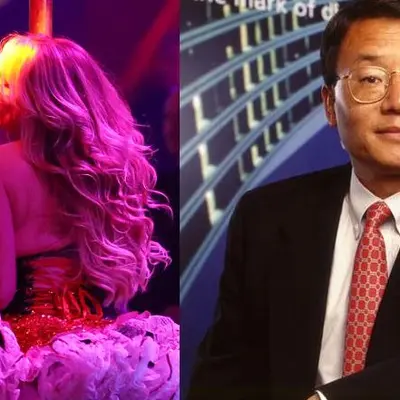
Lou Pai married his first wife, Lanna, in 1976, and the couple had two children. During his years at Enron, however, Pai developed a reputation for spending extraordinary amounts of time at Houston strip clubs, sometimes entertaining colleagues and business associates at company expense.
According to Bethany McLean and Peter Elkind's book "The Smartest Guys in the Room," Pai was primarily motivated by money and a fascination with strippers. Former employees claimed that he occasionally brought dancers back to Enron's corporate offices for late-night parties, although Pai later denied reports that he had been reprimanded for such activities.
One particularly outrageous story involved how Pai allegedly disguised his visits to strip clubs from his wife. According to the account, he would stop at a gas station on his way home and splash gasoline on himself to cover the smell of the clubs.
Eventually, Pai began an affair with Melanie Fewell, a married woman who had worked as an exotic dancer. Melanie became pregnant, and the couple welcomed a daughter in April 1997. When Lanna learned about the affair and the child in early 1998, the marriage began to unravel.
Lou and Lanna separated, and divorce proceedings followed in 2000. What initially appeared to be an enormously expensive personal disaster would ultimately produce one of the most extraordinary financial outcomes in the history of corporate America.
The $110 Million Divorce Settlement
Lou and Lanna Pai began mediating the division of their marital assets in the spring of 2000. Because so much of Lou's wealth consisted of Enron stock and options, the settlement involved the liquidation and division of enormous amounts of company shares.
According to a 2007 Texas appellate court decision involving Lanna and one of her former financial advisers, the couple agreed that their marital estate was worth $193.6 million, excluding certain restricted and unissued securities. Their divorce was finalized on August 21, 2000, with Lanna receiving assets valued at $110,536,269, representing more than 57% of the agreed marital estate. She was also entitled to half of certain additional equity Lou was owed through The New Power Company.
To facilitate the financial division, Pai began selling enormous quantities of Enron stock. On March 22, 2000, he sold 1,760,500 shares at $74.57 apiece, generating more than $131 million in a single day. Over the following two months, he sold nearly two million additional shares worth more than $130 million.
These transactions occurred while Enron was still one of Wall Street's most celebrated companies. Investors expected its stock to keep appreciating, making Pai's forced liquidation appear financially unfortunate.
Instead, the timing was almost unbelievably lucky.
$353 Million in Enron Stock Sales
Between 1999 and 2001, Lou Pai sold approximately $353.7 million worth of Enron stock, more than any other executive at the company during that period. The figure represented gross stock-sale proceeds rather than his personal profit after option-exercise costs and other obligations.
Although the majority of his sales occurred in 2000, Pai continued liquidating holdings in 2001. Between May 18 and June 7, 2001, he sold 338,897 shares and exercised options resulting in another 572,818 shares being sold on the open market. The average stock price during those transactions was $53.78.
Pai's departure from Enron became effective at the end of June 2001. Just five months later, the company was on the verge of complete financial collapse.
Enron stock had reached an all-time high of $90.56 in August 2000. By August 2001, it was trading around $40, and by November, shares had fallen to approximately $1. On December 2, 2001, Enron filed for bankruptcy, becoming the largest corporate bankruptcy in American history up to that point.
Thousands of employees lost their jobs, and shareholders collectively lost billions of dollars. Workers who had invested their retirement savings heavily in Enron stock were financially devastated, while several senior executives eventually faced criminal convictions and prison sentences.
Pai, meanwhile, had already sold hundreds of millions of dollars worth of shares.
His extramarital affair and expensive divorce had helped push him into liquidating a fortune that might otherwise have evaporated in Enron's collapse.
SEC Insider Trading Settlement
Although Pai avoided the criminal convictions that ultimately ensnared several former Enron executives, his stock sales attracted the attention of federal regulators.
In July 2008, the Securities and Exchange Commission charged Pai with insider trading related to his May and June 2001 transactions. The SEC alleged that before selling those shares, Pai had received material, nonpublic information about significant financial and operational problems at Enron Energy Services.
Specifically, regulators alleged that Enron had concealed contract-related losses that would have transformed a reported $40 million quarterly profit in its Retail Energy Services segment into a loss of at least $60 million. The SEC maintained that Pai knew, or should have known, he could not sell his stock while possessing that information.
Pai settled the civil charges without admitting or denying the allegations. He agreed to pay $31.5 million, consisting of $30 million in disgorgement and prejudgment interest, subject to a $6 million credit, plus a $1.5 million civil penalty. He also accepted a five-year prohibition on serving as an officer or director of a public company.
Pai was not criminally convicted in connection with the Enron scandal and did not serve prison time.
Colorado Ranch
In the late 1990s, Pai began investing some of his enormous fortune in ranch properties. His most notable acquisition was the 77,000-acre Taylor Ranch in Colorado's Sangre de Cristo Mountains, which he assembled in 1999 for approximately $23 million.
The sprawling property included Culebra Peak, a mountain rising more than 14,000 feet above sea level. Pai became one of Colorado's largest private landowners, and the mountain was sometimes jokingly referred to as "Mount Pai."
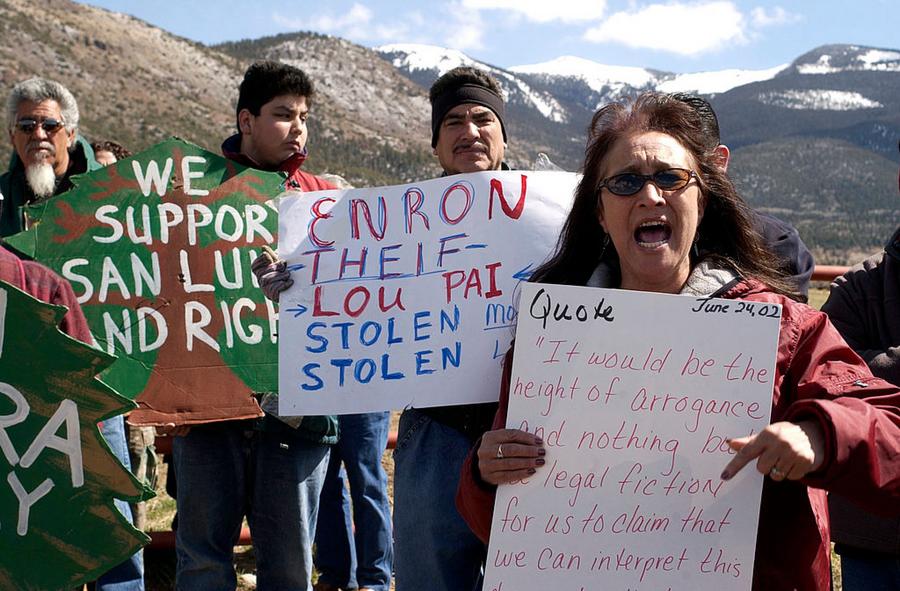
His ownership was controversial because of a longstanding dispute over access rights involving descendants of Hispanic settlers. Under an 1844 Mexican land grant, local families had historically used parts of the property for grazing livestock and gathering firewood and timber. Those rights had been restricted by previous owners, leading to decades of litigation.
Pai fought efforts to restore broad access to the property, but in 2002, the Colorado Supreme Court recognized certain traditional grazing, firewood, and timber rights for qualifying local landowners. The U.S. Supreme Court declined to hear Pai's appeal the following year.
In 2004, Pai sold the ranch to a group of Texas investors for $60 million, nearly three times its reported purchase price.
(Photo By Hyoung Chang/The Denver Post via Getty Images)
Later Business Ventures and Personal Life
After leaving Enron, Pai continued investing in businesses and real estate. He became involved in environmental commodities and renewable energy through Element Markets, a company he helped establish that specialized in products such as renewable energy credits and other environmental assets. Element Markets was acquired by TPG in 2021 and subsequently combined with Bluesource in 2022.
Pai also developed a passion for breeding and training horses. After his divorce from Lanna, he married Melanie Fewell, who became Melanie Pai. Together, they operated equestrian properties under the Canaan Ranch name in Texas and Virginia, focusing particularly on dressage horses.
Their daughter, Natalie Pai, became an accomplished competitive dressage rider, and the family developed strong connections to the equestrian community in Wellington, Florida.
In May 2022, Lou and Melanie purchased a 21-acre equestrian estate in Wellington for $8.2 million. The property featured three stables with accommodations for nearly 40 horses, riding and jumping arenas, pastureland, and residential facilities.
More than two decades after Enron's collapse, Pai's financial story remains one of the strangest examples of unexpected good fortune in modern business history. An affair and divorce that initially threatened his marriage, career, and wealth ultimately helped him escape a corporate bankruptcy with a substantial personal fortune intact.