
/2021/01/tom-anderson.png)
/2011/06/Chris-DeWolfe.jpg)
/2010/04/brad-green2.jpg)
/2011/05/GettyImages-96156651-e1615253284486.jpg)
/2012/03/Kevin-Systrom.jpg)
/2020/06/taylor.png)
/2009/09/Cristiano-Ronaldo.jpg)
/2009/09/Brad-Pitt.jpg)
/2019/11/GettyImages-1094653148.jpg)
/2017/02/GettyImages-528215436.jpg)
:strip_exif()/2009/09/P-Diddy.jpg)
/2020/04/Megan-Fox.jpg)
/2020/01/lopez3.jpg)
/2019/04/rr.jpg)
:strip_exif()/2015/09/GettyImages-476575299.jpg)
/2018/03/GettyImages-821622848.jpg)
/2009/11/George-Clooney.jpg)
What is Tom Anderson's net worth?
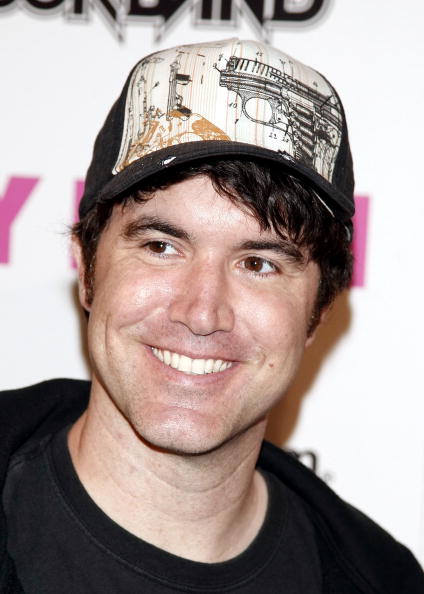
Tom Anderson is an American entrepreneur who has a net worth of $60 million. Tom Anderson earned his net worth as the co-founder of the social networking website Myspace and through successful real estate investments. He co-founded Myspace in 2003 with Chris DeWolfe and was later president of Myspace and a strategic adviser for the company. He became famous because his photo was the default friend for everyone who joined the social network.
As we detail later in this article, Tom and Chris only owned small fractions of MySpace when the company was acquired by NewsCorp in 2005. Prior to the 2005 acquisition, the company had restructured several times after various venture capital investment rounds. In total, between cashouts, acquisitions, and salary, Anderson and DeWolfe both grossed roughly $40 million from the Myspace venture.
Early Life
Tom Anderson was born on November 8, 1970, in Escondido, California. His father was an entrepreneur who "had one crazy idea after another." While attending San Pasqual High, Tom was a hacker using the pseudonym "Lord Flathead," and after he hacked into Chase Manhattan Bank's computer system, the FBI raided the Anderson home and confiscated Tom's computer equipment. They didn't arrest Anderson because he was only 14 at the time, but he was put on probation. After high school, he enrolled at the University of California, Berkeley, to study English and later served as the lead vocalist of the band Swank. Tom moved to Taiwan, then returned to California to attend film school at the University of California, Los Angeles.
Career
Tom originally came to work on Myspace via a company called eUniverse, which was founded by internet entrepreneur Brad Greenspan.
In 2000, Anderson was working as a copywriter and product tester at a digital storage company called XDrive. At XDrive, he met future Myspace co-founder Chris DeWolfe. The company went bankrupt the following year. Tom and Chris soon co-founded ResponseBase, a direct marketing company.
In late 2002, Tom and Chris sold ResponseBase to eUniverse and became eUniverse employees. The idea behind Myspace came about after the 2002 launch of Friendster. Several people with Friendster accounts were employees at eUniverse, and they quickly recognized the potential for such a social network. They formed a team and set about to mimic the more popular features of the rival social networking website.
Kevin Winter/Getty Images
The idea behind Myspace came about after the 2002 launch of Friendster. Several people with Friendster accounts were employees at eUniverse. They quickly recognized the potential for such a social network. They formed a team and set about to mimic the more popular features of the rival social networking website.
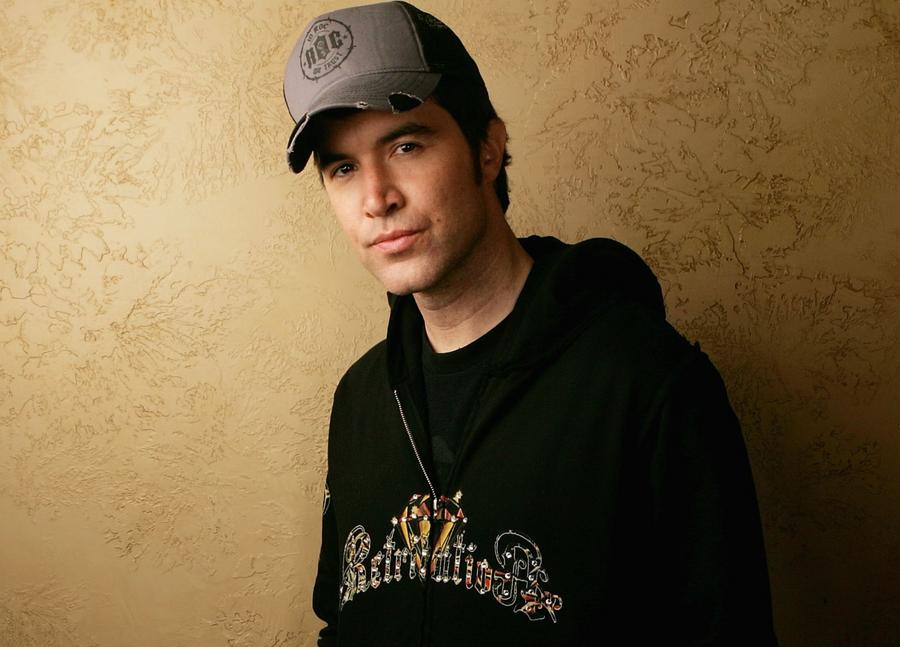
Anderson created the first Myspace pages in 2003, and after eUniverse became Intermix Media, Myspace gained popularity. By the summer of 2005, when Myspace was sold to News Corp, the social network was used by 16 million people per month, and by January 2006, 200,000 new users were signing up every day. Myspace had grown to become the most popular social network in the U.S. by June 2006, and it held this rank until April 2008, when it was taken over by Facebook. From that point on, Myspace declined rapidly in popularity. In the prime of Myspace, the company employed 1,600 employees. That was reduced to 1,000 after laying off 30% of the workforce in June 2009. By June 2011, further job cuts reduced its size to 400 employees. In June 2011, Myspace was sold to Specific Media for $35 million plus a 5 percent equity stake in Specific Media. Justin Timberlake also took a small stake in the deal.
(Photo by Mark Mainz/Getty Images)
News Corp Acquisition
By now, most people know that News Corp acquired Myspace for $580 million. Prior to the sale, Myspace had been restructured several times, resulting in a rather complicated equity shareholder pool. First off, the company had received $15.3 million in early funding from a company called VantagePoint. Then, in February 2005, Myspace took on another $15.5 million from a company called Redpoint. At the time of the Redpoint investment, 25% of the equity was set aside for six employees who were considered the founders of Myspace. This group included Tom Anderson and Chris DeWolfe who each sold $3 million worth of their equity to Redpoint.
There was one catch to the Redpoint investment, though – If Redpoint were able to sell Myspace for greater than $125 million within one year, the founders' stake would be limited at that $125 million valuation. That meant when News Corp acquired Myspace for $580 million, the six founders received a combined $30 million.
According to the book "Stealing Myspace" by Wall Street Journal reporter Julia Angwin, DeWolfe and Anderson each took $10 million of that cut, leaving $10 million for the remaining four founders to split. DeWolfe and Anderson were then both given two-year $30 million contracts with News Corp. In the end, Redpoint made $44.5 million off its $15.5 million investment in less than a year. VantagePoint made $139 million off their $15.3 million investment. In total, between cashouts, acquisitions, and salary, Anderson and DeWolfe both grossed roughly $40 million from the Myspace venture.
Other Ventures
Anderson invested a portion of his Myspace earnings into distressed real estate, most notably in Las Vegas, which reportedly became quite valuable. He also invested in a Facebook gambling app called RocketFrog. In 2009, Tom had a cameo in the Judd Apatow film "Funny People," which starred Adam Sandler, Seth Rogen, and Leslie Mann. Today, he describes himself as "happily retired."
Personal Life
Tom is an active user of other social media platforms, such as Reddit, Facebook, and Instagram. He is interested in photography and has said that his friend, photographer Trey Ratcliff, helped him develop his photography skills. Anderson stated of his photography, "I'm not necessarily trying to represent nature exactly. I'm trying to make something beautiful like a painter would." He enjoys traveling internationally to take photographs of landscapes in places like Myanmar and Thailand, and in an interview with Influencive.com, he shared, "My passion for photography is what keeps me traveling. I have multiple homes in multiple cities, but I'm not satisfied just staying where I'm comfortable. I want to keep creating." Anderson posts his impressive photographs on his Instagram account ("myspacetom"), where he has amassed more than 630,000 followers.
Real Estate
Today, Tom primarily resides in Hawaii, where he owns a $4 million condo in Honolulu.
/2021/01/tom-anderson.png)
/2011/06/Chris-DeWolfe.jpg)
/2010/04/brad-green2.jpg)
/2011/05/GettyImages-96156651-e1615253284486.jpg)
/2010/07/Mark-Pincus.jpg)
/2014/01/GettyImages-139438589.jpg)
/2020/02/GettyImages-77482700.jpg)
/2019/10/denzel-washington-1.jpg)
/2020/02/Angelina-Jolie.png)
/2009/09/Jennifer-Aniston.jpg)