Category:
Richest BusinessCEOs
Net Worth:
$400 Million
Birthdate:
Feb 24, 1943 (83 years old)
Birthplace:
Brooklyn
Gender:
Male
Profession:
Entrepreneur, Businessperson
Nationality:
United States of America
  1. What Is Terry Semel's Net Worth And Salary?
  2. Early Life And Education
  3. Warner Bros.
  4. Yahoo!
  5. Yahoo Salary And Stock Options
  6. The Google And Facebook Deals That Never Happened
  7. The Alibaba Investment
  8. China Controversy
  9. Philanthropy
  10. Honors And Awards
  11. Personal Life
  12. Real Estate
Last Updated: August 23, 2026

What is Terry Semel's Net Worth and Salary?

Terry Semel is an American corporate executive and former Hollywood studio chief who has a net worth of $400 million.

Terry Semel built his fortune over a remarkably long career that placed him near the center of both the entertainment industry and the early Internet boom. He spent 24 years at Warner Bros., eventually becoming co-chairman and co-CEO alongside Robert Daly. During the Daly-Semel era, Warner Bros. produced hundreds of films, built enormously valuable franchises including "Batman" and "Lethal Weapon," launched hit television series such as "Friends" and "ER," expanded aggressively overseas, and developed major businesses in home video, licensing and television.

In 2001, Semel made an unlikely jump from Hollywood to Silicon Valley when he became chairman and CEO of Yahoo!. He helped restore the company to profitability after the dot-com crash and presided over a period in which annual revenue grew from roughly $700 million to nearly $7 billion. His tenure also produced some of the most famous "what if?" moments in technology history. Yahoo explored buying Google when it was still relatively small and later made a roughly $1 billion attempt to acquire Facebook. Neither deal happened. On the other hand, Yahoo's 2005 investment in Alibaba became one of the most lucrative corporate investments of the Internet era.

Semel personally made hundreds of millions of dollars from Yahoo stock options. His wealth was further enhanced by an extraordinary collection of trophy real estate. Two properties he and his family acquired for a combined roughly $55 million – an oceanfront Hamptons estate and a full-floor Fifth Avenue apartment – were sold in 2025 and 2026 for a combined $160 million.

Early Life and Education

Terry Semel was born Terence Steven Semel on February 24, 1943, in Brooklyn, New York. His parents were Mildred and Ben Semel. His father designed women's coats, while his mother worked as an executive at a bus company. Semel was the middle of three children and grew up in the Bay Terrace neighborhood of Queens.

He attended Long Island University in Brooklyn, earning a bachelor's degree in accounting. Although he had trained for a career in finance, Semel quickly discovered that he was more interested in the entertainment business. That decision ultimately led to a career spanning Hollywood, music, television and technology.

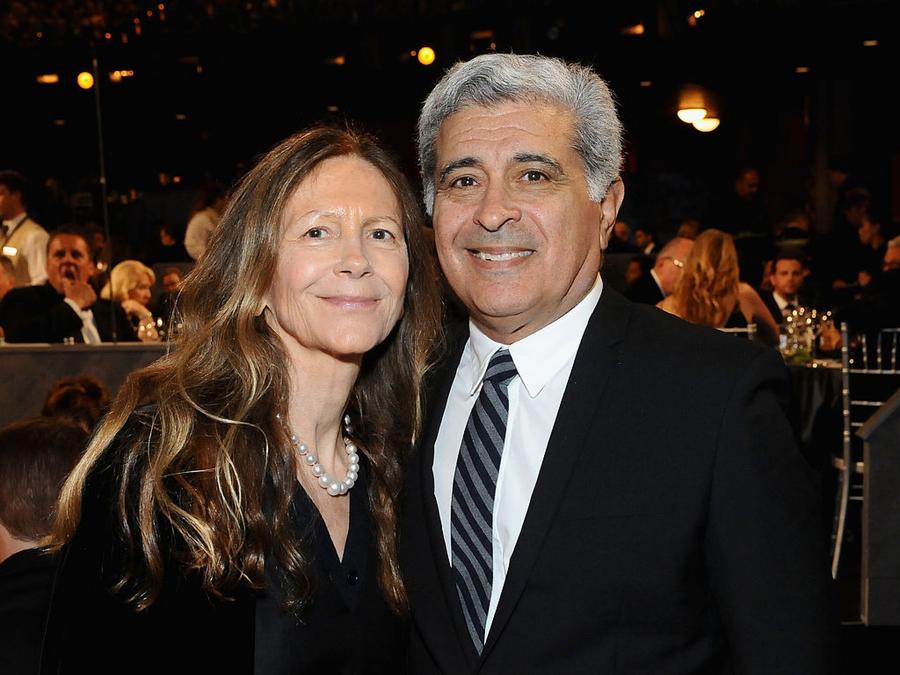
(Photo by Stefanie Keenan/WireImage)

Warner Bros.

Semel entered the entertainment industry in 1965 as a sales trainee at Warner Bros., selling films to movie theaters. He spent several years in sales and marketing before leaving Warner for CBS's Cinema Center Films, where he worked in theatrical distribution. When CBS shut down the operation, Semel moved to Disney and became an executive overseeing theatrical marketing and distribution.

He returned to Warner Bros. in 1975 and steadily rose through the company's executive ranks. By the early 1980s, Semel had become president and chief operating officer. His longtime partnership with Robert Daly would develop into one of the most durable executive pairings in Hollywood history.

In 1994, Semel was promoted to co-chairman and co-CEO of Warner Bros. alongside Daly. The following year, the two executives also assumed control of Warner Music Group.

The scope of the business they built was enormous. During the Daly-Semel era, Warner Bros. was credited with 16 consecutive years of record earnings and the production of more than 400 major motion pictures. The company's films received 13 Academy Award nominations for Best Picture and won for "Chariots of Fire," "Driving Miss Daisy" and "Unforgiven."

Warner also built or expanded enormously valuable franchises including "Batman," "Superman" and "Lethal Weapon," while maintaining relationships with filmmakers and stars including Clint Eastwood, Stanley Kubrick, Mel Gibson and Oliver Stone. Major films released during Semel's years at the studio included "The Fugitive," "JFK," "Malcolm X," "Twister," "Contact," "You've Got Mail" and "The Matrix."

Television became another major pillar. Warner produced shows including "Murphy Brown," "Friends" and "ER" and launched The WB television network. Semel and Daly also helped expand Warner's international distribution operations, consumer-products licensing and home-video businesses and were early proponents of DVD.

By the end of their tenure, Warner's operations had expanded from a business generating less than $1 billion in annual revenue when the partnership began to a global entertainment operation generating roughly $11 billion.

Semel and Daly announced in 1999 that they would not renew their contracts. Their departure ended one of the longest-running executive partnerships in Hollywood.

Yahoo!

In 2001, Semel was recruited to become chairman and CEO of Yahoo!, the Internet company founded by Jerry Yang and David Filo. The appointment initially raised eyebrows because Semel was a traditional media executive taking control of a Silicon Valley company shortly after the collapse of the dot-com bubble.

Yahoo was struggling when he arrived. Advertising revenue had fallen sharply, the company was losing money and its stock price had collapsed from its dot-com-era peak. Semel's strategy was to make Yahoo a more disciplined and diversified media and technology company.

The turnaround was significant. Yahoo returned to profitability, expanded its relationships with major advertisers and built out businesses in search, email, media, shopping, music and social products. Revenue increased from $717 million in 2001 to nearly $7 billion in 2007.

Yahoo also went on an acquisition spree. Among its purchases were search-advertising pioneer Overture, comparison-shopping company Kelkoo and music service Musicmatch. It acquired Flickr and the social-bookmarking service del.icio.us as part of a broader push into user-generated and social media.

Despite that growth, Yahoo eventually lost ground to Google in search and search advertising. The company also struggled to decide whether it was primarily a technology company, a media company or a combination of the two.

Semel stepped down as CEO in June 2007. Jerry Yang succeeded him as CEO, while Susan Decker became president. Semel remained non-executive chairman until leaving Yahoo entirely in early 2008.

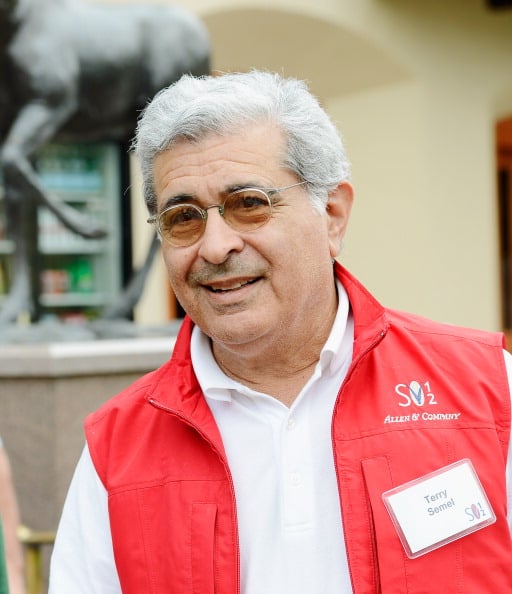
Kevork Djansezian/Getty Images

Yahoo Salary and Stock Options

Semel's Yahoo compensation was one of the primary sources of his enormous personal fortune.

When he joined Yahoo in 2001, his initial employment agreement called for a $310,000 annual salary and a massive package of options to purchase 10 million shares of Yahoo stock. He also personally purchased one million Yahoo shares. The accounting value of his initial option package was reported at more than $110 million.

His salary later increased to $600,000, but cash salary was never the important component of his compensation. Yahoo repeatedly awarded Semel millions of additional stock options and restricted shares.

In 2005 alone, Semel received $8.7 million worth of restricted stock and additional options that could become extremely valuable if Yahoo's share price increased. He also realized $173.6 million that year by exercising options he had received in earlier years.

By mid-2006, Semel had reportedly exercised and sold 18.1 million Yahoo options during the previous three years for a total gain of roughly $429 million.

In May 2006, Yahoo reduced Semel's annual base salary from $600,000 to just $1, putting him in the same symbolic salary club once occupied by Steve Jobs. The tiny salary did not mean tiny compensation. Semel continued receiving enormous performance-based option grants, including an option covering six million shares as a retention incentive. His reported compensation for 2006 was approximately $39.8 million, almost entirely from equity awards.

The Google and Facebook Deals That Never Happened

Two of Semel's most famous business episodes involve companies Yahoo almost bought.

Semel later recalled that Yahoo's founders encouraged him to investigate acquiring Google when Yahoo was still one of Google's biggest customers. Semel met with Google co-founders Larry Page and Sergey Brin. According to Semel, the Google founders initially floated a $1 billion valuation. When he returned willing to discuss that price, they raised the figure to $3 billion and continued resisting a sale. Google ultimately remained independent and became one of the most valuable companies in history.

Yahoo came even closer to buying Facebook.

In 2006, Yahoo offered roughly $1 billion to acquire the young social network. Facebook's investors and several executives were reportedly willing to sell, but founder Mark Zuckerberg was reluctant. After disappointing Yahoo financial results caused Yahoo to temporarily lower its offer, Zuckerberg walked away from the negotiations. Yahoo later returned with a billion-dollar offer, but by then Facebook was growing rapidly and Zuckerberg was determined to remain independent.

Those unsuccessful negotiations became two of the most extraordinary missed acquisitions in corporate history.

The Alibaba Investment

Yahoo's record under Semel was not defined only by missed opportunities. One transaction became extraordinarily valuable.

In 2005, Yahoo invested $1 billion in Alibaba and contributed its Yahoo China operations in exchange for roughly a 40% economic stake in the Chinese Internet company. Yahoo became Alibaba's largest strategic investor. Jerry Yang played an important role in developing the relationship with Alibaba founder Jack Ma, and the deal was completed while Semel was chairman and CEO.

Alibaba subsequently became one of the world's largest e-commerce companies. In 2012, Alibaba paid Yahoo roughly $7.1 billion in cash and stock to repurchase about half of Yahoo's original stake. The remaining Alibaba shares eventually became worth tens of billions of dollars.

The investment turned out to be one of the most valuable assets Yahoo ever owned.

China Controversy

Semel's tenure at Yahoo also included controversy over the company's operations in China. Yahoo was heavily criticized for complying with requests from Chinese authorities that led to the identification of dissidents and journalists, including journalist Shi Tao, who was imprisoned after sending information using a Yahoo email account.

Semel defended Yahoo's position by arguing that companies operating in foreign countries were required to obey local law, but he later expressed discomfort over the consequences of the company's cooperation. The issue generated congressional scrutiny and became an important early debate over the responsibilities of American technology companies operating under authoritarian governments.

Philanthropy

Terry and Jane Semel have donated tens of millions of dollars to educational, medical and cultural institutions.

In 2004, the couple donated $25 million to UCLA's Neuropsychiatric Institute. At the time, it was the largest gift in the institute's history and one of the largest donations in the United States devoted specifically to research into the brain and human behavior. The institution was renamed the Jane and Terry Semel Institute for Neuroscience and Human Behavior.

The Semels later helped establish UCLA's Healthy Campus Initiative, which was designed to improve physical, social and emotional well-being across the university. The program evolved into the Semel Healthy Campus Initiative Center at UCLA.

Semel has also had a long relationship with the Los Angeles County Museum of Art. After previously serving as a co-chair of LACMA's board, he became a co-chair emeritus and life trustee.

Honors and Awards

Semel has received numerous honors for his career in entertainment, business and philanthropy. He received the American Academy of Achievement's Golden Plate Award in 1995 and, with Robert Daly, received the Producers Guild of America's Milestone Award in 1998.

In 1999, Semel and Daly placed their handprints and footprints together in cement at Grauman's Chinese Theatre, an unusual honor for studio executives.

Semel later received the UCLA Medal, the university's highest honor, as well as the Legend in Leadership Award from the Yale School of Management's Chief Executive Leadership Institute.

Personal Life

Semel married Maryann Soloway in 1966. They had a son, Eric, before divorcing in 1974. In 1977, he married Jane Bovingdon. Terry and Jane have three daughters: Courtenay, Lily and Kate.

Semel was diagnosed with Alzheimer's disease in 2011. In 2016, after a fall at the family's Bel-Air home, he moved to the Motion Picture & Television Fund retirement community in Woodland Hills, California.

His care later became the subject of a difficult family dispute. In 2018, his son Eric sought a conservatorship, alleging that his father's living arrangements and medical care were not consistent with his wishes. Jane Semel disputed those allegations and said the move had been made on the advice of doctors. The parties eventually reached a confidential agreement.

Real Estate

Real estate has been a surprisingly important component of Terry Semel's wealth. Over several decades, Terry and Jane accumulated trophy properties in Los Angeles, Malibu, New York and the Hamptons, several of which appreciated by tens of millions of dollars.

The Semels assembled a large Bel-Air compound over many years. They acquired the core property in 1982 for roughly $1.8 million, added an adjacent property for $3.8 million in 1988 and later purchased another neighboring parcel. After an extensive renovation, the compound grew to roughly 13,000 square feet on several acres.

While that work was underway, the couple bought an 8,800-square-foot mansion in the Beverly Hills flats for $8.3 million in 2005. They sold that property in 2011 for $9.1 million.

Their Malibu property produced a much larger windfall. In 1994, the Semels paid approximately $3.15 million for property on Carbon Beach, the stretch of Malibu commonly known as Billionaires' Beach. They eventually developed a Michael Graves-designed compound with more than 10,000 square feet of living space, nine bedrooms, 13 bathrooms, a guesthouse, swimming pool and roughly 151 feet of beach frontage.

After initially asking $50 million, Terry and Jane sold the compound in 2012 to Oracle founder Larry Ellison for $36.94 million.

An even bigger transaction came in the Hamptons.

In late 2005, Semel paid $43 million to acquire an approximately 8.5-acre oceanfront estate at 408 Further Lane from Blackstone co-founder Stephen Schwarzman. The property stretched from Further Lane to the Atlantic Ocean and eventually included a roughly 10,000-square-foot contemporary residence, guesthouse, swimming pool and tennis court.

In July 2025, an entity connected to billionaire Len Blavatnik purchased the estate from Semel for $115 million in an off-market transaction. The deal set a record for the highest price ever paid for a single residential parcel in the Hamptons. Compared with Semel's $43 million purchase price, the transaction represented a $72 million difference before accounting for construction costs, improvements, taxes and other expenses.

Semel also owned one of Manhattan's most prestigious apartments. In 1996, he and Jane paid approximately $12.3 million for the seventh-floor apartment at 820 Fifth Avenue, buying the residence from Gordon and Ann Getty. The exclusive limestone cooperative sits directly across from Central Park and contains only a small number of enormous residences, with the primary full-floor apartments spanning roughly 6,500 to 7,000 square feet.

In July 2026, the Semel apartment sold for $45 million. That was roughly $32.7 million more than the couple had paid three decades earlier.

Taken together, the Hamptons estate and Fifth Avenue apartment sold for $160 million after being acquired for a combined roughly $55.3 million. That represents nearly $105 million in gross appreciation before accounting for improvements, carrying costs, commissions and taxes – another substantial chapter in a fortune already built through decades of Hollywood profits and Yahoo stock options.

All net worths are calculated using data drawn from public sources. When provided, we also incorporate private tips and feedback received from the celebrities or their representatives. While we work diligently to ensure that our numbers are as accurate as possible, unless otherwise indicated they are only estimates. We welcome all corrections and feedback using the button below.
Did we make a mistake?
Submit a correction suggestion and help us fix it!
Submit a Correction