
/2010/06/Elon-Musk.jpg)
/2020/06/jb2.jpg)
/2023/06/kimbal.jpg)
/2010/05/Peter-Thiel.jpg)
/2009/09/Larry-Ellison-1.jpg)
/2022/06/riley.jpg)
/2020/02/Angelina-Jolie.png)
/2009/09/Jennifer-Aniston.jpg)
/2009/09/Brad-Pitt.jpg)
/2019/04/rr.jpg)
/2020/04/Megan-Fox.jpg)
/2018/03/GettyImages-821622848.jpg)
/2020/06/taylor.png)
/2009/09/Cristiano-Ronaldo.jpg)
/2020/01/lopez3.jpg)
/2017/02/GettyImages-528215436.jpg)
/2019/11/GettyImages-1094653148.jpg)
What is Elon Musk's Net Worth?
Elon Musk is a South African-born Canadian-American businessman, inventor, and investor who has a net worth of $700 billion. Elon Musk is the richest person in the world and the richest human being of all time by a mile.
In November 2021, when his net worth briefly topped $340 billion, Elon surpassed John D. Rockefeller for the first time to become the richest person in modern history. Elon was the richest person in the world, pretty much uninterrupted from January 2021 through March 2024, when Jeff Bezos retook the lead. He was the first person in history to have a net worth above $300 billion, $400 billion, $500 billion, and $600 billion. His net worth hit $640 billion in December 2025 on the heels of Tesla having a market cap of $1.5 trillion and SpaceX raising money at an $800 billion valuation.
Elon Musk's career spans online payments, electric vehicles, space exploration, artificial intelligence, and social media. He first rose to prominence in the late 1990s as a co-founder of Zip2, a software company that provided online business directories and maps to newspapers. After selling Zip2, Musk co-founded X.com, an online financial services company that later became PayPal. When PayPal was acquired by eBay in 2002, Musk emerged with significant capital that he reinvested into far more ambitious ventures.
In 2004, Musk became the largest shareholder of Tesla, helping transform the company from a small startup into the world's most influential electric vehicle manufacturer. Under his leadership, Tesla expanded beyond cars into battery storage, solar energy, and large-scale manufacturing, reshaping the global auto industry and accelerating the shift away from internal combustion engines.
Musk also founded SpaceX with the goal of reducing the cost of space travel and enabling human life beyond Earth. After early failures, SpaceX achieved a series of historic breakthroughs, including the first privately developed orbital rocket, reusable boosters, and routine cargo and crew missions to the International Space Station. The company's Starlink satellite network further expanded Musk's reach into global communications.
Beyond Tesla and SpaceX, Musk has launched or led several other ventures, including Neuralink, focused on brain-computer interfaces, and The Boring Company, aimed at tunnel-based transportation. He also became the owner of Twitter, later rebranded as "X," positioning it as a broader communications and payments platform.
Known for his aggressive risk-taking, unconventional management style, and outsized public persona, Musk has built one of the most influential business careers of the modern era, repeatedly turning speculative ideas into companies that reshape entire industries.
Salary & Compensation Plans
Elon Musk does not earn a traditional salary as CEO of Tesla. Instead, his compensation has historically been structured around high-risk, high-reward performance packages. In 2018, Elon arranged a highly unusual and potentially lucrative bonus plan tied strictly to the company's market cap and operational milestones. When the plan was forged, Tesla was worth approximately $50 billion. The agreement stipulated that Elon would receive large tranches of Tesla options—equal to 1% of the company—every time the market cap increased by $50 billion and maintained that level for at least three months.
The first tranche of options was granted once Tesla hit a market cap of $100 billion. Elon received subsequent tranches for every additional $50 billion increase, up to a cap of $600 billion. Essentially, if Tesla's market cap reached $600 billion, Elon would receive options totaling 12% of the company. Crucially, he would have received zero compensation if he failed to achieve any of these 12 milestones within the 10-year term limit.
It took a year for Tesla to cross the first $100 billion threshold. Two years later, in December 2020, Tesla crossed the maximum $600 billion level. By late 2021, the company's valuation topped out at $1.23 trillion, temporarily pushing Elon's net worth to $340 billion. Tesla's board confirmed that by hitting the $600 billion mark in under ten years, Elon was entitled to the full benefit of the plan—receiving roughly 300 million Tesla options, worth approximately $55 billion by January 2024. However, in January 2024, a Delaware judge voided this package following a shareholder lawsuit, ruling that the board was not sufficiently independent and the package was excessive.
2025 Compensation Update: Following the legal voiding of his previous package, Tesla and its shareholders moved to secure Musk's long-term commitment to the company. In November 2025, shareholders overwhelmingly approved a new, record-breaking "Mars-shot" compensation plan. This 10-year incentive package is tied to highly ambitious milestones, including reaching a market capitalization of $8.5 trillion and successfully deploying both the Optimus humanoid robot and fully autonomous robotaxis at scale. If all targets are met, the deal could yield a payout valued at nearly $1 trillion, effectively cementing Musk's status as the world's first trillionaire while ensuring his focus remains on Tesla's expansion into AI and robotics.
Early Life
Elon Musk was born in Pretoria, South Africa, on June 28, 1971. A precocious child, Musk purchased his first computer at age ten and taught himself to program. By age 12, he made his first commercial software sale—a space-themed game called Blaster—for $500. Seeking to avoid mandatory military service in apartheid-era South Africa and seeing greater economic opportunity in North America, he moved to Canada at age 17 in 1989 to attend Queen's University.
In 1992, he transferred to the University of Pennsylvania, where he graduated with dual bachelor's degrees in economics and physics. He briefly enrolled at Stanford University to pursue a PhD in energy physics but dropped out after just two days. The internet boom was beginning, and Musk decided he would rather build the future than study it.
Zip2
Musk's first venture, founded in 1995 with his brother Kimbal, was Zip2 Corporation. The company functioned as an online city guide, providing content for new online versions of newspapers like The New York Times and the Chicago Tribune. It was essentially an early version of Google Maps combined with Yelp. In 1999, during the height of the dot-com boom, Compaq Computer acquired Zip2 for $307 million in cash and $34 million in stock options. Musk netted roughly $22 million from the sale, providing the seed capital for his future empires.
PayPal (X.com)
Using his proceeds from Zip2, Musk co-founded X.com in 1999, an online financial services and email payment company. X.com soon merged with its primary competitor, Confinity, which had a money-transfer service called PayPal. The merged company focused on the PayPal service and was renamed PayPal in 2001. In October 2002, PayPal was acquired by eBay for $1.5 billion in stock. As the largest shareholder with an 11.7% stake, Musk received approximately $165 million from the deal.
SpaceX
In 2002, Musk founded Space Exploration Technologies Corporation (SpaceX) with the goal of reducing space transportation costs to enable the colonization of Mars. After surviving a brush with bankruptcy in 2008, the company has grown from a scrappy startup into the world's most dominant aerospace power. By early 2026, SpaceX had achieved a near-monopoly on orbital launches, with its Falcon 9 fleet consistently landing and reusing boosters with clockwork precision.
The company's growth reached a fever pitch in February 2026, when Musk announced the blockbuster merger of SpaceX and xAI, his artificial intelligence venture. This move, which valued the combined entity at a staggering $1.25 trillion, was designed to facilitate "orbital data centers"—massive, solar-powered AI compute clusters launched by Starship to circumvent terrestrial energy constraints.
SpaceX is currently divided into three massive pillars:
- Starship: The world's largest and most powerful rocket. As of February 2026, SpaceX is prepping for the launch of Starship Version 3, aiming for routine orbital refueling and the first uncrewed Mars landing attempts.
- Starlink: The company's financial engine, which surpassed 9 million subscribers in 2025. This satellite constellation provides high-speed internet to nearly every corner of the globe and generates the bulk of the company's $15 billion+ annual revenue.
- National Security: SpaceX has become a primary partner for the U.S. Department of Defense, securing billions in contracts for classified launches and the deployment of "Starshield," a military-grade satellite network.
With a highly anticipated IPO targeted for June 2026, SpaceX has officially overtaken Tesla as the largest and most influential component of Musk's personal fortune.
Tesla
Musk joined Tesla Motors in 2004 as its primary investor and chairman, taking the CEO reins in 2008. While the company began as an electric vehicle pioneer with the "Master Plan" of moving from high-end sports cars to mass-market sedans, Tesla's 2026 identity has shifted far beyond the automotive industry. Under Musk's recent "Mars-shot" pivot, Tesla is now primarily an AI and Robotics powerhouse.
By early 2026, Tesla reached several defining milestones:
- Optimus Humanoid Robot: In a historic shift, Tesla began winding down production of its legacy Model S and Model X vehicles at the Fremont plant to repurpose the facility for mass-manufacturing the Optimus robot. Musk targets an annual output of 1 million units, aiming to solve global labor shortages.
- Robotaxi & FSD: Tesla's autonomous ride-hailing service is now operational in major hubs like Austin and San Francisco. The Cybercab, a dedicated autonomous vehicle without a steering wheel or pedals, entered production in April 2026, marking the beginning of Tesla's transition into a high-margin software and service platform.
- Market Dominance: Despite a maturing EV market, Tesla maintains a market capitalization hovering around $1.5 trillion. This valuation is increasingly driven by "FSD Licensing" deals with other automakers and the success of Tesla Energy, which provides grid-scale battery storage (Megapacks) to nations worldwide.
In November 2025, shareholders approved a new 10-year performance package that could see Musk receive up to $1 trillion in additional stock if he grows Tesla's market cap to $8.5 trillion. This plan cements Musk's focus on long-term artificial general intelligence (AGI) and ensures his wealth remains inextricably tied to the success of the most valuable robotics company on Earth.
Other Ventures
- X (formerly Twitter): In 2022, Musk acquired the social media platform Twitter for $44 billion, rebranding it as "X" as part of his vision to create a comprehensive "everything app."
- The Boring Company: Founded in 2016, this infrastructure company focuses on building tunnels to alleviate urban traffic congestion.
- Neuralink: Also founded in 2016, Neuralink is developing implantable brain–machine interfaces to connect the human brain with computers.
- xAI: Launched in 2023, this artificial intelligence company aims to compete with major AI labs and understand the true nature of the universe.
SpaceX + xAI Merger
In February 2026, Musk achieved his most ambitious corporate restructuring to date by merging SpaceX and xAI into a single vertically integrated entity valued at $1.25 trillion. This move brought the Grok AI platform, the X social media network, and the Starlink satellite constellation under one roof. The primary goal of the merger was to facilitate "orbital data centers"—massive AI compute clusters launched into space and powered by direct solar energy—positioning SpaceX as the backbone of the global AI infrastructure.
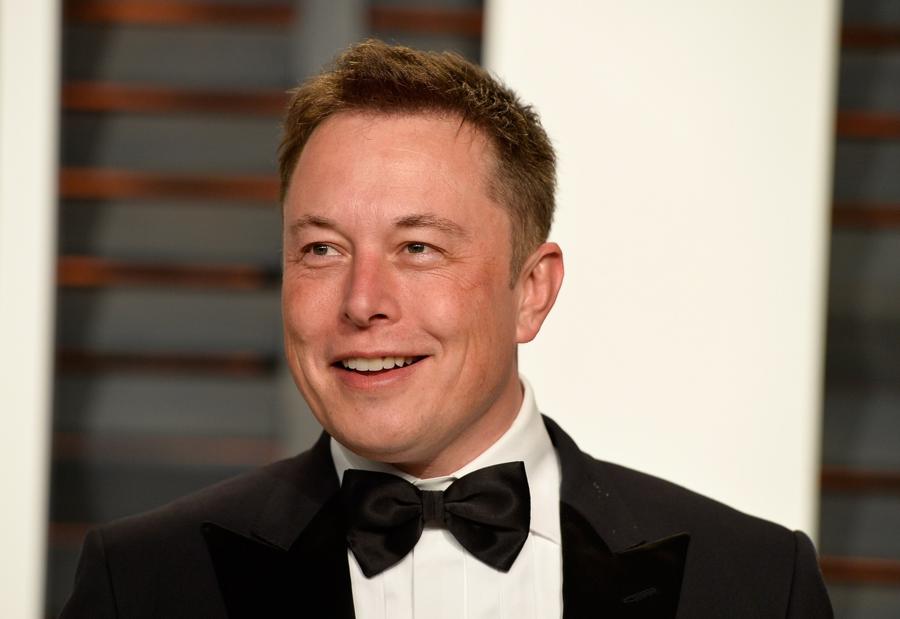
(Photo by Pascal Le Segretain/Getty Images)
Personal Life
Elon has been married three times, twice to the same woman, actress Talulah Riley. He has 10 children. He was married to Canadian author Justine Wilson from 2000 to 2008. They have five sons. He has also been romantically involved with actress Amber Heard and Canadian musician Grimes. In May 2020, Grimes and Elon welcomed a baby boy named X Æ A-Xii. They welcomed a second child via surrogate in December 2021. At some point in late 2021, Elon ALSO welcomed a set of twins born to one of his Neuralink executives.
In July 2022, it was reported that Elon had an affair in December 2021 with Nicole Shanahan, the then-wife of Google co-founder Sergey Brin. The affair reportedly led to Sergey filing for divorce from his wife of four years, Nicole Shanahan. Painfully, Sergey had long been one of Musk's biggest supporters. He invested in several Musk companies, including being one of the earliest investors in Tesla.
Real Estate
Elon previously owned $100 million worth of real estate in California. In the Northern California town of Hillsborough, he continues to own a 100-year-old, 16,000-square-foot villa that sits on nearly 50 acres. He bought this house for $23.364 million in 2017. In Southern California, he once owned six homes in the Los Angeles neighborhood of Bel-Air. His Bel-Air footprint included a 20,000-square-foot house that he bought for $17 million in 2012, a 7,000-square-foot house he bought for $20 million in 2015, and a 9,300-square-foot house he purchased in 2016 for $24.25 million. In 2020, Elon stunned the world by announcing his intention to sell all his worldly possessions, starting with his LA homes. True to his word, he proceeded to sell off each home. He sold four homes at once to one buyer in December 2020.
In Austin, Texas, Elon owns several contiguous homes, which he acquired for a combined $35 million. One of the homes is a 14,400-square-foot Tuscan-style mansion.
Elon Musk: Net Worth Milestones
Historical Wealth Progression | Updated March 2026
| Date & Milestone | Net Worth |
|---|---|
| Feb 2026 SpaceX-xAI Merger All-Time Peak | $750.0 Billion |
| Dec 2025 Delaware Supreme Court Pay Package Reinstatement | $700.0 Billion |
| Oct 2025 First person in history to reach $500B | $500.0 Billion |
| Nov 2024 Post-Election Market Rally | $348.0 Billion |
| Nov 2021 Initial Tesla Peak ($1.2T Market Cap) | $335.0 Billion |
| Dec 2023 X (Twitter) Management & Recovery | $210.0 Billion |
| Jan 2021 Becomes Richest Person on Earth | $195.0 Billion |
| Dec 2022 Guinness World Record Fortune Loss | $134.0 Billion |
| Nov 2020 Surpasses Bill Gates for #2 Spot | $128.0 Billion |
| Jan 2020 Start of the Decade | $28.0 Billion |
| 2012 Forbes Billionaires List Debut | $2.0 Billion |
| 2010 Tesla IPO ($17/share) | $650.0 Million |
| 2002 PayPal Acquisition by eBay | $175.0 Million |
| 1999 Zip2 Sale to Compaq (First Major Exit) | $22.0 Million |
/2010/06/Elon-Musk.jpg)
/2020/06/jb2.jpg)
/2022/12/elon-richest.jpg)
/2024/01/elon-musk.jpg)
/2021/01/elon-2.jpg)
/2024/04/elon-musk.jpg)
/2023/07/elon-arms.jpg)
/2021/10/elon-musk-1.jpg)
:strip_exif()/2009/09/P-Diddy.jpg)
/2009/11/George-Clooney.jpg)