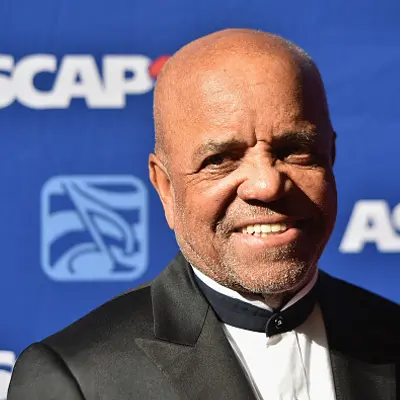















What Is Berry Gordy's Net Worth?
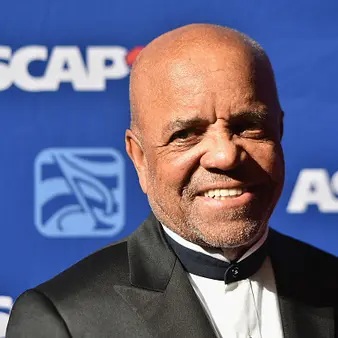
Berry Gordy is an American record executive, songwriter, and producer who has a net worth of $400 million.
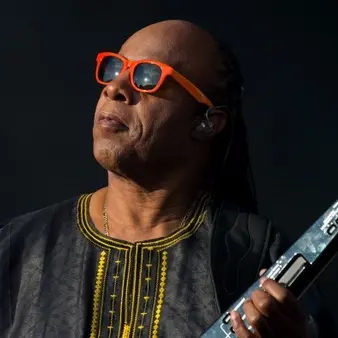
Berry Gordy founded Motown Records and built one of the most important music companies in American history. A songwriter with an ear for a hit and an unusually disciplined approach to developing talent, he helped make the Supremes, the Temptations, the Four Tops, Smokey Robinson, Stevie Wonder, and the Jackson 5 internationally famous. Motown's records crossed racial and geographic boundaries, bringing Black singers, musicians, and songwriters to the center of American popular culture.
Gordy's achievement went beyond discovering exceptional performers. He assembled writers, producers, studio musicians, choreographers, and business executives into an organization capable of producing hit after hit. The company's sound combined gospel feeling, R&B rhythms, memorable melodies, and polished arrangements, while its artists became fixtures on radio, television, and concert stages. Songs such as "My Girl," "You Can't Hurry Love," and "I Heard It Through the Grapevine" became enduring parts of the popular music repertoire.
His path from high school dropout and unsuccessful record-store owner to entertainment mogul began with an $800 family loan that helped launch the Motown empire. Gordy retained valuable publishing rights through Jobete while expanding into film and television, including the Diana Ross vehicles "Lady Sings the Blues" and "Mahogany." He later brought his own story and the company's music to Broadway with "Motown: The Musical."
Gordy sold Motown Records for $61 million in 1988 and sold Jobete to EMI in a series of transactions totaling $321.3 million between 1997 and 2004. His career earned induction into the Rock and Roll Hall of Fame, the National Medal of Arts, the Kennedy Center Honors, and recognition alongside Robinson as a 2023 MusiCares Person of the Year. Few music executives have combined such direct creative involvement with a comparable record of building stars and owning the businesses behind their work.
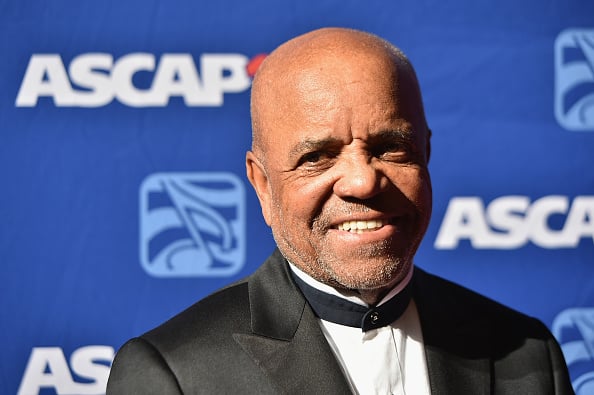
Theo Wargo/Getty Images
Early Life
Berry Gordy was born on November 28, 1929, in Detroit, Michigan, the seventh of eight children of Berry Gordy Sr. and Bertha Fuller Gordy. His parents had moved north from Georgia and raised their children in an entrepreneurial household. Gordy and former President Jimmy Carter were distant cousins through their shared great-grandfather, James Gordy; Berry's grandfather was born to James Gordy and an enslaved woman.
Gordy left high school in the 11th grade to pursue professional boxing. His plans changed when he was drafted into the Army during the Korean War. After returning home, he opened 3-D Record Mart, a Detroit record store specializing in jazz, but the business failed.
He subsequently worked on a Lincoln-Mercury assembly line while continuing to write songs. The factory's organization later influenced his approach to developing performers and producing records. His own ambitions, however, centered on getting his compositions recorded and escaping work that left little room for his musical interests.
The Gordy family remained closely involved as his ambitions grew. His sister Esther Gordy Edwards held senior positions at Motown and later founded the Motown Museum, while other siblings worked in publishing, administration, and artist development. The family's contribution extended well beyond its initial loan, supplying trusted colleagues as the company expanded.
Songwriting and Motown's Beginnings
Gordy's first important breakthrough came through Jackie Wilson. Working with his sister Gwen Gordy and Roquel "Billy" Davis, he co-wrote "Reet Petite," released in 1957, and followed it with songs including "To Be Loved" and "Lonely Teardrops." Those successes established him as a professional songwriter and helped him move into production.
Another decisive relationship began with Smokey Robinson and his group, the Miracles. Robinson encouraged Gordy to create a record company that could release the music they were making. With an $800 loan from his family's cooperative fund, Gordy established Tamla Records in January 1959.
Tamla's early releases included Marv Johnson's "Come to Me." Gordy also established the Motown label, which released the Miracles' "Bad Girl," and incorporated Motown Record Corporation in April 1960. He bought a house on Detroit's West Grand Boulevard that became Hitsville U.S.A., with recording operations downstairs and living quarters upstairs.
Barrett Strong's "Money (That's What I Want)," co-written by Gordy and Janie Bradford, was an early success. The Miracles' "Shop Around," released in 1960, became the company's first million-selling single. In 1961, the Marvelettes' "Please Mr. Postman" gave the company its first number-one hit on the Billboard Hot 100.
Building Motown
Gordy assembled an operation in which songwriting, production, recording, publishing, and artist development reinforced one another. Writers and producers competed to create singles, while the studio musicians later celebrated as the Funk Brothers supplied the instrumental foundation for many of the records. Regular quality-control meetings helped determine which recordings would be released.
Motown also invested in how its artists presented themselves. Performers received instruction in choreography, stagecraft, grooming, and public appearances, preparing them for television, theaters, and nightclub audiences. The approach helped Black artists reach a broad audience at a time when racial segregation still restricted where they could perform and stay while traveling.
Maxine Powell coached performers in poise and presentation, while choreographer Cholly Atkins developed the synchronized movements that helped distinguish Motown groups onstage. Musical director Maurice King worked on performance skills and stage patter. This preparation allowed young singers to move from neighborhood audiences to prestigious venues without abandoning the musical qualities that had first attracted Gordy.
The Supremes became one of Motown's biggest acts, with a run of hits including "Where Did Our Love Go," "Baby Love," and "Stop! In the Name of Love." The Temptations and the Four Tops added another stream of major singles. Mary Wells, Martha and the Vandellas, and Gladys Knight and the Pips further broadened the roster.
By 1966, Motown had 450 employees and generated $20 million in annual revenue, equivalent to $206 million in today's dollars. Its business included several record labels as well as the publishing company Jobete. The latter controlled the underlying compositions, a separate asset from the recordings released by Motown's labels.
The company continued to evolve as its artists sought greater creative independence. Marvin Gaye's "What's Going On" and Stevie Wonder's run of ambitious 1970s albums expanded the possibilities of the Motown sound. At the same time, the Jackson 5 introduced a new generation of listeners to the label and made Michael Jackson a star.
Gordy participated in the songwriting and production team known as the Corporation, which created Jackson 5 hits including "I Want You Back," "ABC," and "The Love You Save." Later successes by the Commodores, Lionel Richie, Rick James, and other acts kept Motown active well beyond its first Detroit heyday. Gordy's role increasingly involved managing a large entertainment business rather than personally supervising every record.
Songwriters and Creative Control
Among Gordy's most consequential collaborators were Brian Holland, Eddie Holland, and Lamont Dozier. Working as Holland-Dozier-Holland, they wrote and produced a large part of the Supremes' and Four Tops' signature repertoire. Their songs, including "Baby Love," "Reach Out I'll Be There," and "You Keep Me Hangin' On," helped give Motown a recognizable identity across different performers.
The relationship also exposed the tensions within Gordy's tightly controlled operation. A dispute over royalties and profit sharing led the trio to leave Motown in the late 1960s and establish their own labels. Motown sued for breach of contract, the writers countersued, and the litigation continued until a settlement in 1977.
Their departure was a substantial creative loss, but Motown continued producing hits through other writers and producers. Robinson remained central to the company, while Norman Whitfield helped take its music in a more expansive direction. As Gaye and Wonder assumed greater control over their albums, the label increasingly accommodated individual artistic visions alongside the disciplined singles production that had built its reputation.
Motown and Jobete Sales
In June 1988, Gordy sold Motown Records to MCA and Boston Ventures for $61 million, equivalent to $173 million in today's dollars. The transaction transferred the recording business after nearly three decades under his control. It did not include the Jobete publishing catalog, which remained a separate holding.
Motown changed hands again in 1993, when PolyGram acquired the company from its subsequent owners in a deal valued at more than $300 million, commonly cited at $325 million to $330 million. Gordy had already exited the recording business, while retaining the separate Jobete publishing company. His later music-rights transactions involved EMI.
Jobete contained 15,000 songs, including 240 that Gordy wrote or co-wrote. Its value came from ownership of compositions that could generate publishing income when recorded, performed, broadcast, or licensed for other uses. The catalog included music associated with many of Motown's biggest stars.
EMI paid $132 million for an initial 50% interest in Jobete in 1997. It purchased another 30% for $109.3 million in 2003 and the remaining 20% for $80 million in 2004. Together, the three publishing transactions amounted to $321.3 million, separate from the earlier $61 million sale of Motown Records.

Getty
Hollywood and Film Production
Motown moved its headquarters to Los Angeles in 1972 as Gordy expanded further into film and television. That year, "Lady Sings the Blues" brought Diana Ross to the screen as Billie Holiday. The film earned Ross an Academy Award nomination and demonstrated that a Motown recording star could also lead a major motion picture.
Gordy produced and directed "Mahogany," released in 1975 and again starring Ross, with Billy Dee Williams. Motown's film activities also included "The Wiz," featuring Ross and Michael Jackson, and the 1985 martial-arts film "The Last Dragon." These projects extended Gordy's work into a business with different production costs, distribution arrangements, and risks from the record industry.
Books, Theater, and Honors
Gordy published his autobiography, "To Be Loved," in 1994. He later used his experiences building the company as the basis for "Motown: The Musical," writing the show's book and helping bring its story to the stage. The production combined his personal history with songs from the Motown catalog.
The musical opened on Broadway in April 2013 and completed its initial run in January 2015. A London production began previews in February 2016 before its official opening in March. Touring productions introduced the show to additional audiences.
Gordy entered the Rock and Roll Hall of Fame in 1988 and received the Songwriters Hall of Fame's Pioneer Award in 2013, becoming the first living recipient of that award. President Barack Obama presented him with the National Medal of Arts in 2016. He received the Kennedy Center Honors in 2021 and was celebrated with Smokey Robinson at the 2023 MusiCares Persons of the Year gala.
At Motown's 60th-anniversary celebration in Detroit in 2019, Gordy announced his retirement at age 89. That year, he also gave $4 million toward the Motown Museum's expansion. The museum preserves the original Hitsville U.S.A. buildings where the company began.
Personal Life
Gordy has been married and divorced three times and has eight children. He married Thelma Louise Coleman in 1953 after returning from military service, and they had three children before divorcing in 1959. His marriage to Raynoma Mayberry Liles lasted from 1960 to 1964 and produced one son.
He married Grace Eaton in 1990, and they divorced in 1993. Gordy also has children with Jeana Jackson, Margaret Norton, Diana Ross, and Nancy Leiviska. His daughter with Ross, Rhonda Ross Kendrick, became a singer and actress.
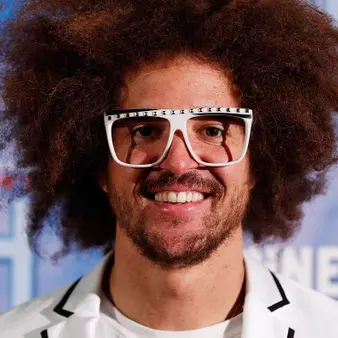
Music careers extend through several branches of the Gordy family. His son Kennedy William Gordy performed as Rockwell, while Stefan Kendal Gordy became known as Redfoo. Redfoo and Gordy's grandson Skyler Austen Gordy, known as Sky Blu, formed the dance-pop duo LMFAO.
Real Estate
Gordy has owned substantial residential property in Southern California. In 1997, he sold his longtime Malibu mansion to entertainment executive Michael Ovitz for $6 million. He had owned the property since 1975.
In 2014, he sold a condominium in Century City for $2 million. His most substantial residential holding has been his Bel-Air compound, which grew from a parcel he purchased in 1976. Subsequent acquisitions assembled three contiguous parcels into an estate covering four acres.
The compound's main house spans 10,000 square feet and has 13 bedrooms and nine bathrooms. Gordy also owns a nearby parcel with a 5,000-square-foot house. The combined Bel-Air holdings have been valued at a potential $50 million to $70 million.