
/2020/04/ps.jpg)
/2017/10/GettyImages-518188756.jpg)
/2011/06/Bobby-Kotick.jpg)
/2023/01/GettyImages-1440351750.jpg)
/2021/09/shroud2.jpg)
/2009/09/Bill-Gates.jpg)
/2019/10/denzel-washington-1.jpg)
/2020/04/Megan-Fox.jpg)
/2017/02/GettyImages-528215436.jpg)
/2020/02/Angelina-Jolie.png)
/2009/09/Jennifer-Aniston.jpg)
/2009/11/George-Clooney.jpg)
/2009/09/Cristiano-Ronaldo.jpg)
/2020/06/taylor.png)
/2019/11/GettyImages-1094653148.jpg)
:strip_exif()/2009/09/P-Diddy.jpg)
/2009/09/Brad-Pitt.jpg)
What is Phil Spencer's Net Worth and Salary?
Phil Spencer is a business executive who has a net worth of $25 million. Over nearly four decades at Microsoft, he rose from intern to one of the most influential figures in the global video game industry. Spencer served as the longtime head of Xbox and later as CEO of Microsoft Gaming, overseeing blockbuster franchises such as "Halo," "Minecraft," "Warcraft," and "Call of Duty." In February 2026, after 38 years at Microsoft, Spencer announced his retirement, marking the end of one of the most consequential leadership runs in gaming history.
Spencer joined Microsoft in 1988 and became a central architect of the company's modern gaming strategy. After taking charge of Xbox in 2014 during a turbulent period, he helped stabilize the brand, nearly tripled the size of the gaming division, and repositioned Microsoft as a subscription- and services-driven gaming powerhouse. He championed cross-platform play, backward compatibility, cloud gaming, and accessibility initiatives such as the Xbox Adaptive Controller. His leadership culminated in Microsoft's $75 billion acquisition of Activision Blizzard in 2023, one of the largest deals in tech history. He retired in 2026 as revenue in the gaming division faced renewed pressure, with AI executive Asha Sharma succeeding him.
Early Life and Education
Phil Spencer was born on January 12, 1968, in Ridgefield, Washington. He attended Ridgefield High School before enrolling at the University of Washington, where he earned a bachelor's degree in technical and scientific communication.
Spencer grew up during the early rise of home computing and developed a lifelong passion for video games. That enthusiasm would later become a defining trait of his leadership style. Even during his early corporate years, colleagues described him as someone who genuinely played and understood games rather than simply managing them from a distance.
Early Career at Microsoft
Spencer joined Microsoft in 1988 as an intern and quickly transitioned into a full-time role. During his early years at the company, he worked on consumer software products and helped lead development on Microsoft's first CD-ROM-based titles, including "Encarta." He also served as development manager for Microsoft Money and later as general manager of consumer productivity products such as Microsoft Picture It! and Microsoft Works.
Throughout the 1990s, Spencer gained experience across multiple divisions, building a broad understanding of Microsoft's consumer business. His cross-functional background later proved crucial when he pushed to unify hardware, software, and content development under one gaming strategy.
Rise of Xbox Leadership
In 2001, Spencer joined the team behind Microsoft's new gaming console, Xbox. He eventually became head of Microsoft Game Studios, overseeing internal development teams responsible for flagship franchises.
In 2014, shortly after Satya Nadella became CEO, Spencer was appointed head of the Xbox division. At the time, Sony's PlayStation was outselling Xbox hardware, and some investors had questioned whether Microsoft should spin off its gaming business entirely. Spencer later revealed that there were internal discussions about the future of Xbox, and he successfully persuaded Nadella to double down on gaming rather than retreat.
In 2017, he launched Xbox Game Pass, a subscription service that allowed users to download and play games from a rotating catalog. Game Pass fundamentally shifted Microsoft's gaming strategy toward recurring revenue and ecosystem growth rather than pure console sales. The move is widely regarded as one of the most influential business innovations in modern gaming.
He also reintroduced backward compatibility to the Xbox platform, allowing players to access older titles, and championed cross-platform play. Under his leadership, Microsoft increasingly released games on PC and explored publishing select titles on competing platforms.
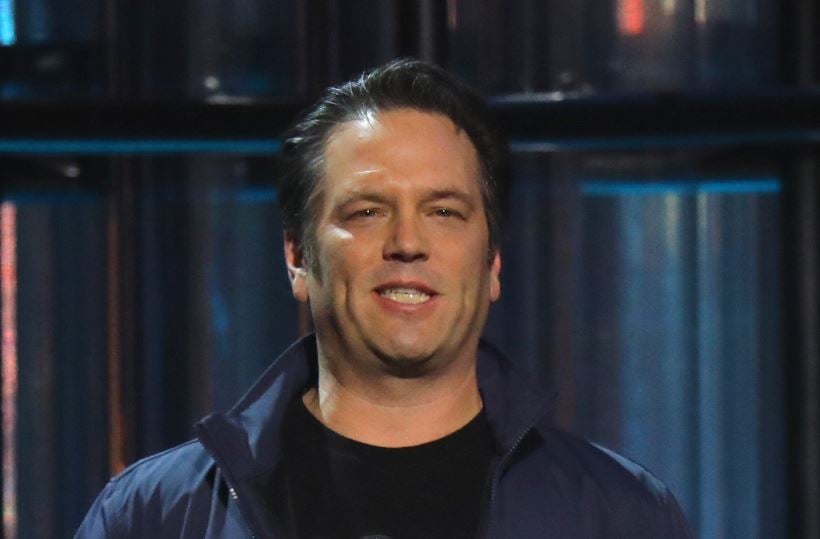
Getty
Microsoft Gaming and the Activision Blizzard Acquisition
In 2022, Microsoft reorganized its gaming operations under the name Microsoft Gaming, with Spencer serving as CEO. The restructuring coincided with the company's $75 billion acquisition of Activision Blizzard, bringing franchises such as "Call of Duty," "Warcraft," and "Diablo" under Microsoft's umbrella alongside "Halo" and "Minecraft."
The deal transformed Microsoft into one of the largest gaming companies in the world. Spencer argued that the acquisition would accelerate cloud gaming, subscription growth, and cross-platform distribution.
During his tenure, Microsoft also introduced Xbox Cloud Gaming and expanded accessibility initiatives, including the Xbox Adaptive Controller, designed for players with disabilities.
However, the gaming business faced challenges in the mid-2020s. Revenue in the division declined roughly 10% year-over-year in late 2025, and Microsoft recorded an impairment charge related to gaming assets. Xbox consoles continued to trail Sony's PlayStation in sales, and Microsoft shuttered several internal studios.
In February 2026, Spencer retired after 38 years at Microsoft and 12 years leading gaming. CEO Satya Nadella credited him with nearly tripling the size of the gaming business and transforming its structure. Asha Sharma, previously a senior AI executive within Microsoft, succeeded him as CEO of Microsoft Gaming.
Board Roles and Industry Recognition
Spencer has served on the boards of the Entertainment Software Association and the First Tee of Greater Seattle.
In 2022, he received the Lifetime Achievement Award at the 25th Annual D.I.C.E. Awards. In 2023, he earned the Andrew Yoon Legend Award at the New York Game Awards. Over time, he became one of the most visible and respected executives in gaming, known for his candid interviews and gamer-first messaging.
Personal Life
Phil Spencer lives in the Seattle area with his wife and two daughters. Despite his corporate status, he has consistently described himself first as a gamer. Throughout his leadership, he maintained a reputation for personally playing titles across platforms, reinforcing his image as an executive who understood the culture he was managing.
By the time of his retirement in 2026, Spencer had overseen one of the most transformative eras in Xbox history, shifting Microsoft from a hardware-centric competitor into a subscription-driven, cloud-enabled global gaming platform.
/2020/04/ps.jpg)
/2017/10/GettyImages-518188756.jpg)
/2017/04/GettyImages-80907199.jpg)
/2023/01/GettyImages-1440351750.jpg)
/2010/12/ray-ozzie.jpg)
/2014/09/mine.jpg)
/2022/10/GettyImages-1187708883.jpg)
/2020/01/lopez3.jpg)
/2019/04/rr.jpg)
/2018/03/GettyImages-821622848.jpg)