












What Is Eduardo Saverin's Net Worth?
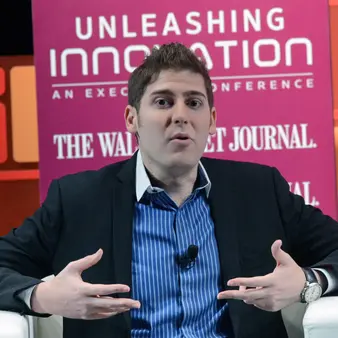
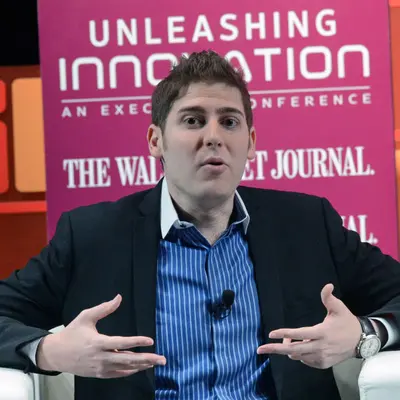
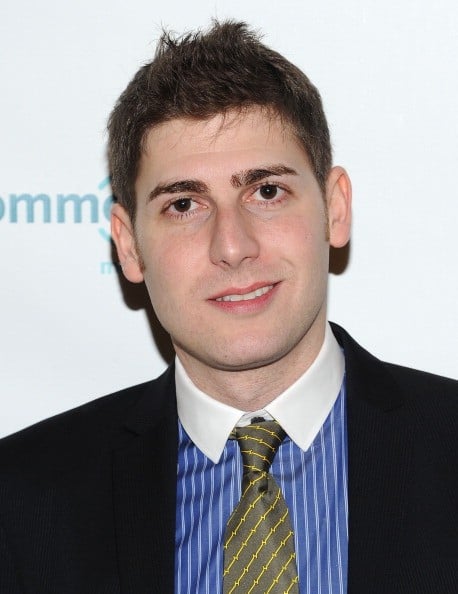
Eduardo Saverin is a Brazilian-born technology entrepreneur, investor, and venture capitalist who has a net worth of $35 billion.
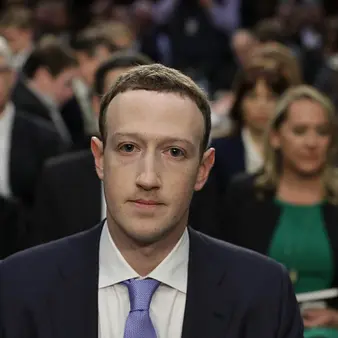
Eduardo Saverin is best known as one of the co-founders of Facebook, now known as Meta Platforms. In late 2003, while attending Harvard University, Saverin contributed approximately $15,000 to help fellow student Mark Zuckerberg launch the website that would eventually become the world's largest social network. Despite a bitter falling-out that resulted in a lawsuit and the dilution of his original ownership stake, Saverin retained enough Facebook stock to become one of the wealthiest people in the world.
Saverin was Facebook's first investor and initially served as its chief financial officer and business manager. His relationship with Zuckerberg deteriorated almost immediately after the company began attracting attention, and he was pushed out of the business. Following a legal settlement, he retained a significant ownership position but never returned to Facebook's management. When Facebook went public in May 2012, Saverin owned 53.1 million shares worth approximately $2 billion. His fortune subsequently multiplied as the company's stock price increased, and his remaining Meta shares continue to account for the overwhelming majority of his wealth.
After moving to Singapore in 2009, Saverin reinvented himself as a venture capitalist. In 2015, he co-founded B Capital with Raj Ganguly, building an investment firm that now manages more than $12 billion across technology, healthcare, artificial intelligence, and other industries. He serves as the firm's co-CEO and has backed companies including Perplexity, Fervo Energy, and Apptronik. He is also known for renouncing his American citizenship shortly before Facebook's IPO, a decision that generated widespread controversy over the potential tax savings.
Early Life and Education
Eduardo Luiz Saverin was born on March 19, 1982, in São Paulo, Brazil, into a wealthy Jewish family. His father, Roberto Saverin, was involved in several businesses, including clothing, shipping, and real estate. His mother, Sandra, worked as a psychologist. His grandfather, Eugenio Saverin, founded Tip Top, a successful Brazilian children's clothing chain.
The family initially lived in São Paulo and Rio de Janeiro before relocating to Miami, Florida, in the early 1990s. According to accounts of his childhood, concerns about kidnapping and the targeting of wealthy Brazilian families contributed to the decision to leave Brazil.
In Miami, Saverin attended Gulliver Preparatory School before enrolling at Harvard University. He developed a particular interest in economics, investing, and financial markets, becoming president of the Harvard Investment Association. He also belonged to the Alpha Epsilon Pi fraternity and the Phoenix S.K. Club.
Saverin's wealth and business interests made him a distinctive figure among Harvard undergraduates. He was known for dressing formally, discussing investments, and cultivating relationships with other students interested in entrepreneurship. One of those students was Mark Zuckerberg.
Saverin graduated magna cum laude from Harvard in 2006 with a degree in economics, two years after helping launch Facebook.
Founding Facebook: The $15,000 Investment
In late 2003, Zuckerberg was a Harvard sophomore developing the idea for an online social network that would allow college students to connect, share personal information, and view one another's profiles.
Saverin was a junior with an interest in business and access to financial resources. Zuckerberg approached him about becoming a partner and helping finance the project. Saverin agreed to contribute approximately $15,000 toward the company's initial expenses, including servers and hosting costs.
The website, originally called TheFacebook.com, launched on February 4, 2004. It quickly became popular among Harvard students and began expanding to other universities.
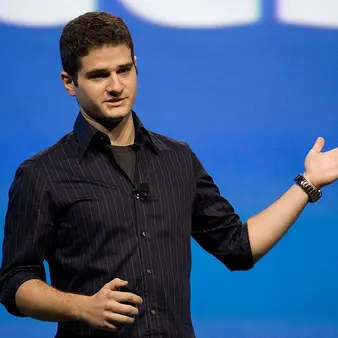
Zuckerberg handled most of the programming and technical development, while Saverin took responsibility for business matters, advertising relationships, and finances. The original team also included Dustin Moskovitz, Chris Hughes, and Andrew McCollum.
In the company's early ownership arrangements, Zuckerberg held a majority stake while Saverin controlled approximately 30%. His stake was subsequently increased to approximately 34% under a later corporate agreement.
During the summer of 2004, Zuckerberg and several collaborators moved to Palo Alto, California, to concentrate on expanding the business. Saverin instead went to New York City for an internship at Lehman Brothers.
That decision would become a major source of conflict between the two founders.
Falling Out With Mark Zuckerberg
As Facebook grew, Zuckerberg became frustrated that Saverin was not in California working on the company full-time. Saverin, meanwhile, was increasingly concerned that important business decisions were being made without his involvement.
The situation deteriorated when Zuckerberg discovered that Saverin had been developing a separate employment website called Joboozle and promoting it through Facebook. Zuckerberg considered the project a potential competitor and objected to Saverin using Facebook's platform to advertise another business.
Their disagreement escalated into a dispute over company finances. Saverin restricted access to Facebook's original bank account, while Zuckerberg and his new advisers sought alternative funding and a corporate structure that would allow the company to continue operating without Saverin's cooperation.
Among those advisers was Sean Parker, the co-founder of Napster, who became Facebook's first president and helped introduce Zuckerberg to Silicon Valley investors.
In 2004, Parker facilitated an introduction to Peter Thiel, the PayPal co-founder who provided Facebook with a $500,000 investment in exchange for an ownership stake.
The relationship between Zuckerberg and Saverin continued to deteriorate as Facebook prepared for further expansion.
Share Dilution and Facebook Lawsuit
Saverin's conflict with Facebook ultimately centered on a corporate restructuring that dramatically reduced his ownership percentage.
When Facebook reorganized its corporate structure, Saverin signed agreements relating to the transfer of intellectual property and the conversion of his original ownership interest into shares of the new corporation.
In 2005, the company issued millions of additional shares to Zuckerberg and other early participants without giving Saverin a comparable allocation.
The effect was devastating to Saverin's ownership percentage. He had previously controlled approximately one-third of Facebook, but the subsequent share issuances diluted his interest to a small fraction of the company.
Saverin argued that he had been misled into approving the restructuring and that Zuckerberg had deliberately arranged the transaction to deprive him of his original ownership.
Facebook, meanwhile, maintained that Saverin had failed to fulfill his responsibilities and that the company's financing and organizational decisions were legitimate.
The dispute resulted in lawsuits between Facebook and Saverin, including claims concerning the validity of the agreements he had signed and the treatment of his shares.
The litigation was ultimately resolved through a confidential settlement in 2009. Although the exact terms were never disclosed, accounts of the agreement indicated that Saverin emerged with approximately 5% of Facebook, substantially less than his original stake but still an enormously valuable holding.
The settlement also formally recognized Saverin as a Facebook co-founder.
Despite the resolution, Saverin did not return to the company and has never held an operational position at Meta.
Jason Kempin/Getty Images
Facebook IPO and Billion-Dollar Fortune
On May 18, 2012, Facebook went public on the Nasdaq stock exchange at $38 per share, giving the company an initial valuation of approximately $104 billion.
Shortly before the IPO, Saverin filed a disclosure with the Securities and Exchange Commission revealing that he owned exactly 53,133,360 Facebook shares.
At the $38 IPO price, those shares were worth approximately $2.02 billion. During the first day of trading, their value briefly reached approximately $2.18 billion.
The filing revealed that Saverin owned slightly less than 2% of Facebook's outstanding equity. He had already sold more than half the shares he received following his legal settlement, including transactions involving Russian investment firm DST Global.
Forbes calculated his total net worth at approximately $2.8 billion immediately following the IPO, including the value of his remaining shares and proceeds from earlier sales.
Although Saverin had surrendered most of his original ownership percentage, the remaining stake proved extraordinarily lucrative.
Over the following decade, Facebook expanded into a global technology business, acquiring Instagram and WhatsApp, building one of the world's largest digital advertising platforms, and eventually changing its corporate name to Meta Platforms.
As Meta's valuation increased, Saverin's fortune grew into the tens of billions of dollars.
Meta Ownership and Wealth
Saverin's roughly 2% ownership interest in Meta remains the primary source of his fortune.
The percentage may appear small, particularly compared with Zuckerberg's much larger stake, but Meta's enormous market capitalization makes it exceptionally valuable. Every $100 billion change in Meta's market value translates into approximately $2 billion in value for a 2% shareholder.
Saverin's stock holdings have not been disclosed in the same detail in recent years. Bloomberg's billionaire calculations use an ownership position of approximately 2%, based on the company's 2022 proxy filings, with adjustments for reported stock sales and other investments.
Bloomberg has also identified more than $500 million in proceeds from Saverin's earlier Facebook stock sales. Those proceeds, along with his venture capital investments, form an additional component of his fortune.
While Zuckerberg continues to control Meta through its dual-class voting structure, Saverin has no management role or meaningful influence over the company's operations.
His financial success has nevertheless been extraordinary. An initial contribution of approximately $15,000 to a student website ultimately helped create a personal fortune worth tens of billions of dollars.

(Photo by ROSLAN RAHMAN/AFP via Getty Images)
Renouncing U.S. Citizenship and Tax Controversy
In 2009, Saverin moved to Singapore, where he began concentrating on investments in Asian technology companies.
In September 2011, he renounced his American citizenship, several months before Facebook's highly anticipated IPO.
The decision became public in May 2012 and generated considerable controversy. Because Singapore does not generally impose capital gains taxes on investment gains, critics argued that Saverin had surrendered his American passport to avoid paying substantial U.S. taxes on his Facebook fortune.
Saverin denied that tax avoidance motivated the decision. Through a spokesperson, he explained that he had already been living in Singapore and intended to remain there indefinitely.
The timing nevertheless attracted attention from American lawmakers, including Senators Chuck Schumer and Bob Casey, who proposed legislation intended to impose additional taxes on wealthy Americans who renounced their citizenship for financial reasons.
Saverin was not exempt from U.S. taxation simply because he relinquished his passport. Under American expatriation rules, wealthy departing citizens are generally subject to an exit tax calculated on unrealized investment gains at the time citizenship is surrendered.
Bloomberg subsequently calculated that Saverin's estimated exit-tax liability could have been approximately $255 million. His actual tax payments have not been publicly disclosed.
Earlier financial analyses suggested that renouncing citizenship could have saved him tens of millions of dollars in capital gains taxes immediately surrounding the IPO, with considerably larger potential savings on subsequent appreciation.
The move also changed his exposure to American estate taxes. Some estimates suggested that the potential estate-tax savings could reach $700 million, although that was not a verified amount of capital gains tax avoided.
Saverin has continued living and investing in Singapore while retaining his Brazilian citizenship.
B Capital
In 2015, Saverin co-founded B Capital with Raj Ganguly, a former Bain Capital executive. The firm was established to invest in technology businesses with the potential to expand internationally, particularly between the United States and Asia.
Saverin and Ganguly developed a partnership with Boston Consulting Group, giving portfolio companies access to strategic consulting, industry expertise, and international business relationships.
B Capital initially focused on growth-stage technology investments but gradually expanded into early-stage venture capital, healthcare, financial technology, artificial intelligence, energy, and other emerging industries.
Its growth has been substantial.
In January 2023, B Capital announced that it had raised $2.1 billion for its third growth fund and related investment vehicles.
In March 2024, the firm closed a $750 million Opportunities Fund intended to support later-stage businesses and existing portfolio companies.
In July 2026, B Capital announced the successful closing of its third early-stage Ascent Fund at $500 million, nearly double the size of its predecessor. The fund targets companies developing artificial intelligence, robotics, healthcare technology, energy systems, and other advanced technologies.
The firm now manages more than $12 billion in assets across multiple funds, operates from nine locations in the United States and Asia, and has invested in more than 200 companies.
Saverin serves as B Capital's co-CEO alongside Ganguly, taking an active role in investment strategy and the development of its international portfolio.
Other Investments
Before founding B Capital, Saverin invested independently in a variety of technology startups.
His early investments included Qwiki, a multimedia information platform acquired by Yahoo in 2013; ShopSavvy, a mobile shopping and price-comparison application; and Jumio, a company specializing in identity verification and online financial transactions.
He also backed 99.co, a Singapore-based property technology platform, and Antler, a venture capital firm and startup accelerator founded by fellow Harvard graduate Magnus Grimeland.
Through B Capital, Saverin has supported companies including Perplexity, an artificial intelligence search platform; Fervo Energy, a developer of advanced geothermal power systems; Apptronik, a robotics company developing humanoid robots; and Axiom, an AI mathematics research company.
The firm has also invested in healthcare technology, financial services, logistics, and enterprise software businesses around the world.
The Social Network
Saverin's relationship with Zuckerberg became internationally famous through the 2010 film "The Social Network," directed by David Fincher and written by Aaron Sorkin.
The film depicted Facebook's early development, Saverin's friendship with Zuckerberg, and the bitter legal conflict that followed.
Saverin was portrayed by Andrew Garfield, while Jesse Eisenberg played Zuckerberg. Justin Timberlake portrayed Sean Parker, whose arrival at Facebook played a central role in the dramatized breakdown of the founders' relationship.
"The Social Network" earned more than $224 million worldwide and won three Academy Awards, including Best Adapted Screenplay. Although the filmmakers took considerable dramatic liberties with the events surrounding Facebook's creation, the film introduced Saverin's story to a global audience.
Personal Life
Saverin met Elaine Andriejanssen, an Indonesian-born finance professional, while they were both studying in Massachusetts. The couple later reconnected in Singapore, where Andriejanssen worked in investment management.
They announced their engagement in March 2014 and celebrated with an elaborate engagement party in Bali that included a performance by John Legend.
Saverin and Andriejanssen married on June 27, 2015, in a private ceremony on the French Riviera. Saverin publicly confirmed the marriage the following month, describing his wife as the love of his life.
Andriejanssen attended Raffles Girls' School in Singapore and Tufts University in Massachusetts. She subsequently worked as a quantitative research analyst at Franklin Templeton Investments.
The couple has a child and maintains a relatively private family life in Singapore.
Real Estate
Saverin has been linked to several exceptionally expensive residential properties in Singapore, where some of the world's wealthiest business figures own homes.
In 2017, local property reports connected him to the purchase of a spectacular duplex penthouse at Sculptura Ardmore, a 36-story luxury condominium tower near Orchard Road. The approximately 10,300-square-foot residence occupied the building's upper floors and featured a private swimming pool. The reported transaction price exceeded S$60 million, equivalent to roughly $44 million at the time.
An even more extraordinary transaction occurred in July 2019, when a sprawling estate on Nassim Road sold for S$230 million, equivalent to $167 million.
The property occupied approximately 84,543 square feet of land, or nearly two acres, in one of Singapore's most exclusive residential neighborhoods. The estate included a large two-story residence, a swimming pool, tennis court, and extensive landscaped grounds.
The seller was a company associated with Wing Tai Holdings chairman Cheng Wai Keung and his wife. Property records identified the buyer as SG Casa, a corporate entity reportedly linked to Saverin.
Although Saverin's personal ownership was never independently confirmed, the transaction was widely associated with him and established a record for a Singapore residential property sale at the time.
The Nassim Road purchase illustrated the extraordinary purchasing power of Singapore's growing billionaire class and the scale of the fortune Saverin accumulated after leaving Facebook.