
/2014/11/GettyImages-522491538.jpg)
/2010/05/Peter-Thiel.jpg)
/2018/03/adam-dell1.png)
/2012/08/Andy-Rubin-1.jpg)
/2010/07/GettyImages-456865726.jpg)
/2010/12/Brian-Johnson.jpg)
/2020/02/Angelina-Jolie.png)
/2009/09/Brad-Pitt.jpg)
/2020/04/Megan-Fox.jpg)
/2020/01/lopez3.jpg)
/2009/09/Cristiano-Ronaldo.jpg)
/2019/04/rr.jpg)
:strip_exif()/2009/09/P-Diddy.jpg)
/2017/02/GettyImages-528215436.jpg)
/2020/06/taylor.png)
/2009/09/Jennifer-Aniston.jpg)
:strip_exif()/2015/09/GettyImages-476575299.jpg)
What Is Bryan Johnson's Net Worth?
Bryan Johnson is an American venture capitalist, writer, and author who has a net worth of $400 million. Bryan Johnson earned his fortune as the founder of the online and mobile e-commerce payment provider Braintree. In 2012, Braintree acquired Venmo for $26 million. In 2013, PayPal (then a unit of eBay) acquired Braintree for $800 million.
Bryan Johnson is also the founder and CEO of Kernel, which creates devices that monitor brain activity. He manages his investments through the OS Fund, a venture capital firm that invests in early-stage science and technology companies. He has received much media attention for his anti-aging attempts, which he refers to as "Project Blueprint."
Early Life
Bryan Johnson was born on August 22, 1977, in Provo, Utah. He was raised in Springville, Utah, and he is the middle child of three brothers and a sister. His parents divorced when he was a child, and he lived with his mother and stepfather, who owned a trucking company. At the age of 19, Johnson became a Mormon missionary as he was a member of the Church of Jesus Christ of the Latter-day Saints. He spent two years in Ecuador on his mission. In 2003, he graduated from Brigham Young University with a degree in International Studies. He then received his MBA from the University of Chicago Booth School of Business in 2007.
Inquist
While he was still a student at university, Johnson launched three startups between 1999 and 2003. The first venture involved selling cell phones and helped him pay for his education at Brigham Young. He hired other college students to sell service plans along with cell phones, and Johnson earned about $300 in commission from each sale. He also started two other businesses. One was called Inquist, a voice-over internet protocol (VoIP) company that he founded with three other partners. It combined features from Vonage and Skype. It ended its operations in 2001. The same year, he joined his brother and another partner on a $70 million real estate project, though the project did not achieve sales goals.
Braintree
In 2007, Johnson founded Braintree, a company that helped businesses accept online credit card payments. He had formulated the idea for the company while working as a door-to-door salesperson selling credit card processing. He realized there was a market for a service that could be pitched to small businesses that were otherwise being taken advantage of due to the lack of regulation of credit card processing. His idea was successful and by 2011, Braintree made "Inc." magazine's 2011 list of the 500 fastest-growing companies. That year, Braintree also purchased Venmo, an app that allows users to send and receive money to each other electronically.
By September 2013, Braintree announced it was processing $12 billion in payments annually. Shortly after this announcement, Braintree was acquired by PayPal, which at the time was part of eBay, for $800 million. In October 2014, Johnson announced he was creating a venture capitalist fund called OS Fund. He used his own personal money to create the fund, which focused on investing in early-stage science and technology companies.
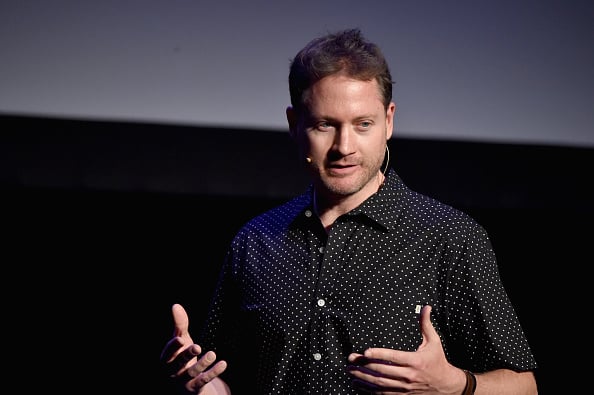
Getty Images
Kernal/Project Blueprint
In 2016, Johnson founded Kernel and invested $100 million of his own money to launch the company. Kernel is a technology company that creates brain-machine interfaces. The company was featured in the 2020 documentary "I Am Human," which focused on brain-machine interfaces. By 2020, Kernel had introduced two brain-activity monitoring devices, Flux and Flow, which can see and record brain activity. The company aims to collect data to better understand neurological diseases and dysfunctions like Alzheimer's and Parkinson's.
Johnson has received most of his media attention for Project Blueprint, his own personal anti-aging pursuit. He announced the project in October 2021 by claiming to have improved certain biomarkers via practices including caloric restriction, intermittent fasting, taking large numbers of supplements and medications, adhering to a strict sleep schedule, and undergoing frequent diagnostic testing, all with the aim of reducing his body's age. The regime costs him approximately $2 million per year to maintain. He claims, at the age of 46, to have achieved the heart of a 37-year-old, the skin of a 28-year-old, and the lung capacity of an 18-year-old.
He made the news for undergoing a series of six monthly 1-liter plasma transfusions with his teenage son as the donor for one of the transfusions. He also donated some of his own blood to his elderly father. However, he has since stopped the transfusions, as he said no clear benefit had been found. The FDA has further stated that such infusions are without benefit and may indeed be harmful.
Some of Johnson's extreme anti-aging attempts have been met with criticism from experts in fields related to aging. Some have highlighted the biggest indicator of aging is genetics and have also pointed out that Bryan's strict routine is simply not realistic for the vast majority of people. In 2023, Johnson took to social media to highlight some of the reasons why he still may be single due to his routine, which includes having one meal per day, sleeping alone, scheduling sex, avoiding small talk, not vacationing anywhere sunny and going to sleep by 8:30 every night.
Personal Life
In 2016, Johnson began dating actress and content creator Taryn Southern. They were engaged by 2018 and living together in California. In October 2021, Southern filed a lawsuit against Johnson that claimed he had promised to support her financially but instead asked her to move out of their house when she was undergoing treatment for breast cancer in 2019. Johnson claimed the allegations were untrue, which seemed to be supported when a judge threw out the suit and demanded that Southern pay Johnson's legal costs.
Prior to his relationship with Southern, Johnson had been married before. He shares three children with his ex-wife.
/2014/11/GettyImages-522491538.jpg)
/2010/12/Brian-Johnson.jpg)
/2015/05/GettyImages-458997172.jpg)
/2010/07/GettyImages-456865726.jpg)
/2019/07/GettyImages-870006538.jpg)
/2010/07/CNW-Man-3.png)
/2009/12/GettyImages-455060882.jpg)
/2010/06/Elon-Musk.jpg)
/2019/10/denzel-washington-1.jpg)
/2009/11/George-Clooney.jpg)