










What Is Raúl's Net Worth?
Raúl González Blanco is a retired Spanish professional soccer player and coach who has a net worth of $100 million.
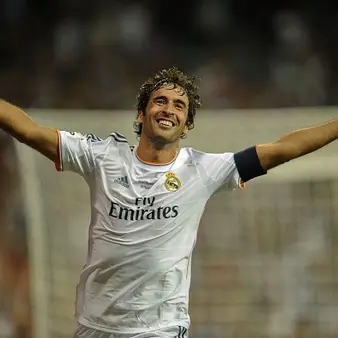
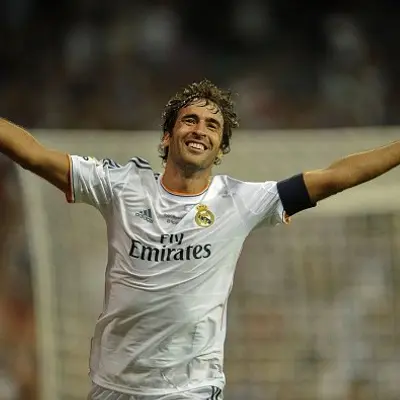
Raúl González is one of the greatest players in Real Madrid history and one of the defining European strikers of his generation. He joined Real Madrid's youth system after cross-town rival Atlético Madrid dismantled much of its academy and made his first-team debut at just 17 years old. Over the next 16 seasons, Raúl played a club-record 741 competitive matches, scored 323 goals, won six La Liga championships, and lifted the UEFA Champions League trophy three times. He scored in the 2000 and 2002 Champions League finals and eventually became captain during the club's famous Galácticos era alongside players including Zinedine Zidane, David Beckham, and Ronaldo.
Raúl was Real Madrid's all-time leading scorer until Cristiano Ronaldo surpassed his record, but Raúl's 741 appearances remain the most in club history. After leaving Madrid in 2010, he became a fan favorite at Schalke 04, won championships in Qatar with Al Sadd, and finished his career with the New York Cosmos. He later returned to Real Madrid as a coach and managed Real Madrid Castilla for six seasons before leaving the club's academy in 2025.
Salary and Career Earnings
Raúl played professionally during an era when elite European soccer salaries were beginning their rapid climb toward today's enormous levels.
By 2001, Forbes described him as the highest-paid European-born soccer player. His compensation continued increasing as he established himself as Real Madrid's captain and one of the most recognizable players in world soccer.
In 2006, Forbes estimated that Raúl earned $10.5 million from salary and endorsements over the preceding year. His sponsors over the course of his career included major international brands such as Adidas, Pepsi, and EA Sports.
Real Madrid gave Raúl another lucrative contract extension in February 2008. Spanish reporting at the time said the agreement guaranteed him more than €6 million net per year and included provisions that could automatically extend his deal if he continued playing regularly.
When Raúl left Madrid for Germany in 2010, reports placed his Schalke salary at roughly €6 million gross per season under a two-year agreement.
His move to Qatar provided another substantial payday. When he joined Al Sadd in 2012, his salary was reported at roughly €4 million per year.
The terms of his final playing contract with the New York Cosmos were not publicly disclosed. Between 16 seasons at Real Madrid, contracts in Germany and Qatar, endorsement agreements, appearance fees, and his post-playing work, Raúl accumulated one of the more substantial fortunes among Spanish players of his generation.
Early Life
Raúl González Blanco was born on June 27, 1977, in Madrid, Spain. He grew up in San Cristóbal de los Ángeles, a working-class neighborhood in the southern part of the city.
His father, Pedro, was an Atlético Madrid supporter, and Raúl began playing soccer with his neighborhood club before joining Atlético's youth system.
He quickly emerged as an exceptional goalscorer. Raúl helped Atlético's youth teams win championships and became one of the brightest prospects in the club's academy.
Then Atlético made a decision that would haunt the club for decades.
From Atlético Madrid to Real Madrid
In 1992, Atlético Madrid president Jesús Gil moved to eliminate much of the club's youth academy as part of a cost-cutting program.
Raúl, then 15, suddenly needed a new club.
Real Madrid took advantage and brought him across the city to its famous La Fábrica youth system. The future symbol of Real Madrid had therefore spent his formative years developing with its fiercest local rival.
Raúl tore through Real's youth teams. His goalscoring performances eventually earned him a place with Real Madrid C, where he scored at a remarkable rate.
First-team manager Jorge Valdano did not wait long before promoting him.
Real Madrid Debut at 17
Raúl made his Real Madrid first-team debut against Real Zaragoza on October 29, 1994. He was just 17 years old.
He missed several opportunities to score in the match, but Valdano kept him in the starting lineup.
One week later, Raúl faced Atlético Madrid.
Against the club that had allowed him to leave its academy, the teenage striker scored his first Real Madrid goal in a 4–2 derby victory.
It was the beginning of one of the longest and most successful careers in club history.
Raúl finished his debut season with nine goals in 28 league appearances as Real Madrid won La Liga. He steadily displaced legendary striker Emilio Butragueño and quickly became one of the faces of a new generation at the Bernabéu.
Champions League Success
For all of Real Madrid's history and prestige, the club entered the late 1990s having gone more than three decades without winning the European Cup.
Raúl helped end that drought.
Real Madrid defeated Juventus in the 1998 Champions League final, winning its seventh European championship and its first since 1966.
Two years later, Real returned to the final against Valencia. Raúl scored the final goal of a 3–0 victory after racing from his own half, rounding goalkeeper Santiago Cañizares, and finishing into an empty net.
Real Madrid won another European title in 2002 against Bayer Leverkusen. Raúl again scored in the final before Zidane produced one of the most famous goals in Champions League history to give Madrid a 2–1 victory.
Raúl therefore won three Champions League titles and scored in two finals.
He also became the competition's all-time leading scorer during his career. Raúl eventually finished with 71 Champions League goals between Real Madrid and Schalke, a record later surpassed during the extraordinary scoring era of Cristiano Ronaldo and Lionel Messi.

PEDRO ARMESTRE/AFP/Getty Images
Captain and the Galácticos Era
Following the departure of longtime captain Fernando Hierro, Raúl became Real Madrid's captain.
The responsibility coincided with one of the most famous periods in club history.
President Florentino Pérez assembled a roster filled with some of the biggest names in world soccer. Luís Figo arrived from Barcelona, Zidane joined from Juventus, Brazilian superstar Ronaldo arrived from Inter Milan, and David Beckham followed from Manchester United.
Despite the constant arrival of international stars, Raúl remained the homegrown symbol of Real Madrid.
He was not the fastest or physically strongest striker, but his anticipation, positioning, movement, and finishing made him extraordinarily effective. Raúl developed a reputation for appearing exactly where rebounds and loose balls were going to fall.
His preferred #7 shirt became inseparable from his identity.
Real Madrid Records
Raúl spent 16 seasons with Real Madrid and finished with 741 competitive appearances and 323 goals.
His 741 appearances remain the club record, ahead of Iker Casillas.
Raúl also retired as Real Madrid's all-time leading scorer. Cristiano Ronaldo later shattered that record, while Karim Benzema also eventually passed Raúl's goal total.
His trophy collection with Madrid included:
6 La Liga championships
3 UEFA Champions League titles
2 Intercontinental Cups
1 UEFA Super Cup
4 Spanish Super Cups
Raúl's longevity was almost as remarkable as his scoring. He remained a first-team player through multiple generations of teammates, managers, and club presidents.
Leaving Real Madrid
By the end of the 2000s, Real Madrid's attacking options were changing.
Cristiano Ronaldo arrived in 2009, joining a squad that also included Karim Benzema and Gonzalo Higuaín. Raúl's playing time declined significantly during the 2009–10 season.
In July 2010, he announced that he was leaving Real Madrid after 16 seasons.
His departure was emotional but also gave him something he still wanted badly: regular first-team soccer.
At age 33, Raúl moved to Germany.
Schalke 04
Raúl signed a two-year contract with Schalke 04 in July 2010.
Anyone expecting a ceremonial end-of-career move was quickly proven wrong.
Raúl became an important player for Schalke and developed into a cult hero among the club's supporters. In his first season, he helped Schalke make an extraordinary run to the Champions League semifinals.
Schalke defeated defending European champion Inter Milan in the quarterfinals before losing to Manchester United.
Raúl also helped the club win the 2010–11 DFB-Pokal, Germany's primary domestic cup competition.
He finished his Schalke career with 40 goals in 98 appearances across all competitions.
His impact was significant enough that Schalke temporarily retired his #7 shirt after his departure.
Al Sadd
Raúl left European soccer in 2012 and signed with Al Sadd in Qatar.
He immediately helped the club win the 2012–13 Qatar Stars League championship, its first league title in several years.
Raúl subsequently helped Al Sadd win the Emir of Qatar Cup in 2014.
Although the competitive spotlight was smaller than it had been in Madrid or Germany, the move extended his playing career while also providing another lucrative contract late in his career.
New York Cosmos and Retirement
Raúl's final club was the New York Cosmos of the North American Soccer League.
He officially joined the club ahead of the 2015 season and combined playing duties with work related to the Cosmos' youth academy, an early indication of his interest in coaching and player development.
Raúl scored eight goals in 28 regular-season appearances.
He announced in October 2015 that he would retire when the season ended.
His career received a fitting conclusion. Raúl scored the winning goal in the NASL semifinal, and the Cosmos went on to defeat Ottawa Fury in the championship match on November 15, 2015.
Raúl retired as a champion.
Spain National Team
Raúl made his senior debut for Spain in 1996 and eventually accumulated 102 international appearances and 44 goals.
He represented Spain at the 1998, 2002, and 2006 World Cups and at the 2000 and 2004 European Championships.
For years, Raúl was Spain's all-time leading scorer. David Villa eventually surpassed his record in 2011.
One major trophy eluded him internationally.
Raúl's final Spain appearance came in 2006, meaning he was no longer part of the national team when Spain entered the greatest period in its history. Spain won Euro 2008, the 2010 World Cup, and Euro 2012 without him.
His absence from those championship teams remains one of the unusual twists of his career: the longtime face of Spanish soccer retired internationally immediately before Spain became the world's dominant national team.
Coaching Career
After retiring, Raúl remained in New York for a period and worked as an ambassador for La Liga before returning to Real Madrid.
He earned his UEFA coaching qualifications and entered Real Madrid's academy coaching system in 2018.
Raúl initially coached younger academy teams before becoming manager of Real Madrid Castilla, the club's reserve side, in 2019.
In 2020, he temporarily took charge of Real Madrid's Juvenil A team for the UEFA Youth League. Raúl led the squad to the championship, giving Real Madrid its first title in the competition.
He remained in charge of Castilla for six seasons and came close to guiding the reserve team to promotion to Spain's second division.
In May 2025, Raúl announced that he would leave Real Madrid's academy after seven years as a coach within the organization. He described the move as the beginning of a new chapter in his managerial career outside the club while expressing his belief that he would eventually return to Real Madrid.
Personal Life
Raúl married Spanish model Mamen Sanz in 1999.
The couple have five children: sons Jorge and Hugo, twins Héctor and Mateo, and daughter María.
Family became part of one of Raúl's most recognizable traditions on the field. After scoring goals, he frequently kissed his wedding ring as a tribute to his wife.
Several of his children have also pursued soccer. His sons played while the family lived in New York, and his daughter María later joined Real Madrid's youth system.
Unlike many of the superstar teammates who surrounded him during the Galácticos era, Raúl maintained a relatively restrained public image throughout his playing career. He rarely generated tabloid controversy and became known for professionalism, discipline, and an intense attachment to Real Madrid.
That image helped make him more than simply a prolific striker. For a generation of Madrid supporters, Raúl became the embodiment of the club itself.