











What Is Yuriorkis Gamboa's Net Worth?
Yuriorkis Gamboa is a Cuban professional boxer and Olympic gold medalist who has a net worth of $2 million.
Yuriorkis Gamboa, nicknamed "El Ciclon de Guantánamo," emerged from Cuba's celebrated amateur boxing system as one of the most exciting fighters of his generation. He won Olympic gold at the 2004 Athens Games, defected from Cuba in 2006, and rapidly climbed the professional ranks after debuting the following year. At his peak, Gamboa combined exceptional hand speed, power, and athleticism to become a unified featherweight world champion, holding versions of the WBA and IBF titles. He later won interim WBA championships at super featherweight and lightweight and entered several major fights against future stars including Terence Crawford, Gervonta Davis, and Devin Haney. Promotional disputes and long stretches of inactivity prevented Gamboa from fully capitalizing financially on his prime years. After losing to Isaac Cruz in 2022, he went more than four years without a professional boxing match before returning in 2026. He also entered bare-knuckle boxing that year, winning his BKB debut at age 44.
Early Life and Amateur Career
Yuriorkis Gamboa Toledano was born on December 23, 1981, in Guantánamo, Cuba. Like many of Cuba's best fighters, he developed inside the country's highly organized amateur boxing system and became one of its elite international competitors.
Gamboa won four Cuban national championships and captured gold at the 2003 Pan American Games in Santo Domingo. His greatest amateur achievement came at the 2004 Summer Olympics in Athens, where he represented Cuba at flyweight.
He defeated five opponents on the way to the gold medal, including France's Jérôme Thomas in the final. Gamboa subsequently moved up in weight and earned a bronze medal at the 2005 World Amateur Championships. He also won medals at the World Cup and Central American and Caribbean Games.
By the time he left the Cuban amateur system, Gamboa was regarded as one of the country's most naturally gifted fighters.
Defection From Cuba
Cuban athletes were prohibited from pursuing conventional professional boxing careers, meaning Gamboa had to leave the country if he wanted to fight professionally and earn substantial purses.
In December 2006, Gamboa was training with the Cuban national team in Venezuela alongside fellow Olympic champions Odlanier Solís and Yan Bartelemí. The three boxers slipped away from the team, traveled into Colombia, and eventually made their way to Germany.
Gamboa later established himself in Miami, Florida. His defection transformed him from an amateur star earning within Cuba's state sports system into one of professional boxing's most sought-after prospects.
Professional Debut
Gamboa made his professional debut in Germany in April 2007, defeating Alexan Manvelyan. He won his first four professional bouts in Europe before making his U.S. debut later that year at the Seminole Hard Rock Hotel and Casino in Hollywood, Florida.
His speed and punching power immediately attracted attention. Although only around 5-foot-5, Gamboa fought with an explosive style built around fast combinations, quick feet, and a willingness to attack aggressively.
That aggression occasionally left him vulnerable to knockdowns, but it also made his fights unusually entertaining. ESPN eventually included Gamboa among boxing's most exciting fighters and noted that promoters were marketing him as a "mini Mike Tyson."
In 2008, Gamboa collected the NABF super featherweight title, WBC International super featherweight title, and WBO NABO featherweight title as he moved rapidly toward a world championship opportunity.
WBA Featherweight Champion
Gamboa defeated José Rojas in April 2009 to win the WBA interim featherweight championship. He was subsequently recognized as the WBA's regular featherweight champion.
He defended the belt against Whyber Garcia and Jonathan Victor Barros before facing Orlando Salido in September 2010. Salido was a rugged Mexican veteran who would later become a multiple-time world champion and the first professional fighter to defeat Vasiliy Lomachenko.
Gamboa won their fight by unanimous decision, adding the vacant IBF featherweight championship to his WBA belt. The victory made him a unified world champion and represented the peak of his ascent through the featherweight division.
Title Stripping
Gamboa's time as a unified champion ended in an unusual fashion.
In March 2011, he was scheduled to defend against Jorge Solís in Atlantic City. Gamboa made the official weigh-in but failed to appear for an IBF-mandated secondary weigh-in on the day of the fight. The IBF stripped him of its featherweight championship before the bout.
Gamboa nevertheless dominated Solís, dropping him five times before winning by fourth-round technical knockout.
The WBA subsequently removed Gamboa's unified-champion designation after he no longer held the IBF belt. As a result, Gamboa effectively lost both major titles through sanctioning-body decisions rather than inside the ring.
The $1 Million Brandon Rios Fight That Never Happened
One of the most financially important episodes of Gamboa's career involved a fight that never took place.
In 2012, Gamboa agreed to move up in weight to face Brandon Rios in a high-profile lightweight bout promoted by Top Rank. The Los Angeles Times reported that Gamboa's purse would have exceeded $1 million, which would have represented one of the largest guaranteed paydays of his career at that point.
Gamboa unexpectedly failed to appear at scheduled promotional events in Miami and Los Angeles and ultimately withdrew from the fight. The decision was connected to a worsening dispute over his promotional relationship with Top Rank.
Top Rank filed a breach-of-contract lawsuit. Rather than fight Rios, Gamboa remained inactive for more than a year after his September 2011 victory over Daniel Ponce de León.
The episode became an early example of a recurring problem in Gamboa's professional career: extended inactivity during years when his athletic ability and market value were at their highest.
50 Cent and SMS Promotions
Gamboa's next major business relationship involved rapper and entrepreneur 50 Cent.
50 Cent initially planned to launch a boxing promotion with Floyd Mayweather under the name TMT Promotions. When that partnership failed to materialize, 50 Cent created SMS Promotions.
Gamboa became one of the company's most prominent fighters. Sports Illustrated reported that 50 Cent paid approximately $1 million for the promotional rights to Gamboa.
Gamboa made his SMS debut in December 2012 on the undercard of the fourth Manny Pacquiao–Juan Manuel Márquez fight at the MGM Grand in Las Vegas. He defeated Michael Farenas by unanimous decision to win the interim WBA super featherweight title.
In June 2013, Gamboa moved up again and defeated Darleys Pérez to claim the interim WBA lightweight championship, improving his record to 23-0.

Getty Images
Promotional Dispute With 50 Cent
The SMS relationship eventually became another source of career disruption.
According to Gamboa, his promotional agreement required SMS to offer him at least three fights per contract year. Instead, he fought only once in 2013, twice in 2014, and did not fight at all during most of 2015.
SMS Promotions filed for Chapter 11 bankruptcy protection in May 2015. Gamboa subsequently went to court seeking to terminate his contract, arguing that the promotional company had failed to provide the required number of fights.
SMS disputed his account and argued that Gamboa's own decisions had contributed to the inactivity. In January 2016, a federal court ruled that his promotional agreement remained valid.
The dispute consumed additional years of Gamboa's prime and represents an important part of his financial story. Despite reaching world-title level and attracting significant promoter investment, he never maintained the consistent schedule of major fights that might have produced substantially greater career earnings.
Terence Crawford Fight
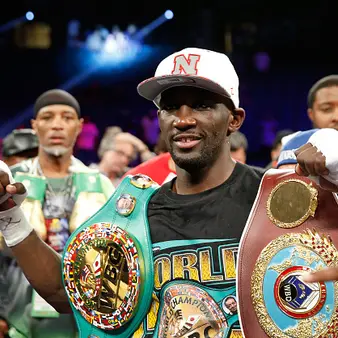
Gamboa's undefeated record ended against Terence Crawford on June 28, 2014, in Omaha, Nebraska.
Crawford was defending the WBO lightweight championship in his hometown. Gamboa started extremely well and used his speed to win several of the early rounds, but Crawford gradually adjusted to his movement and size.
Gamboa was knocked down four times. Even after suffering substantial punishment, he managed to badly hurt Crawford during the ninth round before Crawford responded and stopped him with a right uppercut.
The ninth-round knockout gave Gamboa his first professional loss after a 23-0 start.
The fight became one of the defining performances of Crawford's emerging career and drew an average HBO audience of more than 1.2 million viewers. Crawford later identified Gamboa as one of the toughest opponents he had faced during the early stages of his championship run.
Comeback and Second Loss
Gamboa returned from the Crawford loss with victories over Joel Montes de Oca and Hylon Williams Jr., but inactivity continued to plague him. He did not compete at all during 2016.
In March 2017, he returned with a decision victory over René Alvarado. Two months later, journeyman Robinson Castellanos produced a major upset, dropping Gamboa before Gamboa's corner stopped the fight after the seventh round.
It was Gamboa's second professional defeat and further reduced his standing among boxing's elite.
He nevertheless responded with four consecutive victories over Alexis Reyes, Jason Sosa, Miguel Beltrán Jr., and former world champion Román "Rocky" Martínez. Gamboa knocked Martínez out in the second round in July 2019, earning another major opportunity at lightweight.
Gervonta Davis Fight
On December 28, 2019, Gamboa faced Gervonta "Tank" Davis for the vacant WBA regular lightweight championship at State Farm Arena in Atlanta.
Davis entered the fight as one of boxing's fastest-rising young stars. The matchup represented a classic generational crossroads fight, with the 38-year-old former champion attempting to upset a 25-year-old knockout artist.
Gamboa suffered a serious setback almost immediately. After being knocked down in the second round, he ruptured his right Achilles tendon.
Rather than quit, Gamboa continued fighting for nearly another ten rounds despite the injury. Davis dropped him three times overall before stopping him in the 12th round.
Although the fight was one-sided, Gamboa's ability to continue with a ruptured Achilles became one of the most memorable demonstrations of toughness during his late career.
Devin Haney Fight
Gamboa returned less than a year later to challenge undefeated WBC lightweight champion Devin Haney in November 2020.
By that point, Gamboa was 38 years old and facing another elite young fighter in his prime. Haney controlled the match with his jab, speed, and movement and won a lopsided unanimous decision.
Two judges scored every round for Haney, while the third gave Gamboa only one round. Gamboa also lost a point for excessive holding in the 11th.
The fight extended his losing streak to two but again placed him in a televised world championship main event more than a decade after he first became a champion.
Isaac Cruz
Gamboa returned in April 2022 against Mexican contender Isaac "Pitbull" Cruz on the Errol Spence Jr.-Yordenis Ugás pay-per-view card at AT&T Stadium in Texas. At age 40, Gamboa was well beyond his athletic prime. Cruz overwhelmed him with pressure and power, knocking him down four times before the referee stopped the fight in the fifth round. The loss dropped Gamboa to 30-5.
For the next four years, he did not compete in a professional boxing match.
2026 Boxing Comeback
At age 44, Gamboa surprisingly returned to professional boxing in May 2026. He faced Alexander Espinoza in an eight-round super lightweight bout in Fort Lauderdale, Florida. It was Gamboa's first professional boxing appearance since the 2022 loss to Cruz. Espinoza defeated Gamboa by split decision, moving Gamboa's professional record to 30 wins and six losses, with 18 victories by knockout. The comeback demonstrated Gamboa's continued desire to compete despite being more than two decades removed from his Olympic gold medal.
Bare-Knuckle Boxing
Only three months after returning to conventional boxing, Gamboa entered another combat sport.
He signed with BKB Bare Knuckle Boxing and made his debut on August 29, 2026, at the James L. Knight Center in Miami. Gamboa faced Yesner Talavera in a five-round super lightweight bout.
Unlike his professional boxing comeback, the bare-knuckle debut ended in victory. Gamboa used his experience and speed to win a unanimous decision.
The performance gave the 44-year-old former Olympic champion a successful start in bare-knuckle competition more than 20 years after he first became one of Cuba's most prominent amateur fighters.
Career Earnings
A complete public accounting of Gamboa's boxing earnings is not available, and boxing purses often exclude additional compensation tied to television, sponsors, bonuses, or other contractual arrangements.
What is clear is that Gamboa reached a financial level where promoters were willing to invest seven figures in his career. His abandoned 2012 Brandon Rios fight carried a purse of more than $1 million, while 50 Cent subsequently paid approximately $1 million for the rights to promote him.
Gamboa later headlined or co-headlined major HBO, Showtime, DAZN, and pay-per-view cards against Crawford, Davis, Haney, and Cruz. Those late-career opportunities added meaningful income, but they came after several long stretches in which promotional disputes left him fighting far less frequently than most championship-level boxers.
That stop-and-start career helps explain why Gamboa's financial profile is more modest than might be expected from an Olympic gold medalist who reached unified-champion status and spent years appearing in major televised fights.
Legacy
Gamboa's professional career never fully matched the enormous expectations that followed him out of Cuba.
At his best, however, few fighters of his era possessed his combination of speed, power, athleticism, and aggression. He won an Olympic gold medal, became a unified featherweight champion, captured championships across multiple weight classes, and shared the ring with several fighters who went on to become major stars.
His career also offers a lesson in how much factors outside the ring can affect a boxer's earning power and legacy. Promotional disputes with Top Rank and SMS Promotions cost Gamboa years of activity during his prime, while his tendency to move into increasingly heavier divisions eventually placed him against younger and naturally larger opponents.
Even so, Gamboa remained relevant for an extraordinary length of time. More than 22 years after winning Olympic gold, he was still competing professionally and beginning a new chapter in bare-knuckle boxing.