
/2014/11/Eddie-Murray.png)
/2017/11/Carlton-Fisk.jpg)
/2017/04/Mark-Trumbo.jpg)
/2014/07/Johnny-Bench-1.jpg)
/2010/04/mark.jpg)
/2013/12/GettyImages-78450634.jpg)
/2017/02/GettyImages-528215436.jpg)
/2020/06/taylor.png)
/2018/03/GettyImages-821622848.jpg)
/2009/09/Jennifer-Aniston.jpg)
/2009/09/Brad-Pitt.jpg)
/2020/01/lopez3.jpg)
:strip_exif()/2015/09/GettyImages-476575299.jpg)
:strip_exif()/2009/09/P-Diddy.jpg)
/2019/04/rr.jpg)
/2020/04/Megan-Fox.jpg)
/2020/02/Angelina-Jolie.png)
What is Eddie Murray's Net Worth?
Eddie Murray is a retired American professional baseball player who has a net worth of $10 million. Eddie Murray is best known for his remarkable consistency, power hitting, and longevity over a 21-year Major League Baseball career. One of the most productive switch-hitters in history, Murray spent the majority of his career with the Baltimore Orioles and also played for the Los Angeles Dodgers, New York Mets, Cleveland Indians, and Anaheim Angels. Nicknamed "Steady Eddie" for his calm demeanor and dependable performance, he became one of only five players in MLB history to record both 3,000 hits and 500 home runs. A three-time Gold Glove winner and eight-time All-Star, Murray was inducted into the Baseball Hall of Fame in 2003. His blend of professionalism, durability, and quiet leadership made him one of the most respected players of his era.
Early Life
Eddie Clarence Murray was born on February 24, 1956, in Los Angeles, California, and grew up as the youngest of 12 children. Several of his siblings were also talented athletes, and his brother Rich Murray would later play briefly for the San Francisco Giants. Eddie excelled in multiple sports at Locke High School but focused on baseball, where his natural power and plate discipline quickly drew attention from scouts. The Baltimore Orioles selected him in the third round of the 1973 MLB Draft, and by 1977, at just 21 years old, he made his major league debut.
Career
Murray made an immediate impact with the Orioles, winning the 1977 American League Rookie of the Year Award after hitting 27 home runs with 88 RBIs. Over the next decade, he became the cornerstone of Baltimore's lineup, driving in more than 90 runs in eleven consecutive seasons and helping lead the Orioles to a World Series championship in 1983. Known for his disciplined approach and consistency from both sides of the plate, Murray earned eight All-Star selections and three Gold Gloves during his time in Baltimore.
After being traded to the Los Angeles Dodgers in 1989, he continued to deliver at a high level, driving in 90 or more runs in three of his first four seasons with the club. Murray later played for the New York Mets and Cleveland Indians before returning to Baltimore for his final seasons. In 1996, he joined baseball's elite 500 home run club, and shortly after, he recorded his 3,000th career hit. He retired in 1997 with 504 home runs, 3,255 hits, and 1,917 RBIs, placing him among the top hitters in baseball history.
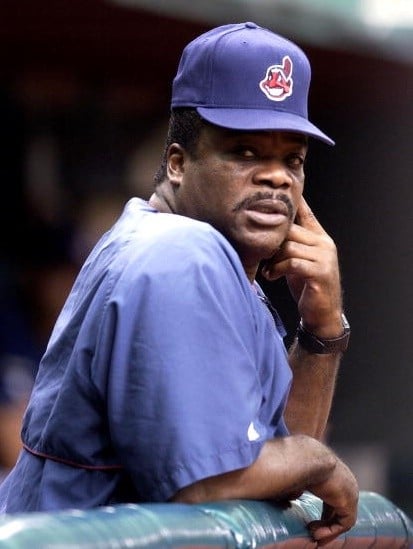
A. Messerschmidt/Getty Images
Contracts, Salaries & Career Earnings
Over the course of his two-decade career, Eddie Murray earned roughly $30 million in salary, a substantial sum during an era when baseball salaries were just beginning to skyrocket. His first major payday came in the early 1980s when he signed a multi-year deal with the Orioles that made him one of the team's highest-paid players. When he was traded to the Los Angeles Dodgers in 1989, he signed a three-year, $7.5 million contract, one of the richest deals in franchise history at the time. Later stints with the Mets and Indians saw him earn between $2 million and $3 million per season. By the time he retired in the late 1990s, Murray had accumulated enough career earnings to place him among the wealthiest players of his generation, especially considering his endorsement income and post-career coaching roles with the Indians and Dodgers.
Insider Trading Case
In 1998, a year after his retirement, Eddie Murray was implicated in an insider trading case involving former Merrill Lynch broker Bob Cimasi. The U.S. Securities and Exchange Commission (SEC) alleged that Cimasi had tipped Murray and several others with confidential information about pending corporate mergers, allowing them to profit from stock trades. According to court filings, Murray made approximately $17,000 in illegal profits from trades based on the insider tips.
Rather than fight the charges, Murray reached a settlement with the SEC in 1998. Without admitting or denying wrongdoing, he agreed to disgorge his profits and pay an equal civil penalty, for a total of about $35,000. The incident marked an uncharacteristic blemish on the reputation of a player long known for professionalism and restraint. While the case did not lead to criminal charges, it drew widespread media attention due to Murray's fame and his otherwise clean image.
Post-Playing Career and Legacy
After retiring, Murray remained involved in baseball as a hitting coach for several teams, including the Cleveland Indians, Los Angeles Dodgers, and Baltimore Orioles. He was inducted into the National Baseball Hall of Fame in 2003 on his first ballot, receiving over 85 percent of the vote. His plaque immortalized him as one of the game's greatest switch-hitters—a player whose consistency and quiet excellence set him apart from flashier contemporaries.
Murray's legacy is defined by balance, professionalism, and production. He ranks among the all-time leaders in RBIs and extra-base hits, and his blend of offense, defense, and leadership continues to serve as a benchmark for future generations. Despite the brief insider trading controversy, his achievements on the field remain untarnished. For two decades, "Steady Eddie" embodied the ideal of a complete player—steady, powerful, and endlessly reliable.
/2014/11/Eddie-Murray.png)
/2017/11/Carlton-Fisk.jpg)
/2014/07/Johnny-Bench-1.jpg)
/2010/04/mark.jpg)
/2018/04/Mike-Schmidt.jpg)
/2012/08/Jeff-Kent-e1619996264574.jpg)
/2012/02/David-Justice.jpg)
/2009/11/George-Clooney.jpg)
/2019/11/GettyImages-1094653148.jpg)
/2009/09/Cristiano-Ronaldo.jpg)
/2019/10/denzel-washington-1.jpg)