
What Is Nigel Mansell's Net Worth?
Nigel Mansell is a retired British racing driver and businessman who has a net worth of $90 million.
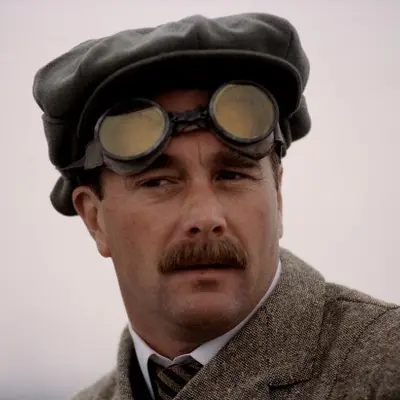
Nigel Mansell is best known for winning the 1992 Formula One World Championship and the 1993 CART IndyCar championship, becoming the first driver to win the two titles in consecutive seasons. Over a Formula One career spanning 1980 to 1995, Mansell competed for Lotus, Williams, Ferrari, and McLaren, recording 31 Grand Prix victories, 32 pole positions, and 59 podium finishes. His aggressive driving style, distinctive mustache, and famous red number five made him one of the most popular British racing drivers of his generation.
Mansell's fortune comes from lucrative Formula One and IndyCar contracts, sponsorships, investments, and business ventures. At his financial peak as a driver, Forbes estimated his annual earnings at $14.5 million. He later became involved in automobile dealerships, golf resorts, hotels, and property investments. Among his most valuable transactions was the sale of his Woodbury Park golf resort business in England, believed to have fetched between £14 million and £18 million in 2007. He also sold two historic Formula One cars from his personal collection for a combined €7.66 million in 2022, followed by more than £2 million in racing memorabilia in 2023.
Early Life
Nigel Ernest Mansell was born on August 8, 1953, in Upton-upon-Severn, Worcestershire, England. He grew up in the Birmingham area and developed a fascination with motor racing as a child. His father, Eric Mansell, was an engineer, and his mother was named Joyce.
Mansell began kart racing at age ten and quickly demonstrated an aptitude for competition. He won numerous regional karting championships during his teenage years, but his family initially preferred that he pursue a more conventional career. He studied engineering at technical colleges in Birmingham and completed an apprenticeship with Lucas Aerospace, eventually working as an aerospace engineer.
Determined to become a professional racing driver, Mansell began competing in Formula Ford while continuing his engineering career. In 1977, he left his job to pursue racing full-time, a decision that placed considerable financial pressure on his young family.
Just three weeks after leaving his job, Mansell suffered a serious accident at Brands Hatch that broke his neck. Doctors warned that he might never race again, but he returned to competition and won the 1977 British Formula Ford championship.
Moving into Formula Three required further sacrifices. Mansell and his wife, Rosanne, sold their house to finance his racing ambitions, while he worked nights as an office cleaner to help pay for expenses. Another serious accident in 1979 threatened his career, but his performances attracted the attention of Lotus founder Colin Chapman.
Formula One Debut With Lotus
Mansell entered Formula One in 1980 as a test driver for Lotus. Chapman recognized his determination and raw speed, giving him his Grand Prix debut at the Austrian Grand Prix that August. Although his early appearances were hampered by mechanical problems, he earned a full-time racing seat for 1981.
The following four seasons were difficult. Lotus struggled with inconsistent performance, and Mansell frequently found himself fighting mechanical failures and competing with more established drivers. His relationship with Chapman had been particularly important, and the team founder's death in December 1982 deprived him of a major supporter.
Mansell nevertheless demonstrated his ability with several podium finishes, including third place at the 1983 European Grand Prix and the 1984 French Grand Prix. His fortunes changed when Frank Williams signed him for the 1985 season.
Williams Breakthrough and 1986 Championship Heartbreak
Joining Williams transformed Mansell's career. Driving alongside Finnish teammate Keke Rosberg, he secured his first Formula One victory at the 1985 European Grand Prix at Brands Hatch. He followed that achievement with another win at the South African Grand Prix, establishing himself as a serious championship contender.
In 1986, Mansell partnered with Nelson Piquet in a formidable Williams-Honda lineup. He won five races and entered the season-ending Australian Grand Prix leading the championship standings. A third-place finish would have secured the title, but his left-rear tire exploded at high speed with 18 laps remaining.
The dramatic failure forced Mansell to retire and allowed McLaren driver Alain Prost to claim the championship. Mansell finished the season second, just two points behind Prost, in one of Formula One's most famous title-deciding races.
He returned even stronger in 1987, winning six Grands Prix. His victory at the British Grand Prix became one of his signature performances after he overcame a substantial deficit to Piquet and executed a spectacular late overtaking maneuver at Silverstone.
Despite his six victories, Mansell again finished second in the championship, this time behind Piquet. A crash during qualifying for the Japanese Grand Prix ended his season prematurely.
Ferrari and the Return to Williams
After a difficult 1988 season with Williams, Mansell moved to Ferrari in 1989. He became the final driver personally selected by Enzo Ferrari before the legendary manufacturer's death in 1988.
Mansell immediately rewarded Ferrari's faith by winning the 1989 Brazilian Grand Prix in his debut for the team. He added another victory in Hungary, where he charged through the field from 12th on the starting grid. Italian fans embraced his fighting style and nicknamed him "Il Leone," meaning "The Lion."
He remained with Ferrari in 1990, partnering with Alain Prost. The relationship was frequently strained, and Mansell won only one race that season, the Portuguese Grand Prix. He initially announced plans to retire before eventually accepting an offer to return to Williams for 1991.
Back at Williams, Mansell drove the technologically advanced FW14, designed by Adrian Newey and powered by Renault. He won five races in 1991 and finished second to Ayrton Senna in the championship.
One of the most memorable moments of the season came at Silverstone, where Mansell won the British Grand Prix and famously gave Senna a ride back to the pits on the side of his Williams after the Brazilian's McLaren ran out of fuel.

Getty Images/Getty Images
1992 Formula One World Championship
The 1992 season became the defining achievement of Mansell's racing career. Driving the Williams FW14B, which featured advanced active suspension and other technological innovations, he dominated the championship from the opening race.
Mansell won the first five Grands Prix of the season and eventually accumulated nine victories in 16 races. He also secured 14 pole positions, setting a single-season record that stood until Sebastian Vettel surpassed it in 2011.
He clinched the World Championship at the Hungarian Grand Prix in August, with five races remaining on the calendar. Mansell became the first British Formula One world champion since James Hunt in 1976, and his success generated enormous enthusiasm among British racing fans.
His dominance also made him one of the highest-paid athletes in motorsport. However, negotiations with Williams for the following season became contentious, particularly over compensation and the team's interest in bringing Alain Prost back to Formula One.
Rather than defend his championship with Williams, Mansell announced that he would leave Formula One and pursue a new challenge in American open-wheel racing.
1993 IndyCar Championship
In 1993, Mansell joined the Newman/Haas Racing team in the CART IndyCar World Series, competing alongside American racing legend Mario Andretti.
Although the American series presented unfamiliar challenges, particularly high-speed oval racing, Mansell adapted almost immediately. He won his first IndyCar race at Surfers Paradise in Australia and went on to claim four additional victories during the season.
His success was extraordinary because European Formula One champions rarely moved directly into American championship racing and achieved immediate dominance.
Mansell won the 1993 CART championship in his debut season, becoming the first rookie to accomplish the feat. He also became the first driver to win the Formula One and CART championships in consecutive years, holding both titles simultaneously until the end of the 1993 Formula One season.
His second IndyCar season in 1994 was considerably less successful. He failed to win a race, finished eighth in the championship standings, and became increasingly dissatisfied with the series.
Formula One Comeback and Retirement
Following Ayrton Senna's death at the 1994 San Marino Grand Prix, Williams invited Mansell to return for selected races. He competed in four Grands Prix that season, culminating in a victory at the Australian Grand Prix in Adelaide.
That win became the 31st and final Formula One victory of his career. At the time, he was one of the most successful drivers in the sport's history.
Mansell signed with McLaren for 1995, but the arrangement quickly deteriorated. The team's car was initially too cramped for him to drive comfortably, forcing engineers to modify the cockpit while replacement driver Mark Blundell competed in the opening races.
Mansell eventually participated in just two Grands Prix, at San Marino and Spain. After struggling with the car's handling and performance, he and McLaren ended their relationship in May 1995.
His final Formula One record included 187 race starts, 31 victories, 59 podium finishes, and 32 pole positions. He later returned to competitive racing in the Grand Prix Masters series, winning its inaugural race in South Africa in 2005 and another event in Qatar in 2006.
He also participated in sports-car racing, including an appearance at the 2010 24 Hours of Le Mans with his sons.
Formula One and IndyCar Salaries
Mansell earned substantial compensation during the most successful years of his racing career. Contemporary reporting indicates that his earnings placed him among the highest-paid drivers in international motorsport.
In January 1993, the Los Angeles Times reported that Forbes had estimated Mansell's earnings during 1992 at $14.5 million. That figure reflected the enormous commercial value of a reigning Formula One world champion during an era when driver salaries were rising rapidly.
His move to Newman/Haas Racing in 1993 involved a significant reduction in compensation. The Los Angeles Times reported that his annual salary with the American team was believed to be around $5 million.
Mansell publicly emphasized that his decision to race in America was motivated by the team's professionalism and the opportunity to pursue another championship, rather than maximizing his salary. The pay reduction ultimately proved worthwhile from a sporting perspective when he captured the CART title.
His brief return to Williams in 1994 was also financially rewarding. Contemporary reporting in Motor Sport magazine placed his compensation at around $1.5 million per race, implying potential earnings of $6 million for his four appearances.
Mansell's subsequent negotiations with McLaren produced further substantial salary offers. Reports at the beginning of 1995 suggested that he had agreed to a contract worth between $8 million and $10 million for the season, although the arrangement ended after just two races.
Motorsport reporting later suggested that McLaren paid Mansell around $2 million as part of their separation agreement. The final financial terms were not publicly disclosed, so the original contract value should not be confused with the amount he actually collected.
In addition to his racing salaries, Mansell earned money from sponsorships, personal appearances, licensing arrangements, and commercial partnerships.
Woodbury Park Hotel and Golf Resort
One of Mansell's most significant investments outside motorsport was Woodbury Park Hotel, Golf and Country Club, a luxury golf and leisure complex near Exeter in Devon, England.
Mansell and his wife invested heavily in developing the property into an upscale destination featuring championship golf courses, a four-star hotel, leisure facilities, and residential accommodations. Mansell invested nearly £10 million in the development during his ownership.
The resort became a prominent business venture for the former racing champion, who was also an accomplished golfer and frequently participated in celebrity and professional golf events.
In 2005, Mansell and his wife sold Merehaven Manor, their adjoining seven-bedroom residence, to property investor Robin Hawkins and his wife Sue for nearly £5 million.
Two years later, the Mansells agreed to sell the entire Woodbury Park business to the Hawkins family. The October 2007 transaction was handled by local estate agency Bradleys, with contemporary reporting placing the estimated sale price between £14 million and £18 million.
The final purchase price was not publicly disclosed. Mansell subsequently maintained an association with Woodbury Park as an ambassador, although he no longer owned the resort.
Car Dealerships and the Mansell Collection
Mansell also invested in automotive retail businesses, including a Ferrari dealership and later a family-run dealership operation on the island of Jersey.
In 2012, he acquired a renovated Art Deco building in St. Helier and developed it into the Mansell Collection, combining an automotive dealership with a museum dedicated to his racing achievements.
The attraction opened in 2013 and displayed race-winning cars, trophies, helmets, and other memorabilia from his career. His sons Leo and Greg became involved in the family businesses.
The dealership subsequently represented Mitsubishi and Hyundai, while also expanding into motorcycle sales. However, the company's operations were affected by the pandemic and changes in the European automotive market.
The museum closed in 2019. In February 2023, the business announced that it was ending its Mitsubishi and Hyundai vehicle sales, servicing, and parts operations, citing Mitsubishi's departure from Europe and declining sales following the pandemic.
The Mansell Collection subsequently concentrated on motorcycles, representing brands including BMW Motorrad, Ducati, Triumph, KTM, Kawasaki, and Royal Enfield.
In October 2026, the business, operated by Mansell's son Greg, announced another restructuring following a decline in motorcycle sales and consumer spending. The changes included reductions in inventory and workshop capacity.
Historic Racing Car Auctions
Mansell's collection of historic racing cars became another valuable financial asset. In May 2022, he sold several vehicles from his personal collection through RM Sotheby's at its Monaco auction.
The most valuable was his 1991 Williams FW14, chassis FW14-5, which he drove to five Grand Prix victories. The car was especially famous for carrying Ayrton Senna back to the pits after the 1991 British Grand Prix. It sold for €4.055 million ($4.22 million at the time).
Another important vehicle was his 1989 Ferrari 640, the car in which Mansell won the Brazilian and Hungarian Grands Prix during his first season with Ferrari. It sold for €3.605 million ($3.75 million at the time).
Those two cars alone generated €7.66 million, equivalent to nearly $8 million at the time of the auction.
The collection also included a Reynard racing car from the Grand Prix Masters series and other vehicles associated with Mansell's racing career.
2023 Memorabilia Auction
In October 2023, Mansell auctioned an extensive collection of personal racing memorabilia through RM Sotheby's. The sale included 324 lots featuring trophies, helmets, racing suits, steering wheels, photographs, and other items accumulated throughout his career.
The auction generated more than £2.05 million, with several helmets attracting particularly strong bidding.
The most valuable item was the helmet Mansell wore during his first Formula One victory at the 1985 European Grand Prix, which sold for £68,400. A helmet from his 1992 championship season fetched £61,200.
Other notable sales included his personalized "5 NM" registration plate for £50,400 and his 1992 San Marino Grand Prix winner's trophy for £28,800.
Mansell continued offering selected memorabilia at auction in 2026, including items from his Williams racing career. Some of the proceeds and donated items were associated with fundraising activities benefiting the youth charity UK Youth.
Personal Life and Philanthropy
Mansell married his wife, Rosanne, in 1975, and the couple have three children: Chloe, Leo, and Greg. His sons both pursued careers in motorsport, including Formula Three competition, before becoming involved in business activities.
The family lived for many years in Jersey in the Channel Islands. Mansell subsequently established a home in Florida's Tampa Bay area, where he spends much of his time while continuing to travel to Britain for racing-related and charitable activities.
Mansell has long supported charitable organizations, particularly UK Youth, an organization dedicated to improving opportunities for young people. He has served as its president since 1999.
In 2026, Mansell announced that his family had committed £1 million to a fundraising campaign for a new sports and outdoor education facility at Avon Tyrrell in England's New Forest. He also participated in speaking engagements and memorabilia auctions to raise additional funds.
His sporting achievements have earned numerous honors. He won the BBC Sports Personality of the Year award in both 1986 and 1992, becoming one of the few athletes to receive the distinction twice. He was appointed an Officer of the Order of the British Empire in 1992 and later elevated to Commander of the Order of the British Empire in recognition of his contributions to motorsport and charity.