
/2010/07/Matt-Kenseth.jpg)
/2012/11/55981136.jpg)
/2010/07/Jack-Roush.jpg)
/2019/11/jimmie.jpg)
/2013/04/carl.jpg)
/2009/12/Kevin-Harvick.jpg)
/2017/02/GettyImages-528215436.jpg)
/2020/06/taylor.png)
:strip_exif()/2009/09/P-Diddy.jpg)
/2020/04/Megan-Fox.jpg)
/2009/09/Cristiano-Ronaldo.jpg)
/2019/04/rr.jpg)
/2009/09/Brad-Pitt.jpg)
/2020/01/lopez3.jpg)
/2019/11/GettyImages-1094653148.jpg)
/2020/02/Angelina-Jolie.png)
:strip_exif()/2015/09/GettyImages-476575299.jpg)
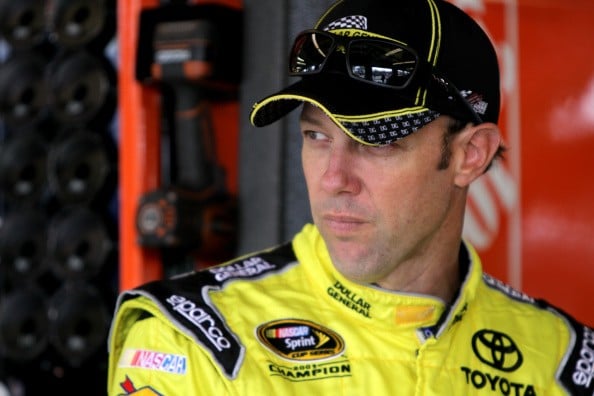
What Is Matt Kenseth's Net Worth?
Matt Kenseth is a former American stock car racing driver who has a net worth of $60 million. Matt Kenseth is best known for being the current competition advisor for the NASCAR Cup Series and holding the most Slinger Nationals victories as an active competitor for the Slinger Speedway in Wisconsin. He's known for winning several prestigious racing awards, such as NASCAR's Rookie of the Year in 2000, the Winston Cup Championship in 2004, and the series championship in the International Race of Champions 2004 season. In 2023, Kenseth joined the Legacy Motor Club as a competition advisor.
Career Earnings
Kenseth earned over $110 million in total gross income (salary, endorsements, and winnings share) during his career. The cars he drove generated approximately $100 million to $110 million in prize money. (Note: This is the total purse paid to the team, which is then split between the owner and driver). Key Paydays:
- 2003 Championship: Winning the Winston Cup title netted him a massive payday, including a $4 million bonus check at the awards banquet alone.
- Daytona 500s: His victories in the sport's biggest race (2009 and 2012) each came with winner's purses exceeding $1.5 million.
Early Life
Matthew Roy Kenseth was born on March 10th, 1972, in Cambridge, Wisconsin, the son of Roy and Nicola Kenseth. His father trained him in the sport of racing, striking an agreement with his young son that he would buy cars and Kenseth would work on them until he was old enough to drive. Kenseth began serious stock car racing in 1998 at the age of 16, where he debuted at the Madison National Speedway. His first car – a 1981 Camaro, which racer Todd Kropf previously drove in championships – won Kenseth a feature race in his third outing. His father later recalled, "Matt was smooth. I knew then he was going to be a racer."
Kenseth graduated from Cambridge High School and worked at Left-hander Chassis, a racecar manufacturer, while he raced on the side. In 1990, he bought a car from racer Richard Bickle and won the season opener at the Super Slinger Speedway in Slinger, Wisconsin. This win earned him the Rookie of the Year title. That same year, he entered 15 ARTGO events and became the youngest winner in ARTGO history.
Career Beginnings
By the early 1990s, Matt Kenseth's racing career was far from a sure thing. In 1992, after a difficult season marked by mechanical failures and only a handful of strong finishes, Kenseth seriously considered walking away from racing altogether. His fortunes changed late in the year when Kipley Performance loaned him an engine for the season finale, dramatically improving his results and convincing him to continue. In 1993, Kenseth built his own car around a Kipley engine and found immediate success, winning eight feature races at Madison International Speedway and finishing second in the overall points standings.
Kenseth's reputation grew steadily over the next two seasons as he defeated several well-known Midwestern drivers, including Dick Trickle. In 1994, he captured track championships at both Wisconsin International Raceway and Madison, while also winning the prestigious Slinger Nationals. These accomplishments established him as one of the most promising short-track racers in the region.
In 1996, Kenseth relocated from Wisconsin to the southern United States to compete in the Hooters Late Model Series for engine builder Carl Wegner. He nearly won the championship as a rookie, ultimately finishing third. The following year, Kenseth made his Busch Series debut at Lowe's Motor Speedway. Despite flashes of speed, the season was frustrating due to limited sponsorship and resources, drawing comparisons to the difficult year that nearly ended his career in 1992. By the end of 1997, his partnership with Wegner had dissolved, leaving Kenseth once again searching for stability.
Jerry Markland/Getty Images
Professional Breakthrough
Kenseth's professional breakthrough came through a pivotal opportunity in 1998. After driver Tim Bender suffered a career-ending injury, crew chief Robbie Reiser offered Kenseth a chance to fill the seat. That season, Kenseth made his first Winston Cup Series attempt, though an underpowered engine resulted in a disqualification. A second start later that year produced a sixth-place finish, one of the strongest Cup debuts of the season and a clear signal of his potential.
By 2000, Kenseth had secured sponsorship from DeWalt and earned Raybestos Rookie of the Year honors, firmly establishing himself at the Cup level. His rise coincided with the ascent of Jack Roush's organization, which was assembling one of the most formidable lineups in NASCAR. Kenseth became a cornerstone of Roush Racing, competing alongside teammates such as Kurt Busch, Greg Biffle, and, later, Carl Edwards during what became one of the most dominant team eras of the early 2000s.
Kenseth reached the pinnacle of the sport in 2003, capturing the NASCAR Winston Cup championship through remarkable consistency. He followed that season by winning the International Race of Champions title and the NASCAR All-Star Race. Although he endured a winless Cup season in 2008, Kenseth rebounded with a victory in the 2009 Daytona 500, later adding a second Daytona 500 win in 2012. His longevity was underscored by his ability to remain competitive even as younger stars, including Edwards, emerged within the same Roush system.
Later in his career, Kenseth made a high-profile return in 2020 with Chip Ganassi Racing, stepping into the No. 42 car. He earned his final Cup Series victory that season before stepping away from full-time competition. In 2022, Kenseth was named to the NASCAR Hall of Fame Class of 2023, though scheduling adjustments led to his formal induction as part of the Class of 2024. In 2023, he returned to the sport in an advisory role, joining Legacy Motor Club as a competition advisor and mentor, continuing his influence on NASCAR beyond the driver's seat.
Controversy
Matt Kenseth's championship win in 2003 sparked a controversy that ultimately contributed to NASCAR introducing a new points system in 2004. There had been heavy criticism of the former system that allowed Kenseth's win. Multiple critics and fellow drivers pointed out that it was unfair for a racer to be able to win the championship if they had only won one victory in 36 races. NASCAR unveiled a new points system in response, entitled "The Chase for the Nextel Cup," which has been informally referred to as the "Matt Kenseth Rule." NASCAR denies that Kenseth was the reason for the change. However, officials agree that the controversy brought much-needed attention to the issue.
Personal Life
In 2000, Matt Kenseth married Katie Martin, who hailed from his hometown of Cambridge. The couple has four daughters—Kaylin, Grace, Clara, and Mallory—and Kenseth has a son named Ross from a previous relationship. Ross has followed in his father's footsteps and made his ARCA debut at Michigan International Speedway in 2015.
In 2004, Kenseth established a fan museum for himself in Cambridge. It was later relocated to a downtown storefront and closed in 2017.
In 2023, Kenseth was inducted into the NASCAR Hall of Fame by his wife and father.
/2010/07/Matt-Kenseth.jpg)
/2019/11/jimmie.jpg)
/2010/07/Jack-Roush.jpg)
/2020/07/Bubba-Wallace.jpg)
/2013/04/carl.jpg)
/2010/05/Michael-Waltrip.jpg)
/2016/05/GettyImages-531283900.jpg)
/2014/10/dale.jpg)
/2019/10/denzel-washington-1.jpg)
/2009/11/George-Clooney.jpg)
/2018/03/GettyImages-821622848.jpg)