
/2014/10/GettyImages-486048505.jpg)
/2019/11/Charles-Leclerc.jpg)
/2019/11/Rubens-Barrichello.jpg)
/2025/01/franco.jpg)
/2014/08/GettyImages-537112233-e1588541658872.jpg)
/2020/12/Romain-Grosjean.jpg)
:strip_exif()/2015/09/GettyImages-476575299.jpg)
/2009/09/Brad-Pitt.jpg)
/2019/10/denzel-washington-1.jpg)
/2009/09/Cristiano-Ronaldo.jpg)
/2019/11/GettyImages-1094653148.jpg)
/2018/03/GettyImages-821622848.jpg)
/2020/01/lopez3.jpg)
:strip_exif()/2009/09/P-Diddy.jpg)
/2009/11/George-Clooney.jpg)
/2020/02/Angelina-Jolie.png)
/2009/09/Jennifer-Aniston.jpg)
What was Jules Bianchi's Net Worth?
Jules Bianchi was a French racing driver who had a net worth of $10 million.
Jules Bianchi was a French racing driver who competed in Formula One for the Marussia team and was widely regarded as one of the most promising young talents in international motorsport. Emerging from a distinguished racing family, Bianchi rose rapidly through the junior racing ranks during the late 2000s, winning the Formula 3 Euro Series championship and joining Ferrari's prestigious driver development program. Known for his smooth driving style and strong technical feedback, he was considered a future contender for a seat with one of Formula One's top teams.
Bianchi made his Formula One debut in 2013 with Marussia, a smaller team competing with limited resources against the sport's wealthiest organizations. Despite the team's constraints, he quickly established himself as its standout driver and delivered the most significant result in the team's history with a ninth-place finish at the 2014 Monaco Grand Prix. The performance earned Marussia its first and only championship points and demonstrated Bianchi's ability to compete at a high level despite an uncompetitive car. His promising career was tragically cut short after a crash at the 2014 Japanese Grand Prix left him with severe brain injuries. After nine months in a coma, Bianchi died in July 2015 at the age of 25, becoming the first Formula One driver to die from race-related injuries since Ayrton Senna in 1994.
Early Life
Jules Lucien André Bianchi was born on August 3, 1989, in Nice, France. Motorsport ran deeply in his family. His grandfather Mauro Bianchi was a racing driver who competed in endurance racing during the 1960s, including the 24 Hours of Le Mans. His great-uncle Lucien Bianchi was also a Formula One driver who competed in 17 Grand Prix races between 1960 and 1968 before being killed in a testing accident ahead of the 1969 Le Mans race.
Growing up in southern France, Bianchi developed an early passion for racing. Like many professional drivers, he began competing in karting at a young age and quickly distinguished himself as a talented competitor. His performances in junior karting championships attracted attention from teams and talent scouts within the European motorsport community.
By his teenage years, Bianchi was widely viewed as one of the most promising young drivers in France.
Junior Racing Career
Bianchi transitioned from karting to single-seater racing in the mid-2000s and immediately demonstrated exceptional ability. In 2007, he competed in the French Formula Renault 2.0 championship and won the title in his rookie season. His victory was particularly notable because he became the first driver to win the series in his debut year since Alain Prost, who later went on to become a four-time Formula One world champion.
Following that success, Bianchi moved into the highly competitive Formula 3 Euro Series, one of the most important development championships for future Formula One drivers. After finishing third in his rookie season, he captured the series championship in 2009.
The victory firmly established him as one of the most promising young drivers in international motorsport.
Ferrari Driver Academy
In 2009, Bianchi joined the Ferrari Driver Academy, a development program designed to identify and nurture future Formula One talent for the Scuderia Ferrari team. The program placed him among an elite group of young drivers being groomed for potential future roles within the Ferrari organization.
As part of the program, Bianchi gained experience through extensive testing and simulator work while continuing to compete in junior championships. In 2011 he became Ferrari's official Formula One test driver, allowing him to gain valuable experience with one of the sport's most prestigious teams.
His association with Ferrari fueled speculation that he could eventually secure a race seat with the legendary team.
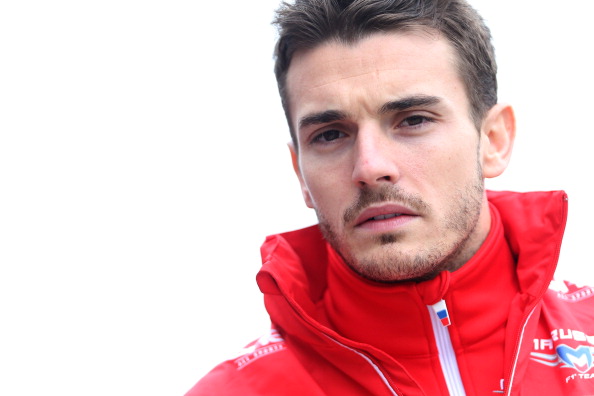
Getty Images
Formula One Career
Bianchi made his Formula One debut in 2013 with the Marussia F1 Team. Although Marussia was one of the smallest and least-funded teams on the grid, Bianchi quickly proved to be its most capable driver.
During his rookie season, he consistently outperformed his teammate and frequently finished ahead of cars from rival lower-budget teams. His performances earned respect within the paddock and reinforced the belief that he had the talent to compete at a higher level.
His defining moment came at the 2014 Monaco Grand Prix. In a race known for its narrow streets and technical difficulty, Bianchi delivered a remarkable performance by finishing ninth. The result earned Marussia its first-ever Formula One championship points since the team entered the series in 2010.
The achievement was widely celebrated as one of the most impressive performances by a driver from a backmarker team in modern Formula One history.
The 2014 Japanese Grand Prix Crash
On October 5, 2014, Bianchi suffered a devastating crash during the Japanese Grand Prix at the Suzuka Circuit.
Late in the race, heavy rain created hazardous conditions on the track. During a caution flag period, Bianchi lost control of his car and slid off the circuit at high speed. His car struck a crane that was removing another vehicle that had crashed earlier.
The impact caused severe brain injuries, leaving Bianchi unconscious at the scene. He was immediately transported to a hospital in Japan for emergency treatment.
The crash shocked the motorsport world and sparked renewed concerns about safety procedures during races.
Final Months and Death
Following the accident, Bianchi remained in a coma for several weeks in Japan before being transferred to a hospital in Nice, France, near his hometown.
Despite months of medical care and rehabilitation efforts, he never regained consciousness. On July 17, 2015, nine months after the crash, Bianchi died from the injuries he had sustained.
He was 25 years old.
His death marked the first time a Formula One driver had died from injuries sustained during a Grand Prix weekend since Ayrton Senna's fatal crash at the 1994 San Marino Grand Prix.
The tragedy sent shock waves through the sport and prompted renewed discussions about driver safety.
Impact on Formula One Safety
Following Bianchi's crash, the Fédération Internationale de l'Automobile conducted a detailed investigation into the circumstances of the accident.
While the official report concluded that existing race procedures had been followed, the incident led to the introduction of new safety measures. One of the most significant changes was the implementation of the Virtual Safety Car system, which electronically slows drivers across the circuit during dangerous conditions.
The system was designed to ensure that drivers reduce speed immediately when hazards appear on the track.
Bianchi's accident also contributed to ongoing safety reforms that eventually included additional cockpit protection measures in Formula One.
Legacy
Although his Formula One career lasted only two seasons, Jules Bianchi left a lasting impression on the sport. Many drivers, team principals, and analysts believed he had the potential to become a future race winner and possibly a world championship contender.
His ninth-place finish at the Monaco Grand Prix remains one of the most celebrated performances by a driver in an underpowered car. It demonstrated his skill, determination, and ability to extract maximum performance from limited machinery.
Bianchi is remembered not only for his talent but also for his calm demeanor and professionalism. Within the Formula One paddock, he was widely respected by fellow drivers and team members.
Today, he remains a symbol of both the promise and the dangers of motorsport, and his legacy continues to influence the sport's ongoing commitment to improving safety for drivers.
/2014/10/GettyImages-486048505.jpg)
/2019/11/Charles-Leclerc.jpg)
/2025/02/missing_profile.jpg)
/2019/11/Rubens-Barrichello.jpg)
/2023/08/Lando-Norris.jpg)
/2017/07/Valtteri-Bottas.jpg)
/2014/01/Damon-Hill.jpg)
/2020/06/taylor.png)
/2019/04/rr.jpg)
/2020/04/Megan-Fox.jpg)