
/2014/06/Picabo-Street-2.jpg)
/2018/02/Mikaela-Shiffrin.jpg)
/2010/02/Lindsey-Vonn.jpg)
/2009/12/Bode-Miller.jpg)
/2015/07/GettyImages-830815426.jpg)
/2020/06/taylor.png)
/2020/01/lopez3.jpg)
/2018/03/GettyImages-821622848.jpg)
/2020/02/Angelina-Jolie.png)
/2009/09/Jennifer-Aniston.jpg)
/2020/04/Megan-Fox.jpg)
/2009/11/George-Clooney.jpg)
/2017/02/GettyImages-528215436.jpg)
/2009/09/Brad-Pitt.jpg)
:strip_exif()/2015/09/GettyImages-476575299.jpg)
:strip_exif()/2009/09/P-Diddy.jpg)
/2019/11/GettyImages-1094653148.jpg)
What is Picabo Street's Net Worth?
Picabo Street is a former American professional alpine ski racer who has a net worth of $3 million.
Rising to prominence in the mid-1990s, Street became one of the most dominant downhill and super-G skiers of her era, helping redefine American women's alpine skiing on the world stage. She captured Olympic gold at the 1998 Nagano Winter Games in the super-G and followed it with silver in the downhill, solidifying her reputation as one of the sport's elite speed specialists. Street also won multiple World Cup races and earned a world championship title, achievements that placed her among the most successful U.S. alpine racers of her generation.
Known for her aggressive style and outspoken personality, Street stood apart from many of her peers in a sport traditionally defined by discipline and restraint. She embraced pressure, openly discussed fear and risk, and often framed competition as a mental battle as much as a physical one. Her career was marked not only by victories but also by comebacks, including a return from a devastating knee injury that could have ended her competitive life. After retiring from professional skiing, Street transitioned into broadcasting and motivational speaking, becoming a visible ambassador for the sport and a candid voice on resilience, recovery, and peak performance.
Early Life
Picabo Street was born on April 3, 1971, in Triumph, Idaho, and grew up in nearby Sun Valley, one of the most storied ski towns in the United States. Her unusual first name came from a nearby mountain, a fitting origin for someone whose life would become inseparable from alpine terrain. Raised in a family that encouraged independence and physical activity, Street was skiing almost as soon as she could walk.
Sun Valley's culture revolved around winter sports, and Street quickly gravitated toward downhill racing, drawn to speed rather than technical precision. Unlike many elite racers who followed regimented development programs from a young age, Street's early path was comparatively unconventional. She trained locally, raced relentlessly, and built her skills through sheer repetition and fearlessness rather than strict adherence to form. By her teenage years, she was already recognized as a standout talent with rare velocity and competitive instinct.
Rise on the World Cup Circuit
Street made her World Cup debut in the early 1990s and quickly established herself as a threat in speed events, particularly downhill and super-G. Her breakout came during the 1994–1995 season, when she won her first World Cup downhill race and demonstrated she could beat the traditionally dominant European skiers on their home courses.
During the 1995–1996 season, Street reached the pinnacle of World Cup competition by winning the overall downhill title, becoming the first American woman to do so. That season cemented her reputation as the fastest woman in the world on skis. Her success was fueled by an aggressive, sometimes risky approach that favored attacking courses at full throttle rather than managing margins.
Street's racing style was not without controversy. She often spoke openly about fear, pressure, and mental preparation, topics many athletes avoided publicly at the time. This candor made her a compelling figure both within the sport and in the broader media landscape.
Olympic Success
Picabo Street competed in multiple Winter Olympics, but it was the 1998 Games in Nagano, Japan, that defined her Olympic legacy. Entering the Games, she was already considered a medal contender, but she exceeded expectations with a gold medal performance in the super-G. Her run combined precision and raw speed, showcasing a more controlled version of the aggressive style that had defined her career.
She followed that performance with a silver medal in the downhill, finishing just fractions of a second behind the gold medalist. The two medals represented the peak of her competitive achievements and placed her among the most decorated American alpine skiers of the era.
Street also competed in the 1994 Lillehammer Olympics, where she narrowly missed the podium, an experience she later described as a crucial motivator in her development as an athlete.
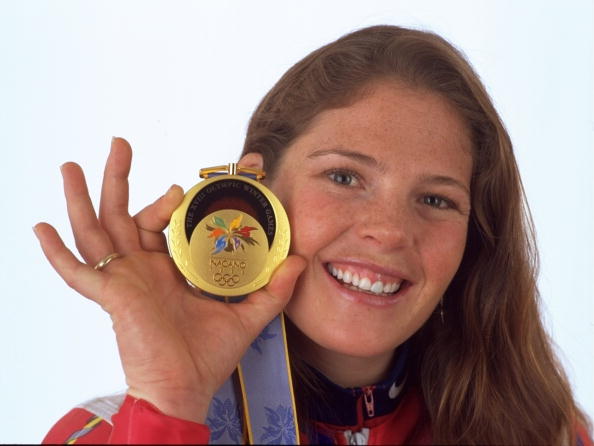
Mike Powell/Getty Images
Injuries and Comeback
Street's career was repeatedly challenged by injury, most notably a severe knee injury sustained in a crash during the 1996 season. The injury required extensive surgery and rehabilitation and threatened to end her career at its height. Recovery was long and physically demanding, but Street approached rehabilitation with the same intensity she brought to racing.
Her return to competition was marked by skepticism from observers who questioned whether she could regain her previous form. Instead, Street proved she could not only return but also win at the highest level, culminating in her Olympic success in 1998. Her comeback became one of the defining narratives of her career and a central theme in her later work as a speaker and commentator.
World Championships and Later Career
In addition to her Olympic achievements, Street captured a gold medal at the FIS Alpine World Ski Championships in the super-G, further validating her status as one of the top speed skiers of her generation. She continued competing on the World Cup circuit into the late 1990s before retiring from professional racing.
By the time she stepped away from competition, Street had accumulated multiple World Cup victories, Olympic medals, and championship titles. Her impact extended beyond statistics, influencing how American skiers approached speed events and mental preparation.
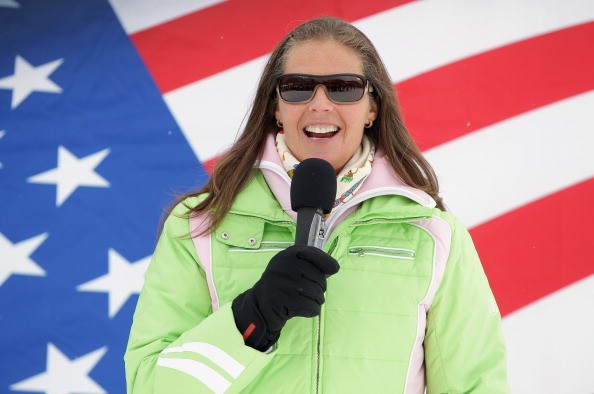
Doug Pensinger/Getty Images
Broadcasting and Media Work
Following her retirement, Picabo Street transitioned into sports broadcasting, becoming a ski racing analyst and commentator. Her firsthand experience and candid communication style made her a natural fit for television, where she was known for explaining the technical and psychological aspects of racing in accessible terms.
Street's media work allowed her to remain closely connected to the sport while also expanding her public profile beyond competition. She became a recognizable voice during major international ski events, offering insight shaped by years of elite-level experience.
Motivational Speaking and Legacy
In addition to broadcasting, Street built a career as a motivational speaker, focusing on themes of resilience, fear management, and recovery from adversity. Drawing on her experiences with injury, pressure, and elite competition, she spoke to audiences in corporate, athletic, and educational settings.
Picabo Street's legacy is rooted not only in medals and titles but also in her willingness to challenge norms within her sport. She helped usher in a generation of American women who believed they could dominate speed events traditionally controlled by European programs. Her career remains a case study in risk, recovery, and the psychological demands of competing at the highest level.
/2014/06/Picabo-Street-2.jpg)
/2018/02/Mikaela-Shiffrin.jpg)
/2015/07/GettyImages-830815426.jpg)
/2009/12/Bode-Miller.jpg)
/2025/02/missing_profile.jpg)
/2012/07/Bradley-Wiggins.jpg)
/2016/04/GettyImages-453726155.jpg)
/2019/04/rr.jpg)
/2009/09/Cristiano-Ronaldo.jpg)
/2019/10/denzel-washington-1.jpg)