
/2013/10/GettyImages-51855742.jpg)
/2014/11/Ryan-Tannehill.jpg)
/2024/02/C.-J.-Stroud.jpg)
/2011/11/joe-flacco-1.jpg)
/2014/01/GettyImages-186054477.jpg)
/2023/05/eddie-george.png)
/2009/11/George-Clooney.jpg)
/2019/10/denzel-washington-1.jpg)
:strip_exif()/2009/09/P-Diddy.jpg)
/2020/06/taylor.png)
/2018/03/GettyImages-821622848.jpg)
/2019/11/GettyImages-1094653148.jpg)
/2017/02/GettyImages-528215436.jpg)
/2009/09/Jennifer-Aniston.jpg)
/2020/02/Angelina-Jolie.png)
/2020/01/lopez3.jpg)
/2009/09/Cristiano-Ronaldo.jpg)
What was Steve McNair's Net Worth and Career Earnings?
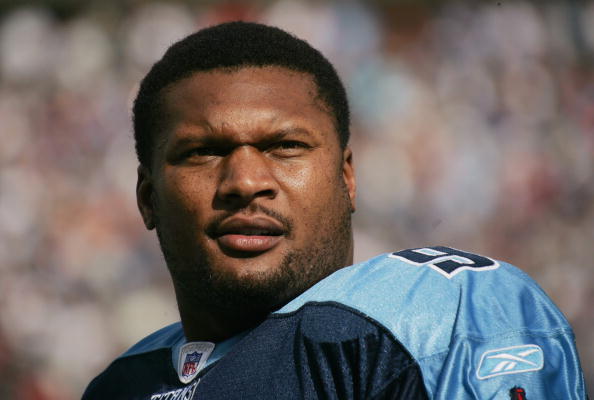
Steve McNair was an American football player who had a net worth of $20 million. Steve McNair played 13 seasons in the NFL from 1995 to 2007, mostly with the Houston/Tennessee Oilers/Titans. Among his career accomplishments, he led the Titans to Super Bowl XXXIV in 2000 and was named the AP NFL MVP in 2003. Steve died on July 4, 2009, at the age of 36 as part of a tragic murder-suicide at the hands of a girlfriend.
Career Earnings
During his NFL career, Steve McNair earned $76 million in total salary. In June 2001, Steve signed a six-year, $47 million contract with the Titans. The deal came with a $16 million signing bonus paid out over two years, $10 million at the time of signing and $6 million a year later. During his career he earned $61 million playing for the Titans and $15 million from the Ravens.
Real Estate
At the time of his death, Steve owned a 26-room mansion in Nashville which had recently been listed for sale for $3.2 million. He bought this property in 2004 for $1.6 million. He also owned a 650-acre farm and house in Mount Olive, Mississippi, near his childhood home.
Getty Images
Early Life and High School
Steve McNair was born on February 14, 1973 in Mount Olive, Mississippi. He had four brothers named Fred, Jason, Michael, and Tim. As a teenager, McNair went to Mount Olive High School, where he played football, basketball, and baseball in addition to running track. In his junior year, he led the Mount Olive Pirates to the state championship.
Collegiate Career
Although he was drafted by MLB's Seattle Mariners in 1991, McNair chose to play college football instead. He decided to go to Alcorn State University, an HBCU competing athletically in the Southwestern Athletic Conference. McNair made an immediate impression there, being named SWAC Freshman of the Year and SWAC Offensive Player of the Year in 1991. In his second year with the Alcorn State Braves in 1992, he threw for 3,541 yards and 29 touchdowns, leading his team to the NCAA Division I-AA playoffs. As a junior in 1993, McNair threw for 3,197 yards and 22 touchdowns as the Braves finished with an 8-3 record. He had his best year as a senior, throwing for 5,377 yards and 47 touchdowns to go along with 904 rushing yards. In the process, McNair broke over a dozen I-AA records. For his incredible senior year, he won the Walter Payton Award.
Houston/Tennessee Oilers/Titans
In the 1995 NFL draft, McNair was chosen third overall by the Houston Oilers. This made him the highest-drafted African-American quarterback in NFL history at that time. After seeing limited playing time in his first two seasons with the Oilers, McNair had his breakout season in 1997 during the team's first year in Tennessee. Starting all 16 games, he threw for 2,665 yards and 14 touchdowns, and led the Oilers in rushing touchdowns, with eight. McNair had another strong season in 1998, throwing for 3,228 yards and 15 touchdowns in 16 starts. In 1999, the Oilers were officially renamed the Titans. Although McNair had a rocky season due to an inflamed disk that required surgery, he helped the Titans achieve a 13-3 record and a playoff berth. The team made it all the way to Super Bowl XXXIV, where they lost to the St. Louis Rams.
In 2000, the Titans recorded their second consecutive 13-3 season, making it back to the playoffs. This time, they fell to the Baltimore Ravens in the divisional round. McNair went on to have a terrific season in 2001, posting career highs in passing yards (3,350), completions (264), touchdowns (21), and quarterback rating (90.2). He did even better in 2002, surpassing himself with new career highs in passing yards (3,387), completions (301), and touchdowns (15). With an 11-5 record in 2002, the Titans returned to the playoffs, reaching the AFC Championship game. There, they lost to the Oakland Raiders. McNair continued his success in 2003, helping the Titans to a 12-4 record and another playoffs. For his 2003 season, in which he posted career highs of 24 passing touchdowns and a 100.4 quarterback rating, McNair was named AP NFL MVP alongside Peyton Manning. He followed his MVP season with injury-riddled seasons in 2004 and 2005.
Baltimore Ravens
In 2006, McNair was traded to the Baltimore Ravens. He had an excellent first season with the team, starting all 16 games and leading the Ravens to a 13-3 record and the AFC North title. Among his highlights was his 89-yard touchdown pass in Week 14 against the Kansas City Chiefs, the longest regular-season touchdown pass in Ravens franchise history. In the playoffs, the team fell to the Indianapolis Colts in the divisional round. McNair's second season with the Ravens was far less successful, as he played only six games due to injury. After the season, he announced his retirement from the NFL.
Legal Troubles
During the 2003 offseason, McNair was arrested for DUI and illegal gun possession. Ultimately, all charges were eventually dropped. Later, during the 2007 offseason, McNair was arrested in Nashville for riding in his pickup truck with his inebriated brother-in-law as the driver. His charge was eventually dropped.
Personal Life and Death
With his wife Mechelle, whom he married in 1997, McNair had two sons named Tyler and Trenton. He also had two sons, Stephen Jr. and Steven, from previous relationships.
On July 4, 2009, McNair was found dead from multiple gunshot wounds in his rented condominium in Nashville. Beside him was the dead body of his 20-year-old girlfriend Sahel Kazemi, who was found to have committed murder-suicide.
/2013/10/GettyImages-51855742.jpg)
/2023/05/eddie-george.png)
/2021/01/josh-allen.jpg)
/2024/10/Daniel-Jones.jpg)
/2024/02/C.-J.-Stroud.jpg)
/2024/10/Jordan-Love-.jpg)
/2011/11/joe-flacco-1.jpg)
/2009/12/Donovan-McNabb.jpg)
/2020/04/Megan-Fox.jpg)
/2019/04/rr.jpg)
:strip_exif()/2015/09/GettyImages-476575299.jpg)