
/2014/01/Maurice-Clarett.jpg)
/2024/02/C.-J.-Stroud.jpg)
/2019/10/Terrelle-Pryor.png)
/2014/04/GettyImages-121139264.jpg)
/2016/09/Ezekiel-Elliott.jpg)
/2010/11/Jim-Tressel.jpg)
:strip_exif()/2015/09/GettyImages-476575299.jpg)
/2019/11/GettyImages-1094653148.jpg)
/2009/09/Jennifer-Aniston.jpg)
/2020/04/Megan-Fox.jpg)
/2020/06/taylor.png)
:strip_exif()/2009/09/P-Diddy.jpg)
/2019/10/denzel-washington-1.jpg)
/2017/02/GettyImages-528215436.jpg)
/2018/03/GettyImages-821622848.jpg)
/2009/09/Brad-Pitt.jpg)
/2019/04/rr.jpg)
What is Maurice Clarett's Net Worth?
Maurice Clarett is a former American football player who has a net worth of $50,000. Maurice Clarett played college football for the Ohio State University, where he helped lead the Buckeyes to a national championship as a freshman in 2002. After being dismissed from OSU amid an academic scandal and unsuccessfully challenging the NFL Draft's eligibility rules, he got into a series of legal troubles resulting in multiple arrests and an imprisonment. Clarett eventually got his life back on track, playing for the UFL's Omaha Nighthawks for a season and working as an advocate for mental health and criminal justice reform.
Early Life and High School
Maurice Clarett was born on October 29, 1983 in Youngstown, Ohio. As a teenager, he first attended Austintown-Fitch High School, where he demonstrated his football prowess as a varsity freshman tailback. Clarett rose to national prominence after transferring to Warren G. Harding High School, where he continued to showcase his playing skills.
Collegiate Career
For college, Clarett attended the Ohio State University and played for the Buckeyes football team. He had an exceptional season as a freshman, rushing for 1,237 yards and scoring 18 touchdowns to help the Buckeyes post a 14-0 record. The team went on to win the 2002 BCS National Championship. Early the next year, Clarett scored the winning touchdown against Miami in the Fiesta Bowl.
Although he was a star player with the Buckeyes, Clarett was the source of major trouble while at OSU. In 2002, he yelled at his position coach during a game against Northwestern and publicly derided OSU officials for refusing to pay for him to fly home to attend a funeral. Things really heated up in the summer of 2003 when it was revealed that Clarett had received preferential treatment from professors for being a star football player, despite the fact that he had not attended any classes. He was consequently suspended for the 2003 season.
NFL
After being dismissed from OSU, Clarett moved to Los Angeles and sued to be included in the 2004 NFL Draft. He challenged the NFL's eligibility rule stipulating that a player must wait three years after graduating from high school to enter the draft. Clarett won his case at trial, but then had the decision reversed by the United States Court of Appeals for the Second Circuit. Clarett was subsequently barred from the draft by the NFL, and denied reinstatement by the NCAA. He went on to train in preparation for the 2005 NFL Combine, which he participated in with a poor performance.
Despite all his troubles post-college, Clarett was chosen in the 2005 NFL Draft with the final pick of the third round by the Denver Broncos. Following a disappointing training camp, he signed a four-year contract with the team. Clarett never rose to the occasion, however, and was released on waivers in August without having played a single preseason game. By the next month, he had accumulated $1 million in debt from legal fees related to his fight with the NFL.
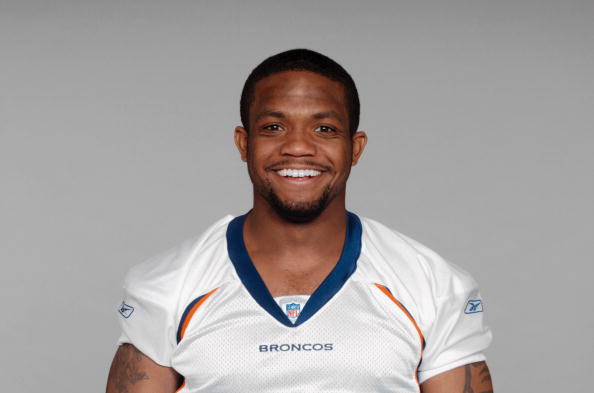
Getty Images
Legal Troubles
After his highly publicized battle with the NFL, Clarett had a series of run-ins with the law. In early 2006, he got into trouble for robbing two people at gunpoint outside a dance club in Columbus, Ohio. He turned himself into police the following day, and was later released on bond. One month later, Clarett was indicted by a grand jury on two counts of aggravated robbery and five additional counts. In the summer of 2006, he got into further hot water when he was arrested for making an illegal U-turn and leading the police on a chase. Officers subsequently uncovered multiple swords and guns in his car. Clarett eventually filed a guilty plea in a plea bargain involving all of his charges until that point. He was sentenced to seven-and-a-half years in prison with the possibility of early release after three-and-a-half years. Ultimately, Clarett was granted early release in April of 2010.
Omaha Nighthawks
Clarett rebounded from his past troubles when he joined the United Football League's Omaha Nighthawks in 2010. In his first game of the season – his first real football game in eight years – he rushed for 12 yards against the Sacramento Mountain Lions. Clarett finished the season with 154 yards and a touchdown, in addition to catching 12 passes for 98 yards. This would be his only season in the UFL, as the league shut down in 2012.
Business Career
Clarett has used his many personal struggles and time in prison to turn his life around as a motivational speaker, mental health advocate, and businessman. He has spoken at prisons and youth football camps about his struggles and rehabilitation, and has worked as a consultant for collegiate athletic departments to help encourage players to focus on their mental wellbeing. Clarett is also an advocate for criminal justice reform. As an entrepreneur, he founded a behavioral health agency in Youngstown, Ohio called the Red Zone, which provides mental health, addiction, and recovery services, among others.
/2014/01/Maurice-Clarett.jpg)
/2010/11/Jim-Tressel.jpg)
/2019/10/Terrelle-Pryor.png)
/2011/11/Urban-Meyer.jpg)
/2015/12/GettyImages-481492436.jpg)
/2014/02/GettyImages-508395012.jpg)
/2014/04/GettyImages-121139264.jpg)
/2013/10/GettyImages-55379790.jpg)
/2020/02/Angelina-Jolie.png)
/2020/01/lopez3.jpg)