

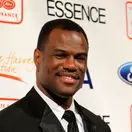












What Is Vinnie Johnson's Net Worth?
Vinnie Johnson is an American retired professional basketball player and entrepreneur who has a net worth of $500 million.
Vinnie Johnson earned just over $6 million during his NBA career but built a vastly larger fortune after basketball as the founder and owner of Piston Group, one of North America's largest minority-owned automotive suppliers. His manufacturing business grew from approximately $1 million in annual sales in 1996 to a peak of $3.4 billion in 2023, followed by $3 billion in 2025. The privately held group employs more than 10,000 people across the United States, Mexico, and Canada, producing and assembling components for major automakers. Johnson expanded through partnerships and acquisitions, including a $175 million purchase of an automotive-interiors manufacturer in 2016. Court records have identified him as the sole owner of Piston Group and the controlling owner of a separate climate-control joint venture. Before becoming a manufacturing executive, Johnson was a beloved guard for the Detroit Pistons, winning back-to-back NBA championships in 1989 and 1990. Nicknamed "the Microwave" for his instant offense off the bench, he hit the series-winning shot in the 1990 NBA Finals and had his No. 15 jersey retired by Detroit.
NBA Salary and Career Earnings
During his NBA playing career, Johnson earned approximately $6.06 million in recorded salary, a fraction of the value of the business he subsequently built. His highest recorded annual salary was $1.45 million from the Pistons for the 1991–92 season, although Detroit waived him before that season began. He had earned $1.4 million the preceding year. His recorded earnings also include $130,000 from the San Antonio Spurs in 1991–92 and a $210,000 payment listed for 1992–93, after his last NBA appearance.
At the beginning of his career, basketball contracts were considerably smaller. Johnson was the seventh overall pick in the 1979 draft, but he did not benefit from the enormous guaranteed contracts, marketing deals, and worldwide merchandise businesses that became common for later generations of superstars. Instead, nearly all of his accumulated wealth came from owning and expanding businesses after retirement. He had worked toward a second career while still playing, but his first construction venture with friends failed after its initial project.

Mike Powell/Getty Images
Founding Piston Group
Johnson established Piston Automotive in Detroit in the mid-1990s; the company dates its founding to 1996. Its name was an obvious tribute to his former basketball team. Rather than opening a consumer-facing automotive business, he entered the industrial supply chain, initially producing corrugated packaging and pallets and later assembling complex systems delivered directly to vehicle manufacturers.
The company began inside Detroit's Empowerment Zone, an area designated to encourage investment and employment. Its early customers included Ford and General Motors. Johnson gradually expanded beyond packaging into what the industry calls value-added assembly: receiving hundreds of components, assembling them into larger modules, and delivering them to automakers in the precise order needed for production. This placed his operation inside a business where reliable delivery, engineering, and long-term contracts could support substantial growth.
In 2000 and 2001, the company established joint ventures with major suppliers, including Lear Corporation, Continental Teves, and Sachs Automotive. Businesses associated with those partnerships included JL Automotive, Piston Modules, and PASA Modules. The arrangements gave Johnson access to technical expertise and larger customer programs, allowing him to take on work that his original packaging business could not have handled alone.
From $1 Million to $3 Billion in Revenue
Piston Group's published financial history shows how dramatically Johnson expanded the business. Revenue rose from approximately $1 million in 1996 to $326 million in 2010, then reached $1.2 billion in 2015. By 2018, the group was producing $2.86 billion in annual revenue, an extraordinary increase for a company that had begun with packaging materials barely two decades earlier.
Revenue continued to grow, reaching $2.9 billion in 2020 and 2021, $3.2 billion in 2022, and a high of $3.4 billion in 2023. Sales subsequently moderated to $3.1 billion in 2024 and $3 billion in 2025, according to the company's own published figures. Piston Group operates manufacturing and assembly facilities across North America, and Johnson continues serving as its founder, chairman, and CEO.
The company has evolved into three principal operating businesses: Piston Automotive, which assembles powertrain, chassis, cooling, and electric-vehicle battery systems; Piston Interiors, which manufactures seating and interior trim products; and Detroit Thermal Systems, which produces heating, ventilation, and air-conditioning systems for vehicles. The combined enterprise serves major automakers and employs more than 10,000 workers in the United States, Mexico, and Canada.
The $175 Million Automotive Acquisition
One of Johnson's largest transactions came in September 2016, when his group acquired Irvin Automotive Products for $175 million from Japanese auto-parts manufacturer Takata. Irvin had approximately $500 million in annual sales and manufactured seat covers, headrests, sun visors, armrests, and other interior components, with operations in Michigan, Texas, and Mexico.
The purchase transformed Piston Group from a company primarily associated with assembling other manufacturers' components into a major producer of automotive interior materials. KPMG Corporate Finance advised on the deal, and investment firm Cyprium Partners provided subordinated debt and equity capital to help finance the acquisition. Irvin's operations subsequently became part of the Piston Interiors business. In 2021, the interiors operation further expanded by acquiring A. Lava & Son, a supplier of covers for mattresses, furniture, and related products.
Another key division, Detroit Thermal Systems, originated in a 2012 joint venture with French automotive supplier Valeo. The venture acquired an existing Ford climate-control operation and became a supplier of heating and air-conditioning modules. A published Michigan appellate decision identified Johnson's business as holding a 51% controlling interest in Detroit Thermal Systems, with Valeo holding the remainder. The same case identified Johnson as the sole owner of the Piston Group holding company.
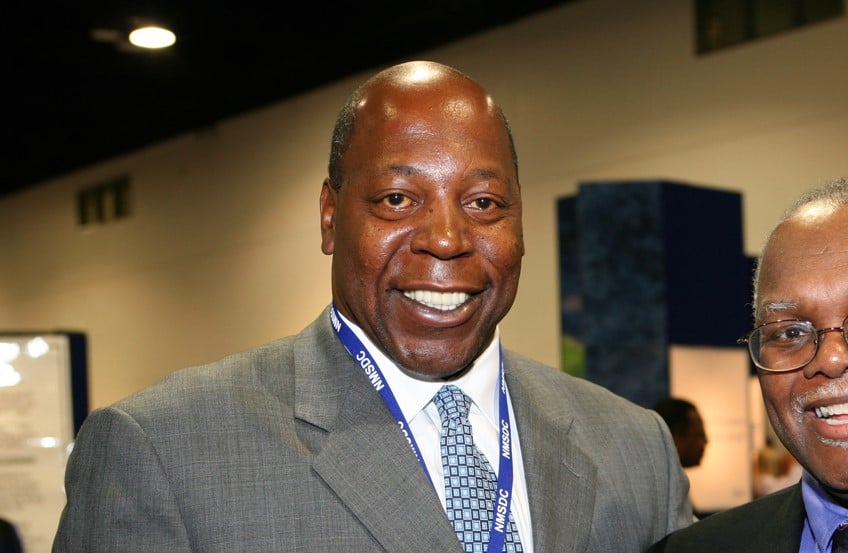
Getty
New Manufacturing Contracts and Investments
The company's growth has continued through major manufacturing programs. In 2024, Michigan announced that Piston Automotive had won a six-year General Motors contract to assemble and supply components for an electric pickup truck. The project involved plans for as much as $85.2 million in investment and up to 900 jobs at a new facility on the former site of the Palace of Auburn Hills, where Johnson had celebrated his NBA championships.
The state approved an $8.5 million performance-based grant and a tax-related incentive valued at nearly $1.8 million for the project. The facility encompasses approximately 710,000 square feet. Johnson visited the site in April 2026 as the company prepared the operation, with production expected to support several General Motors truck and SUV programs.
Piston Automotive also announced plans in January 2025 for a separate $55 million hydrogen fuel-cell manufacturing project at Detroit's former State Fairgrounds, supported by a proposed $1.5 million state grant and expected to create up to 144 jobs. That project encountered a setback in May 2025, when General Motors suspended work on the facility. It was described as paused rather than formally canceled. The two projects reflect the scale of capital commitments and customer contracts involved in the business Johnson built.
Minority-Supplier Certification Lawsuit
Johnson's ownership of Piston Group became central to a significant business lawsuit beginning in 2021. The Michigan Minority Supplier Development Council had challenged whether several of his companies qualified for minority-business certification after changes in their senior management. Certification mattered commercially because major automakers used the designation when awarding supplier contracts.
Johnson and the companies sued the council, arguing that the decision threatened established business relationships. In court, Johnson identified Ford and Stellantis as accounting for roughly 75% of the companies' sales at the time. The litigation also disclosed the corporate ownership structure: Johnson controlled 100% of Piston Group and its principal wholly owned operating businesses, while the group's interest in Detroit Thermal Systems was 51%.
A judge granted a preliminary injunction preserving the companies' certification during the lawsuit, and a Michigan appellate court upheld that temporary order in 2022. An August 2024 judgment included a permanent injunction. In March 2025, the Court of Appeals clarified that a separate stay involving attorney fees did not suspend the enforceability of that injunction. The dispute exposed how important supplier eligibility and a handful of large automotive customers were to Johnson's multibillion-dollar enterprise.
Early Life and College Basketball
Vincent Johnson was born on September 1, 1956, in Brooklyn, New York. He attended Franklin Delano Roosevelt High School and had a younger brother, Eric, who also went on to play professional basketball, including a stint with the Utah Jazz.
Johnson began college at McLennan Community College in Waco, Texas, earning junior-college All-American honors before transferring to nearby Baylor University. He played two seasons at Baylor, averaging 24.1 points per game, earning All-America recognition, and setting a school scoring record with 50 points against Texas Christian University in 1979. His scoring ability made him a coveted prospect in the NBA draft.
NBA Career and Two Championships
The Seattle SuperSonics selected Johnson with the seventh overall pick in the 1979 NBA Draft. He played parts of three seasons in Seattle before being traded to Detroit in November 1981. The move placed him alongside Isiah Thomas, Joe Dumars, Dennis Rodman, and other members of the Pistons team that became known as the "Bad Boys."
Johnson became an especially dangerous reserve scorer, earning the nickname "the Microwave" from Boston Celtics guard Danny Ainge because he could enter a game and immediately produce points. He helped Detroit win the 1989 NBA championship by sweeping the Los Angeles Lakers in the Finals.
The following year produced his signature basketball moment. Facing the Portland Trail Blazers in Game 5 of the 1990 Finals, Johnson hit a 14-foot jump shot with 0.7 seconds remaining, giving Detroit a 92–90 victory and its second consecutive championship. The shot also inspired the nickname "007."
After the Pistons waived him in 1991, Johnson signed with the San Antonio Spurs and completed his last NBA season in 1991–92. Across 984 regular-season games, he scored 11,825 points, averaging 12 points per game. Detroit retired his No. 15 jersey in recognition of his contribution to the franchise.
Philanthropy
In 2010, Johnson established the Vinnie Johnson Foundation to support education and opportunities for children in Detroit and other Michigan communities. Its charitable grants have supported organizations including Math Corps, the Bing Youth Institute, Jalen Rose Leadership Academy, and Beat the Streets Detroit. Public nonprofit filings identify hundreds of thousands of dollars in grants distributed to educational and youth organizations over multiple years.
Johnson has also participated in Michigan business and civic organizations, including the Detroit Chamber of Commerce, while his foundation has supported youth programs in the city where he spent most of his NBA career.