
Category:
Richest AthletesNBA Players
Net Worth:
$300 Million
Birthdate:
Aug 6, 1965 (60 years old)
Birthplace:
Key West
Gender:
Male
Height:
7 ft 1 in (2.16 m)
Profession:
Basketball player
Nationality:
United States of America
  1. What Is David Robinson's Net Worth?
  2. Contracts, Salaries & Career Earnings
  3. Endorsements
  4. Private Equity Career
  5. Early Life And Collegiate Career
  6. Start With San Antonio Spurs
  7. NBA Championships
  8. Olympic Games
  9. Spurs Investment
  10. Philanthropy
  11. Personal Life
  12. David Robinson Career Earnings
Last Updated: May 4, 2026

What Is David Robinson's Net Worth?

David Robinson is a retired American professional basketball player who has a net worth of $300 million.

David Robinson is widely regarded as one of the greatest centers in NBA history, combining elite athleticism, defensive dominance, and leadership throughout a Hall of Fame career with the San Antonio Spurs. Known as "The Admiral" due to his service commitment to the United States Naval Academy, Robinson first gained national attention as a standout college player, winning both the Naismith and Wooden Awards before entering the NBA.

After fulfilling his naval service, Robinson joined the Spurs in 1989 and made an immediate impact, winning Rookie of the Year while transforming the franchise into a contender. Throughout the early 1990s, he was one of the league's most dominant two-way players, leading the NBA in scoring in 1994 and earning the MVP award in 1995. A 10-time All-Star and perennial All-NBA and All-Defensive selection, Robinson anchored one of the league's top defenses and became known for his shot-blocking, rebounding, and versatility.

Despite individual success, championship glory initially eluded him. That changed with the arrival of Tim Duncan in 1997, forming one of the most formidable frontcourts in NBA history. Robinson embraced a reduced role as Duncan emerged as the team's focal point, demonstrating a willingness to sacrifice personal accolades for team success.

The Spurs captured their first NBA championship in 1999, followed by a second title in 2003, Robinson's final season. He retired that year as a two-time champion and one of the most respected figures in the sport.

Robinson was inducted into the Basketball Hall of Fame in 2009. Beyond basketball, he has been recognized for his philanthropy and community work, particularly in education, reinforcing a legacy defined not just by excellence on the court, but by character and leadership off it.

Contracts, Salaries & Career Earnings

Over his 14-season career, all with the San Antonio Spurs, David Robinson earned approximately $116 million in NBA salary, a massive figure for his era and a testament to both his dominance and unique negotiating position early in his career.

Robinson's financial story began with one of the most unusual rookie contracts in league history. Selected first overall in the 1987 NBA Draft, he was unable to join the Spurs immediately due to a two-year active-duty commitment with the United States Navy. This delay gave him rare leverage. At the time, unsigned draft picks could re-enter the draft, putting pressure on San Antonio to secure his long-term commitment. The result was an unprecedented eight-year, $26 million rookie contract, one of the richest deals ever given to a player who had yet to appear in an NBA game. As part of that agreement, Robinson also negotiated a no-trade clause, becoming the first player in NBA history to secure that protection.

As Robinson developed into a league MVP and perennial All-Star in the mid-1990s, his earnings rose significantly alongside the NBA's expanding salary cap. His peak salary came during the 1998–1999 season, when he earned approximately $14.8 million while helping lead the Spurs to their first NBA championship alongside Tim Duncan.

Even as he transitioned into a secondary role later in his career, Robinson remained one of the team's highest-paid players. He earned roughly $14.7 million in the 2000–01 season, followed by $9.5 million in 2001–02 and $10.5 million in his final season in 2002–03, which ended with a second championship. Across all phases of his career, Robinson maximized his value both as a franchise cornerstone and as a veteran leader.

Endorsements

Off the court, David Robinson was one of the most marketable athletes of the 1990s. His combination of elite performance, military background, and clean-cut public image made him especially appealing to major brands.

His most significant endorsement relationship was with Nike, where he served as one of the flagship athletes for the company's "Force" basketball line. Robinson was closely associated with several iconic sneakers, including the Air Command Force, Air Force 180, and Foamposite models. Nike also built a memorable advertising campaign around him titled "Mr. Robinson's Neighborhood," a playful parody that highlighted his personality and broadened his appeal beyond basketball fans.

Regionally, Robinson became synonymous with H-E-B, a Texas-based supermarket chain. His long-running partnership with the brand made him a familiar face in local advertising and helped cement his status as a cultural icon in San Antonio. He was effectively the original Spurs player to serve as a face of the company, a role later continued by teammates in subsequent generations.

In addition to these cornerstone deals, Robinson secured national endorsements with brands such as Casio and Frito-Lay, appearing in campaigns for products like watches and Doritos. He also partnered with Franklin Sports on branded basketball equipment and participated in licensing deals with trading card companies and memorabilia producers.

Private Equity Career

Robinson's post-NBA business career has become one of the most impressive second acts in professional sports. In 2007, four years after retiring from the Spurs, Robinson teamed with Daniel Bassichis, a former Goldman Sachs investment banker, to launch Admiral Capital Group. The firm was created as a for-profit investment platform with a built-in social mission: generate strong returns while dedicating a portion of profits to education and underserved communities.

The idea grew partly out of Robinson's philanthropic work. In 2001, while he was still playing in the NBA, he donated $9 million to help launch the Carver Academy in San Antonio. Robinson and Bassichis later realized that if they wanted to support that kind of educational work on a larger scale, they needed a sustainable financial engine rather than relying only on personal donations.

Admiral Capital began with a focus on real estate. Its first fund raised approximately $115 million and eventually acquired around $350 million worth of real estate assets. Early institutional supporters included USAA Real Estate and the Teacher Retirement System of Texas. The firm targeted value-add properties, meaning assets that could be improved through renovation, better management, repositioning, or new capital. Over time, Admiral's portfolio expanded to include apartment communities, retail properties, office buildings, hotels, and other commercial assets across multiple states.

The company also moved beyond real estate into private equity investments and operating businesses. Admiral and its affiliates have been involved with companies and brands such as Academy Sports + Outdoors, United Talent Agency, Centerplate, Krossover, SidelineSwap, Houwzer, Blaze Pizza, and Jimmy John's franchise rights in Texas.

In November 2022, Admiral Capital Group rebranded as Vero Capital. By that point, the platform had grown far beyond its original boutique investment-firm roots. Vero has reported more than $3.3 billion in total transaction value, roughly $656 million in equity deployed, and 81 major assets acquired. Its real estate footprint has included more than 17,000 multifamily units, millions of square feet of office space, industrial properties, retail space, and hundreds of hotel rooms.

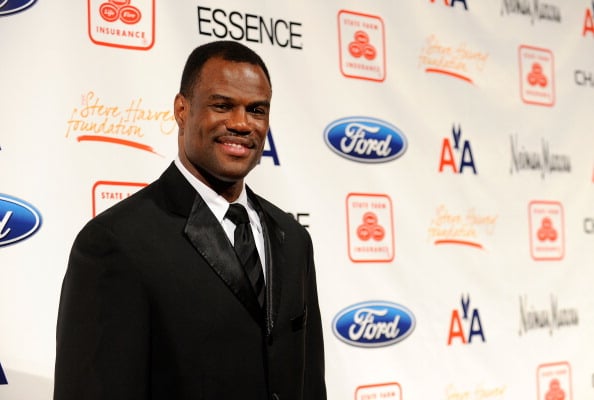
(Photo by Dimitrios Kambouris/Getty Images)

Early Life and Collegiate Career

David Robinson was born on August 6, 1965, in Key West, Florida. He is the second child of Freda and Ambrose Robinson. Due to his father's service in the US Navy, Robinson moved frequently with his family as a youth. They eventually settled in Woodbridge, Virginia, where Robinson excelled in both academics and sports.

He attended Osbourn Park High School in Manassas. During his senior year, David experienced a massive growth spurt, growing to 6'6″. Despite not having played organized basketball, he was added to his school's basketball team and went on to earn all-area and all-district honors.

After graduating from high school in 1983, Robinson chose to enroll at the US Naval Academy. There, he played on the basketball team and majored in mathematics. By the beginning of his sophomore year, David had grown to 7′, preventing him from serving on any US naval craft. He went on to become what many consider the greatest basketball player in Naval Academy history, winning both the Naismith and Wooden Awards as a senior. Following his graduation, Robinson became a civil engineering officer at the Naval Submarine Base Kings Bay in Georgia.

Start with San Antonio Spurs

In 1989, Robinson signed a contract with the San Antonio Spurs. Immediately, he made history with the greatest single-season turnaround in NBA history to that point, bringing the floundering team – which had a franchise-worst record of 21-61 the previous season – to a record of 56-26. Moreover, he helped lead the Spurs to the second round of the Western Conference playoffs. For his incredible contributions, David was unanimously named NBA Rookie of the Year. The Spurs would go on to make the playoffs for the next seven consecutive seasons. During this time, Robinson was engaged in a duel for the NBA scoring title with Shaquille O'Neal; he ultimately won it with 71 points in a single game against the Lakers.

Robinson's success continued in 1995 when he won the NBA MVP trophy. The next year, he was named one of the 50 best players in NBA history. However, he still had yet to win an NBA championship title. David's dreams of winning that honor were thwarted again in 1997 when he injured his back during the preseason. After returning to the court in December, he broke his foot in a home game and had to miss the remainder of the regular season. Despite an abysmal 20-62 record, the Spurs ended up winning the NBA Draft Lottery, with which the team selected superstar player Tim Duncan.
NBA Championships

With Duncan on the team, the Spurs finished the 1998-99 season with an NBA-best record of 37-13 and went on to advance to the NBA playoffs. The Spurs easily swept the first three rounds of the playoffs, defeating the Minnesota Timberwolves, Los Angeles Lakers, and Portland Trail Blazers by a combined record of 11-1. As a result, the Spurs made it to the NBA Finals for the first time in franchise history. Thanks to the combined power of Robinson and Duncan, the team ended up winning the championship title in five games over the New York Knicks. Robinson and Duncan were nicknamed "The Twin Towers" for their achievement.

During the final years of his playing career, David was beset by back injuries. He consequently announced his retirement following the 2002-03 season. Ultimately, Robinson managed to go out with a bang: in that final season, he and the Spurs won a second NBA championship title in six games over the New Jersey Nets. In the final game, David recorded 13 points and 17 rebounds to clinch the win. With Duncan, he shared "Sports Illustrated" magazine's Sportsmen of the Year award for 2003.

Olympic Games

Beyond the NBA, Robinson was part of the US national basketball teams at the Summer Olympic Games in 1988, 1992, and 1996. With the team in 1988, he won the bronze medal. In Barcelona in 1992, he won the gold medal as part of the legendary "Dream Team," which included Patrick Ewing, Larry Bird, Scottie Pippen, Michael Jordan, Magic Johnson, and Charles Barkley, among others. It was the first American Olympic team to feature active NBA players. David and the US team won gold again at the 1996 Olympic Games in Atlanta.

Spurs Investment

One of Robinson's smartest personal investments was in the franchise where he spent his entire NBA career. In 2004, one year after retiring, Robinson reportedly purchased a 1.88% ownership stake in the San Antonio Spurs.

At the time, the Spurs were valued at approximately $280 million. Based on that valuation, Robinson's 1.88% stake would have cost roughly $5.2 million. The investment turned out to be an extraordinary long-term bet on both the NBA and the San Antonio franchise.

For years, Robinson's stake grew quietly as NBA franchise values increased. Earlier estimates placed the Spurs at around $1.9 billion, which would have made a 1.88% stake worth about $36 million. More recent franchise valuations have placed the Spurs much higher, especially after the arrival of Victor Wembanyama and the continued surge in NBA team prices. At a $4.5 billion valuation, Robinson's reported 1.88% stake would be worth approximately $84.6 million.

That means Robinson's Spurs investment may be worth more than 16 times its original estimated purchase price. It also fits the broader pattern of his post-playing career. Rather than chasing flashy ventures, Robinson made patient, logical investments tied to assets he understood deeply: real estate, education, community development, and the basketball franchise that helped make him famous.

Philanthropy

Philanthropy has been central to Robinson's life for decades. In 2001, while still an active NBA player, he donated $9 million to establish the Carver Academy in San Antonio. The school was designed to provide high-quality educational opportunities for inner-city children, and Robinson remained closely involved after its launch.

In 2012, the Carver Academy became a public charter school through a partnership with IDEA Public Schools and was renamed IDEA Carver. The move allowed Robinson's original educational mission to reach more students while operating within a larger charter-school network.

Robinson's philanthropic vision also helped shape his business career. When he and Daniel Bassichis launched Admiral Capital Group, they built a charitable commitment directly into the firm's structure. Admiral pledged to donate 10% of profits to support education and lower-income communities. That made the investment platform unusual in the private equity world: financial returns and social impact were part of the same mission from the beginning.

In addition to Carver Academy and IDEA Carver, Robinson has supported broader community-development initiatives, including work connected to underserved and rebuilding communities. He has also used his business experience to mentor athletes on how to manage wealth, think long term, and avoid the financial mistakes that have derailed so many former players.

Personal Life

In 1991, Robinson wed Valerie Hoggatt. Together, they have three sons, David Jr., Corey, and Justin. Corey played football at Notre Dame, while Justin played basketball at Duke and later signed with the Erste Liga's Mornar Bar.

David Robinson Career Earnings

  • San Antonio Spurs (2002-03)
    $10.5 Million
  • San Antonio Spurs (2001-02)
    $9.5 Million
  • San Antonio Spurs (2000-01)
    $14.7 Million
  • San Antonio Spurs (1999-00)
    $11.6 Million
  • San Antonio Spurs (1998-99)
    $14.8 Million
  • San Antonio Spurs (1997-98)
    $12.4 Million
  • San Antonio Spurs (1996-97)
    $10 Million
  • San Antonio Spurs (1995-96)
    $7.7 Million
  • San Antonio Spurs (1994-95)
    $7.3 Million
  • San Antonio Spurs (1993-94)
    $5.7 Million
  • San Antonio Spurs (1992-93)
    $5.7 Million
  • San Antonio Spurs (1991-92)
    $2.2 Million
  • San Antonio Spurs (1990-91)
    $2.3 Million
  • San Antonio Spurs (1988-89)
    $1 Million
  • San Antonio Spurs (1987-88)
    $1 Million
All net worths are calculated using data drawn from public sources. When provided, we also incorporate private tips and feedback received from the celebrities or their representatives. While we work diligently to ensure that our numbers are as accurate as possible, unless otherwise indicated they are only estimates. We welcome all corrections and feedback using the button below.
Did we make a mistake?
Submit a correction suggestion and help us fix it!
Submit a Correction