
/2009/10/Dale-Earnhardt-Jr.jpg)
/2021/07/Dale-Earnhardt.jpg)
/2022/12/kelley.png)
/2012/09/Teresa-Earnhardt.jpg)
/2010/05/Michael-Waltrip.jpg)
/2020/03/jeff-gordon.jpg)
/2019/11/GettyImages-1094653148.jpg)
/2009/11/George-Clooney.jpg)
/2018/03/GettyImages-821622848.jpg)
/2019/04/rr.jpg)
:strip_exif()/2009/09/P-Diddy.jpg)
/2009/09/Jennifer-Aniston.jpg)
/2009/09/Cristiano-Ronaldo.jpg)
/2020/01/lopez3.jpg)
/2020/02/Angelina-Jolie.png)
/2020/06/taylor.png)
/2020/04/Megan-Fox.jpg)
What is Dale Earnhardt, Jr.'s net worth?
Dale Earnhardt, Jr. is a retired American NASCAR driver and media personality who has a net worth of $300 million.
Dale Earnhardt Jr. is one of the most popular drivers in NASCAR history and a central figure in the sport's modern era. The son of seven-time NASCAR Cup Series champion Dale Earnhardt, he carried both the weight and the benefit of one of racing's most famous surnames, ultimately forging a successful career that extended far beyond his father's shadow.
Earnhardt Jr. began his professional climb in the late 1990s, winning back-to-back NASCAR Xfinity Series championships in 1998 and 1999. He moved full-time to the NASCAR Cup Series in 2000 with Dale Earnhardt Inc., immediately making an impact. In just his second Cup start, he won at Texas Motor Speedway, signaling that he was more than just a legacy name. Over the next several seasons, he became especially dominant at restrictor-plate tracks, winning the Daytona 500 twice, in 2004 and 2014, along with multiple victories at Talladega.
In 2008, Earnhardt Jr. made a high-profile move to Hendrick Motorsports, one of NASCAR's premier teams. While he did not win a Cup championship, he remained consistently competitive and enjoyed one of his best statistical seasons in 2014, winning four races and contending in the inaugural playoff format.
Across his Cup career, he recorded 26 wins, 260+ top-10 finishes, and 15 consecutive Most Popular Driver awards from 2003 through 2017, a testament to his massive fan base. After retiring from full-time Cup competition in 2017, he transitioned smoothly into broadcasting, becoming a lead analyst for NBC Sports and later Amazon Prime Video's NASCAR coverage.
Career Earnings
Over the course of his career, Dale Earnhardt Jr. earned an estimated $410 million from salary, race winnings, endorsements, and merchandise royalties, making him one of the highest-paid drivers in NASCAR history.
At his peak, Earnhardt Jr. earned between $25 million and $30 million per year. From 2004 through his retirement in 2017, he generated at least $20 million annually, and from 2008 to 2015 he was NASCAR's highest-paid driver every single year. His career-high payday came in 2008, when he earned approximately $30 million.
Racing Earnings
His total on-track income is estimated at roughly $150 million. That figure includes his base salary from team owners as well as his share of race purses. During his early years with Dale Earnhardt Inc. from 2000 to 2007, his base salary was estimated in the $2 million to $4 million range annually. After moving to Hendrick Motorsports in 2008, his base salary reportedly jumped into the $10 million to $12 million range per season, reflecting both his performance and his commercial value.
In addition to salary, Earnhardt Jr. accumulated more than $97 million in total career purse winnings. Drivers typically receive approximately 40% to 50% of the purse, with the remainder going to the team to cover expenses such as crew salaries, travel, and equipment. In major seasons like 2004, when he won the Daytona 500, and 2014, when he captured his second Daytona 500, his total race winnings for the year exceeded $6 million.
Endorsement Earnings
Where Earnhardt Jr. truly separated himself financially was off the track. His estimated off-track income exceeded $260 million over his career. During his prime years, particularly from 2008 to 2015, he earned between $20 million and $25 million annually from endorsements alone.
His most iconic partnership was with Budweiser, whose "Bud 8" car became one of the most recognizable brands in NASCAR. Later, Bud Light continued that relationship. Other major sponsors and endorsement partners included PepsiCo brands such as Amp Energy and Mountain Dew, Nationwide Insurance, Kraft, Drakkar, Chevrolet, Gillette, EA Sports, Pennzoil, TaxSlayer, Goody's, and Wrangler.
Merchandise was another enormous revenue stream. Earnhardt Jr. won NASCAR's Most Popular Driver award 15 consecutive times, and for several years his merchandise reportedly accounted for as much as 25% of all NASCAR merchandise sales. In certain seasons, he outsold every other driver combined. He is estimated to have earned between $1 million and $3 million per year in merchandise royalties alone during his peak.
Business Assets
Unlike many retired athletes who rely primarily on passive investments, Dale Earnhardt Jr. has built a diversified portfolio of active businesses that continue to generate revenue long after his full-time racing career ended.
One of his most significant ventures is JR Motorsports (JRM), which he co-owns with his sister, Kelley Earnhardt Miller, and longtime NASCAR team owner Rick Hendrick. Based in North Carolina, JR Motorsports operates as a full-scale NASCAR Xfinity Series organization, fielding multiple competitive cars each season. The team generates revenue through race purses, sponsorship agreements, licensing, and driver development programs. JRM has won multiple championships and has become a pipeline for future Cup Series talent, cementing its status as a major enterprise within NASCAR.
In the media space, Earnhardt founded Dirty Mo Media, a production company that creates motorsports-focused digital content. Its flagship program, "The Dale Jr. Download," became one of the most successful racing podcasts in the industry. The network expanded to include multiple shows and secured a seven-figure syndication and distribution deal in 2024, further strengthening its long-term revenue potential. Earlier in his career, he also launched Hammerhead Entertainment, which developed motorsports-themed television content.
Earnhardt has invested in lifestyle and consumer brands as well. He co-owns Whisky River, a chain of bars and entertainment venues with locations in Charlotte and major airports. He also holds an ownership stake in FilterTime, a subscription-based home air filter company. In the spirits market, he partnered with Sugarlands Distilling Co. to launch High Rock Vodka. Additionally, he owns and lends his name to car dealerships in North Carolina, including Dale Earnhardt Jr. Chevrolet.
His assets have also included aviation holdings. Over the years, he has owned multiple private aircraft, including a Learjet 60 and a Cessna Citation Latitude. In August 2019, the Citation Latitude was involved in a crash during a landing attempt at an airport in Tennessee. Earnhardt, his wife, daughter, and others onboard survived with minor injuries. The incident drew national attention but did not result in long-term harm to the family.
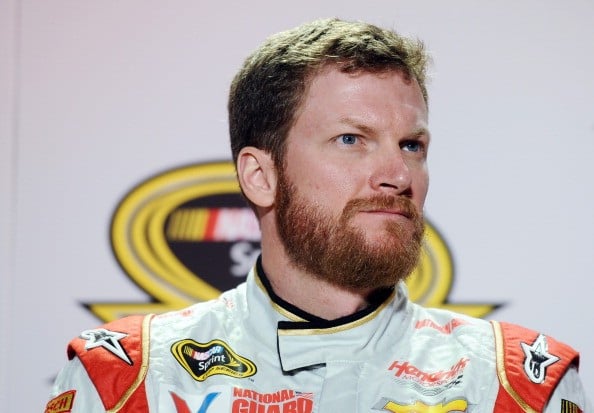
Rainier Ehrhardt/Getty Images
Early Life
Ralph Dale Earnhardt, Jr. was born on October 10, 1974, in Kannapolis, North Carolina.
Dale is the son of Brenda Lorraine Jackson and the late NASCAR legend Dale Earnhardt, Sr., who died in February 2001 in a crash at the Daytona Speedway. He has an older sister named Kelley Earnhardt, an older half-brother, Kerry, from his dad's first marriage, and a younger sister, Taylor, from his dad's third marriage to Teresa Earnhardt. His parents divorced not long after Dale was born. The family's house burnt down when Dale was six, and his mom couldn't afford to fix it, so she gave up custody of Kelley and Dale to Dale Sr. When he was 12, his father sent him to military school.
The Weight of a Name
Dale Earnhardt Jr. entered NASCAR carrying the most famous surname in stock car racing. As the son of seven-time champion Dale Earnhardt, he faced unmatched expectations from the moment he strapped into a race car. Rather than chase his father's legacy directly, Junior built one of his own, becoming the face of NASCAR for nearly two decades. Though he never won a Cup Series championship, he became a two-time Daytona 500 winner, a 15-time Most Popular Driver, and one of the sport's most commercially successful and culturally influential figures.
Busch Series Breakthrough
Before reaching the Cup level, Earnhardt Jr. proved his talent in the NASCAR Busch Series (now Xfinity Series). Driving for Dale Earnhardt Inc., he won back-to-back championships in 1998 and 1999. Those titles silenced early critics who believed he was simply benefiting from his last name. His aggressive driving style and calm demeanor under pressure demonstrated he belonged at NASCAR's highest level.
The "Bud 8" Era Begins
Earnhardt Jr. moved full-time to the Cup Series in 2000, piloting the iconic red No. 8 Budweiser Chevrolet for Dale Earnhardt Inc. His rookie season was electric. He won at Texas Motor Speedway and Richmond and captured the All-Star Race, becoming the first rookie to win that exhibition event. A new generation of fans gravitated toward the young driver, and the "Bud 8" car quickly became one of the most recognizable brands in American motorsports.
2001: Tragedy and Redemption
The 2001 season reshaped his life. On the final lap of the Daytona 500, his father was killed in a crash while protecting Junior's second-place finish. At just 26 years old, Earnhardt Jr. became the emotional center of a grieving sport.
Five months later, NASCAR returned to Daytona for the Pepsi 400. In a moment that transcended racing, Earnhardt Jr. dominated the event and won, celebrating in front of an emotional crowd. The victory became one of the most powerful moments in NASCAR history, cementing his bond with fans.
Peak Years with DEI
From 2003 to 2006, Earnhardt Jr. was among the sport's elite. He became a master of restrictor-plate racing at Daytona and Talladega, tracks where precision and drafting skill are critical.
His best statistical season came in 2004. He won six races, including his first Daytona 500 victory, and finished fifth in the championship standings, the highest ranking of his career at the time. Despite success, internal tensions with DEI leadership ultimately led him to leave the team his father founded.
The Hendrick Motorsports Era
In 2008, Earnhardt Jr. joined Hendrick Motorsports, NASCAR's most powerful organization. Driving the No. 88 Chevrolet alongside stars like Jeff Gordon and Jimmie Johnson, he began a new chapter.
After early optimism, he endured a difficult stretch between 2009 and 2011, going winless as NASCAR transitioned to a new car design. His career resurgence came in 2014 when he won his second Daytona 500 and four races overall, his strongest season in a decade. The victory ended a 55-race drought and reinforced his reputation as one of the greatest superspeedway racers of his era.
Concussions and Retirement
The final phase of his career was shaped by health concerns. Earnhardt Jr. suffered multiple concussions, voluntarily sitting out races in 2012 and missing the second half of the 2016 season due to persistent symptoms. Prioritizing long-term health and family, he announced that 2017 would be his final full-time Cup season.
He retired with 26 Cup Series victories and more than 260 top-10 finishes, ranking among the top 40 drivers in career wins.
Legacy and Continued Impact
Earnhardt Jr.'s legacy extends beyond statistics. He won the Most Popular Driver award 15 consecutive times from 2003 through 2017, reflecting an unparalleled connection with fans. In 2021, he was inducted into the NASCAR Hall of Fame.
Post-retirement, he has remained deeply involved in the sport through JR Motorsports, which has developed future stars, and through broadcasting roles that have helped bring NASCAR to new audiences. His career represents a rare combination of competitive success, commercial dominance, and cultural impact within American motorsports.
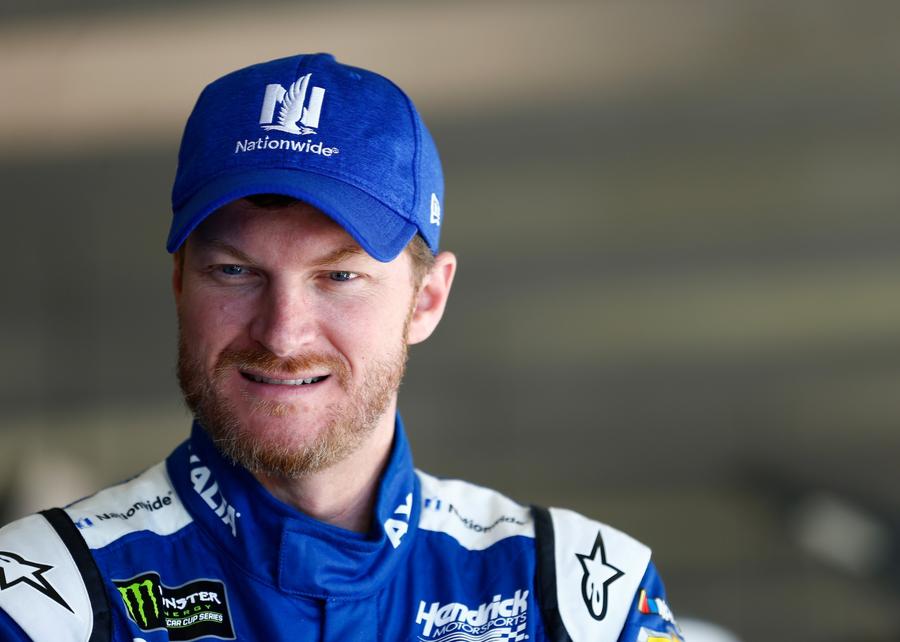
Daniel Shirey/Getty Images
Personal Life
Dale married his longtime girlfriend, Amy Reimann, on New Year's Eve 2016 at a vineyard in North Carolina. In October 2017, the couple revealed that they were expecting their first child. Isla Rose Earnhardt was born on April 30, 2018. In March 2020, the couple revealed that they are expecting their second child.
Earnhardt intends to donate his brain to science for research on concussions when he passes away.
In 2019, Earnhardt, his wife Amy, and their daughter Isla were on their Cessna plane when it crashed. The Earnhardts were on the plane with two pilots and the family dog. Three passengers sustained minor injuries. NTSB investigators determined that part of the landing gear collapsed, and part of the right wing hit the runway as the plane bounced twice before touching down a third time with about 1,000 feet of paved surface remaining. The Cessna crashed through a chain-link fence and ended up on the side of Tennessee Highway 91.
Earnhardt collects wrecked race cars, which he keeps on a property he owns in North Carolina. He owns a number of infamous wrecks, including his own 2014 Duck Commander 500 car that was wrecked after contact with wet grass on the infield that sliced a tire open.
Real Estate
In early 2020, Earnhardt listed his pirate-ship-inspired home in Key West, Florida, for $3.7 million. Earnhardt and his wife bought the home in 2009 for $2.4 million. The quirky 3,300-square-foot house comes with five bedrooms, 3.5 baths, nautical-inspired family rooms with a flotilla of wall-mounted model ships, and a large, covered deck and gazebo next to the pool.
Earnhardt also owns a home in Mooresville, North Carolina, on 200 acres.
/2009/10/Dale-Earnhardt-Jr.jpg)
/2021/07/Dale-Earnhardt.jpg)
/2020/03/jeff-gordon.jpg)
/2010/09/dw.jpg)
/2017/09/GettyImages-511620434.jpg)
/2010/05/Rick-Hendrick.jpg)
/2012/09/Teresa-Earnhardt.jpg)
:strip_exif()/2015/09/GettyImages-476575299.jpg)
/2009/09/Brad-Pitt.jpg)
/2017/02/GettyImages-528215436.jpg)