
In early 2009, at the absolute depths of the global financial crisis, one of the most outrageous deals in sports history quietly took place. A veteran Formula 1 engineer named Ross Brawn acquired a failing, money-burning racing team for exactly £1. Not £1 million. Not £100,000. One single British pound.
To anyone inside Formula 1, Ross Brawn wasn't some random opportunist. He was one of the most respected technical minds in the sport, a behind-the-scenes architect of multiple championship dynasties. He had helped guide Benetton to titles with Michael Schumacher in the mid-1990s and later became the strategic mastermind behind Ferrari's dominant run in the early 2000s. Known for his calm demeanor and ruthless race-day decision-making, Brawn had built a reputation as someone who could outthink entire teams from the pit wall.
But even by his standards, what he was about to do bordered on reckless.
The team he was buying wasn't just underperforming, it was collapsing. Its parent company had just pulled the plug. Hundreds of employees were on the verge of losing their jobs. The operation had no engine deal, no sponsors, and no guarantee it would even make it to the first race of the season. On paper, it looked less like an investment and more like a financial and professional suicide mission.
And yet, within that chaos, Brawn saw something no one else fully appreciated.
What he believed he had in his hands was not a dead team, but a sleeping one. A car designed around a clever interpretation of new rules. A head start that no rival could replicate overnight. A narrow, fleeting window where everything might align.
- If he was right, it would be one of the boldest bets in sports history.
- If he was wrong, it would be over before it even began.
Eight months later, Ross would pull off the greatest sports team flip of all time…
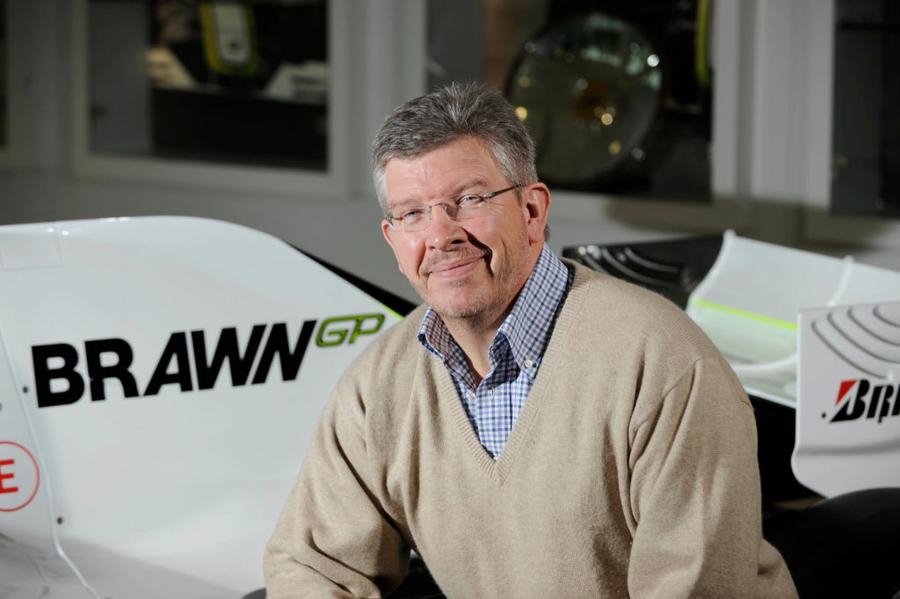
(Photo by David Ashdown/Getty Images)
The Collapse That Created the Opportunity
By late 2008, the global economy was imploding. The automotive industry was among the hardest hit sectors, and Honda was hemorrhaging cash.
Its Formula 1 program had become an expensive embarrassment. The company was reportedly spending $200 million to $300 million per year on a team that wasn't remotely competitive. The 2008 car was so uncompetitive that halfway through the season, Ross Brawn made a radical decision: abandon development entirely and shift all resources toward the upcoming 2009 regulations.
Those new rules were expected to completely reshape car design, and Brawn believed they offered a rare opportunity to leapfrog the competition.
Corporate Honda didn't want to wait. On December 5, 2008, executives abruptly announced they were exiting Formula 1 immediately.
Seven hundred employees at the team's Brackley factory were suddenly days away from losing their jobs. The operation was on the brink of liquidation.
The Loophole That Changed Everything
What Honda's executives didn't fully understand was that the team they were abandoning had quietly developed a potentially dominant car.
Because Brawn had shifted focus so early, engineers had spent over a year working on the 2009 chassis. During that process, they discovered a critical loophole buried in the new FIA rulebook.
The regulations tightly controlled the dimensions of the car's floor and diffuser, but they failed to govern the vertical channels connecting them. The team exploited this oversight with a design that became known as the "double diffuser."
By feeding air into a secondary channel above the main diffuser, the car generated a massive increase in downforce with almost no drag penalty. When the wind tunnel data came back, the numbers were so strong that Brawn initially thought something was wrong with the sensors.
Nothing was wrong. They had simply outsmarted the rules.
The £1 Deal
With Honda pulling out, the team's future looked bleak. Several potential buyers circled, including Richard Branson, but no serious deal materialized.
Meanwhile, Honda faced a painful reality. Shutting the team down would cost roughly $100 million in severance, contract buyouts, and shutdown expenses. On top of that, laying off 700 employees right before Christmas would be a public relations disaster.
Ross Brawn and CEO Nick Fry proposed a solution: a management buyout.
On March 6, 2009, the deal was finalized.
The purchase price was £1.
In exchange, Brawn's group assumed the team's liabilities. But more importantly, Honda effectively funded the transition. Instead of spending $100 million to shut the team down, they handed that money over to keep it alive.
Brawn didn't just buy a Formula 1 team for £1. He was essentially paid to take it.
The Frankenstein Car
There was just one major problem. The team no longer had an engine.
Honda had withdrawn completely, leaving the newly formed Brawn GP scrambling just weeks before the season opener. In a last-minute move, they secured a customer engine deal with Mercedes.
But integrating a Mercedes engine into a chassis designed for Honda was a logistical nightmare. The mounting points, cooling systems, and gearbox alignment were all different.
In a frantic 20-day sprint, engineers modified the car to make it work. They literally cut into the carbon-fiber chassis to fit the new engine. The changes compromised the car's balance and center of gravity. On top of that, the team couldn't afford KERS, a hybrid system many rivals were using.
The resulting car, the BGP 001, was a patchwork solution. It arrived at testing in a plain white livery with no major sponsors.
But it had one thing no one else had: the double diffuser.
A Fairy Tale Season on a Shoestring Budget
From the moment the car hit the track, it was obvious something was different.
At the opening race in Australia, Jenson Button took pole position and led a stunning 1–2 finish for Brawn GP. Rival teams immediately protested, claiming the diffuser was illegal. The FIA reviewed the design and ruled it fully compliant.
Brawn GP had found a legal loophole, and they had exploited it perfectly.
Button went on an incredible run, winning six of the first seven races and building a massive championship lead. But behind the scenes, the situation was far from comfortable.
The team was burning through the cash Honda had provided. Midway through the season, they were forced to lay off more than 300 employees just to survive. While rivals like Ferrari, McLaren, and Red Bull poured tens of millions into upgrades and eventually developed their own versions of the double diffuser, Brawn GP had almost no development budget.
By the second half of the season, their early advantage had evaporated. Button was no longer dominating and was often fighting just to stay on the podium.
But the cushion he built early in the season proved just enough.
On October 18, 2009, at the Brazilian Grand Prix, Button clinched the Drivers' World Championship. Brawn GP simultaneously secured the Constructors' title.
They remain the only team in Formula 1 history to win both championships in their only season of existence.
The Exit: Cashing in at the Perfect Moment
Ross Brawn understood something critical. As remarkable as the season had been, an independent team with limited resources had no chance of competing long-term against giants like Ferrari and Red Bull.
The smart move was to sell while the value was at its peak.
Just weeks after winning the championship, a deal was struck. On November 16, 2009, Daimler and Abu Dhabi-based Aabar Investments agreed to purchase a 75.1% stake in the team for roughly £110 million.
In other words, Ross Brawn flipped £1 into £110 million in just 255 days. But that's not all.
At the same time, Brawn GP had become highly profitable. Between the initial Honda funding, late-season sponsorship deals, and Formula 1 prize money, the team generated approximately £98.5 million in profit in 2009 alone. Management paid themselves more than £20 million in dividends from that windfall. But that's not all.
Brawn and his partners retained a minority stake, which they sold in 2011, bringing the total valuation of the team to around £180 million.
Ross Brawn personally walked away with an estimated £100 million from the sale and profits.
The Legacy: From £1 to a Multi-Billion-Dollar Dynasty
After the acquisition, the team was rebranded as Mercedes GP and later evolved into the Mercedes-AMG Petronas Formula One Team.
Ross Brawn stayed on to help rebuild the organization's long-term infrastructure. He played a key role in bringing Michael Schumacher out of retirement and setting the stage for Lewis Hamilton's eventual arrival.
What followed was one of the most dominant runs in modern sports history. The team went on to win eight consecutive Constructors' Championships from 2014 to 2021 and became the defining force of Formula 1's hybrid era.
Today, the team is valued at several billion dollars.
All of it can be traced back to a moment in early 2009, when a corporation panicked, walked away from a hidden advantage, and handed the keys to someone smart enough to recognize it.
Ross Brawn didn't just save a team. He executed one of the most extraordinary financial and competitive turnarounds ever seen in sports.
/2014/07/Ross-Brawn-1.jpg)
/2009/09/Michael-Schumacher.jpg)
/2026/03/chappell-roan.jpg)
/2025/08/sophie-image.png)
/2014/01/GettyImages-73490544.jpg)
/2026/03/darryl-strawberry.jpg)
:strip_exif()/2015/09/GettyImages-476575299.jpg)
/2020/01/lopez3.jpg)
/2019/11/GettyImages-1094653148.jpg)
/2019/10/denzel-washington-1.jpg)
/2018/03/GettyImages-821622848.jpg)
/2009/11/George-Clooney.jpg)
/2017/02/GettyImages-528215436.jpg)
:strip_exif()/2009/09/P-Diddy.jpg)
/2020/06/taylor.png)
/2019/04/rr.jpg)
/2009/09/Cristiano-Ronaldo.jpg)
/2009/09/Jennifer-Aniston.jpg)
/2009/09/Brad-Pitt.jpg)
/2020/04/Megan-Fox.jpg)
/2020/02/Angelina-Jolie.png)